



‘Excessively Dangerous’: Federal Court Upholds Maryland’s ‘Assault Weapons’ Ban
A U.S. appeals court upheld a Maryland law banning assault-style weapons on Tuesday, ruling that the law does not violate the Second Amendment. The Firearms Policy Coalition, Second Amendment Foundation, Citizens…
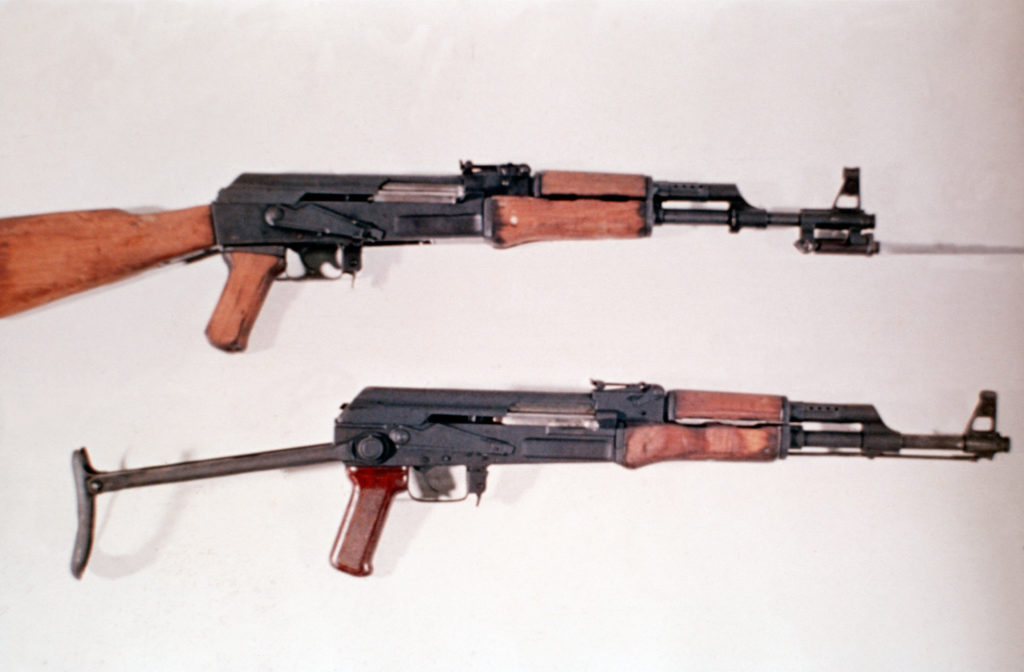

A U.S. appeals court upheld a Maryland law banning assault-style weapons on Tuesday, ruling that the law does not violate the Second Amendment.
The Firearms Policy Coalition, Second Amendment Foundation, Citizens Committee for the Right to Keep and Bear Arms and several Maryland citizens brought up the case challenging the constitutionality of the state’s “military-style assault weapons” ban, prohibiting the sale and possessions of the AR-15, AK-47 and Barrett .50 caliber sniper rifle, among others. The ban has been in place since 2013 following the Sandy Hook Elementary School shooting that killed 20 children and six adults in Connecticut.
“The assault weapons at issue fall outside the ambit of protection offered by the Second Amendment because, in essence, they are military-style weapons designed for sustained combat operations that are ill-suited and disproportionate to the need for self-defense,” Judge J. Harvie Wilkinson wrote in the decision. “Moreover, the Maryland law fits comfortably within our nation’s tradition of firearms regulation. It is but another example of a state regulating excessively dangerous weapons once their incompatibility with a lawful and safe society becomes apparent, while nonetheless preserving avenues for armed self-defense.”
Firearms Policy Coalition (FPC) president Brandon Combs said in a statement following the decision that the group plans on taking the suit to the Supreme Court.
“FPC will take the Fourth Circuit’s terrible decision to the Supreme Court without delay. Our objective is simple: End all bans on so-called ‘assault weapons’ nationwide. And we look forward to doing just that,” Combs wrote.
The plaintiffs had brought the case to the Supreme Court in May, arguing that the lower court was taking too long to decide, but the Court rejected the case at the time after Maryland Officials argued the appeals court should rule first,