



First Amendment Orgs Skewer Bipartisan Lawmakers’ ‘Frightening’ Attempt To Police Election Speech
Republican New York Rep. Mike Lawler and Democratic New Jersey Rep. Josh Gottheimer urged four agencies to crack down on so-called election misinformation propagated by artificial intelligence (AI) tools, prompting pushback from First Amendment organizations.
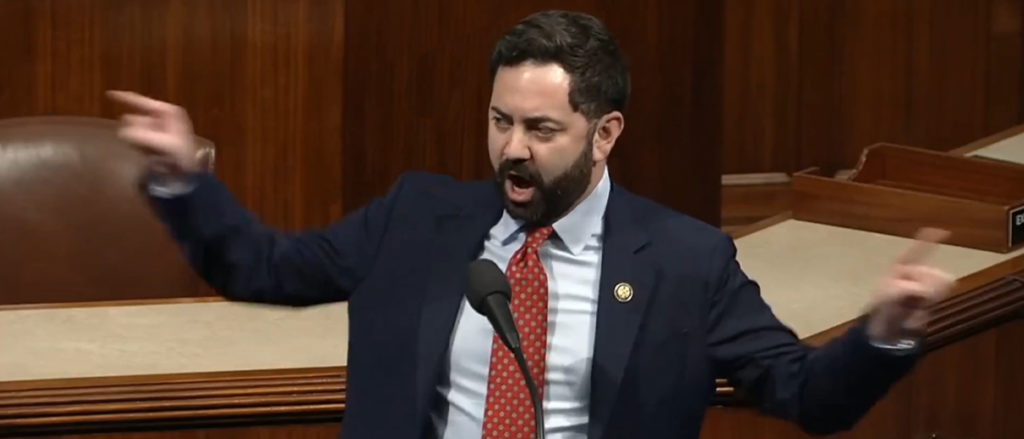

Republican New York Rep. Mike Lawler and Democratic New Jersey Rep. Josh Gottheimer urged four agencies to crack down on so-called election misinformation propagated by artificial intelligence (AI) tools, prompting pushback from First Amendment organizations.
The lawmakers asked the Department of Justice (DOJ), the Department of Homeland Security (DHS), the Cybersecurity and Infrastructure Security Agency (CISA) and the Federal Election Commission (FEC) to monitor AI tools to prevent the spread of election misinformation in a letter Tuesday. The letter elicited warnings from First Amendment organizations who expressed to the Daily Caller News Foundation their concerns about what it could mean for Americans’ constitutional rights.
“With the midterm elections just a few months away, we urge your agencies to coordinate to ensure the U.S. is prepared for AI-driven threats to election integrity, including the development and deployment of appropriate monitoring and mitigation capabilities,” the letter stated. “We also urge you to deepen engagement with major AI companies to understand their safeguard protocols, testing practices, and mechanisms for identifying political bias, misinformation, or model vulnerabilities that could affect voters.”
Lawler said on X that his demand would help AI companies “address election threats, improve transparency, and identity bias,” arguing that AI presented “new challenges” to election integrity. Neither Lawler or Gottheimer responded to the DCNF’s questions about which arbiter would determine what constitutes misinformation.
David Inserra, a fellow for free expression and technology at the Cato Institute, told the DCNF that the letter is a “frightening attack on the First Amendment.”
“Misinformation is generally protected under the First Amendment,” Inserra told the DCNF. “It can be misleading speech, it can be inaccurate speech, false speech, it can be speech that is biased or unverified. That speech is protected by the First Amendment. All of us, every American, every single day, says things that are biased or saying one view over another that leaves out, in crucial details. We’re all inaccurate, we all say things that turn out to be wrong or partially wrong. But we don’t empower the government to somehow police that speech and that is exactly what this letter to various government agencies is suggesting.”