



Former AG Gives Adam Schiff A Lesson In The Law
Sen. Adam Schiff appears to be arguing that when a president publicly criticizes someone, any later investigation of that person automatically becomes politically suspect. That is a dangerous standard. Political hostility does not place anyone beyond the reach of the law, just as it should not be used as a substitute for evidence of wrongdoing. […]
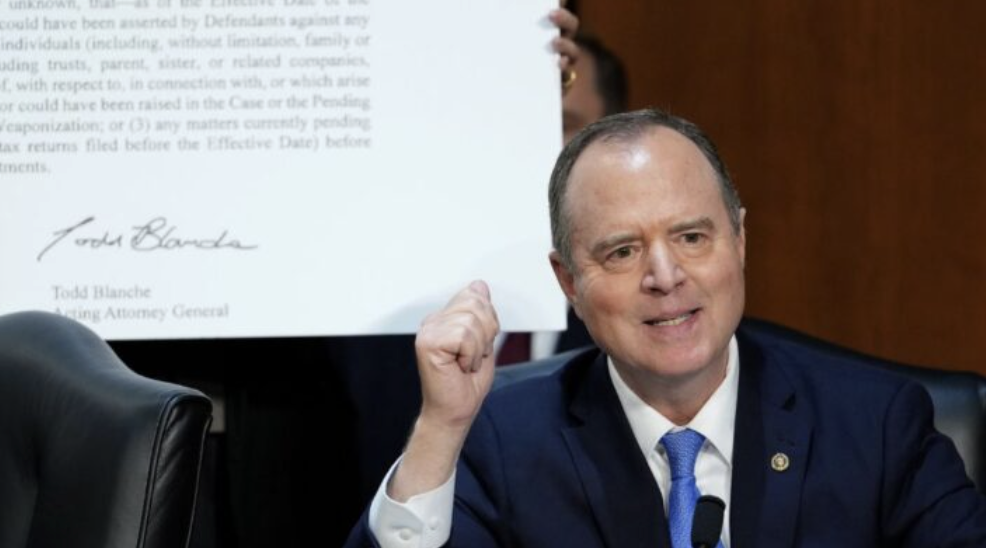
Sen. Adam Schiff appears to be arguing that when a president publicly criticizes someone, any later investigation of that person automatically becomes politically suspect.
That is a dangerous standard. Political hostility does not place anyone beyond the reach of the law, just as it should not be used as a substitute for evidence of wrongdoing.
The issue came up Thursday while former Attorney General John Ashcroft testified in support of attorney general nominee Todd Blanche. Schiff, a California Democrat and longtime critic of President Donald Trump, questioned Ashcroft about whether a president should ask the attorney general to investigate or prosecute political opponents.
Schiff asked whether it was appropriate for a president to call on the Justice Department to prosecute one of his enemies. Ashcroft responded that federal law should be enforced without regard to the political views of either the accused or the officials overseeing the investigation.
That should be the basic principle. A president should not direct prosecutions simply to punish critics. At the same time, being a critic of the president cannot provide immunity from investigation when there is legitimate evidence that a law may have been broken.
Schiff suggested that Ashcroft was accepting the idea that presidents may freely demand prosecutions of their enemies. Ashcroft pushed back, arguing that a president may properly encourage law enforcement to respond to possible crimes, even when the person involved happens to be a political opponent.
“If an enemy of the president goes out and conducts a violent crime,” Ashcroft said, there would be nothing inherently wrong with the president urging the attorney general to address it.
Schiff then raised two examples that were clearly intended to make the administration’s concerns sound trivial. He referred to a political opponent taking a photograph of seashells and to senators posting a video reminding military personnel that they may disobey illegal orders.
The first reference concerned former FBI Director James Comey, who posted a photograph showing seashells arranged to read “86 47.” Critics interpreted the message as a threat against Trump, the 47th president. Comey said there was no violent intent behind the image and later removed it.