Here’s Why Drones Are In And Main Battle Tanks Are Out
Say goodbye to the main battle tank, and say hello to the first-person-view drones that are dominating them across the globe.
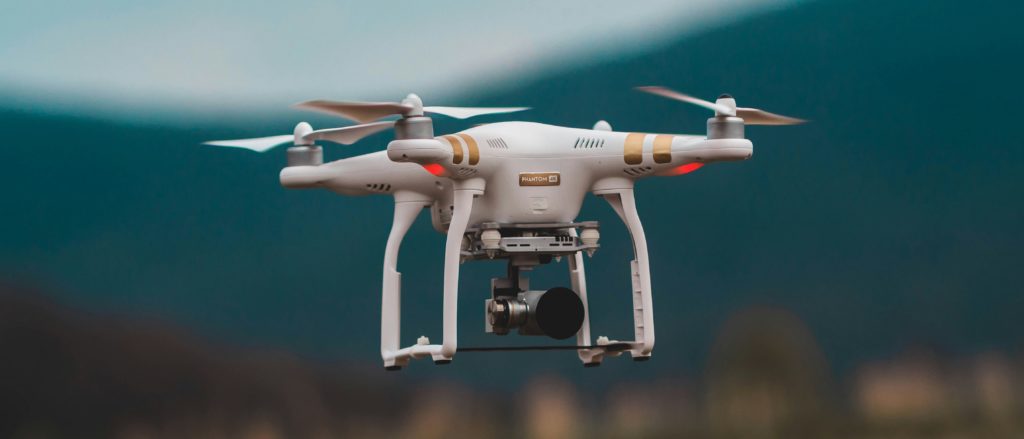

Say goodbye to the main battle tank, and say hello to the first-person-view drones that are dominating them across the globe.
For decades, military analysts have said that the tank is dead, but recent developments in military technology may have finally put the nail in the coffin for these armored beasts. The rapid development of first-person-view (FPV) drones has allowed for individual soldiers to destroy tanks worth millions of dollars with a single explosive charge, targeting the weakest points in the armor profile of these expensive pieces of military technology.
These drones fly by at breakneck speeds, identify potential targets such as trucks, troops or tanks, and then dive down directly on top of their victims. Most prominently, this new technology has been battle-tested in the Russo-Ukrainian War and the Israeli invasion of Lebanon.
The Ukrainian military frequently releases videos on X depicting exactly what these drones look like in action when used against Russian tanks, such as the T-90.
However, this new technology goes both ways. Pro-Russian accounts on X have similarly released unverified videos of Russian drones destroying Ukrainian tanks, such as the T-72. The Russian and Ukrainian militaries both use similar equipment, leading to skepticism from both sides as to what is actually depicted within these videos.
The U.S. military is working quickly to adopt this new technology, which is being pushed to new heights by companies such as Anduril, an AI (artificial intelligence) focused defense manufacturer.
Anduril recently published a video on X showcasing the Altius-700, a rocket-assisted long-range FPV drone in a winged configuration, rather than the typical quadcopters seen in the FPV videos shown above.
Anduril did not respond to a request for comment.
The Pentagon is currently working to implement anti-tank FPV systems that strengthen infantry units without the immense cost of legacy precision munitions such as the Javelin missile, which costs more than $100,000.
U.S. Army Soldiers from Delta Company, 1st Brigade Engineer Battalion, 1st Armored Brigade Combat Team and the 1st Infantry Division, recently hosted a demonstration where they tested the Selectable Lightweight Attack Munition (SLAM), a FPV quadcopter with a shaped charge munition that is designed to attack armored vehicles from the top down, at the weakest point in their armor profile.
“The cost of the system reflects its broader strategic value,” the Army reported, citing Capt. Kyle Fortin, the Delta Company commander. “A single SLAM-equipped FPV drone system costs approximately $5,700, compared to more than $120,000 for a Javelin missile, offering tactical units an organic, low-cost option against armored threats without drawing from high-end munitions stockpiles.”
“Unleashing U.S. Military Drone Dominance,” is the subject of an official memorandum published by Secretary of War Pete Hegseth on July 10, 2025. The memorandum states the Department of War’s current goal to “bolster the nascent U.S. drone manufacturing base by approving hundreds of American products for purchase by our military.”
This follows Executive Order 14307 from President Donald Trump, titled “Unleashing American Drone Dominance.” The goal of this order is to strengthen the development and industry surrounding American unmanned aircraft systems (UAS), as well as integrating this new technology into the U.S. National Airspace System.
The Pentagon did not respond to a request for comment.
FPV drones allow insurgent forces to take on much stronger adversaries. The most notable instance of this was seen in Lebanon, where Hezbollah forces were able to destroy an undisclosed number of Israeli tanks, such as the Merkava main battle tank, according to unverified videos posted on X.
Even the Houthis are getting in on the action, developing their own domestic FPV drones to attack the Saudi military. One viral video on X allegedly depicts a Saudi-owned U.S.-built M1 Abrams main battle tank getting destroyed by a mine dropped vertically onto the tank.
As these drones continue to plague battlefields throughout the world, militaries are scrambling to develop new defensive measures to protect armored units from FPV drone attacks.
The “cope cage” is a new concept that has been seen throughout various armed conflicts. A “cope cage” is a mesh, wire or sheet metal shell that combat engineers fit to the turret and hull of trucks, tanks and other armored vehicles in an attempt to detonate the explosive payloads of these drones before they can enter their effective blast radius.
“The irony of modern warfare: a Ukrainian armored vehicle protected from FPV drones by a ‘cope cage,’while carrying its own FPV drones ready to hunt the enemy,” one military-focused account posted on X.
“Cope cages” are just the beginning. The Russian military has pioneered an even more aggressive measure to defend against drones, which it calls the “turtle tank,” essentially a complete enclosure of the vehicle, leaving only a narrow angle of the main gun exposed to enemy fire.
The Russian military recently showcased a Russian T-80 “turtle tank” in an unverified video posted on X by a pro-Russian account.
But even the “turtle tank” can not defend the crew inside from these drones. A narrow weak spot needs to remain open for the main gun to fire on enemy targets. FPV drones are so agile and precise that they have been able to target this narrow chink in the armor, as multiple unverified videos on X show.
The concept of “cope cages” proved to be so promising that some nations have even scaled up this technology to defend their critical infrastructure.
The United Arab Emirates has installed “cope cages” to defend its oil storage tanks, IranObserver0, another military-focused account, posted on X.
The Iranian Islamic Revolutionary Guard Corps has not engaged in much anti-tank warfare since the conflict began; however, they have shown the value of modern drone warfare through their successful drone attacks on neighboring countries throughout the Middle East with larger drones, such as the Shahed-136. Iran has launched thousands of one-way attack drones since the war began on Feb. 28, according to U.S. Central Command.
One of the most high-profile instances of these drone attacks occurred when Iran attacked Dubai in the United Arab Emirates. Viral unconfirmed videos posted on X showcased what those attacks looked like, including strikes on affluent residential areas.
As the drone arms race continues to dominate modern warfare, one question remains: when will armed forces stop investing millions in main battle tanks when they could invest in advancing the drone technology that is obliterating these expensive vehicles?
All content created by the Daily Caller News Foundation, an independent and nonpartisan newswire service, is available without charge to any legitimate news publisher that can provide a large audience. All republished articles must include our logo, our reporter’s byline and their DCNF affiliation. For any questions about our guidelines or partnering with us, please contact [email protected].