





Congress May Be Out Of Time To Strike Deal On Permitting Reform
Republican members of Congress are running out of time to strike a permitting reform deal after the House passed its own overhaul and left Washington for the midterm campaign trail.
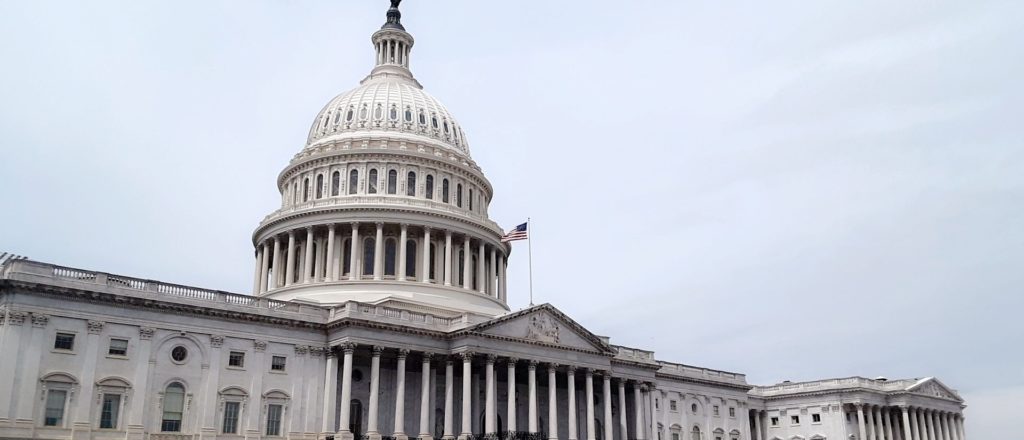

Republican members of Congress are running out of time to strike a permitting reform deal after the House passed its own overhaul and left Washington for the midterm campaign trail.
The House passed the bipartisan Standardizing Permitting and Expediting Economic Development (SPEED) Act 221-196 in December 2025, sending legislation aimed at accelerating federal approvals for energy and infrastructure projects to the Senate. Eleven Democrats joined Republicans in supporting the bill, while Democratic California Rep. Brad Sherman voted against it.
But the legislation has remained tied up in the Senate as lawmakers negotiate how far Congress should go in changing environmental reviews and litigation rules. Senate Republicans are expected to discuss Wednesday whether to cut their session short or remain in Washington, Politico reported, citing two people familiar with the planning.
Republican Maine Sen. Susan Collins is pressing for a bipartisan permitting agreement in the coming days, leaving senators with a narrowing window to reach a compromise before potentially joining their House counterparts on the campaign trail.
The House-passed SPEED Act would reform the National Environmental Policy Act (NEPA), including changes to environmental reviews and litigation surrounding federal approvals. House Natural Resources Chairman Bruce Westerman and Democratic Maine Rep. Jared Golden introduced the legislation in July 2025 with the stated goals of shortening permitting timelines and providing greater certainty for developers.
The House vote did not settle the permitting fight. Senate lawmakers have pursued broader negotiations that extend beyond the House bill, including disputes over what projects should benefit from permitting changes and what environmental safeguards should remain.
Senate Environment and Public Works Chair Shelley Moore Capito has expressed optimism about reaching a deal, while ranking Democratic Rhode Island Sen. Sheldon Whitehouse has sought assurances that Senate and House leadership have a path for moving an agreement through both chambers.
That creates another complication for negotiators: even if senators reach a permitting agreement before leaving Washington, changes to the House-passed legislation could require the House to act again before a final bill could reach President Donald Trump’s desk.
House Republicans currently have no plans to return to Washington before the election to consider a Senate-passed permitting bill, Punchbowl News founder Jake Sherman reported on X Wednesday, citing anonymous senior House GOP sources. House Republicans would also be wary of accepting the Senate’s version outright, while the GOP’s narrow three-vote majority and attendance issues could complicate passage if lawmakers were called back, he noted.
The debate comes as the United States faces growing pressure to build new power plants, transmission infrastructure and other energy projects to meet rising electricity demand.
A report released Monday by the Joseph Rainey Center for Public Policy argues that developers and investors also face uncertainty over whether federal permits will remain intact after billions of dollars have been committed to a project. The report, “When Permits Aren’t Permanent,” argues that permitting instability can increase financing risks and ultimately raise costs borne by ratepayers, taxpayers, tollpayers and retirement savers.
The report comes as the country faces an estimated $9.1 trillion infrastructure investment need through 2033 while electricity demand grows from data centers, manufacturing and electrification, according to the Rainey Center.
That uncertainty has become particularly visible in the energy sector, where projects can require years of federal reviews, large upfront investments and infrastructure that may operate for decades.
The permitting push also intersects with lawmakers’ broader focus on energy affordability. Rapid data center construction is increasing demand for generation and transmission, while Congress debates how quickly the country can add new power supplies without shifting infrastructure costs onto existing customers.
Some developers have already begun pursuing power outside the traditional electric grid to move projects forward faster. Natural gas company Williams recently brought a 200-megawatt system online in Ohio to serve a Meta-affiliated data center, illustrating how large power users are looking for alternatives to lengthy grid interconnection and infrastructure timelines.
Republican Ohio Sen. Jon Husted has separately pushed legislation aimed at preventing households and small businesses from bearing infrastructure costs associated with new data centers. The House passed his Ratepayer Ratepayer Protection Act 417-3 on Sept. 16, though Democratic New Mexico Sen. Martin Heinrich blocked Husted’s attempt to pass it by unanimous consent in the upper chamber the following day.
Trump has also discussed the legislation with Senate Majority Leader John Thune as Washington confronts rising electricity demand associated with artificial intelligence.
Those affordability fights put additional pressure on Congress to determine how quickly new generation and transmission can be built the same infrastructure at the center of the permitting negotiations.
Lawmakers have repeatedly struggled to reach a permitting compromise. Democratic Sens. Whitehouse, Heinrich and Brian Schatz have raised concerns that changes to NEPA could narrow environmental reviews without sufficient safeguards or benefits for clean energy, while business, manufacturing, mining and energy groups have supported efforts to accelerate federal approvals.
The House has already passed its permitting bill and left Washington until after the midterm elections. Senators now face a shrinking window to determine whether they can reach their own agreement and whether whatever they produce has a path through a House that has already gone home.
All content created by the Daily Caller News Foundation, an independent and nonpartisan newswire service, is available without charge to any legitimate news publisher that can provide a large audience. All republished articles must include our logo, our reporter’s byline and their DCNF affiliation. For any questions about our guidelines or partnering with us, please contact [email protected].