




Explainer: How the Path to the Democratic Presidential Nomination Is Different in 2020
The Democratic Party will officially nominate a 2020 presidential candidate at its convention in July, a process that begins on Monday with the Iowa caucuses and ends with the Puerto Rico primary in June. The goal is to…
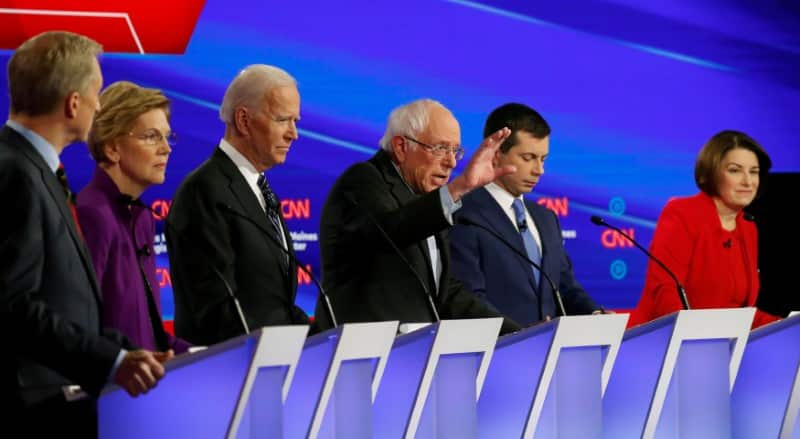
The Democratic Party will officially nominate a 2020 presidential candidate at its convention in July, a process that begins on Monday with the Iowa caucuses and ends with the Puerto Rico primary in June.
The goal is to amass on a state-by-state basis the 1,991 delegates needed to secure the nomination on the first ballot at the convention in Milwaukee. A candidate must get at least 15% of the vote statewide or in an individual congressional district to be awarded delegates.
The nominating process will be much different this time around after Democrats made changes aimed at increasing participation and ensuring transparency.
The following explains some key changes.
For a graphic on the delegate race, see: https://graphics.reuters.com/USA-ELECTION-CALENDAR/0100B31F26V/index.html
FEWER CAUCUSES
In 2020, Democrats will hold caucuses in four states – Iowa, Nevada, North Dakota and Wyoming – far fewer than the 18 conducted in states and territories in the 2016 campaign.
Caucuses require voters to attend a lengthy meeting in person and vote in the open by raising their hand or gathering with fellow supporters. The process has been criticized as undemocratic because it can dampen participation and is subject to intimidation. In-person meetings at a set time can often be difficult for shift workers or parents to attend.
The caucus system favors candidates with a strong, active base instead of broader support. U.S. Senator Bernie Sanders of Vermont, for example, significantly outperformed his rival, Hillary Clinton, in caucuses in the 2016 campaign.
In primaries, voters show up to their polling place and check the box for the candidate of their choice.
SUPER TUESDAY TO PLAY A BIGGER ROLE?
The first states to vote – Iowa and New Hampshire – have always had an outsized role in picking nominees.