



JAMES CARTER And JACOB CHOE: Trump’s Doctrine, Rubio’s Moment And How America Got Serious About Iran
Washington has a habit of dressing up failure as sophistication. Thirty years of engagement with Iran — the diplomacy, the frameworks, the endless European intermediaries — produced a regime with more centrifuges, more…
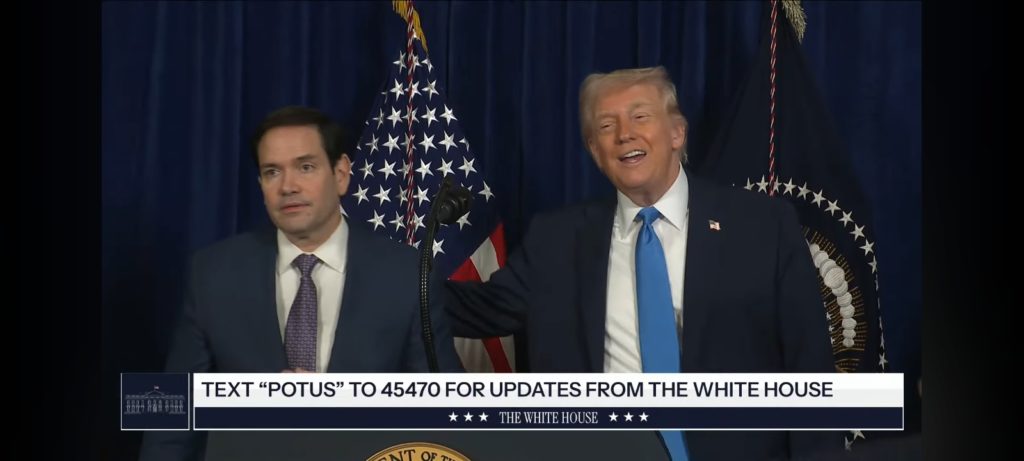

Washington has a habit of dressing up failure as sophistication.
Thirty years of engagement with Iran — the diplomacy, the frameworks, the endless European intermediaries — produced a regime with more centrifuges, more proxies, and more confidence than when the process started. The foreign policy establishment responded to each setback by calling for more of the same, with better manners.
Trump looked at that record and didn’t find it complicated. He found it embarrassing.
That instinct — blunt, impatient with credentialed excuse-making — drove the maximum pressure campaign, the JCPOA withdrawal, and ultimately Operation Midnight Hammer. You can argue about the sequencing or the risks. What’s harder to argue with, at this point, is the trajectory. Iran’s nuclear sites are rubble. Its proxy network is the weakest it’s been in a decade. The regime that spent years believing it could outlast American attention is now having a different conversation.
None of that happened because the establishment came around. It happened because Trump didn’t need it to.
Rubio brought something different to this — not strategic vision, which Trump had, but the apparatus to make it executable. The months of ally briefings before the first strike. The legal designations, the message discipline, the quiet work of ensuring that when the moment came, the coalition was there and the justification was airtight.
That kind of groundwork isn’t glamorous. It also doesn’t make headlines. It’s what separates a successful military campaign from a successful military action that collapses diplomatically three weeks later.
The critics call this managerial pragmatism, which in Washington is meant to damn with faint praise. But look at what the alternative produced.
Libya was a humanitarian intervention that created a humanitarian catastrophe. The ISIS vacuum didn’t appear from nowhere — it was the predictable result of a withdrawal that prioritized the appearance of ending a war over the reality of what would fill the space. Afghanistan ended with the Taliban holding American equipment and the foreign policy community writing essays about lessons learned.