



Japan’s PM Abe Resigns as Coronavirus Hits Economy, Endangers Legacy
Prime Minister Shinzo Abe, Japan’s longest-serving premier, announced his resignation because of poor health on Friday, ending a stint at the helm of the world’s third-biggest economy in which he sought to revive growth…
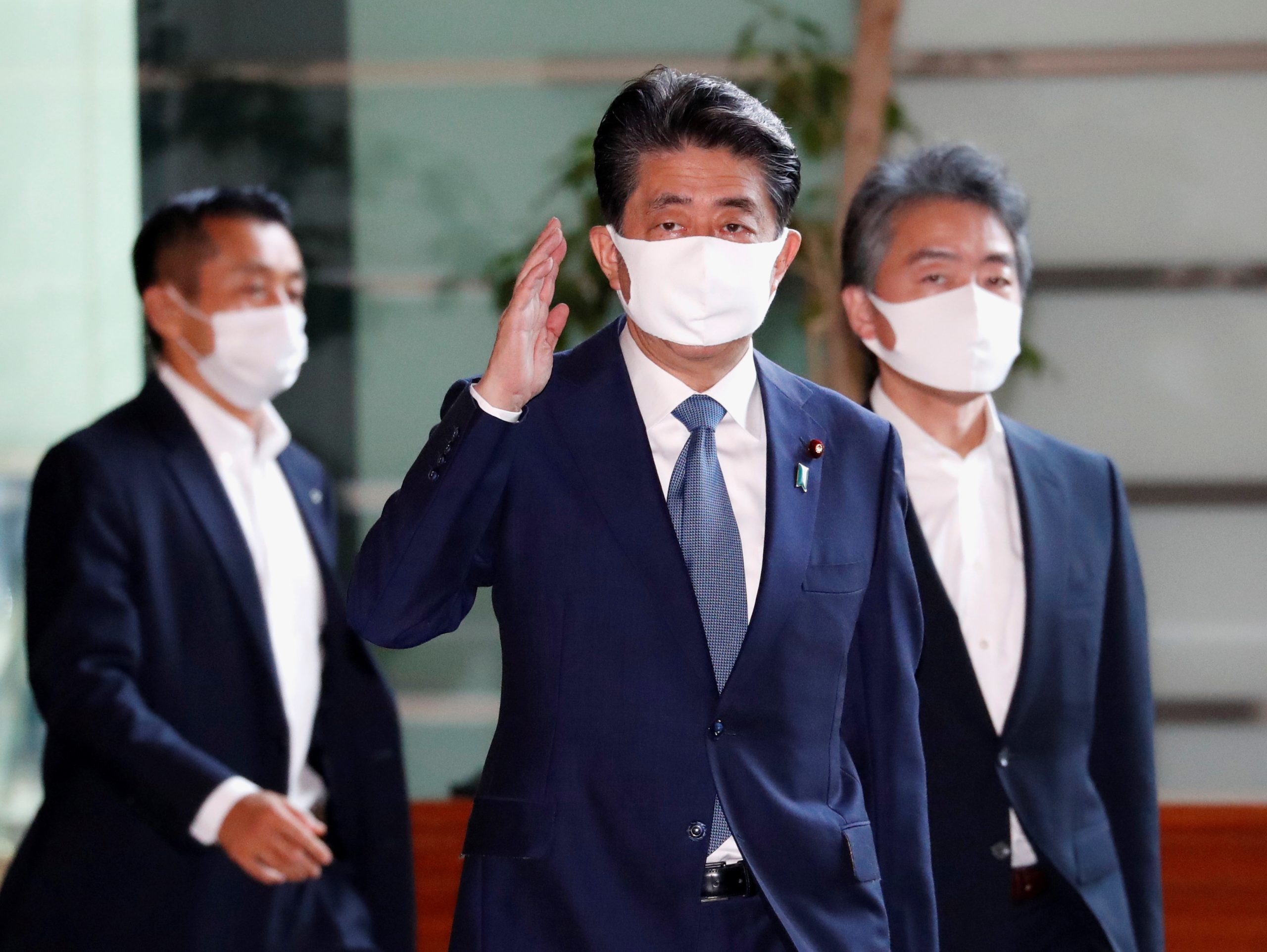
Prime Minister Shinzo Abe, Japan’s longest-serving premier, announced his resignation because of poor health on Friday, ending a stint at the helm of the world’s third-biggest economy in which he sought to revive growth and bolster its defences.
Abe has battled the disease ulcerative colitis for years and two recent hospital visits within a week had fanned questions on whether he could stay in the job until the end of his term as ruling party leader, and hence, premier, in September 2021.
“I cannot continue being prime minister if I do not have the confidence that I can carry out the job entrusted to me by the people,” Abe, 65, told a news conference as he announced his decision to step down.
He said he wanted to avoid a political vacuum as the country copes with the novel coronavirus.
“I apologize from the bottom of my heart that despite all of the support from the Japanese people, I am leaving the post with one full year left in my term,” Abe said, at times blinking back tears and his voice choking up.
It was the second time Abe has resigned as prime minister because of poor health.
As news of the resignation spread, Japan’s benchmark Nikkei average <.N225> fell 2.12% to 22,717.02, while the broader Topix <.TOPX> shed 1.00% to 1,599.70. The selling wiped $47 billion off Tokyo’s $5.7 trillion stock market value, which had more than doubled during Abe’s tenure.
The resignation will trigger a leadership race in the ruling Liberal Democratic Party (LDP) – most likely in two or three weeks – and the winner must be formally elected in parliament. The new party leader will hold the post for the rest of Abe’s term.
Former defence minister Shigeru Ishiba and former foreign minister Fumio Kishida both expressed interest in the top job, media reported. Among others whose names have been floated is Abe’s close aide, Chief Cabinet Secretary Yoshihide Suga.
Whoever wins the party poll is likely to keep Abe’s reflationary “Abenomics” policies as Japan struggles with the impact of the novel coronavirus but may have trouble emulating the political longevity that may be Abe’s biggest legacy.