



Justice Department Drops Election Monitor Announcement
The Justice Department is preparing to send roughly 1,000 federal election monitors across the country for the November midterm elections, an effort Assistant Attorney General Harmeet Dhillon says could be one of the largest of its kind under a Republican administration. Dhillon, who leads the Justice Department’s Civil Rights Division, discussed the plans in an […]
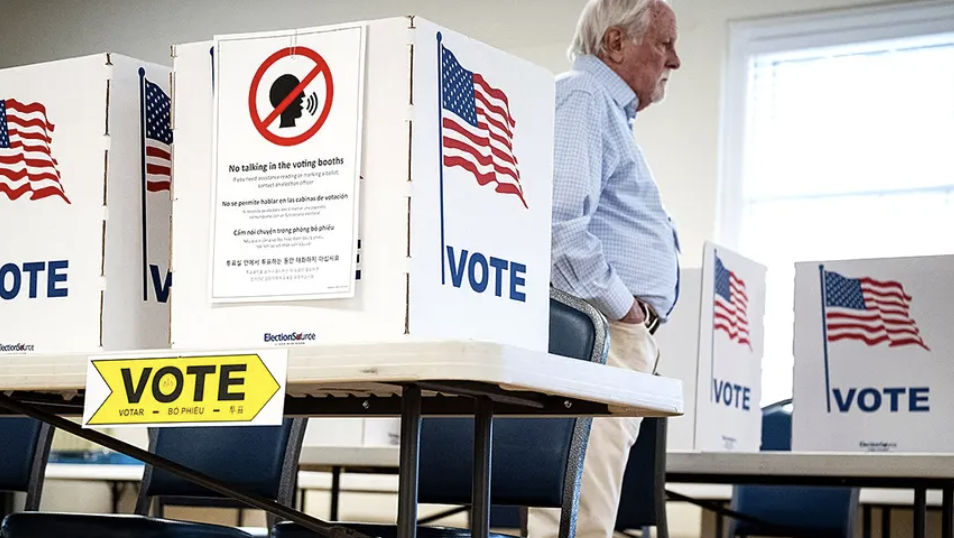
The Justice Department is preparing to send roughly 1,000 federal election monitors across the country for the November midterm elections, an effort Assistant Attorney General Harmeet Dhillon says could be one of the largest of its kind under a Republican administration.
Dhillon, who leads the Justice Department’s Civil Rights Division, discussed the plans in an interview with Bloomberg. She said federal election monitoring is nothing new for the department, although the number of personnel expected to participate this fall stands out.
According to Dhillon, the department has already used monitors during this year’s primary elections and intends to expand that operation significantly in November.
“We just did it in the primary,” she said, adding that the department expects to deploy approximately 1,000 monitors for the general election.
Federal officials have already been present during several state primaries. The Justice Department sent monitors to polling locations in Michigan and Arizona, and federal personnel were also dispatched for Minnesota’s primary earlier this month.
Dhillon said the Justice Department’s role is not to take control of elections from state or local authorities. Instead, monitors observe conditions at polling locations and can provide information that may be useful if questions or investigations arise.
She also emphasized that federal officials must follow the election laws and restrictions established in each state. That includes rules governing how close monitors or other individuals may come to polling locations.
“We respect state law,” Dhillon told Bloomberg.
Although some state officials may be uncomfortable with a large federal presence during elections, Dhillon argued that cooperation among federal, state and local governments can help reassure voters that election laws are being followed.
The monitoring effort is also broader than investigating possible illegal voting.
The Civil Rights Division is responsible for enforcing a number of federal voting protections. Those responsibilities include ensuring that voters are not discriminated against and that people with disabilities can access polling places. The division also enforces laws involving voter registration, overseas and military voters, and other election-related protections.