



Legal Experts React To Supreme Court Showdown Over Climate Lawsuits
Supreme Court justices grappled Monday with whether a blue city can make oil companies pay for climate damages — and legal experts are weighing in.
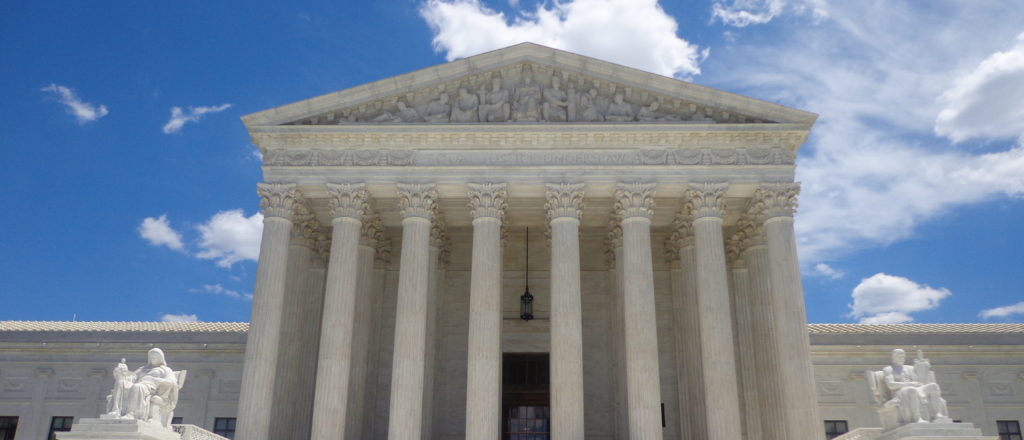

Supreme Court justices grappled Monday with whether a blue city can make oil companies pay for climate damages — and legal experts are weighing in.
Monday oral arguments for Suncor Energy v. Board of County Commissioners of Boulder County concluded with the Court’s nine justices appearing to be split on the question. In the case, multiple Colorado governments including the City of Boulder argue the companies should pay for alleged local climate harms, while energy companies Suncor and ExxonMobil contend federal law preempts claims involving interstate and global greenhouse gas emissions.
Republican Utah Attorney General Derek Brown told reporters outside the Supreme Court he left the arguments “optimistic,” saying the dispute ultimately comes down to “who gets to decide the policy.”
“It’s an energy tax dressed up in a fraud lawsuit,” Brown said of Boulder’s claims. “That’s ultimately what this is, because the reality is, they’re trying to regulate action that takes place, not just in their own state, but anywhere across the country.”
Republican Alabama Attorney General Steve Marshall likewise said he felt more confident after hearing the justices’ questions, pointing particularly to Justice Brett Kavanaugh.
“We were confident coming in. I feel better having heard, particularly if you listen to Justice Kavanaugh on his line of questioning,” Marshall told the Daily Caller News Foundation. “It makes it abundantly clear that this is not a question for local officials in Boulder, Colorado, to somehow adopt energy policy for our country. But instead, that’s an issue of federal law, and particularly an issue of Congress.”
Marshall cautioned, however, against interpreting individual questions as indications of how a justice might ultimately vote. Asked about Justice Amy Coney Barrett’s pushback on aspects of the companies’ arguments, Marshall said she was “just doing her job as somebody on the court, trying to fully understand specifically what the advocates are advancing.”