



MORGAN MURPHY: Lessons From Normandy
Thursday’s 80th anniversary of D-Day likely marked the final major ceremony to be attended by survivors of the Juno, Omaha, Gold, Utah, and Sword beach landings. Precious few veterans of history’s largest amphibious…
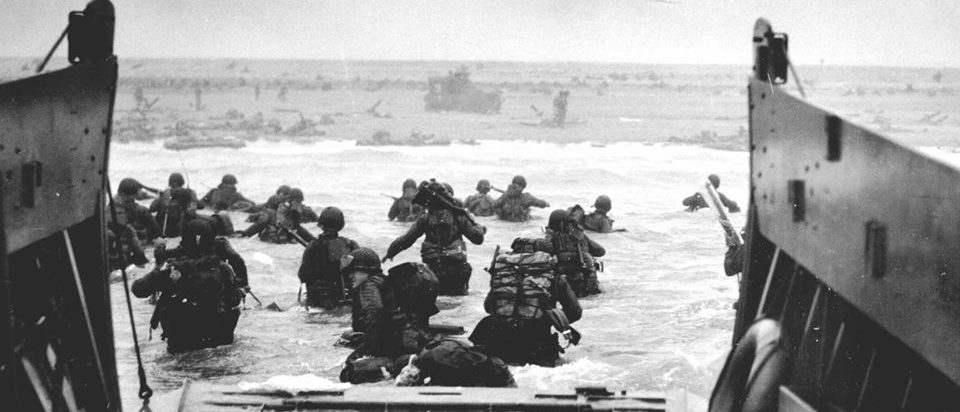

Thursday’s 80th anniversary of D-Day likely marked the final major ceremony to be attended by survivors of the Juno, Omaha, Gold, Utah, and Sword beach landings. Precious few veterans of history’s largest amphibious invasion will be present for the 90th. As they leave us, we lose the knowledge of the last Americans to experience firsthand what it took to win a war between global powers.
It took guts to invade Hitler’s Fortress Europe. At Normandy, Allied boys found a toehold in Hitler’s Atlantic Wall, 40 million tons of concrete stretching 3,200 miles. Manned by 300,000 soldiers and bristling with 15,000 bunkers, the Atlantikwall remains among the largest construction project ever undertaken by mankind.
That toehold soon enabled men and matériel to flow into France. The United States and the nations of the British Commonwealth flooded the newly-captured beaches with all the industrial might that capitalism and democracy could produce. By June 30th, 1944, the Allies landed 148,803 vehicles, 570,505 tons of supplies, and 850,279 men in Normandy.
I had the honor of befriending one of those men: an Army tech sergeant who had been there. Like thousands of other G.I.s, Alfred Valenti entered Europe through Utah beach. The young G.I. from Bairdford, Pa., maintained Jeeps and half-ton trucks for Gen. Dwight D. Eisenhower’s Army, as it massed supplies to liberate Paris and fight into the heart of Germany. “Fred,” as I called him, remembered nearly every detail of his time with the Army, from the hedgerow where he found an abandoned German Luger pistol to the thrill of receiving among the very first Ike jackets popularized by Eisenhower himself.
Though a half-century divided us, we swapped stories of our very different wars like old friends. We laughed how some Army traditions never die, like cream-chipped beef on toast (or as the G.I.’s called it, “S.O.S.”—s**t on a shingle). Like many of his generation, Fred drove American cars and bought American-made products as a matter of pride and principal. I admired his fierce, simple patriotism—a love of country earned by hard experience.
On his 95th birthday in 2016, Fred surprised me with the gift of a German P38 pistol he had found in the Atlantic Wall in 1944. He’d spotted it wrapped in newspaper, still perfectly preserved in its leather holster. The weapon’s original owner and his nation are long gone. But with its eerie Wehrmacht stampings, the gun carries a stark warning.