



NASA’s Boeing Moon Rocket Cuts Short ‘Once-in-a-Generation’ Ground Test
NASA’s deep space exploration rocket built by Boeing briefly ignited all four engines of its behemoth core stage for the first time on Saturday, cutting short a crucial test to advance a years-delayed U.S. government…
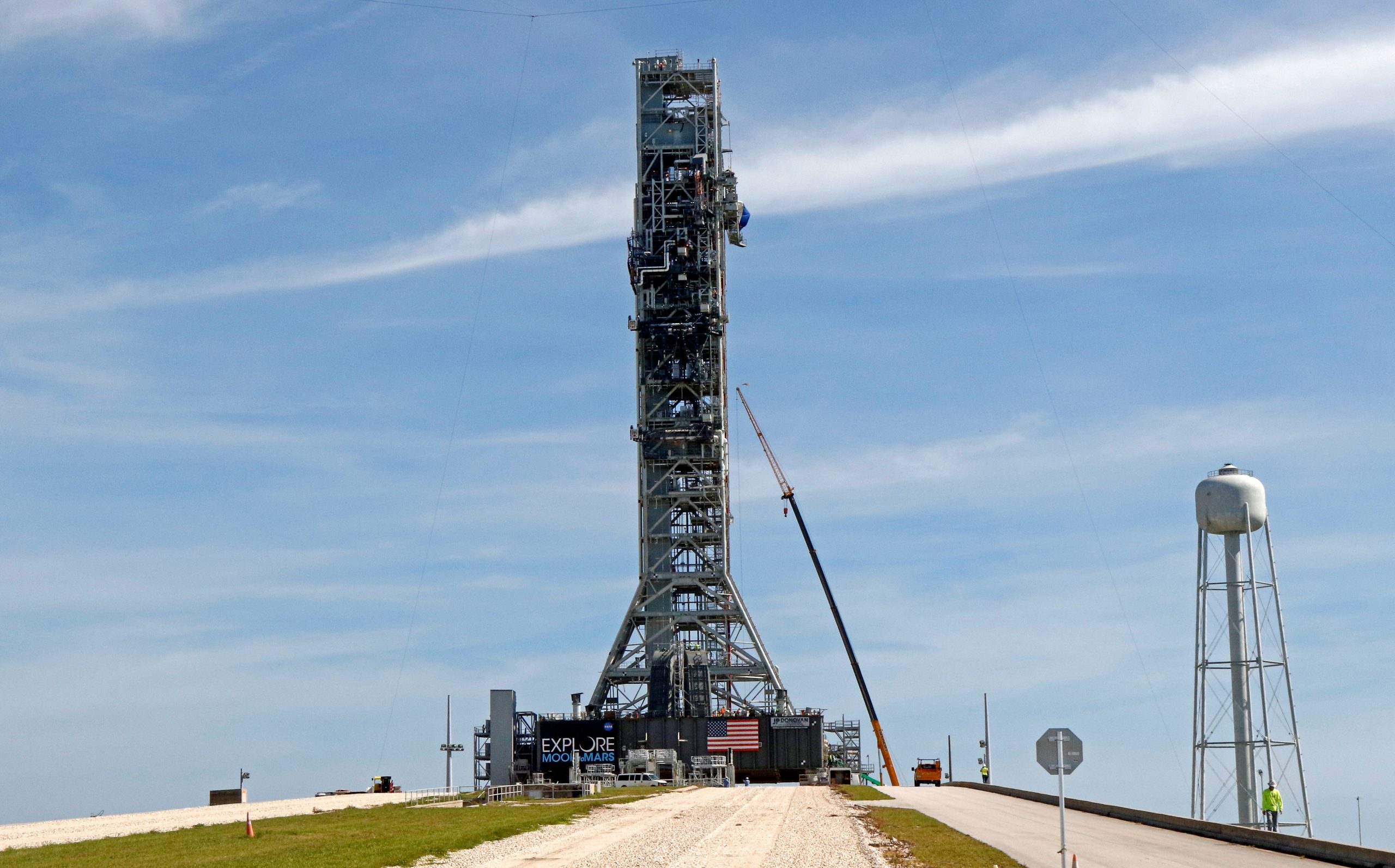
NASA’s deep space exploration rocket built by Boeing briefly ignited all four engines of its behemoth core stage for the first time on Saturday, cutting short a crucial test to advance a years-delayed U.S. government program to return humans to the moon in the next few years.
Mounted in a test facility at NASA’s Stennis Space Center in Mississippi, the Space Launch System’s (SLS) 212-foot tall core stage roared to life at 4:27 p.m. local time (2227 GMT) for just over a minute — well short of the roughly four minutes engineers needed to stay on track for the rocket’s first launch in November this year.
“Today was a good day,” NASA administrator Jim Bridenstine said at a press conference after the test, adding “we got lots of data that we’re going to be able to sort through” to determine if a do-over is needed and whether a November 2021 debut launch date is still possible.
The engine test, the last leg of NASA’s nearly year-long “Green Run” test campaign, was a vital step for the space agency and its top SLS contractor Boeing