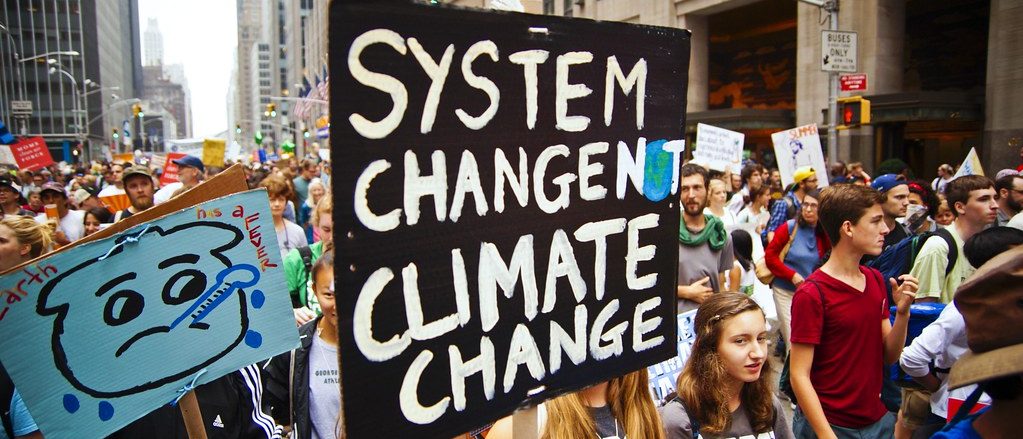
The Climate Left Can’t Defend Its Own Agenda. Conservatives Haven’t Made Them Try
I’ve spent the past week arguing with environmental activists on X about the bipartisan permitting bill. Ask why they’re fighting legislation that independent analysts project would cut emissions and the responses get thin in a hurry. For a movement that has dictated so much of the energy debate, its advocates seem remarkably unprepared for a challenge on their own terms.
Chris Johnson·Nov 23, 2026·5 min read
Sponsored
I’ve spent the past week arguing with environmental activists on X about the bipartisan permitting bill. Ask why they’re fighting legislation that independent analysts project would cut emissions and the responses get thin in a hurry. For a movement that has dictated so much of the energy debate, its advocates seem remarkably unprepared for a challenge on their own terms.
Conservatives deserve some of the blame. We’ve spent decades mocking failed doomsday predictions and private jets at climate conferences. It’s easy material. Meanwhile, the organizations that shape environmental policy have faced far less scrutiny over whether their preferred policies actually accomplish what they promise. We’ve let them off the hook.
Let’s do a thought experiment. Assume climate change is real and catastrophic. Assume cutting human-produced emissions is the best way to fight it. Now judge the environmental Left by that standard.
On Nov. 19, the Senate passed the Bipartisan American Affordability and Jobs Act, 62–33. Sens. Shelley Moore Capito of West Virginia, Sheldon Whitehouse of Rhode Island, Mike Lee of Utah and Martin Heinrich of New Mexico negotiated a deal intended to make it easier to build energy projects and transmission lines. Major environmental groups, including Natural Resources Defense Council (NRDC) and the Sierra Club, opposed it.
key provisions of an earlier version of the bill and projected annual U.S. emissions reductions of 5 million to 148 million metric tons in 2040. That is a wide range, and the study did not evaluate every provision of the final Senate bill. Still, those numbers should matter to people who describe every additional ton of carbon as a threat to the planet.
On a leaked strategy call, Brett Hartl of the Center for Biological Diversity said the goal was “to stop this bill, not to make it better.”
Erik Schlenker-Goodrich of the Western Environmental Law Center argued that the bill “should not be judged just based on a net emissions analysis.”
They have objections theoretically worth considering.
The legislation would narrow judicial review and ease the path for fossil fuel infrastructure as well as renewable projects. Local water quality and wildlife matter. So does the climate cost of keeping America’s permitting system as it is. When an organization calls emissions an existential emergency, it ought to be able to explain how much potential climate benefit it is willing to sacrifice to preserve the rules it prefers.
This is especially glaring for the wind and solar projects these same organizations say we desperately need. Resources for the Future found that wind projects requiring full environmental impact statements spent an average of 43 months in federal review, and solar projects 26. Nearly a third of those solar projects and half the wind projects faced lawsuits. Those figures cover projects undergoing the most extensive review, but they still reveal how long a clean-energy developer can spend securing permission before generating a single watt.
You don’t have to have any love for wind or solar to see that environmentalists have a problem. The red tape they say we need to save the environment can stop the exact kinds of zero-emissions energy they say we need to save the environment.
The same blind spot applies to manufacturing. Factories that can’t be built here get built somewhere else, and often somewhere dirtier. A 2025 analysis found that American manufactured goods are more than twice as carbon-efficient as the world average and about four times as efficient as those made in China. If a proposed American factory is blocked, its customers still need the product. Where does it come from, and what powers the facility that makes it?
Block American production and the demand doesn’t disappear. When that production moves to a dirtier economy, the emissions go overseas, and they grow. Environmentalists who oppose domestic industry should have to reckon with that consequence instead of treating an unbuilt American factory as an environmental victory.
Instead, conservative commentary is full of videos of protesters glued to pavement. The organizations that actually lobby over the rules governing American energy projects would probably prefer we keep posting them. It lets them skip the debate over what their agenda does.
I don’t expect the people who throw paint at priceless artwork to change their minds because I quote an emissions study at them. But there are plenty of Americans who care about the climate and want their country to build things. Conservative commentary has spent too long entertaining people who already agree with us. It ought to give everyone else a reason to listen.
Environmental groups have occupied the high ground on environmental outcomes partly because conservatives have spent years arguing about their sincerity and their predictions. The permitting fight has exposed how much ground we’ve left uncontested. Make them defend the actual effects of the rules they support and the projects they fight. The net is wide open. We should start shooting.
Chris Johnson is the President and Co-Founder of the American Energy Leadership Institute.
The views and opinions expressed in this commentary are those of the author and do not reflect the official position of the Daily Caller News Foundation.
All content created by the Daily Caller News Foundation, an independent and nonpartisan newswire service, is available without charge to any legitimate news publisher that can provide a large audience. All republished articles must include our logo, our reporter’s byline and their DCNF affiliation. For any questions about our guidelines or partnering with us, please contact [email protected].