



Police Get Into A Wrestling Match With A 600 Pound Alligator
In Sarasota County this week, deputies faced a serious challenge — not from criminals, but from a massive, 14-foot alligator weighing around 600 pounds. The dramatic scene unfolded as a team of seven sheriff’s deputies…
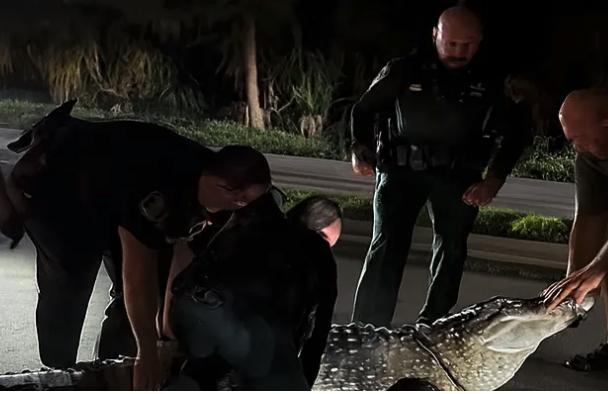
In Sarasota County this week, deputies faced a serious challenge — not from criminals, but from a massive, 14-foot alligator weighing around 600 pounds. The dramatic scene unfolded as a team of seven sheriff’s deputies worked alongside a professional trapper to capture and safely remove the enormous reptile from a local area.
The Sarasota County Sheriff’s Office released video footage of the capture, which showed the intense effort involved. The trapper managed to secure the alligator’s powerful jaws using a clamp device, while the deputies quickly moved in to pin down its legs and thick, muscular tail. Working together, the team was eventually able to hoist the gator into the back of a pickup truck.
The removal took place just as alligator activity in Florida starts to slow down. According to the Florida Fish and Wildlife Commission, alligators become less active when temperatures drop. They stop eating when the weather dips below 70 degrees Fahrenheit and enter a dormant or very low-activity state once temperatures fall under 55 degrees.
While it’s not unusual to see alligator sightings during warmer months in Florida, it is a bit less common this late in the year. Daytime temperatures in Sarasota County have recently stayed in the low 70s, which is right around the point when these cold-blooded animals begin to seek out warmth and slow down.
Reptiles like alligators rely on the sun to regulate their body heat. This is also seen in other Florida reptiles, like iguanas, which are known to become “cold-stunned” during winter snaps. In very cold weather, iguanas have been spotted falling from trees, frozen in place from the sudden temperature drop — a strange but common sight during Florida winters.
The large alligator in this case was not injured and, according to the sheriff’s office, was safely relocated to an alligator farm. This type of farm allows the animal to be housed in a controlled environment where it can live without posing a risk to people or pets.
Incidents like this serve as a reminder that wildlife in Florida, especially large reptiles, can be unpredictable. Authorities encourage residents to call professionals and not attempt to approach or remove wild animals on their own.