



Senate Approves ‘FIGHT China Act’ To Halt US Funds Fueling China’s Arsenal
The Senate passed two major pieces of legislation this week targeting U.S. technology and security ties with China, limiting the flow of advanced research and federal funding to Beijing-linked companies. The new…
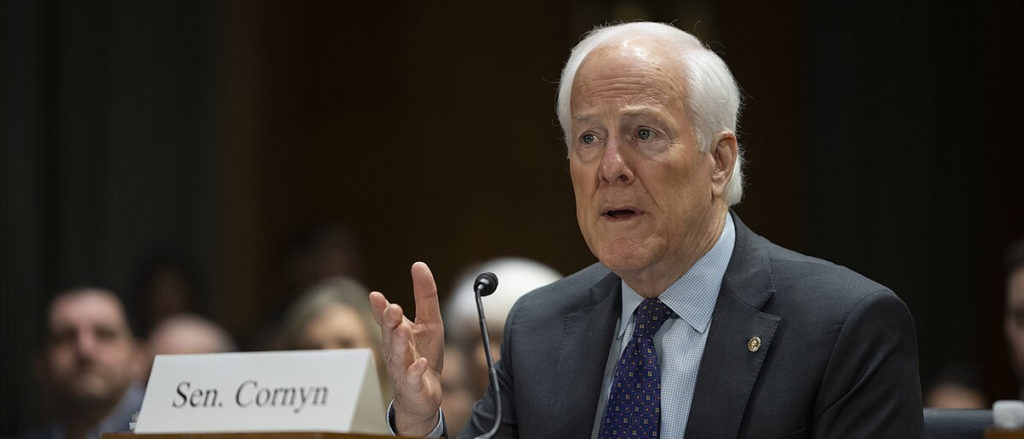

The Senate passed two major pieces of legislation this week targeting U.S. technology and security ties with China, limiting the flow of advanced research and federal funding to Beijing-linked companies.
The new legislation comes as part of the National Defense Authorization Act (NDAA), an annual defense policy bill that includes $879 billion in funding for the U.S. military. With their bipartisan passage in the Senate Thursday night, Republican Texas Sen. John Cornyn’s “FIGHT China Act of 2025” and Republican Tennessee Sen. Bill Hagerty’s “Bio-Secure Act” are poised to clamp down on perceived vulnerabilities in U.S.-China security.
Senator Cornyn’s “Foreign Investment Guardrails to Help Thwart (FIGHT) China Act of 2025” establishes new guardrails to stop U.S. money and expertise from advancing China’s high-tech military programs, including advanced chips, artificial intelligence, quantum computing, hypersonic weapons, and supercomputers. The bill passed on a bipartisan basis.
“This is a transparency bill that will give us some insight into the amount of money being invested in the People’s Republic of China, and the extent to which those investment dollars are directly flowing into the arsenal of our greatest strategic adversary, the People’s Republic of China,” Cornyn said on the Senate floor on Thursday. “The United States is the most important foreign source of investment to semiconductors, quantum computing, and AI in China because of China’s military fusion strategy. These investments are directly bolstering the People’s Liberation Army.”
The bill empowers federal agencies to block or penalize transactions that funnel American capital or expertise into key Chinese sectors. It also mandates regular reporting to Congress on U.S. investment in Beijing’s tech industries.
“We should be developing the most sensitive, cutting-edge technologies right here at home, rather than funding their development in countries that do not share our values,” added Democratic Massachusetts Sen. Elizabeth Warren. “ would protect our national security and help ensure that American ingenuity, innovation, and investment do not end up turbocharging these countries’ advancements in fields like artificial intelligence, quantum computing, and microelectronics.”