



SHANKER A. SINGHAM And JAMES CARTER: Stay The Trump Course On Trade Deals
President Trump announced a new round of tariffs on Japan, South Korea, Malaysia, Kazakhstan, South Africa, Laos, and Myanmar earlier this week. Watching these developments, all part of the emerging “Trump Tariff…
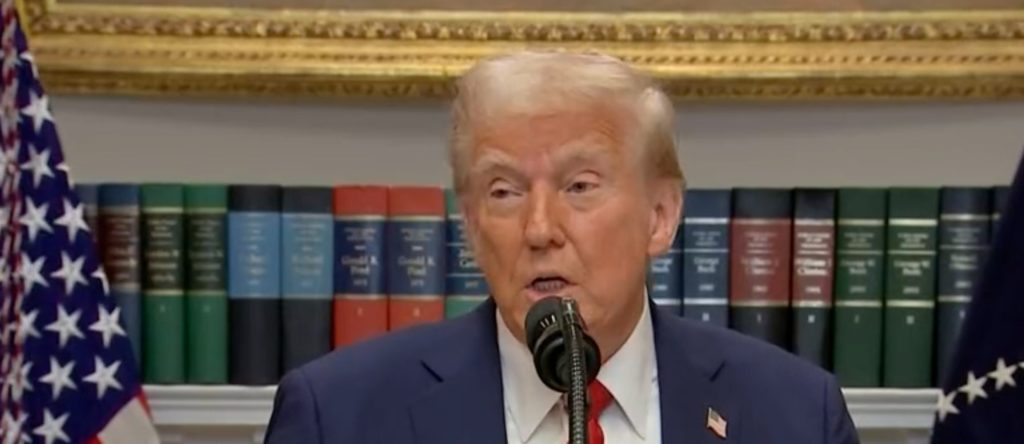

President Trump announced a new round of tariffs on Japan, South Korea, Malaysia, Kazakhstan, South Africa, Laos, and Myanmar earlier this week. Watching these developments, all part of the emerging “Trump Tariff Doctrine,” feels like an emotional rollercoaster.
Indeed, the week’s tariff news is likely to incense those who simply want U.S. trade policy to return to “normal.” Critics will doubtless point to increasing costs for consumers and damage to supply chains.
Yes, tariffs may, in the short run, produce unwanted effects. But stakeholders must look to the long run and the Trump Administration’s long game.
The administration is right to point out that countries are suddenly and uncharacteristically agreeing to negotiate matters that were once considered nonnegotiable. Vietnam has, for example, accepted the principle that transshipped goods will have a much higher tariff than goods of Vietnamese origin. This is an implicit recognition by Vietnam that violations of rules of origin are anti-competitive market distortions (ACMDs). That blatant lack of recognition was unchallenged… until now.
Meanwhile, the European Union’s tradition of imposing restrictive and burdensome regulations—under the guise of so-called “sanitary and phytosanitary” concerns—has long blocked American exports. That deliberate effort to disadvantage the U.S. was unchallenged… until now.
Prior U.S. efforts to discourage these and other non-tariff trade barriers did not work. It is equally clear that President Trump’s massive retaliation for other countries’ ACMDs has at least a chance of forcing those countries to negotiate a reduction of their barriers—especially those that lurk dangerously beneath the surface.