



Sinema Smacks Down Dems’ Dream of Nuking the Filibuster – And Then Some
If Democrats were frustrated with Sen. Kyrsten Sinema’s (D-Ariz.) refusal to nix the legislative filibuster thus far, they’re really not going to like her latest comments. During an event at the McConnell Center, the…
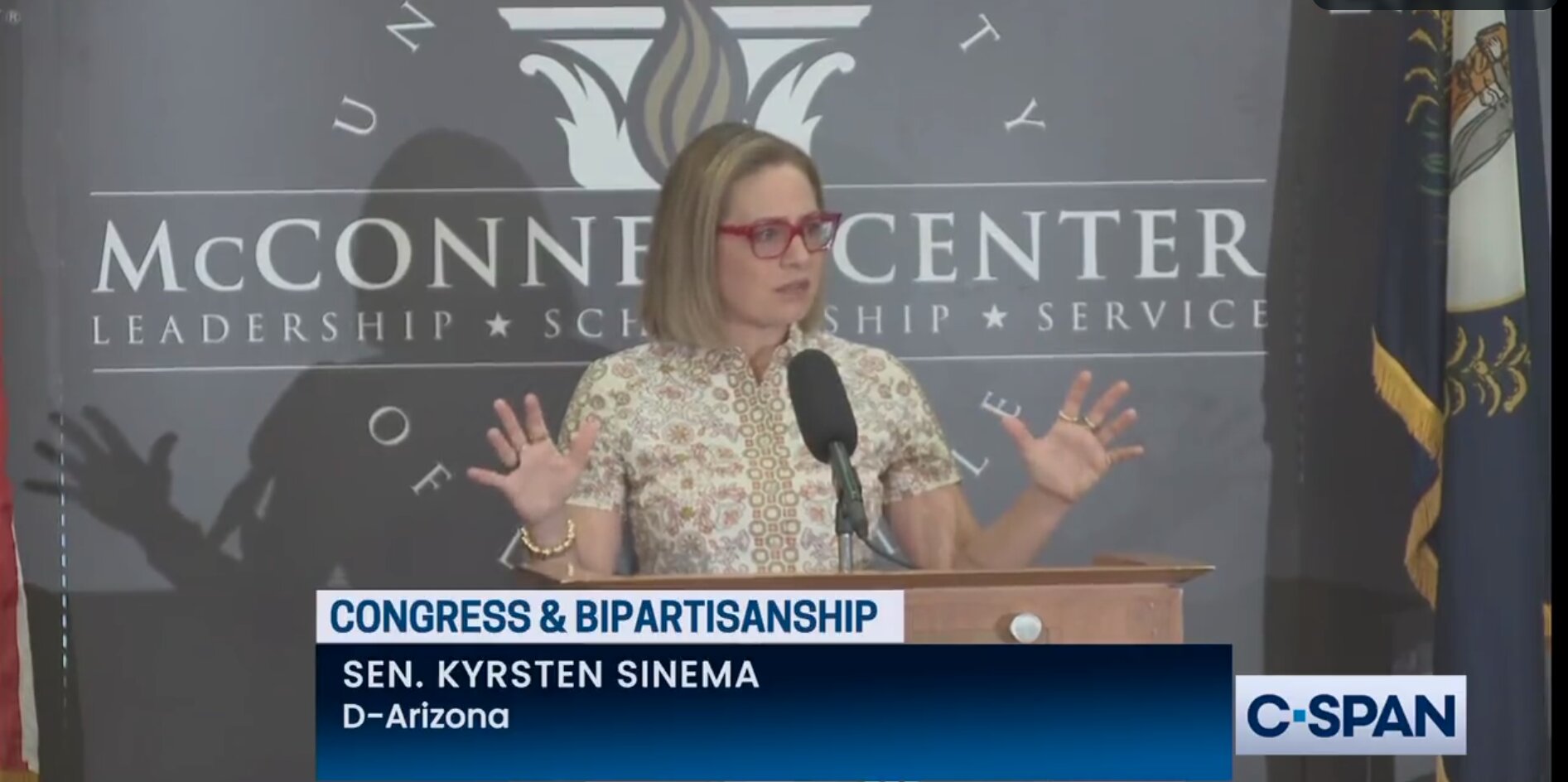
If Democrats were frustrated with Sen. Kyrsten Sinema’s (D-Ariz.) refusal to nix the legislative filibuster thus far, they’re really not going to like her latest comments.
During an event at the McConnell Center, the Arizona senator spoke in defense of the filibuster — a measure that requires 60 votes for most legislation to pass.
She noted that the House represents the “passions in the moment,” which tend to be “a little bit over-eager.”
“The Senate’s job is to cool that passion,” she explained. “The Senate was designed to be a place that moves slowly. To cool down those passions. To think more strategically and long-term about the legislation before us. And more importantly, it was designed to require comity, to require people to compromise and work together.”
Watch the video below:
Those comments alone may be enough to vex Democrats.
But she did not stop there.
Sinema went on to express what she called an “incredibly unpopular” view.
“Not only am I committed to the 60 vote threshold, I have an incredibly unpopular view. I actually think we should restore the 60-vote threshold for the areas in which it has been eliminated already,” she said, adding, “Not everyone likes that. Because it would make it harder for us to confirm judges. It would make it harder for us to confirm executive appointments in each administration. But I believe if we did restore it, we would see more of that middle ground in all of our governance.”
The Senate has already eliminated the filibuster for judicial appointments and executive branch appointments.
Democrats, and Republicans, keep falling into the trap of wanting to get legislation passed right this moment because, at least for right now, they are convinced that they are right. So it is very tempting to consider getting rid of the filibuster in order to pass agendas in their purest form without influence from the other party. And it’s tempting to nominate partisan appointees to high-profile positions.