



Biden’s Pick for Top US Civil Rights Lawyer, Kristen Clarke, Faces Fraught Task
President Joe Biden’s nominee to lead the Justice Department’s Civil Rights Division, Kristen Clarke, is poised to take on the role at a fraught time in American history. Clarke will face a Senate hearing this week as…
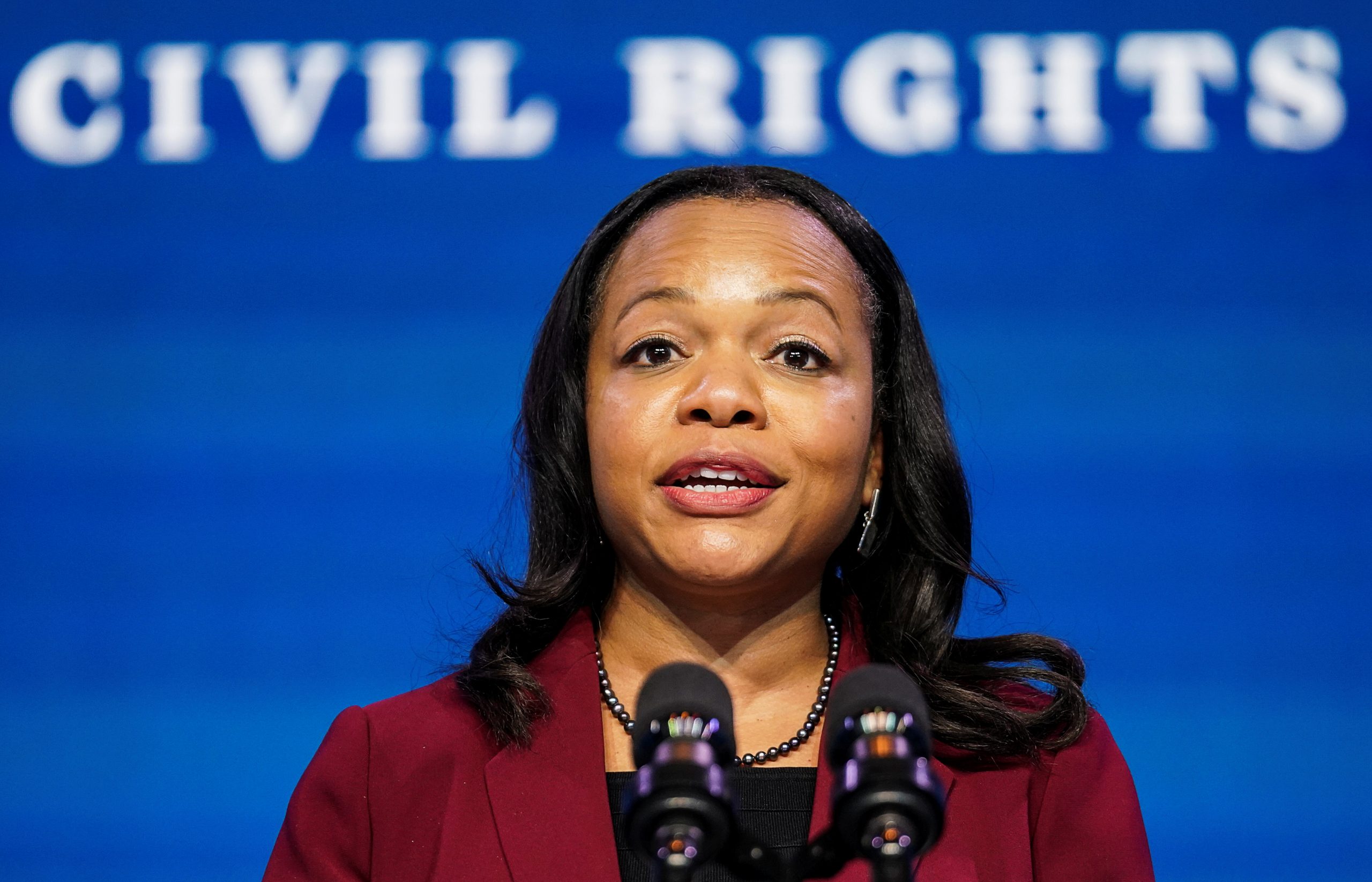
President Joe Biden’s nominee to lead the Justice Department’s Civil Rights Division, Kristen Clarke, is poised to take on the role at a fraught time in American history.
Clarke will face a Senate hearing this week as hate crimes against Asian Americans are on the rise, Republican-led state legislatures are advancing bills that voting-rights groups say would disenfranchise Black voters and former Minneapolis police officer Derek Chauvin is on trial facing a charge of murdering a Black man, George Floyd.
Clarke will appear before the Senate Judiciary Committee on Wednesday alongside Todd Kim, Biden’s nominee to lead the department’s Environmental and Natural Resources Division.
Kim, like Clarke, previously worked in the Justice Department division he is now nominated to lead. Most recently, he served as a deputy counsel in the U.S. Department of Energy.
Former colleagues say Clarke’s experience, both as a Justice Department lawyer and as executive director of a large civil rights organization, make her qualified to tackle the challenge.
“If you were inventing a nominee from scratch… you’d come up with Kristen or someone very, very close,” said Justin Levitt, a former colleague who teaches law at Loyola Law School.
Clarke has spent a good chunk of her career advocating for voting rights issues.
Ernest Montgomery, a councilman in Calera, Alabama, said he was impressed by Clarke when he met her in 2010.
Montgomery was an intervener in Shelby County v. Holder, a 2010 voting rights case arising from a dispute over whether states and counties must seek preclearance, or approval, from the federal government before re-drawing voting districts. He got involved as a third-party advocate in the litigation after the city re-drew his district’s lines, diluting the Black vote.