



Victor Davis Hanson Details Close Call After Cancer Surgery
Hoover Institution Senior Fellow Victor Davis Hanson described his close call during cancer surgery in a Monday post on X. Hanson told the audience of his podcast, “Victor Davis Hanson: In His Own Words,” on Dec. 26…
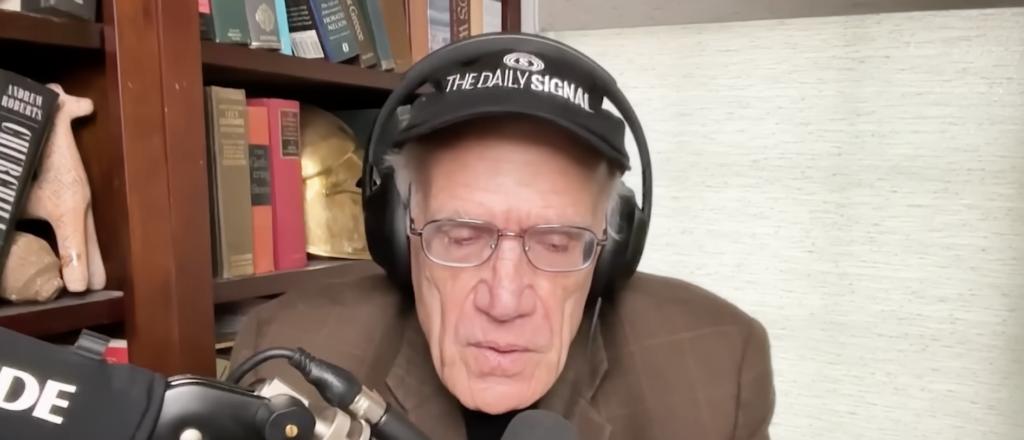

Hoover Institution Senior Fellow Victor Davis Hanson described his close call during cancer surgery in a Monday post on X.
Hanson told the audience of his podcast, “Victor Davis Hanson: In His Own Words,” on Dec. 26 that he would be having an operation to address a “serious” medical condition that doctors were unable to diagnose at the time. Hanson went into detail about the complications resulting from the initial medical procedure that removed the cancerous tumor.
“I want again to thank everyone for the wonderful expressions of concern and reassurance that I have received from listeners and readers. In response to inquiries, and some quite detailed questions and advice, here is a brief update concerning my current temporary absence,” Hanson posted. “As I wrote, the removal of a cancerous lung mucinous adenoma carcinoma along with the lower right lung lobe roughly a month ago was successful. But a post-op aneurism/bleed soon developed.”
“That required a quick second reentry operation into the lung to stop the hemorrhaging—adding considerable time under anesthesia and requiring about 5 blood transfusions,” Hanson continued. “As a result, over the last 30 days, I developed low red blood counts, fatigue, and bouts of arterial fibrillation. All that has sort of slowed my recovery.”
Hanson underwent the operation on Dec. 30, during which the tumor was removed, according to a Jan. 3 post on X by former Secretary of State Condoleezza Rice. Hanson said there was a chance of the cancer returning, despite some encouraging readings from scans.
“This type of nonsmoker’s lung cancer has a rare genetic/mutation profile. And it seems to recur about 40 percent of the time in the general lung area—even when as in my case the removed and biopsied lymph nodes, along with adjacent vascular/pleural samples, were all negative. And the pre-op PET scan show no signs of malignancy outside the lower right lung lobe,” Hanson posted.