



WALKER WILDMON: A Vacancy That Could Redefine The Supreme Court
President Donald Trump’s recent mention of Republican Texas Sen. Ted Cruz as a potential Supreme Court nominee as well as current speculation that Justice Samuel Alito may retire this year has renewed focus on when the…
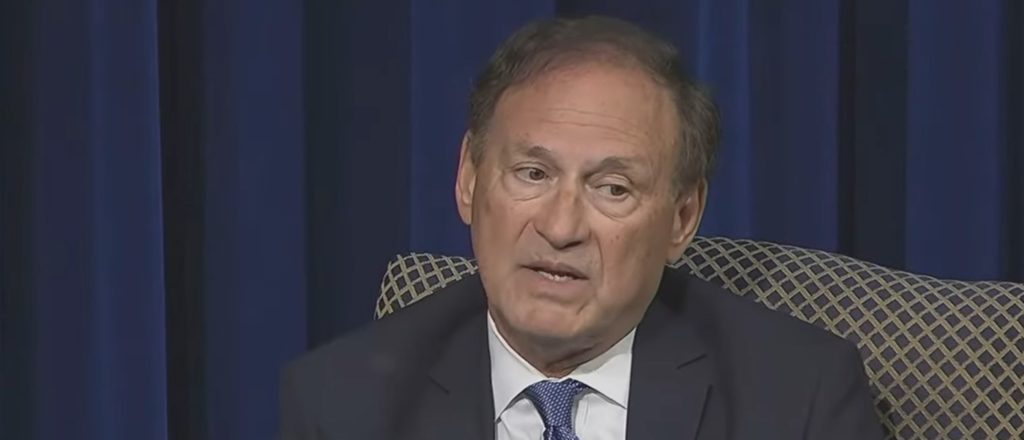

President Donald Trump’s recent mention of Republican Texas Sen. Ted Cruz as a potential Supreme Court nominee as well as current speculation that Justice Samuel Alito may retire this year has renewed focus on when the next Supreme Court vacancy might occur and what it could mean for the Court.
The Supreme Court is often described in terms of its outcomes, but far less attention is paid to the philosophies that produce those outcomes.
Today’s Court operates less like a rigid 6-3 Court with six conservatives and three liberals, and more like a 2-3-1-3 Court. Seen through this structure, the “2” first votes are the most reliably constitutional votes of Justice Clarence Thomas and Justice Alito. Therefore, the replacement of either of these anchor Justices would mark a turning point — one that could reshape the Court and possibly jeopardize the ability of constitutionalists to continue securing major Supreme Court victories on issues central to American justice.
Thomas and Alito consistently exercise a constitutionalist and originalist approach, interpreting the Constitution based on its original public meaning at the time of adoption. The next “3” votes are Justices Brett Kavanaugh, Amy Coney Barrett and Neil Gorsuch. Of course, they are unique, but most often are found between the Thomas/Alito block and the vote of the Chief.
As a group, they have historically not been as reliable as Thomas and Alito when it comes to producing strong constitutionalist rulings. Of note is Gorsuch’s opinion in Bostock v. Clayton County, interpreting discrimination on the basis of sex to include sexual orientation and gender identity, an interpretation not rooted in the text of Title VII. Chief Justice John Roberts often functions as the Court’s sixth vote but at times becomes the fifth “swing vote.” Sometimes he sides with the constitutionalists, and sometimes not. The final “3” votes are Justices Elena Kagan, Sonia Sotomayor and Ketanji Brown Jackson. They form a reliably aligned block focused on an activist approach to the Constitution. They often vote together on major cases with moral, social and/or political impact.