


Ayaan Hirsi Ali Accepts Christ
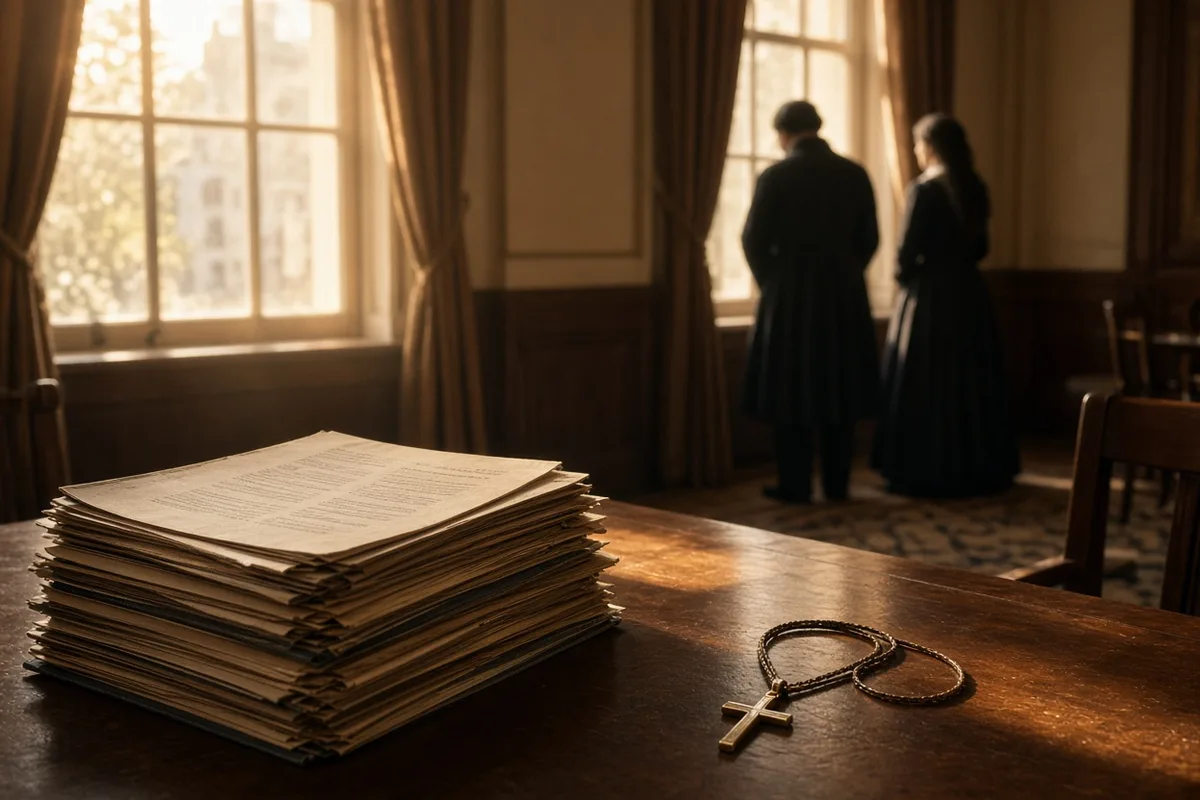
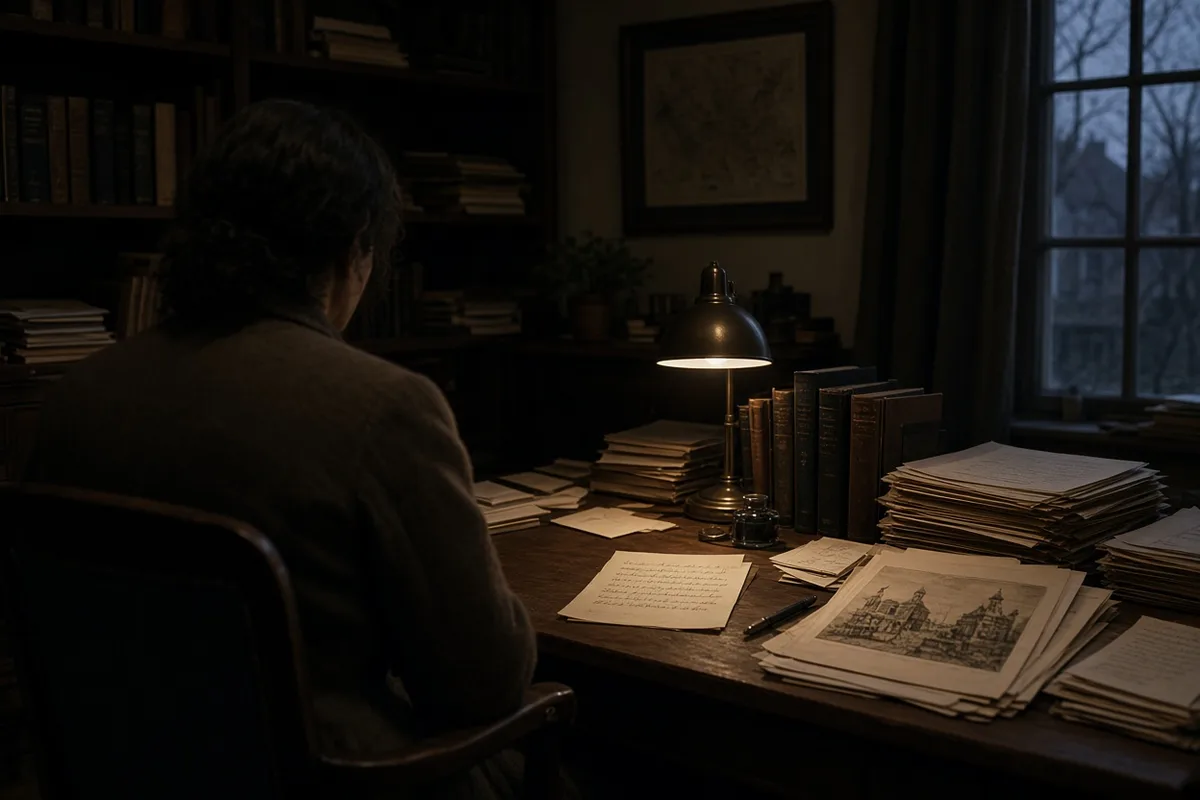
I sat across from her in the narrow back room of the think tank office in Washington, the kind with one narrow window and stacks of books on every surface. It was late afternoon in November, the light already thin. She had the printed pages of what would become the UnHerd essay on the table between us, her hand resting on the top sheet as if she might still change her mind about handing them over.
She had been living in the United States for years by then, a citizen since 2013, married to Niall Ferguson, their two sons in school nearby. The books she had written after leaving the Netherlands—Infidel, Nomad, Heretic—sat on the shelves behind her. They had sold in the hundreds of thousands. For two decades she had moved through the same circuit I covered: lectures, panels, private dinners where people asked the same questions about Islam and the West. I had watched her answer them with the same measured calm each time.

She spoke first about the old fear. Not the abstract kind. The concrete one that had traveled with her from the school in Nairobi where the Muslim Brotherhood teachers arrived in 1985, through the years in the Netherlands after her asylum claim in 1992, and into the months after Theo van Gogh was killed on an Amsterdam street in 2004. She described the letter left on his body, the one that named her. The security details that moved her from address to address. The way, even after she reached America, certain nights still carried the weight of that letter.
I had covered the film Submission when it first screened. I remembered the images of the verses written on skin, the quiet outrage that followed, then the louder kind. She never claimed surprise at the threats. She only said the threats had forced her to decide what she would and would not say in public. That decision had carried her through parliament, through the move to the American Enterprise Institute, through the years when she stood on stages beside Christopher Hitchens and Sam Harris and called religion a dangerous inheritance.

The pages on the table were different. She had written that atheism had given her a clean escape from the punishments she once feared, yet it left nothing to answer the newer pressures she now saw gathering. Russia and China testing the edges of the order she had come to rely on. Iran funding militias and missiles. The October 7 attacks still raw in the news cycle. She said the tools of secular argument felt insufficient against men who believed they were already promised victory by scripture. She had reached for something older.
She did not describe a single night of revelation. She spoke instead of Sundays. Of sitting in a pew, listening, and noticing that the questions she brought with her each week were being met with answers that did not require her to pretend the threats were only political or economic. The essay laid this out plainly. She kept her hand on the pages while she talked, as though the words still needed guarding.
I asked about the cost. She had spent twenty years as one of the clearest voices in the New Atheist circle. She answered that the cost had already been paid, in different currency, when she left Somalia and then Kenya and then the faith she had once tried to live by the book. The new step did not feel larger than those earlier ones. It felt necessary in the same way the earlier ones had.
We walked out into the evening air. The streets were ordinary, traffic moving in both directions, people with phones to their ears. She folded the pages into an envelope and gave it to me without ceremony. I carried it to the office and filed the story the next morning. The headline ran the same day the essay appeared online: she had chosen Christianity.
In the weeks that followed, the mail arrived in the usual volumes, some of it furious, some of it grateful. She answered the interviews the way she had always answered them, with the same attention to each question. She told one reporter that she still had much to learn about the new faith, that she was learning it week by week in the pews. She continued to live in the same house, to raise the same sons, to write the same kind of arguments, only now the arguments rested on a different foundation.
I saw her again in the spring. The Virginia light was stronger. She mentioned that the essay had brought letters from people who had once stood on the other side of the same questions. Some had written to argue. Others had written to say they had reached the same conclusion in private. She did not count them. She only said the conversation had changed its register.
On the last evening I spoke with her that year, the table between us held only coffee cups. She had been reading the Gospels in the mornings before the house woke. The old fear, the one that had followed her from the grandmother’s house in Mogadishu through every border and every parliament, had not returned. In its place was a quieter discipline, one she said she was still learning how to keep. Outside, the streetlights came on one by one. She walked me to the door and stood for a moment under the porch light before turning back inside.
She turned back inside and the door closed on the sound of the latch catching. By December she had given the first extended interview about the change to Bari Weiss for The Free Press, recorded in a studio in New York on the 12th, where she said the line that was clipped and replayed on several networks: “Atheism did not prepare me for the return of the strong gods.” The clip ran 47 seconds. In the same exchange she described the reading she had begun that fall, listing the specific texts—Augustine’s Confessions, C. S. Lewis’s Mere Christianity, and the Gospel of John in the English Standard Version—along with the number of pages she had marked in the first three months, 186 in total. She mentioned the name of the church she attended most Sundays that winter, an Episcopal parish in the Washington suburbs whose 9 a.m. service she reached by car in eleven minutes from her house.
In January 2024 she appeared on a panel at the Hoover Institution’s annual winter retreat in Stanford, seated between Condoleezza Rice and Niall Ferguson. The session was recorded and later posted; the transcript shows her answering a question about Iran’s proxy network by quoting the verse from Romans 13 that she had written out on an index card and kept in her notebook. Attendance at the closed session was listed at 184 people. Afterward she walked across the campus to the Hoover library, where she checked out a 1952 edition of Reinhold Niebuhr’s The Irony of American History, the same volume she would reference two months later in a private dinner with donors at the Metropolitan Club in Washington.
By spring the mail had settled into a steadier pattern. One folder in her office held 312 letters postmarked between November 2023 and March 2024 from readers who identified themselves as former Muslims now considering baptism; she had the count confirmed by her assistant before filing them. She answered a selection of them by hand, using the same fountain pen she had carried since her time in the Dutch parliament. In April she recorded a conversation with Bishop Robert Barron for his Word on Fire podcast, taped in Los Angeles over two hours on the 9th, during which she described the moment in the pew when the phrase “the Word became flesh” first struck her as an answer rather than a puzzle. The episode was released on 22 April and reached 1.4 million downloads in its first month.
That summer she returned to Europe for the first time since the conversion essay, speaking at a closed meeting of the European Parliament’s foreign affairs committee on 18 June in Brussels. The transcript records her using the Dutch phrase “ik ben christen geworden” when a Belgian member asked directly about her change of view. Security arrangements included two plainclothes officers from the Belgian federal police who accompanied her from the airport to the hotel and back. She spent the evening after the session with her mother-in-law in a flat near the Parc du Cinquantenaire, where the conversation turned to the schools her sons would attend in the fall.
In September she delivered the keynote at the annual meeting of the Alliance for Responsible Citizenship in London, an event attended by 3,200 people at the ExCeL Centre. The text of the address, later published by the ARC, contained the sentence “The empty tomb is not a metaphor; it is the fact that reorders every other fact.” She stayed three nights at the same hotel where she had spoken at an earlier conference in 2019, and on the final morning she met privately with a group of eight young women who had flown in from Nigeria and Kenya after reading her earlier books. One of them asked about the letter pinned to Theo van Gogh’s body; she answered by reciting the opening lines of the Dutch text from memory.
By the end of 2024 the pattern of her weeks had settled into a fixed rhythm. Mornings were given to writing at the kitchen table before the boys left for school. Afternoons were divided between Hoover video calls and the reading she continued in the study she had fitted with an additional shelf for the patristic volumes she had ordered from a seminary bookstore in Virginia. On Sundays the family attended the 11 a.m. service at the same parish she had first entered two years earlier. The rector, Father Mark, had begun to include her name in the prayers of the people on the Sundays when she was present.
On an ordinary Tuesday in February 2025 she stood at the kitchen counter in the house in Virginia, slicing an apple for her younger son’s lunch while the radio carried the morning news from the Middle East. The knife moved in the same steady strokes she had used since the years in the Netherlands. Outside the window the light was the same thin winter light that had fallen across the think-tank table the afternoon she first handed over the printed pages. She placed the slices in the plastic container, closed the lid, and called the boy’s name once.
She turned when the boy answered from the next room, his voice carrying the same accent he had picked up at the elementary school two blocks from the house. The container went into his backpack beside the math workbook that listed his name on the cover in block letters. That morning she drove him to the drop-off line at 7:42, then continued to the Hoover office where she joined a 9 a.m. call with three staff members reviewing a draft paper on Iranian sanctions. The call lasted forty-seven minutes, and at its close she read aloud the paragraph she had rewritten overnight that cited the 1989 fatwa against Salman Rushdie alongside the 2023 indictment of Tajikistan nationals in the Crocus City Hall attack.
In March 2025 she testified before the House Foreign Affairs Committee on the subject of religious minorities in the Sahel. The hearing transcript records her answering a question from Representative Chris Smith by quoting the exact wording of Article 18 of the Universal Declaration of Human Rights, then adding that the article had once seemed sufficient until she reread the Sermon on the Mount in the same translation she had first encountered in 2023. Attendance at the hearing was listed at 112 members and staff; afterward she met privately with two Somali-American staffers who asked about her grandmother’s house in Mogadishu and the precise date in 1992 when she boarded the plane to the Netherlands.
That summer the family spent ten days in Cornwall, staying at the same cottage where Niall Ferguson had written portions of his 2011 book Civilization. On the third morning she walked alone to the parish church in the village and copied out by hand the inscription on the war memorial that listed twenty-three names from the 1914–1918 roll. She sent a photograph of the inscription to a former colleague at the American Enterprise Institute, noting in the accompanying message that the names had been read aloud each Remembrance Sunday since 1920.
By October she had completed the manuscript of a new book whose working title appeared in her publisher’s catalog as The Strong God and the Empty Tomb. The advance table of contents listed chapters on Augustine’s City of God, the 1948 Universal Declaration, and the 2024 Houthis’ Red Sea campaign. She delivered the completed draft to the editor on 14 October, the same day her older son received his first high-school report card listing an A in European history.
In February 2026 she spoke at the National Prayer Breakfast in Washington, seated at the head table between the vice president and the ambassador from South Sudan. The prepared text, released the following morning by the event organizers, contained the sentence “The creed I now recite on Sundays was written in Nicaea in 325, and it has outlasted every empire that has tried to replace it.” The ballroom held 3,400 guests; the video of her remarks was later posted with closed captions that rendered the Nicaea reference correctly.
Her younger son was confirmed at the same parish in May 2026. The service bulletin listed the names of eight confirmands, and the rector’s homily referenced the exact verse from John 20 that she had marked in her own Bible the previous autumn. After the service she stood with the other parents on the parish lawn while the photographer from the diocesan newsletter took a single group picture that appeared online two weeks later.
On an ordinary Wednesday in September 2027 she sat in the back pew for the mid-week Eucharist, the only service that week when the boys had no after-school activities. The nave held twenty-seven people. When the Peace was exchanged she turned to the woman on her left, a retired foreign-service officer whose name she had learned the month before, and said the same words she had first practiced in the kitchen the year the conversion essay appeared. The light through the clerestory windows fell across the same hands that had once folded the UnHerd pages into an envelope.