


Batkid Saves San Francisco
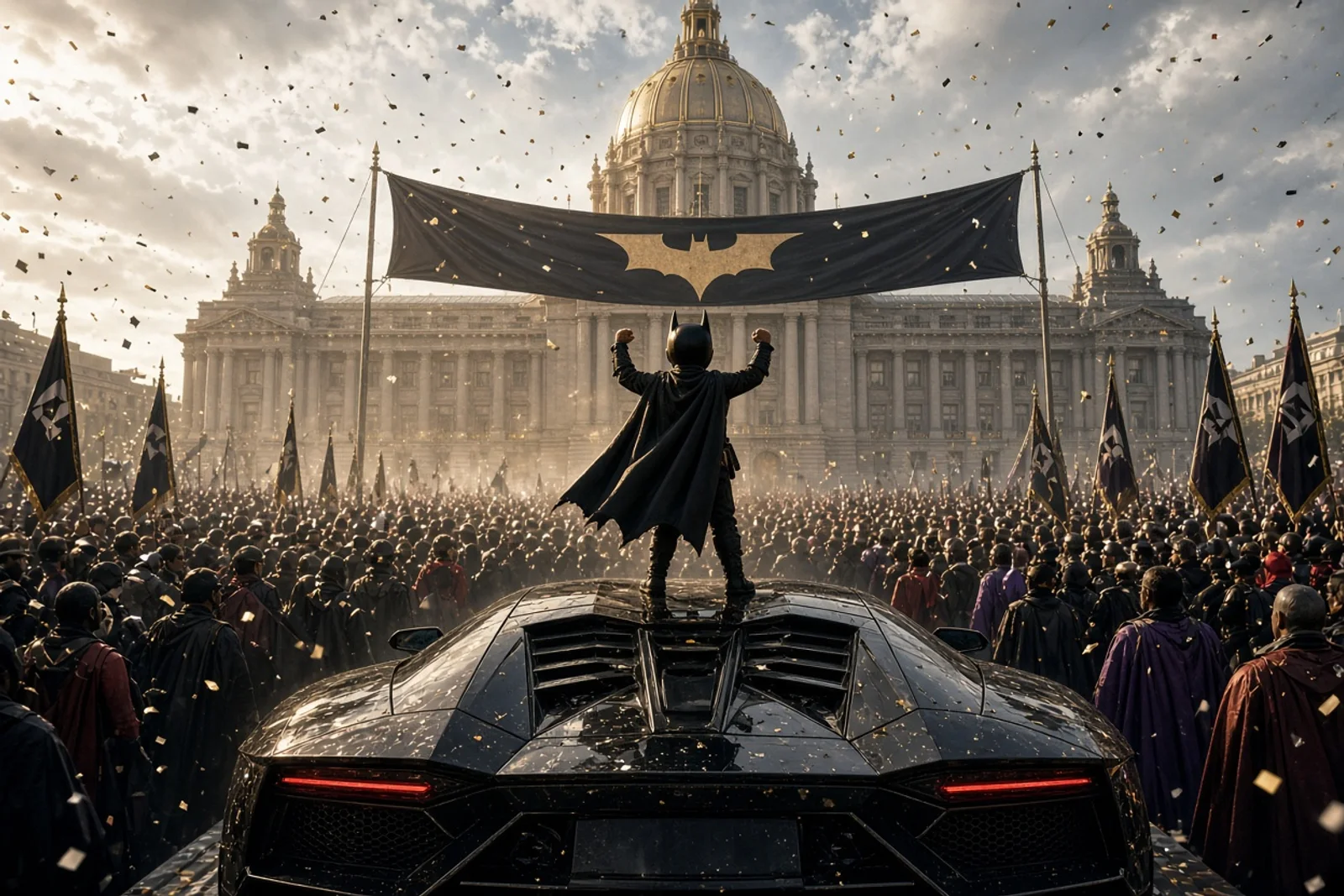
I got there before the sun did, which in San Francisco in November means I got there in fog thick enough to taste, salt and diesel and the smell of coffee from carts that weren't supposed to be set up yet. Somebody handed me a lanyard and a folded map of the route and said, just keep people behind the tape, that's the whole job. I looked at that map for a long time. It ran through the financial district, down toward Union Square, out to a ballpark on the water. It ran through a five-year-old's imagination like it was the only city that had ever existed.
I didn't know Miles Scott. I knew what everyone else knew by then, because the story had gotten around the way these things do before a single camera crew showed up. Diagnosed at eighteen months old. Three years of drugs that kept him alive by poisoning him a little at a time. A mother named Natalie who had watched him through all of it, a father named Nick who would later thank every doctor and nurse who'd stood in that room with them. Somewhere in the middle of that fight, the kid had picked his side. Not a fireman, not an astronaut. Batman. And when the people at Make-A-Wish sat down with him and asked what he wanted, once he was finally in remission, he didn't ask for a toy. He asked to be him.

What I didn't understand until I was standing on that curb at six in the morning was what "playing along" was going to require. Somebody at Make-A-Wish had apparently used the phrase military operation, and by the time I saw the staging area behind Union Square, I believed it. There were two black Lamborghinis fitted with removable Batman decals, parked nose to nose like they were guarding something. There was a costume shop's worth of capes on a rolling rack. There were walkie-talkies clipped to belts up and down the block, more than I'd ever seen outside of an actual emergency. And there were people. Not dozens. Not hundreds. By the time the fog started to lift off Market Street, there were already more people arriving than I could count from where I stood, and the day hadn't even started.
Word was the police department had been in on it from the beginning, Chief Greg Suhr himself agreeing to make the call. That detail stuck with me all morning, because it meant somewhere in this city a switchboard had prepared a broadcast that didn't sound like a joke to the people listening. A five-year-old boy driven across town believing he was going to get fitted for a costume, nothing more than that, while behind him an entire department was rehearsing a manhunt that didn't exist.
I heard it before I understood what I was hearing. A voice, amplified, rolling down the block from somewhere near where the boy would be. The police chief, live, calling for help. Calling for Batkid.
Somewhere behind those barricades a small boy in a mask must have felt the floor of the world tilt sideways, must have understood in one lurch that the trip for a costume was actually a trip into the only story he'd ever wanted to be inside of. I wasn't close enough to see his face in that first moment. I only know that a ripple went through the crowd near me a half second after the call went out, a kind of exhale, like everyone had been holding their breath together without agreeing to.
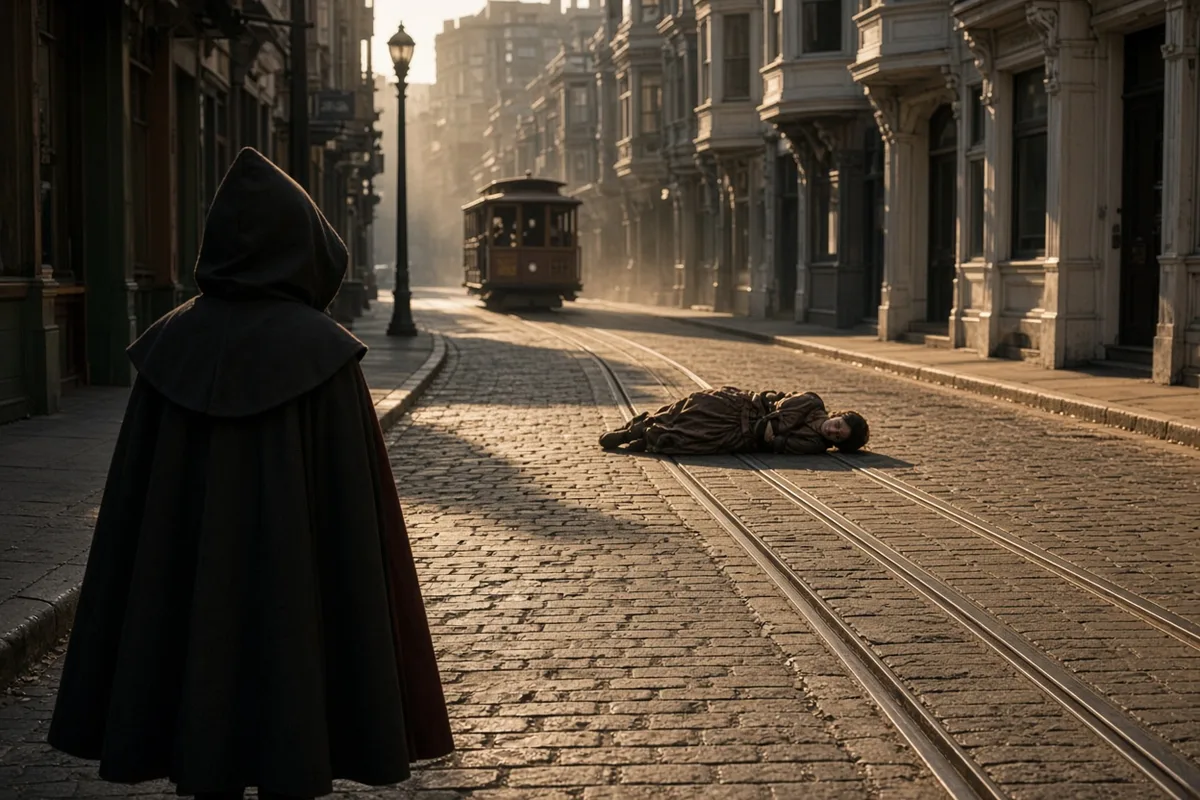
The first crime scene was cable car tracks. A damsel in distress, tied down on the rails, the kind of peril that exists only in movies from decades before this boy was born, and it didn't matter one bit that it was staged, because when Batkid arrived people screamed like it wasn't. I was two blocks down and I could hear it coming before I could see it, a wave of noise rolling up the street ahead of the actual boy, the way thunder gets to you before the flash does anything more than flicker. Then there he was. Small. Caped. Moving with the seriousness of somebody who has trained for this exact moment his whole life, because in his mind, maybe he had.
He freed her. The crowd around the tracks went up like a struck bell, and I remember thinking, absurdly, that I had never in my life seen that many adults cheer for the safety of a stranger who was never actually in danger. It didn't matter. Nothing about that morning ran on the actual stakes. It ran on the several thousand people who had shown up specifically to manufacture stakes worth caring about, for one boy, for one day.
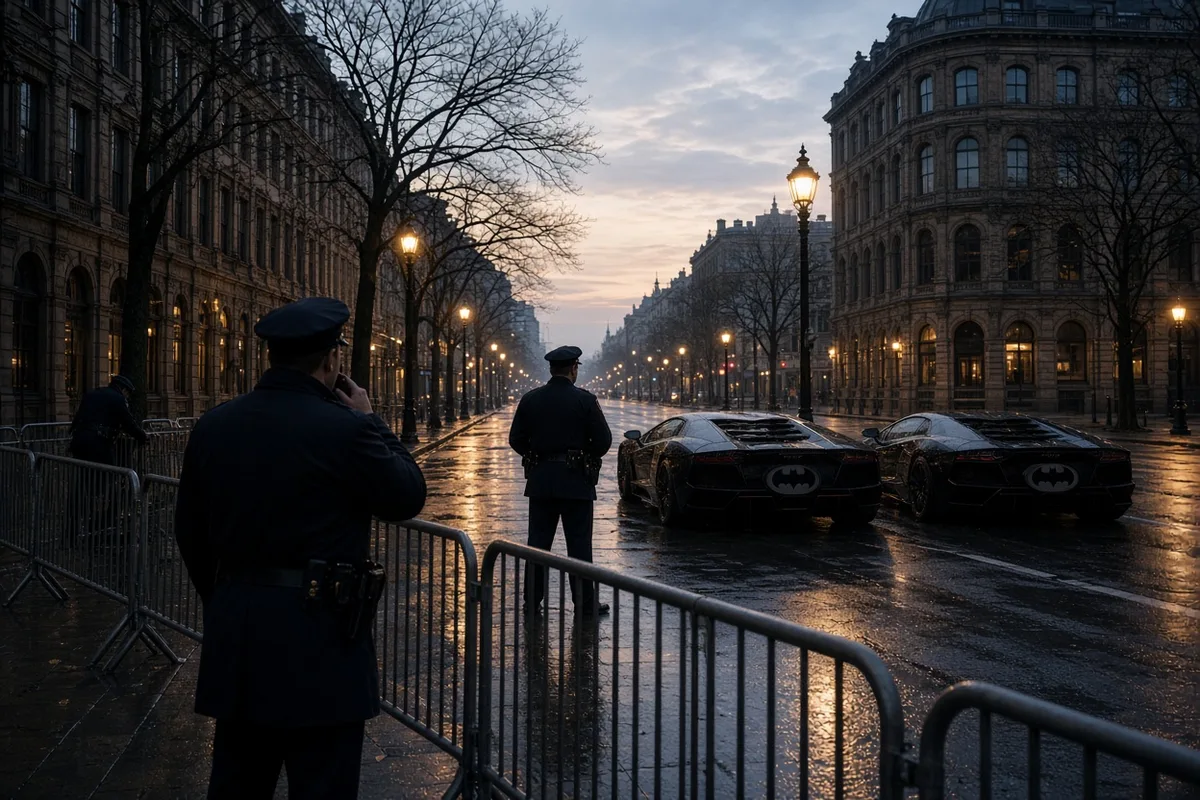
An adult Batman walked beside him for the parts that needed muscle, and the two of them moved from block to block like they were being chased by something, though of course it was the opposite — they were being chased by everyone who wanted to see them succeed. Somewhere in the financial district a robbery had been arranged, complete with a getaway and a capture, and I heard later that the Department of Justice had gone so far as to draft an actual indictment for the villains, the Riddler and the Penguin, on official letterhead, for a crime that had never technically been committed. I laughed out loud when I heard that detail, alone, on the sidewalk, because it told me something about how far up the effort had gone. Not just police captains playing along. Not just costume shops and two borrowed Lamborghinis. Lawyers had written a real document for a crime a five-year-old had invented in a hospital bed.
By midmorning I'd left my post near Union Square to help funnel the crowd toward the financial district, and that's where I first understood the scale of it, because the streets that are usually clogged with commuters and delivery trucks were clogged instead with families. Strollers. Kids in their own capes, homemade ones, the fabric still creased from being folded in a drawer the night before. Office workers leaning out of windows above the street, phones out, not working. A grown man near me had brought a Batman-yellow umbrella just so he'd have something in his hands to hold up when the boy went by. I don't think anyone had told most of these people exactly what to do or where to stand. They had just decided, individually and then collectively, that they were going to be there, and it had turned into something that needed traffic control.
I want to say I saw the moment the boy caught the Riddler, but honestly by then I was too far back in the crowd, on my toes, catching only flashes of black and yellow between shoulders. What I did see was the sound afterward. It came off the crowd in a single roll, like a wave breaking against a jetty all at once instead of gradually, thousands of voices deciding at the same second that justice, of a kind, had been done.
They put him back in one of the Lamborghinis after that, police escort front and back, and I remember watching those cars pull away down the street and thinking that I had never once in my life seen a five-year-old chauffeured like visiting royalty, and that if I had, I would have expected it to look ridiculous. It didn't. It looked exactly like what it was supposed to be. A boy who had spent three years in and out of a hospital was being driven through his own city like the city itself had turned into a hallway lined with people who wanted him to know he'd made it out.
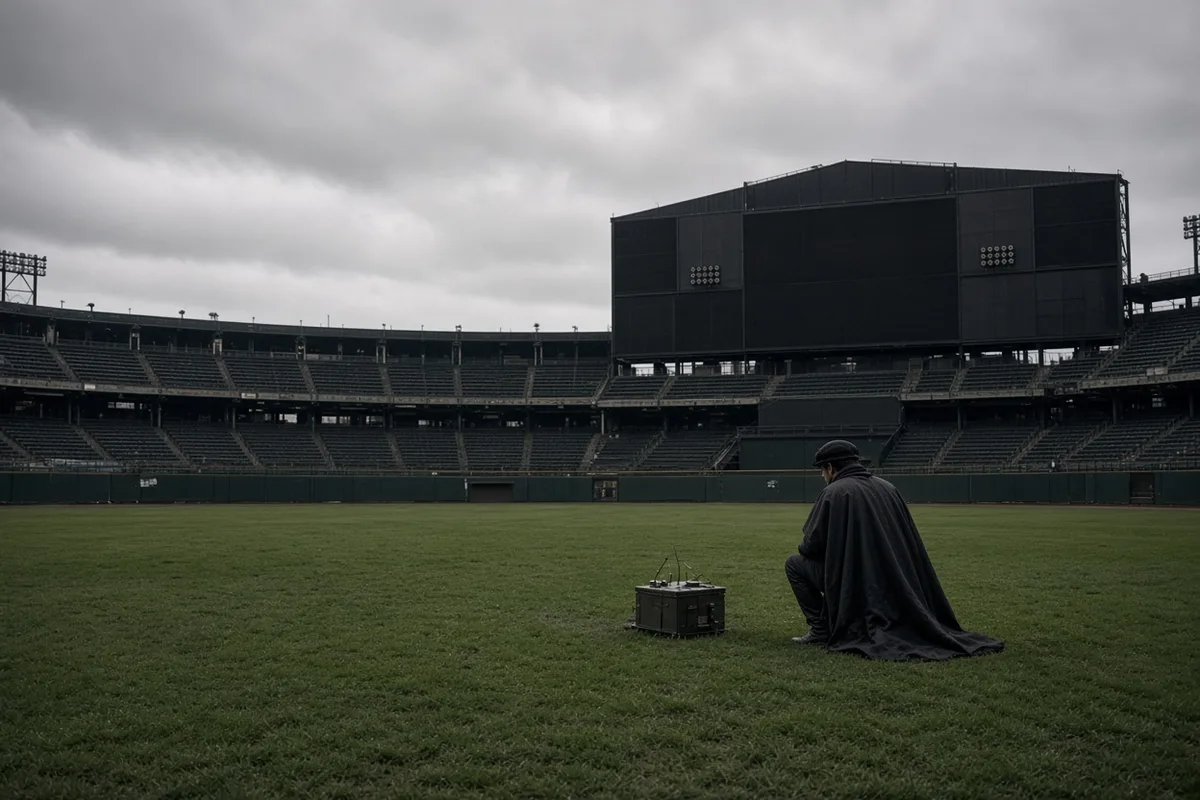
At AT&T Park the story kept going. A fake bomb, planted by the Penguin, threatening the Giants' mascot, and Batkid arriving to disarm it in front of a crowd inside the stadium that had turned out just for this, cheering a fictional crisis with the same lung capacity they'd have used for a ninth-inning home run. I wasn't inside for that part. I heard it from someone with a radio clipped to her jacket, relaying it in bursts the way people do when they're following a game they can't watch. Bomb defused. Mascot safe. She said it the way you'd announce a score, and around us a few strangers actually applauded, standing on a sidewalk, reacting to news about a stunt none of us could see, because by that point in the day it didn't matter whether you were close enough to witness it. Everyone in the city had opted into the same plot.
Somewhere in there, unnoticed by most of us on the ground until later, the White House had weighed in. A tweet went out telling Batkid to go get them. And a video arrived, recorded, the President himself saying way to go, Miles, way to save Gotham, using the boy's real name inside the fiction like he understood exactly how these two things — the disease and the day — were the same story wearing different capes. I heard about it secondhand, standing near a barricade with cold hands, and it struck me that a boy who spent a chunk of his short life in rooms that smelled like antiseptic had, for one afternoon, become someone the most powerful man in the country wanted to speak to directly.
By the time the light started going gray again in the late afternoon, the way it does early in November, the crowd had pulled itself toward Union Square for whatever was going to happen last. I got there ahead of the worst of it and still couldn't find a clear line of sight. People were stacked along the edges of the square the way I imagine they stack for parades, except nobody had scheduled this the way a parade gets scheduled months in advance with permits and marching bands. This had assembled itself out of pledges, ten thousand of them and more, ordinary people who had signed up online to be extras in somebody else's rescue.
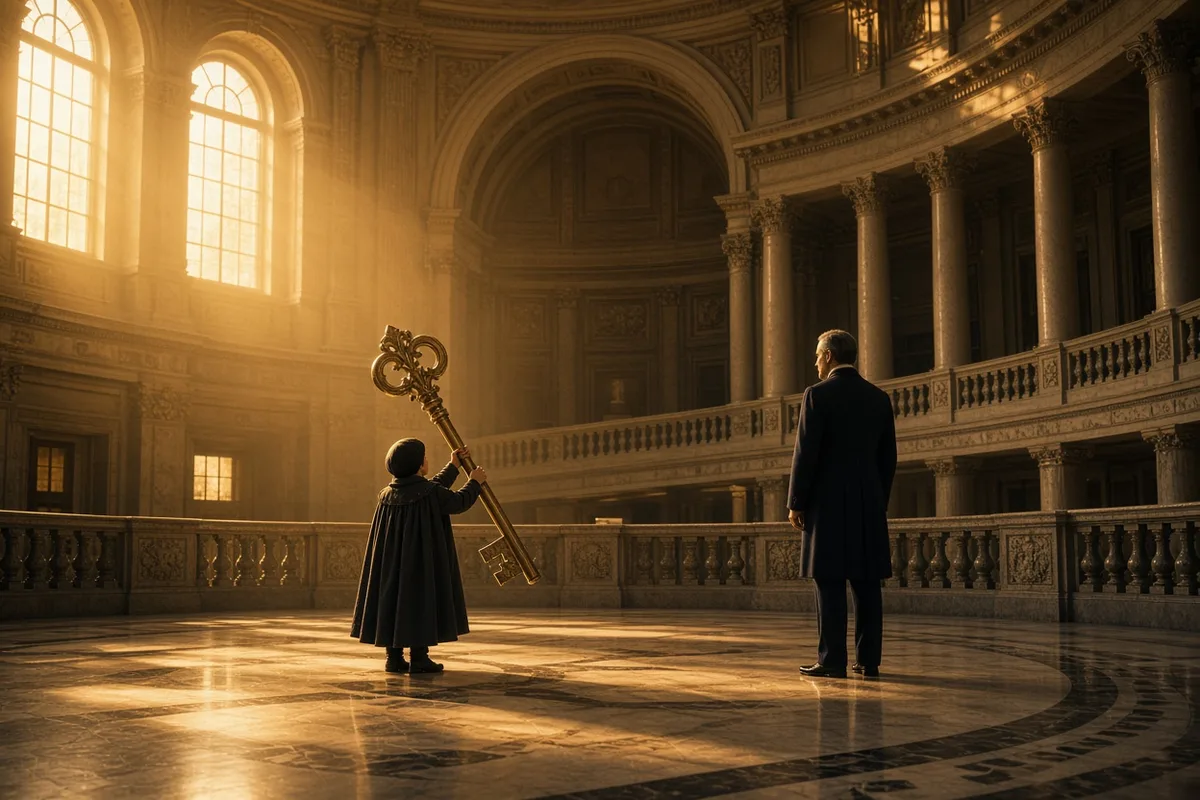
Mayor Ed Lee was there, and at some point in that square he gave the boy a key to the city. I couldn't hear the words exchanged. I could see the shape of it, an adult in a suit bending down slightly, a small figure in a cape and cowl accepting something ceremonial with both hands, the way kids do when they sense an object matters even if they don't fully know why. Around them, the crowd had gone quiet in patches and loud in others, the way big groups do when they're trying to listen and cheer at the same time and can't quite manage both.
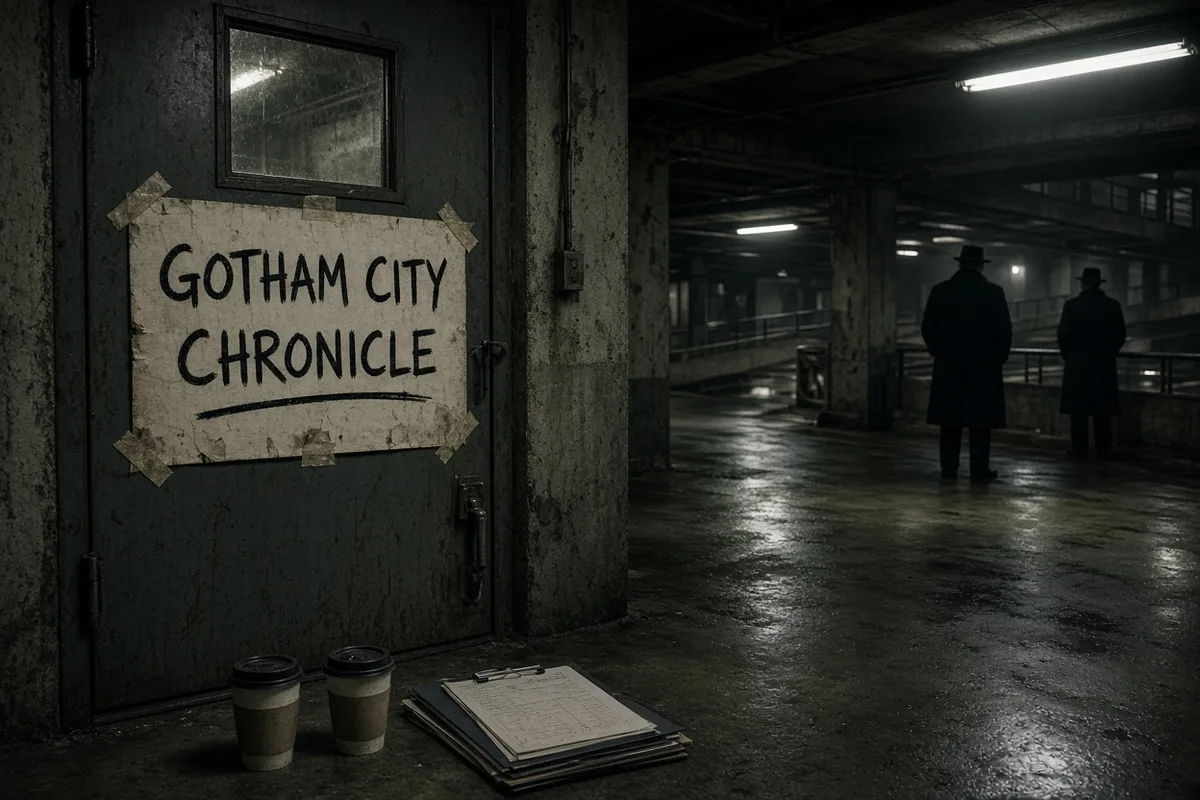
I found out afterward that a local paper had remade its own front page for the day, renaming itself after the fictional city the boy had been fighting to save, and that felt, once I saw it, like the last piece clicking into a machine that had been built entirely out of goodwill and borrowed props. A newspaper doesn't change its own name for just anyone. It does it for a five-year-old who spent three years absorbing treatments meant to kill something faster than it could kill him, and who came out the other side wanting, more than anything else, to be someone who saves people instead of someone who has to be saved.
I keep coming back to the number, because I still don't fully trust it even though I watched a fraction of it happen with my own eyes. Something like twenty thousand people, by some counts, turned an entire city into a set for one boy's afternoon. Seven thousand by other counts, depending on who was measuring and when. I don't think anyone will ever settle on the exact figure, and I don't think it matters. I stood in the middle of a slice of it, one street, one square, and it was already more than I could see all at once, so multiplying that across the whole route was like trying to hold water in two open hands.
Later I heard his mother had put out a statement calling the day a celebration, and that it marked the end of putting toxic drugs into her son's body, a sentence I read twice because of how plainly it laid the whole thing bare. All the capes and the borrowed sports cars and the indictment on Justice Department letterhead had been standing in for something much smaller and much heavier, a family closing a door they'd been forced to leave open for three years, finally allowed to shut it behind them.
I went home that night with a lanyard still around my neck and cold hands and no real memory of eating anything since breakfast, and for a long time afterward I'd see a kid in a homemade cape at a grocery store or a bus stop and think of that morning, the fog on Market Street, the sound of a police chief's voice calling out over loudspeakers for a hero who was, in fact, on his way. The boy went home too, presumably to a bed that didn't smell like a hospital anymore, in a city that had spent one entire day agreeing, without much explanation needed, that a five-year-old who had already survived the worst thing most of us will ever face deserved to spend a single afternoon believing he was the one doing the saving.