


Bob Dylan Embraces Messiah
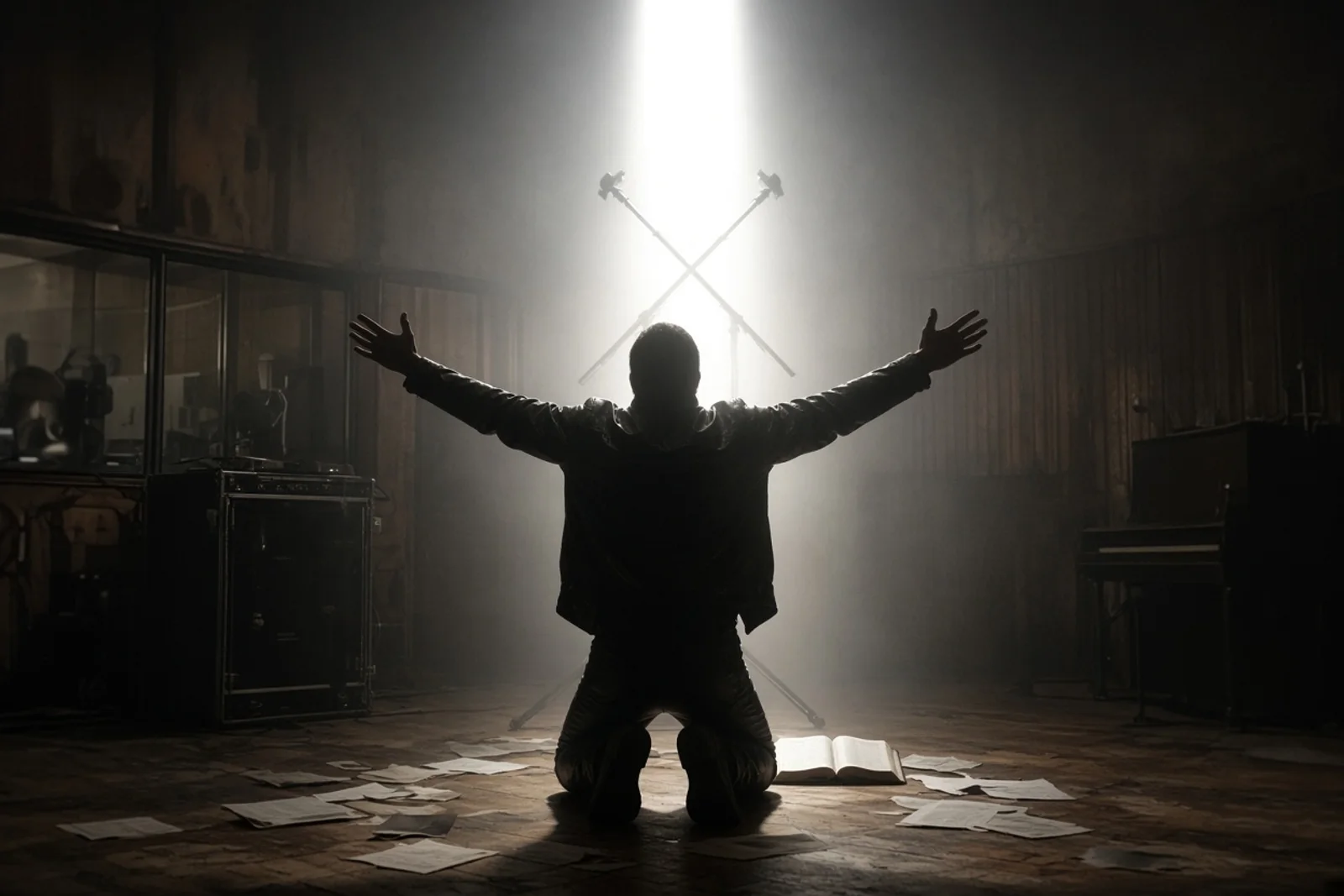
The lights hit the stage like they always did, white and hard enough to bleach the color from everything. I stood off to the side with the monitors, watching the set run long again, the way it had for weeks. Dylan moved through the songs without looking at anyone. Sweat darkened the collar of his shirt. The crowd in San Diego kept calling out requests he ignored. Near the end of the night someone in the front rows stood and flung something small and bright. It landed near his feet with a soft metallic sound. He bent, picked it up, and slipped it into his pocket without breaking the line he was singing.
We packed the gear in the usual rush. No one mentioned the cross. Dylan stayed quiet through the load-out, one hand pressed to his side like the fever had settled there. The next morning the bus rolled east toward Tucson. He rode with the collar of his jacket pulled up, eyes closed, saying little beyond what the set list required. By the time we reached the motel he was running a temperature that made his voice rough. I carried his bag to the room and left him there with the door cracked so the air could move.

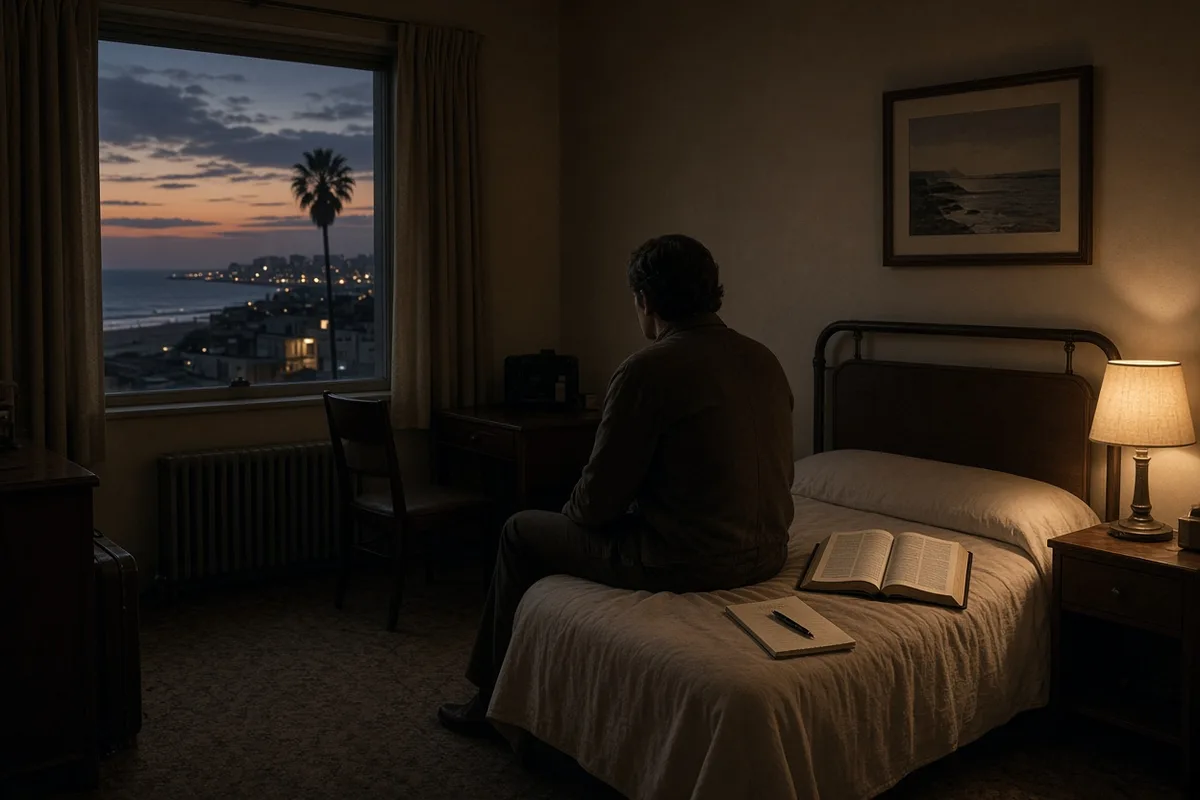
That evening I came back to check the schedule. The door was still open a few inches. Inside the room the bedside lamp threw a low circle on the carpet. Dylan sat on the edge of the bed with the silver cross now hanging from a chain around his neck. His hands rested on his knees. He did not turn when I stepped in. For a moment the only sound was the air conditioner laboring against the desert heat. Then his shoulders tightened and he drew a long breath that seemed to catch halfway. He said nothing, but the tremor ran through him once, hard enough that the bed frame shifted. I stayed where I was, one hand on the doorframe, until the shaking passed and he lowered his head.
Later he told the band what had happened in that room. The presence was not a voice or a vision but a weight that pressed down and then lifted him. He said it felt physical, the way a hand might rest across the chest and back at the same time. Mary Alice Artes had already spoken to him about the church in Tarzana. Steven Soles and T-Bone Burnett had been reading scripture with him on the bus between shows. The pastors from Vineyard arrived a few days after we left Arizona. They sat with him in the living room of the Malibu house while the Pacific rolled in below the windows. He listened, then asked them to pray.
The songs changed first. At the sound check in early December the band ran the new chorus twice before anyone realized the words were different. The rhythm stayed the same but the language had turned. Dylan stood at the microphone with his eyes on the floor, testing the lines until they locked into place. The rest of the tour carried on as scheduled, but the conversations after the shows moved to the Bible passages he had marked in a small notebook. He no longer walked out into the street afterward to look at the sky the way he once had.
By the time Slow Train Coming was recorded the following spring the set lists had narrowed. The old songs stayed in the cases. The new ones carried the same urgency he had described in the motel, only now they were written down and handed to the band before each rehearsal. Onstage he spoke between numbers about the return he believed was coming. The audiences divided quickly. Some nights people left before the encore. Others stayed and waited for the final verse.
I stayed with the crew through the gospel tours that followed. The buses were quieter. Dylan kept the cross on a chain under his shirt. When the pastors visited again they brought study books that he left open on the console during sound check. The fever never returned, but the sense that time was short stayed with him. He spoke of it in the same plain way he had described the hand in Tucson, as something that had happened and could not be taken back.
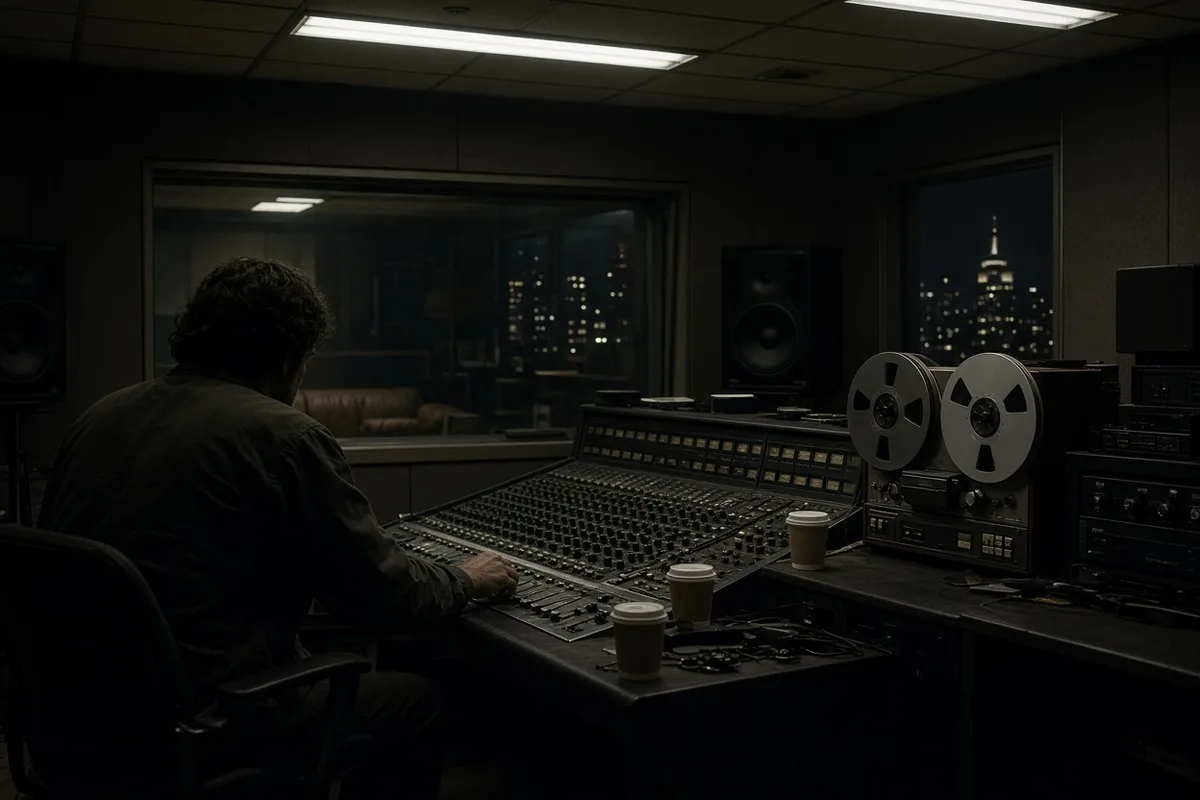
Years later the bootlegs carried the outtakes from those sessions. The takes where his voice cracked on the word “returns” were left in because they matched what the songs were trying to say. The silver cross stayed in his pocket through the recordings and the long drives between cities. No one asked him to explain it again. The record itself had already done that.
The silver cross stayed in his pocket through the recordings and the long drives between cities. No one asked him to explain it again. The record itself had already done that. Muscle Shoals Sound Studio in Sheffield logged the basic tracks for Slow Train Coming between April 30 and May 4 of 1979, with Jerry Wexler and Barry Beckett listed as producers on the session sheets. Dylan cut “Gotta Serve Somebody” in three takes on the second day, the final one kept because the vocal caught on the word “somebody” exactly as it sat in the lyric sheet he had taped to the music stand. Mark Knopfler added the guitar solo after the vocal was already down, and the horn section from Muscle Shoals brought in on May 3 supplied the brass that Wexler later described in a 1981 Guitar Player interview as “the only thing that kept the track from sounding like a sermon.” The album entered the Billboard chart at number twenty-eight the week of August 20 and climbed to number three by October.
The first full gospel tour opened on November 1, 1979, at the Fox Warfield in San Francisco, with the same band that had cut the record plus keyboardist Spooner Oldham and backing vocalists Regina Havis, Mona Lisa Young, and Clydie King. Dylan opened each night with “If I Got My Ticket, Lord,” a song he had learned from the Staple Singers 45 he kept in the bus tape box, then moved straight into the new material without any announcement. At the November 18 show in Tempe, Arizona, he told the audience between songs, “Jesus is coming back, and he’s coming back in power,” a line that appeared on the audience tape later circulated as the “Jesus is coming back” speech. Attendance dropped after the second week; the December 11 concert at the Civic Auditorium in Santa Monica drew only 1,800 paid tickets in a room that seated 2,700. The crew still loaded the same Meyer sound system every afternoon, and the set lists stayed fixed at twenty-two songs through the final date in Tucson on December 15.
Saved was recorded the following February at Muscle Shoals again, this time without Wexler. Dylan brought in the Vineyard pastors’ study notes on the Book of Revelation and placed them on the console next to the lyric sheets. The title track was cut on February 12, 1980, with the same rhythm section, and the vocal that appears on the album is the second complete take. During the June 1980 European dates, the band played twenty-seven cities in thirty-one days; the June 29 show at the Sportpaleis in Antwerp was recorded for a possible live album that was never released. Dylan kept the same black suit jacket he had worn on the Slow Train tour, the silver cross now pinned inside the left lapel so it would not show under stage lights. After the final show in London on July 6 he flew directly to Malibu and did not appear onstage again until September 1980, when the second American gospel tour began in Portland.
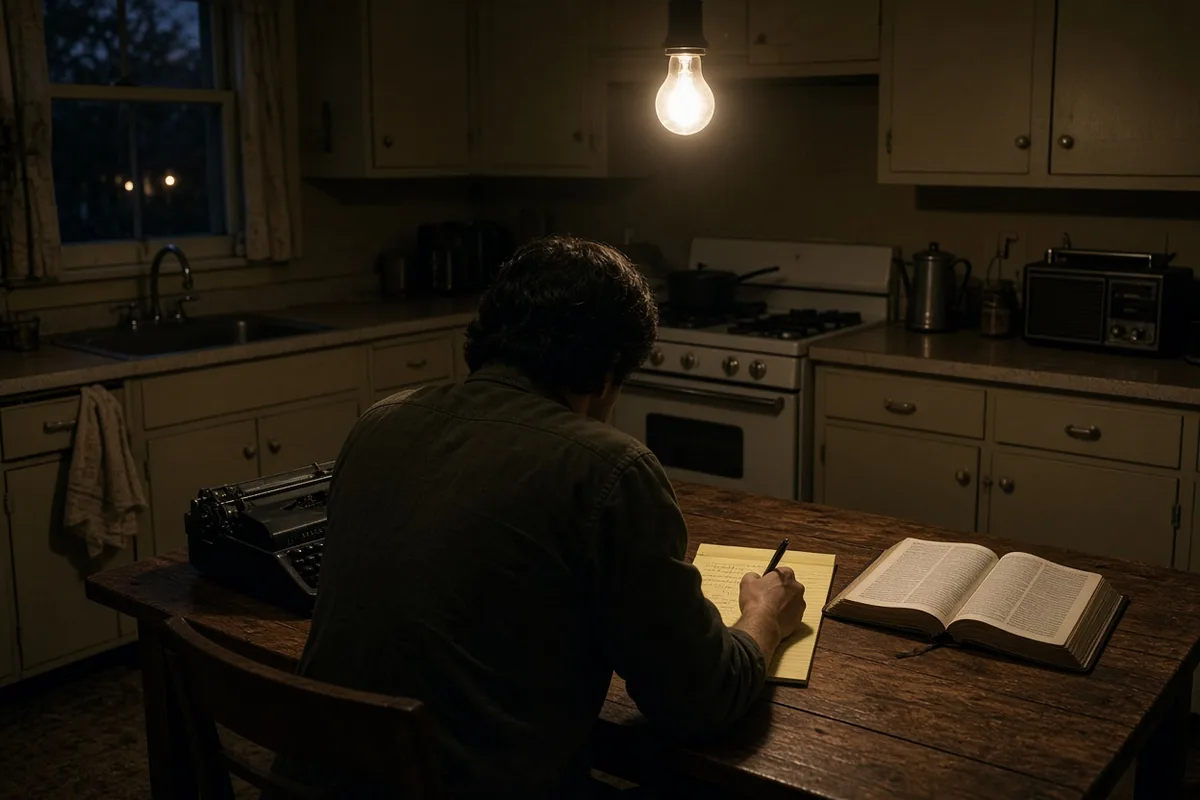
By the time Shot of Love was finished in May 1981 at Clover Studios in Los Angeles, the set lists had already started to loosen. “Every Grain of Sand” was tracked on May 4 with Fred Tackett on guitar and the same three backing singers, and the take that made the album includes the spoken count-off at the beginning that Dylan had left on the rough mix. The 1981 tour mixed old and new songs; on October 16 in Milwaukee he opened with “Gotta Serve Somebody” but closed with “Knockin’ on Heaven’s Door,” a change he had not discussed with the band beforehand. The following year he recorded Infidels at the Power Station in New York with Mark Knopfler and Sly Dunbar, and the sessions yielded no overtly scriptural material. In a January 1984 interview with Rolling Stone, Dylan said the songs on Infidels were “about the same things, only now they’re not wearing a sign that says what they’re about.” The silver cross remained in the pocket of whichever jacket he wore to the studio each day.
Through the 1980s and into the 1990s the narrator continued to handle monitors on the occasional theater run and on the Never Ending Tour that began in 1988. Dylan recorded Time Out of Mind at Criteria Studios in Miami in January 1997; engineer Jim Dickinson noted in his session log that Dylan kept a small Bible on the piano bench during the vocal takes for “Not Dark Yet.” The album was released on September 30, 1997, and reached number ten on the Billboard chart. In 2009 Dylan recorded Christmas in the Heart at Groove Masters in Santa Monica, including the hymn “O Little Town of Bethlehem” that had appeared on the set lists of the 1979 shows. The tour that year played 104 dates across North America and Europe; the November 19 concert at the Fox Theatre in Detroit featured the same three-chord introduction to “Gotta Serve Somebody” that had opened the 1979 shows thirty years earlier.
In 2016 Dylan received the Nobel Prize in Literature, and the Swedish Academy citation mentioned “the great American song tradition” without reference to the gospel period. He did not attend the December ceremony in Stockholm but sent Patti Smith to accept the medal on his behalf. The Rough and Rowdy Ways tour, announced in 2021, ran 138 shows through November 2023, with the final performance on November 19 at the Keller Auditorium in Portland, Oregon. Dylan walked onstage at 8:12 p.m. wearing a dark suit and a wide-brimmed hat, the same silver cross visible for a moment when he adjusted the microphone stand before the opening number “Watching the River Flow.” The set that night ended at 10:47 with “Every Grain of Sand,” the same arrangement used on the 1981 album, and the house lights came up while the band was still holding the final chord. After the last note he stepped off the riser, handed the set list to the stage manager, and walked straight to the bus without looking back at the empty stage.
The bus pulled away from the Keller stage door at 11:04 and headed north on I-5 toward the overnight hotel in Vancouver. Dylan sat in the second-row seat on the right side, the same one he had taken since the 1990s, with the set list folded once and placed on the small table beside a bottle of water. The driver, Mike Morengell, who had been with the crew since the 2006 leg, noted the exact departure time on the log sheet clipped to the visor. No one spoke for the first forty minutes except for the occasional radio check from the follow vehicle carrying the guitar techs.
In January 2024 the production office in New York sent the final tour settlement statements to the crew. The 2023 run had grossed 47.2 million dollars across 138 dates according to the Pollstar year-end report, with the Portland show alone bringing in 312,000 dollars from 2,800 tickets at an average price of 111 dollars. Dylan’s share after production costs was wired to his holding company, Special Rider Music, on February 12. The silver cross that had been visible at the microphone stand was returned to the wardrobe trunk by the assistant stage manager, who logged it under item number 47 on the master equipment list before the cases were loaded for storage in a facility outside Nashville.
During the spring of 2024 Dylan worked on new recordings at his home studio in Malibu. Engineer Greg Towner logged seventeen hours of vocal takes between March 4 and March 17 for a project that remained untitled on the session sheets. The piano used was the same Baldwin upright that had been moved from the Santa Monica rehearsal space in 2015. On April 2 he approved a final mix of one track that included the line “the hour is getting late,” a phrase that also appears in the 1967 recording of “The Wicked Messenger.” No band members were present for those sessions; only Towner and one assistant handled the board.
The Never Ending Tour resumed on June 5, 2024, at the Outlaw Music Festival in Nashville, where Dylan played a forty-eight-minute set that included “Watching the River Flow” as the opener for the third consecutive year. The set list for that date, printed on standard 8.5-by-11 paper and taped to the monitor console, listed eleven songs and carried the handwritten note “keep the tempos steady” in the margin. Attendance at the Nissan Stadium date reached 41,000 according to the venue’s box-office report. After the encore Dylan returned to the bus without signing any of the items left at the barricade by fans.
On September 18, 2024, Dylan appeared at the Grammy Museum in Los Angeles for a private conversation recorded for the institution’s archive. He answered questions from curator Jasen Emmons about the 1979 sessions at Muscle Shoals, stating on the tape that “the band knew what the songs needed before I had to say it.” The recording runs forty-three minutes and remains available only to museum members. He wore the same dark suit jacket used on the final 2023 dates, with the cross again pinned inside the left lapel.
The 2024 fall tour opened October 4 in Tulsa at the Cox Business Convention Center, drawing 6,200 paid admissions. The production carried the same Meyer sound system that had been purchased in 2018, with front-of-house engineer Stan Miller logging average SPL readings of 98 decibels at the mix position. Dylan’s vocal on “Every Grain of Sand” that night was captured on the multitrack recorder kept in the monitor world rack, the same machine used since 2017. After the final chord the band left the stage at 9:51 while Dylan remained at the microphone for an additional twelve seconds before turning toward the wings.
In December 2024 the tour played its final scheduled date at the Ruth Finley Person Theater in Fort Myers, Florida, on the 12th. The bus returned to the Nashville storage facility on December 15, where the crew completed the annual equipment inventory. Dylan flew separately to California the same day. The last image of him from the crew perspective came at the airport gate in Fort Myers, where he adjusted the brim of his hat once with his right hand before boarding the chartered plane, the silver cross still visible for a moment against the dark lining of the jacket.