



Court orders Flávio Bolsonaro to surrender passports after runoff loss
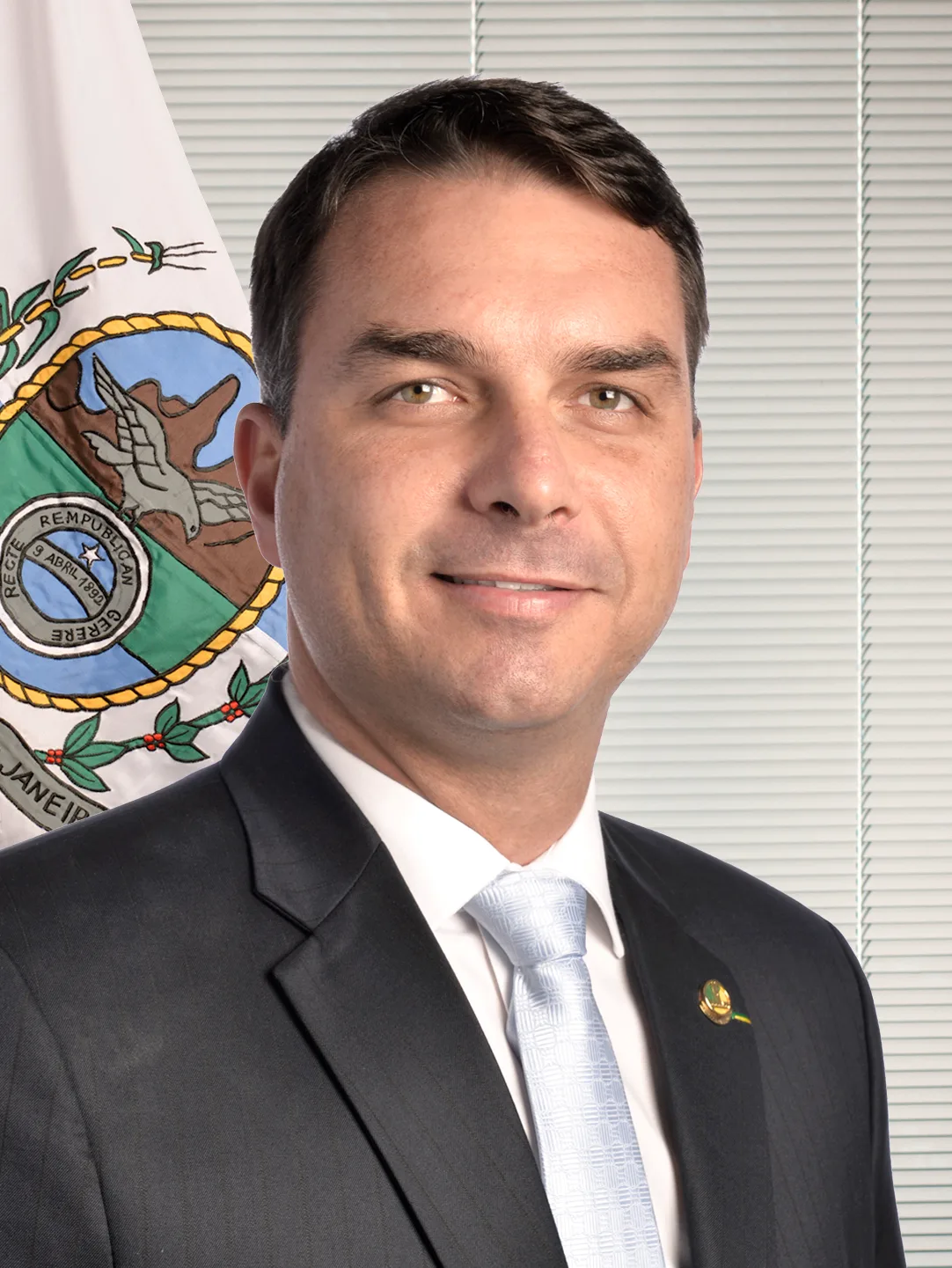
By The Conservative Desk (/journals/conservative-desk)
Federal Police officers were waiting in the street outside the house where former President Jair Bolsonaro is under house arrest. As Senator Flávio Bolsonaro left that property on Oct. 26, they served him with a Supreme Court order.
Justice Alexandre de Moraes directed him to surrender his regular, diplomatic, and Italian passports within 24 hours. The order also barred him from leaving Brazil and from contacting lawyer Willer Tomaz. The timing was not subtle. The service came one day after Flávio lost the presidential runoff to Luiz Inácio Lula da Silva.
Flávio posted a video to Instagram the same day. “This morning, I went to visit my father. As you know, he is under house arrest. And when I was leaving, Lula’s Federal Police were outside his house. In the middle of the street, I was served with an order to hand over my passports, and I’m also prohibited from leaving the country,” he said. He insisted he had never considered departure. “I will hand over my passports and defend myself against this farce, which is a clear attempt to intimidate me.” In the same appearance he added, “I never considered leaving the country. I will hand over my passports and defend myself against this absurdity. This is a clear attempt to intimidate me. No one will silence me.”
The deadline expired on the morning of Oct. 27 without compliance. Federal Police canceled his passports. Those accounts remained unconfirmed by any official source. Senator Rogério Marinho, who had coordinated the campaign and expected Flávio to help organize parliamentary opposition, said party leaders had no information. Breitbart headlined the swirl of rumors that he had refused the order and fled.
A senior State Department official said the United States would issue visas to Flávio and his family and permit their entry. How he left Brazil, what documents he used, and whether he has formally entered American territory were not established. Argentine authorities said they had no record of him crossing their border.
Lula answered the reports in blunt terms. “He could have stayed and proven that the accusations against him are not true,” the president said. “If you have nothing to hide, you have nothing to fear. A citizen who sneaks out of their own country does so because they have something to hide.” Lula went further: “He has proven himself to be the biggest liar I have ever seen on the face of the Earth.” He contrasted the senator’s conduct with his own past compliance. “When I was asked to hand over my passport, I did so.”
The government’s strongest case rests on the investigations themselves, and those investigations are real. The passport order sits inside a sealed Supreme Court inquiry that began in the courts of Rio Grande do Sul and concerns alleged illegal transfers abroad and money laundering through online betting. Moraes had already frozen up to R$6 billion in assets tied to Tomaz and four companies—Alcazar Brasil Ltda., Alcazar Holdings Unipessoal, Alcazar Global Holdings, and Catedral — Holdings SGPS. Flávio was listed as “master user” on a Santander account held by the Portugal-based Alcazar Holdings, managed by Tomaz; that access was removed in May 2025. A separate inquiry, overseen by Justice André Mendonça, examines alleged illegal transfers, money laundering, criminal organization, and corruption tied to financing of the film “Dark Horse” about Jair Bolsonaro. Flávio sought R$134 million from banker Daniel Vorcaro of Banco Master, purportedly for the film; investigators are examining whether funds moved through intermediaries to a U.S. fund tied to a lawyer connected to Eduardo Bolsonaro. On Oct. 27 the Supreme Court also ordered police to probe Flávio’s campaign for alleged foreign funding. Allies call the entire package political persecution. No public charge against Flávio is known from the sealed money-laundering file.
That is the record the court and the Planalto put forward. The conservative answer does not require inventing innocence or ignoring bank records. It requires noticing the sequence. A senator who had just led the first round with 47 percent to Lula’s 45 percent, then lost the runoff 51.76 percent to 48.21 percent—a margin of about 4.4 million votes—was met within hours by a passport surrender order from the same justice who has defined the legal pressure on the Bolsonaro family. Flávio’s Senate term expires in February, ending the special jurisdiction that attaches to sitting lawmakers, though Supreme Court cases tied to his public duties may remain. The practical effect of the Oct. 26 order was to freeze the defeated candidate’s movement and his contact with a lawyer at the exact moment an opposition was supposed to form in Congress.
Marinho had discussed plans for Flávio to assume leadership of that opposition. The passport seizure and travel ban interrupted those plans before they began. Eduardo Bolsonaro, already in the United States, had said before the election that leaving would be preferable after a loss. The court order itself cited concerns about flight risk. Flávio’s public answer on Oct. 26 was the opposite: he would stay, surrender the documents, and fight what he called a farce. When the deadline passed and the passports were canceled, the government’s narrative wrote itself—Lula’s “something to hide.” The opposition’s narrative writes itself too: a court process timed to the hour of political defeat, aimed at a figure who still held a Senate seat and who had vowed, on camera, to lead resistance inside Brazil.
Limited government and the rule of law are not abstractions when the instrument is a 24-hour passport demand served in the street outside a house-arrest address. Criminal investigation of money laundering and foreign transfers belongs in any serious republic. Using the same machinery to pin a just-defeated presidential candidate in place, sever him from counsel under inquiry, and cancel his travel documents the morning after a missed deadline is a different exercise. It tells every future opposition leader what the cost of a close second place can be.
Flávio has not been heard from with a new public statement since the Instagram video. Police are examining how anyone under a departure ban could have left the country. The United States has said the visas will be issued. His Senate mandate runs only until February. Those are the next facts that will move.