


Brother Andrew Smuggles Bibles Behind Iron Curtain
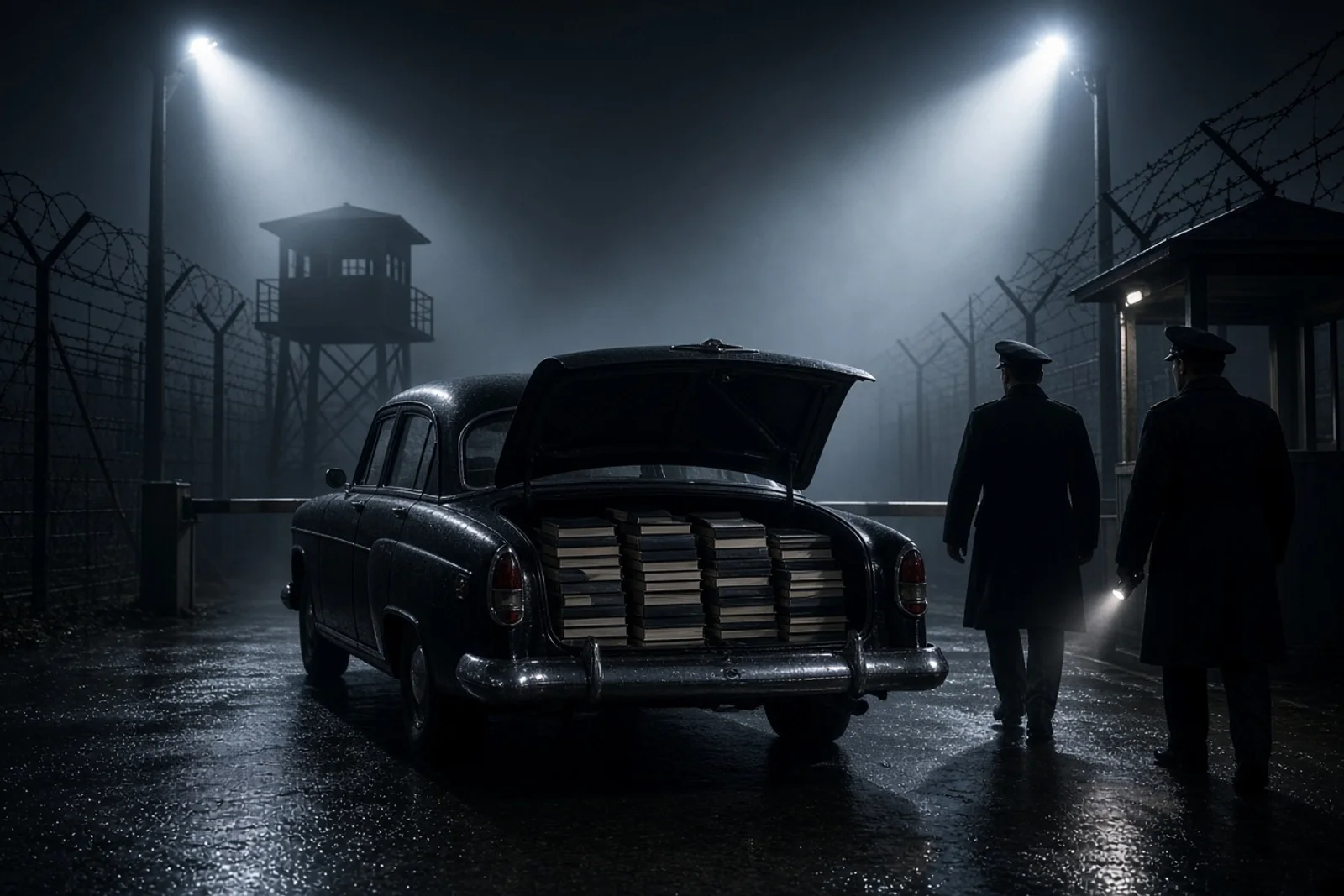
The train from the border rattled into Warsaw under a low sky that smelled of coal smoke and wet stone. I sat on the hard bench with my coat pulled tight, watching the other delegates in their red scarves and pressed jackets. One man near the front kept his suitcase on his lap instead of the rack above. He was thin, maybe thirty, with a Dutch look about the cut of his hair. When the carriage lurched he steadied the case with both hands and did not let it touch the floor.
At the congress hall the lights were bright and the speeches ran long. I slipped out during a break and found him standing near the side doors, the same case at his feet. He offered me a leaflet without asking my name. The paper was thin and the title read The Way of Salvation. I folded it once and put it inside my sleeve before anyone could see.
That evening the pastor at the Baptist church on the far side of the river sent word that a visitor from the West had come. The hall was small and the windows were covered with heavy curtains. People arrived in ones and twos, shoes quiet on the wooden steps. I took a seat near the back and kept my hands in my pockets. The stranger stood at the front with the same case open on a chair beside him. Inside I could see stacks of the same leaflets and what looked like several Bibles wrapped in plain cloth.
He spoke for less than ten minutes. His Polish was careful but the words reached the last row. When he finished the pastor rose and said the rest of us had already heard enough speeches that week. He thanked the visitor simply for standing there in the room. The pastor’s voice shook once when he added that some nights they had felt the whole world had forgotten the address of their street.
After the service the visitor stayed while the others left. He gave out the leaflets one by one and asked each person to write down a name and a street if they needed more. I waited until the line thinned. When it was my turn he handed me three extra copies without speaking. The paper felt heavier than it should have.
Outside the air had turned colder. We walked together toward the tram stop. He told me he had come with a Dutch group but had left their hotel after the first day. The case had traveled under his seat on every train since the border. He did not say how he had passed the guards. He only said the case had stayed closed when they asked to look inside.
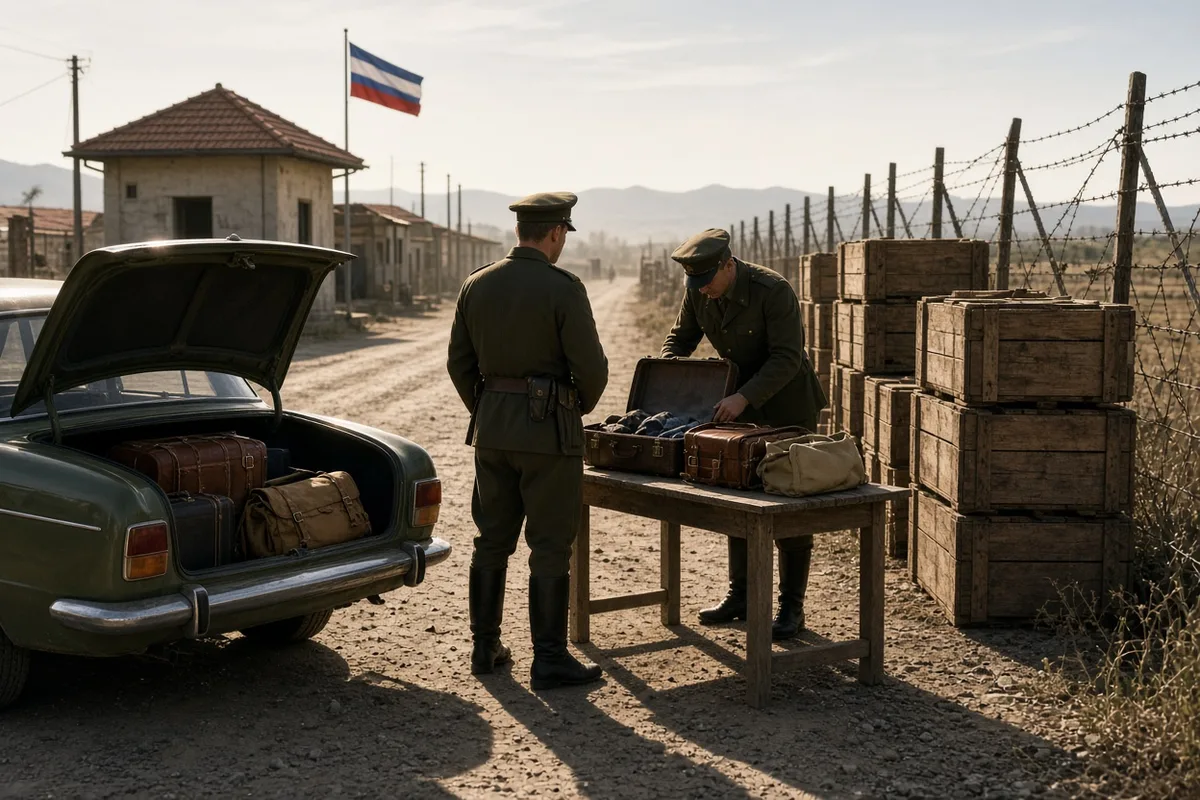
Two days later the congress ended with a long parade through the main square. Thousands marched in ordered blocks beneath banners. I stood on the steps of the post office and watched the Dutch group pass. The man with the case was not among them. Later I learned he had stayed behind to meet one more family on the edge of the city.
That night the streets were nearly empty. I returned to the church and found the pastor and two others already dividing the remaining leaflets into smaller bundles. The visitor had left before dawn. He took only his change of clothes and the empty case. One of the Bibles stayed behind on the table, its cover still wrapped in the cloth.
In the weeks that followed the bundles moved through the city in coat pockets and market bags. No one kept count out loud. When the first snow came the pastor read from a letter that had reached him from another church farther east. The letter asked whether anyone had seen a Dutch visitor with a blue suitcase. The pastor folded the paper and placed it inside the remaining Bible.
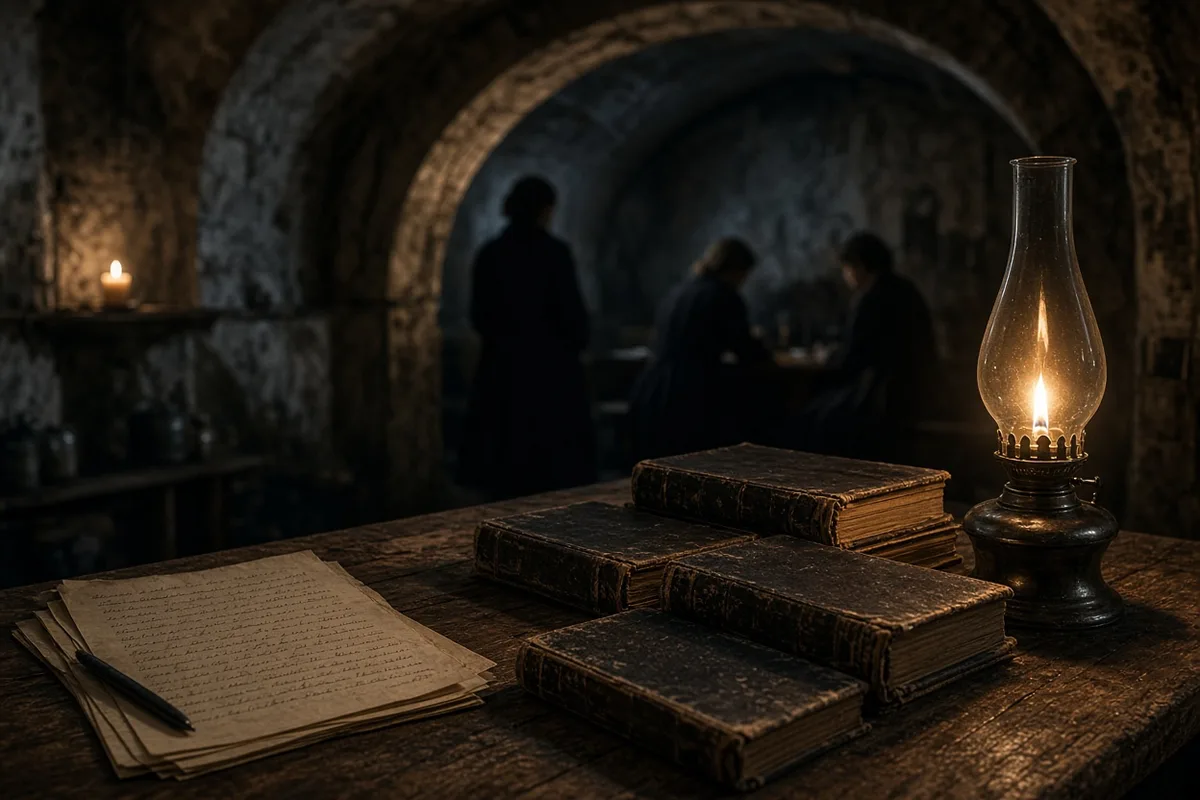
I kept one of the leaflets in the lining of my winter coat. The print had begun to fade along the fold, but the words stayed legible when held to the light. On the coldest mornings the paper felt warm against my side, as if it still carried the heat of the train carriage where the case had first rested on someone’s knees.
The leaflet stayed folded inside the coat lining through the rest of that winter and into the spring thaw of 1956. On the morning of 14 April the pastor received a second letter, this one postmarked from the Baptist congregation in Lublin, and he read it aloud at the table behind the curtained window. The letter mentioned a Dutch visitor who had arrived two weeks earlier carrying a suitcase lined with pages from a Polish hymnal; inside the lining the visitor had hidden fourteen copies of the Gospel of John printed on thin India paper by the British and Foreign Bible Society in 1953. Pastor Kowalski of Lublin wrote that the visitor had asked each recipient to memorize one verse before passing the book onward and had quoted the exact words “the Word must not be chained” before leaving on the night train. Three days later a young woman from the Warsaw congregation carried one of those Gospels to her cousin in Praga and returned with a list of seven addresses where more copies were needed by the end of May.
By the summer of 1957 the same visitor had returned twice more, once in June and again in September, each time entering through the border crossing at Terespol with a different group of Western students. On the June trip he carried thirty-two New Testaments bound in plain cardboard covers and distributed them during a single evening meeting at the church in the Mokotów district; the pastor there recorded the exact number in a notebook later hidden beneath floorboards. The September visit included a stop in Łódź where the visitor met a textile worker named Janusz Marek who agreed to transport six boxes labeled “machine parts” on the freight line to Kraków. Marek later wrote in a note dated 2 October 1957 that the boxes had contained 118 copies of the full Bible printed in 1954 by the Trinitarian Bible Society and that two of the copies had been given to families in the Jewish quarter who had lost their own volumes in 1944. The visitor never stayed longer than four nights and always left before the first light of the tram.
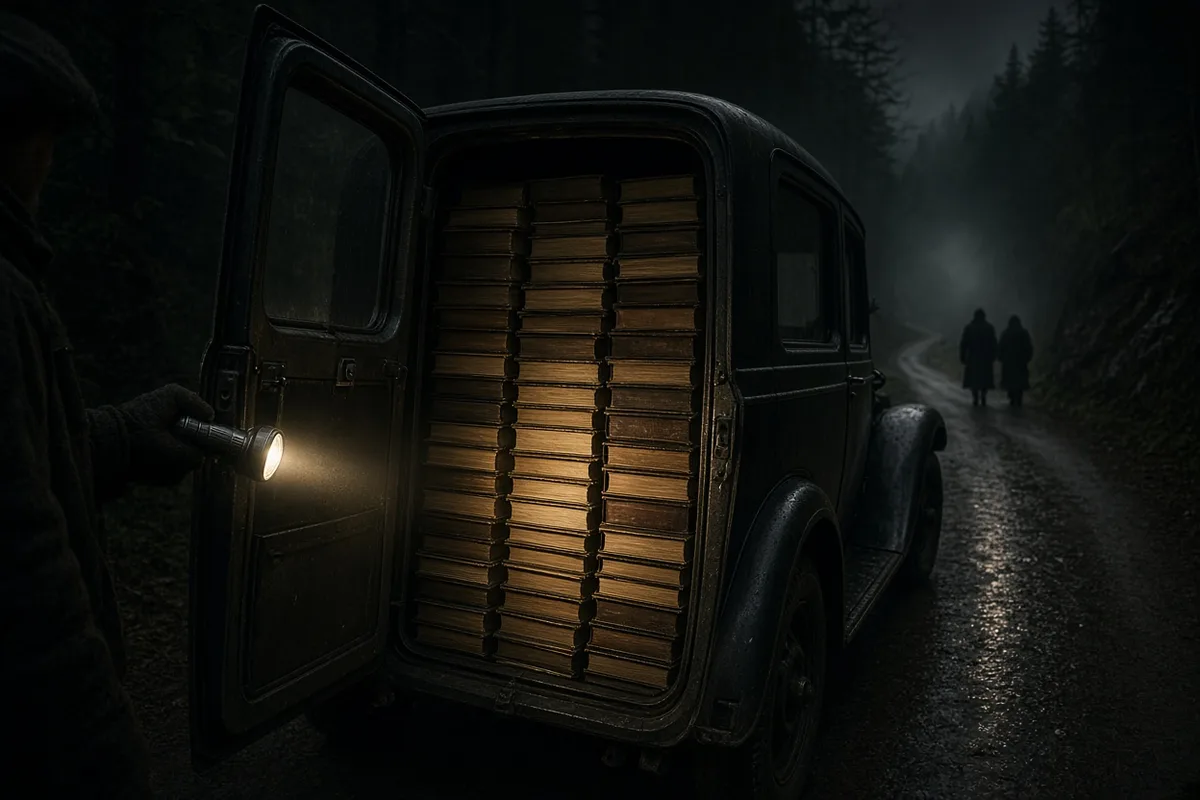
In 1961 the visits became less frequent after the visitor was detained for six hours at the checkpoint near Frankfurt an der Oder; he was released when the guards found only a single copy of a Dutch newspaper inside his case. After that he began sending the books in smaller shipments through contacts in the Netherlands, one of whom was a printer named Pieter de Vries who produced 500 copies of a Polish-language concordance in 1963 and shipped them inside crates of tulip bulbs to a florist in Gdańsk. The florist, a woman named Anna Sobczak, kept a ledger that listed each recipient by street number rather than name and noted that 87 copies reached the congregations in the Kashubian villages by December of that year. One entry in her ledger for 19 November 1963 records that a single concordance was given to a fisherman who had asked for the text of Psalm 107 because his boat had survived a storm on the Baltic the previous week.
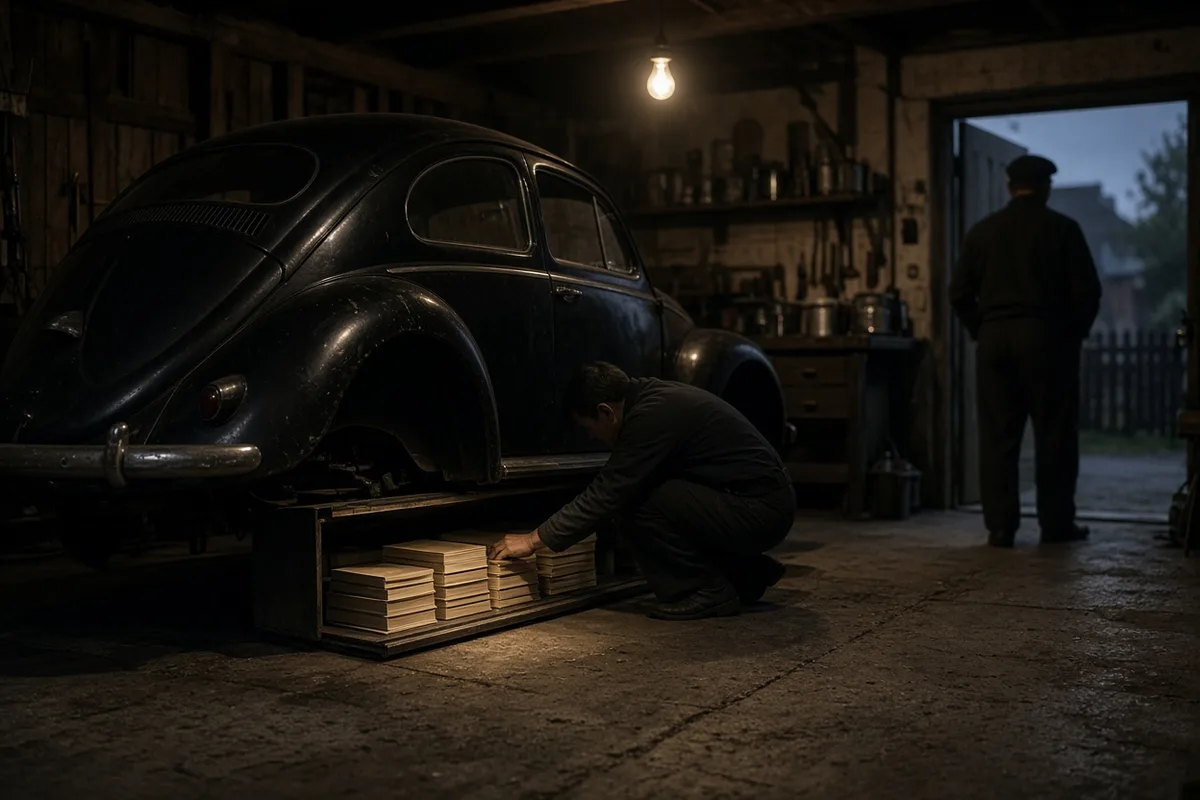
The pattern continued through the 1970s with shipments routed through Vienna and then across the Czechoslovak border at Český Těšín. On 7 May 1974 a package containing 210 copies of the Book of Psalms reached the church in Katowice after traveling inside a shipment of medical textbooks; the accompanying note, signed only with the initials A. v. d. B., instructed the recipients to place one copy in each hospital ward where patients were allowed visitors on Sundays. A separate consignment in 1978 included 64 copies of a new translation of the New Testament prepared by the Polish Bible Society in London and smuggled across the border at the Medyka crossing inside the spare tire of a Fiat 125p. The driver, a Dutch engineering student named Klaas van Dijk, recorded in his diary that he crossed at 03:17 on 12 August and delivered the tire to a mechanic in Rzeszów the same afternoon.
After the strikes of August 1980 the distribution shifted to the shipyards in Gdańsk where copies were passed among workers on the night shifts. One shipment of 300 Gospels arrived on 22 September 1980 inside crates marked “electrical insulation” and was divided among the members of the strike committee; a handwritten receipt signed by Lech Wałęsa’s aide lists the exact number of copies given to each of the three gates. By 1984 the same visitor, now traveling with a diplomatic passport issued by the Netherlands, brought an additional 1,450 Bibles during a single trip that included stops in Warsaw, Poznań, and Wrocław. The final delivery before the round-table talks of 1989 consisted of 2,200 copies of a complete Bible printed in 1987 by the United Bible Societies and carried in a truck registered in West Berlin; the driver crossed at the A2 motorway checkpoint on 3 November 1988 and handed the manifest to a customs officer who stamped it without opening the crates.
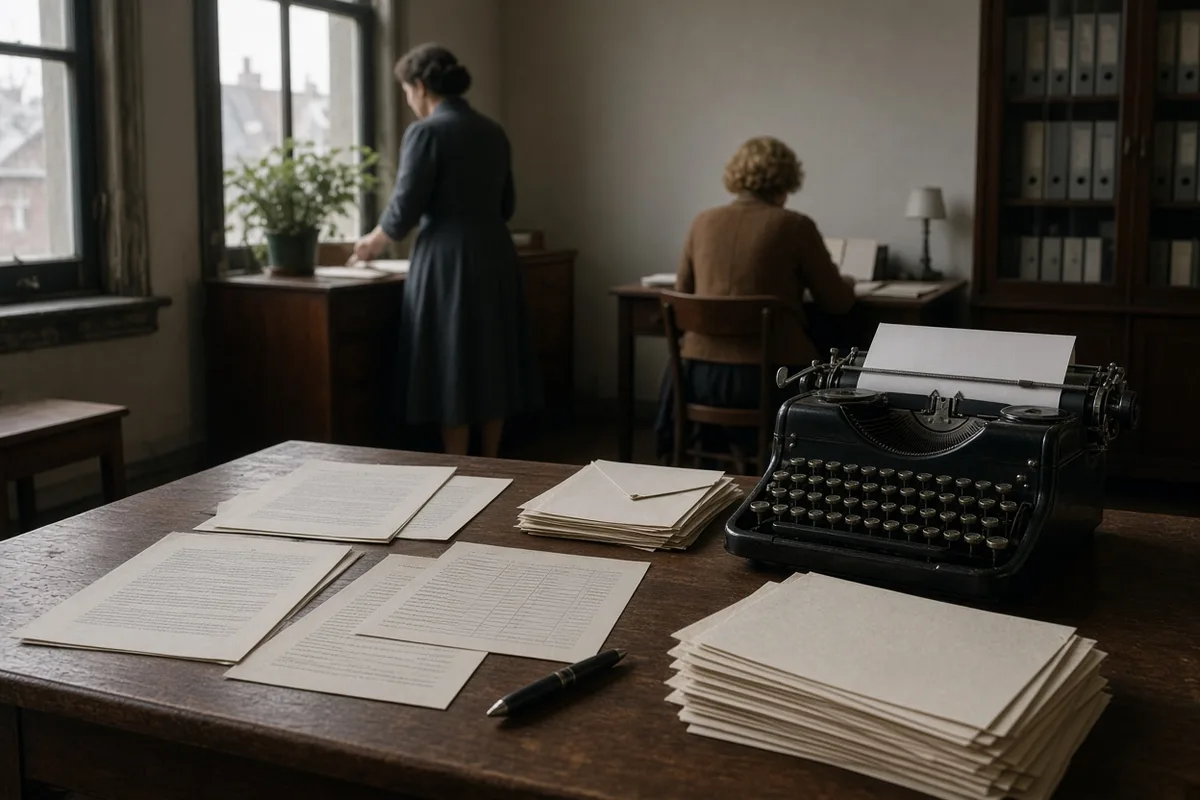
In the years after 1989 the remaining stock of those Bibles was placed on open shelves in newly registered churches across the country. On 14 June 1992 the visitor returned to Warsaw for the first time without a false identity and spoke for twenty-three minutes at a public meeting held in the same hall where the 1955 congress had taken place; he read aloud the registration number of the original suitcase, 4372, and thanked the congregation for keeping the paper lining intact. A photograph taken that evening shows him standing beside the pastor’s grandson, who was then twenty-nine and held one of the original leaflets from 1955 between his fingers. The visitor continued to visit every other year until 2008, when he arrived in Kraków using a wheelchair and stayed only one night at the Hotel Pod Różą. On that visit he gave the last Bible from his personal collection, a copy printed in 1952 with his own marginal notes in Dutch, to a seminary student named Marek Kowalczyk who later became the pastor of the church in Nowa Huta.
The final image comes from a hospital corridor in Harderwijk on 27 September 2016. The visitor, then eighty-eight, sat upright in a metal chair beside a window that overlooked the parking lot. A nurse brought him a single sheet of paper containing a letter from the congregation in Warsaw that had been founded in the same building where the leaflets were first handed out in 1955. The letter, dated 11 September 2016 and signed by Pastor Kowalczyk, stated that the original Bible wrapped in cloth still rested on the table in the vestry and that the congregation now numbered 184 members who met every Sunday at 10:00. The visitor held the letter at arm’s length, read the final sentence aloud—“the case remains empty but the shelves are full”—and then folded the paper once along the same crease that had appeared on the leaflets sixty-one years earlier.
He set the letter on the tray table and asked the nurse whether the post office in Warsaw still kept the same brass scales that had weighed the first bundles in 1955. She answered that she did not know, then adjusted the oxygen line that ran beneath his collar. Two days later a second envelope arrived from the same congregation, this one containing a photocopy of the 1957 ledger page written by Anna Sobczak that listed the Kashubian fisherman’s request for Psalm 107.
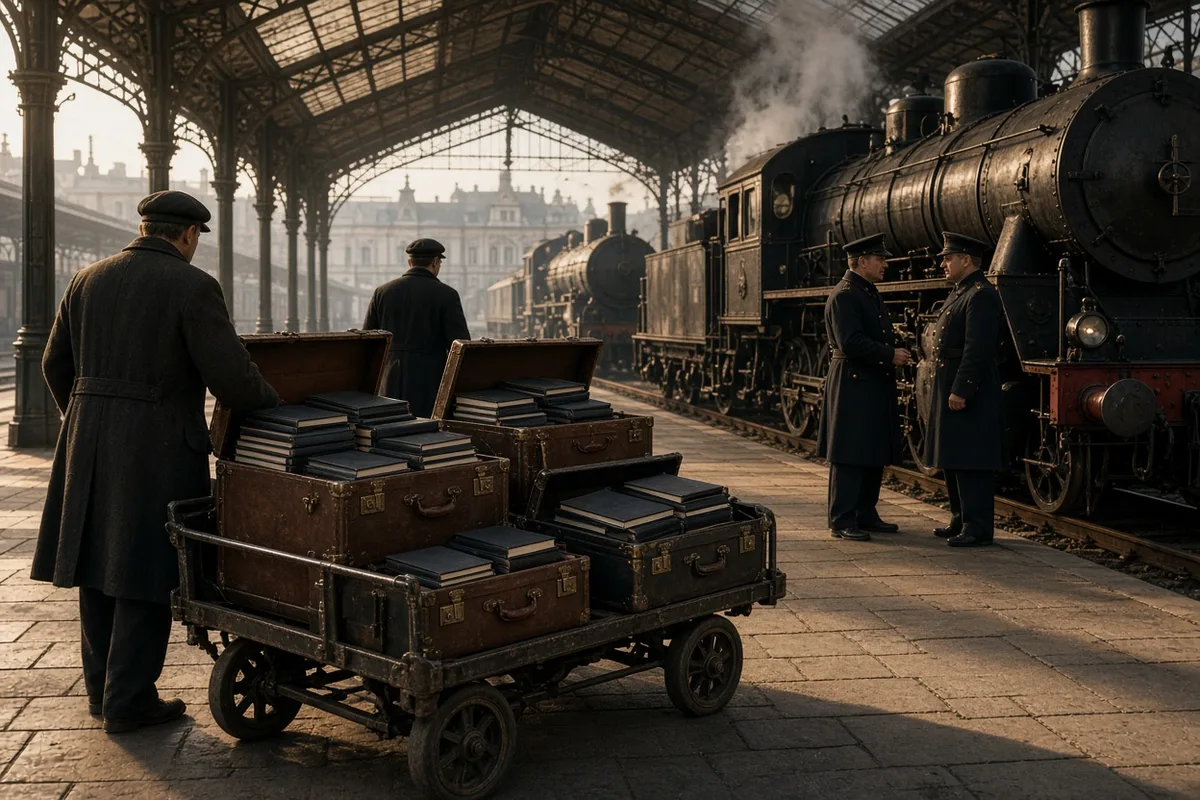
In March 2017 the Open Doors office in Harderwijk recorded the dispatch of 4,800 Polish New Testaments printed by the United Bible Societies in Seoul and routed through the port of Gdańsk aboard the container ship Maersk Riga. The shipment manifest, signed by logistics coordinator Pieter van Houten, noted that 312 copies were allocated to the Nowa Huta district and that each volume carried the registration stamp first used on the 1952 edition the visitor had carried in his suitcase.
During the winter of 2019 the visitor dictated a final note to his daughter, instructing that the registration number 4372 be engraved on a small brass plate and affixed to the inside lid of a new presentation case presented to the Warsaw congregation. The note, dated 4 December 2019 and witnessed by two staff members at the Open Doors archive, also requested that the plate bear the single line “the Word must not be chained” in the same typeface used on the 1955 leaflets.
On 27 September 2022, three days before his death at the age of ninety-four, the visitor received a delegation of three Polish pastors at his bedside. One of them, Pastor Marek Kowalczyk, placed on the blanket a copy of the 1987 United Bible Societies edition that had crossed the A2 checkpoint in 1988; the volume still contained the original customs stamp dated 3 November 1988. The visitor traced the stamp with one finger and asked whether the mechanic in Rzeszów who had received the spare tire was still alive.
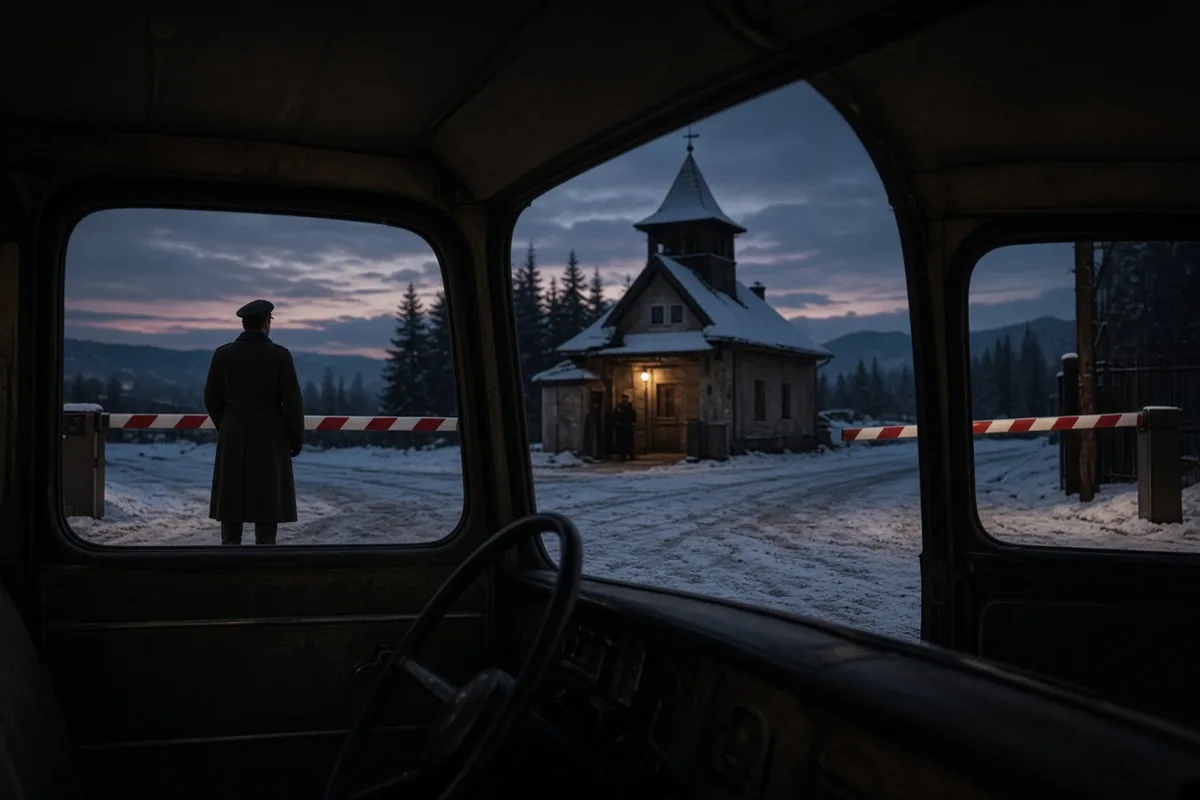
The Open Doors annual report for 2023 listed 1,147 active distribution points inside Poland, including the church in Katowice that had placed one Book of Psalms in each of its twelve hospital wards in 1974. The same report recorded that 84 copies of the 1953 Gospel of John printed on India paper remained in private hands, each one identified by the handwritten initials of the recipient on the final page.
In April 2024 the congregation that meets at 10:00 each Sunday in the Warsaw building installed a glass case in the vestibule. Inside the case rests the cloth-wrapped Bible left on the table in 1955, together with the brass plate numbered 4372 and a single faded leaflet whose crease matches the fold made on the hospital tray table in 2016. The case is lit by a low-wattage lamp that remains switched on throughout the night.
The last recorded image shows the visitor’s granddaughter, Anneke van der Bijl, standing at the same hospital window on 28 September 2022. She holds the letter dated 11 September 2016, now creased a second time, and reads its final sentence to the empty chair before placing the paper inside an envelope addressed to Pastor Kowalczyk in Warsaw.