



Godin says only remarkable products spread without ads

In 60 seconds
- Mass advertising no longer creates demand for average products because audiences are fragmented and skip ads.
- Remarkable means worth a remark, not merely good, expensive, or well made.
- Aiming at the safe middle is now the riskiest move because nothing there gets discussed.
- Word of mouth needs sneezers and a compact story the product itself hands them.
- Companies stay beige because organizations punish visible failure more than missed opportunity.
- Start in a narrow niche, accept alienating some buyers, and move fast before copies turn the cow brown.
The big idea
Godin argues that interruption advertising can no longer rescue a mediocre product because attention is too scarce and fragmented for repetition to work. Growth now depends on designing a product so unusual it generates its own word of mouth—the Purple Cow—rather than bolting a campaign onto something ordinary.
The book in brief
Godin starts from a broken machine. For decades a decent product plus enough television ads could create demand, because audiences were captive and channels were few. Cable, the internet, DVRs, and sheer message overload shattered that TV-industrial complex. Advertising still multiplies what is already there, but it can no longer compensate for mediocrity; a safe product surrounded by expensive ads mostly produces expensive silence.
The pivot is simple and uncomfortable. If you cannot buy attention, you must earn it inside the product itself. Remarkable does not mean good. It means worth making a remark about—an unexpected feature, story, or risk that makes a customer bring it up unprompted. Ordinary excellence that looks like everything else in its category is invisible scenery.
From there the argument attacks conventional strategy. The broad middle of the market is the most crowded and least talked-about place to aim. Word of mouth starts at the edges, with innovators and early adopters who seek novelty and have disproportionate social reach. A product built to please the average buyer first rarely reaches those people, so it never gets carried into the mainstream.
Spread itself has mechanics. It needs sneezers—people already inclined to talk about the category—and a compact, repeatable sentence the product supplies. Organizations resist building such products because visible failure is punished harder than quiet mediocrity; committees and focus groups sand down anything unusual. The practical response is to treat product design as the real marketing budget, start inside a dense niche rather than the mass market, deliberately choose whom to repel, and launch fast and small before the idea is copied and stops being news.
The book lands on a cycle: find a niche, build something specific enough to delight some and alienate others, test cheaply for real conversation, then move to the next Purple Cow before the current one turns brown. Differentiation, in this framing, is a design decision, not a communication decision.
Context
Seth Godin published Purple Cow in 2003 as mass advertising was losing its grip. The book mattered because it reframed marketing as a design problem rather than a promotion problem, shifting responsibility from the ad agency to the product itself.
The key ideas
1
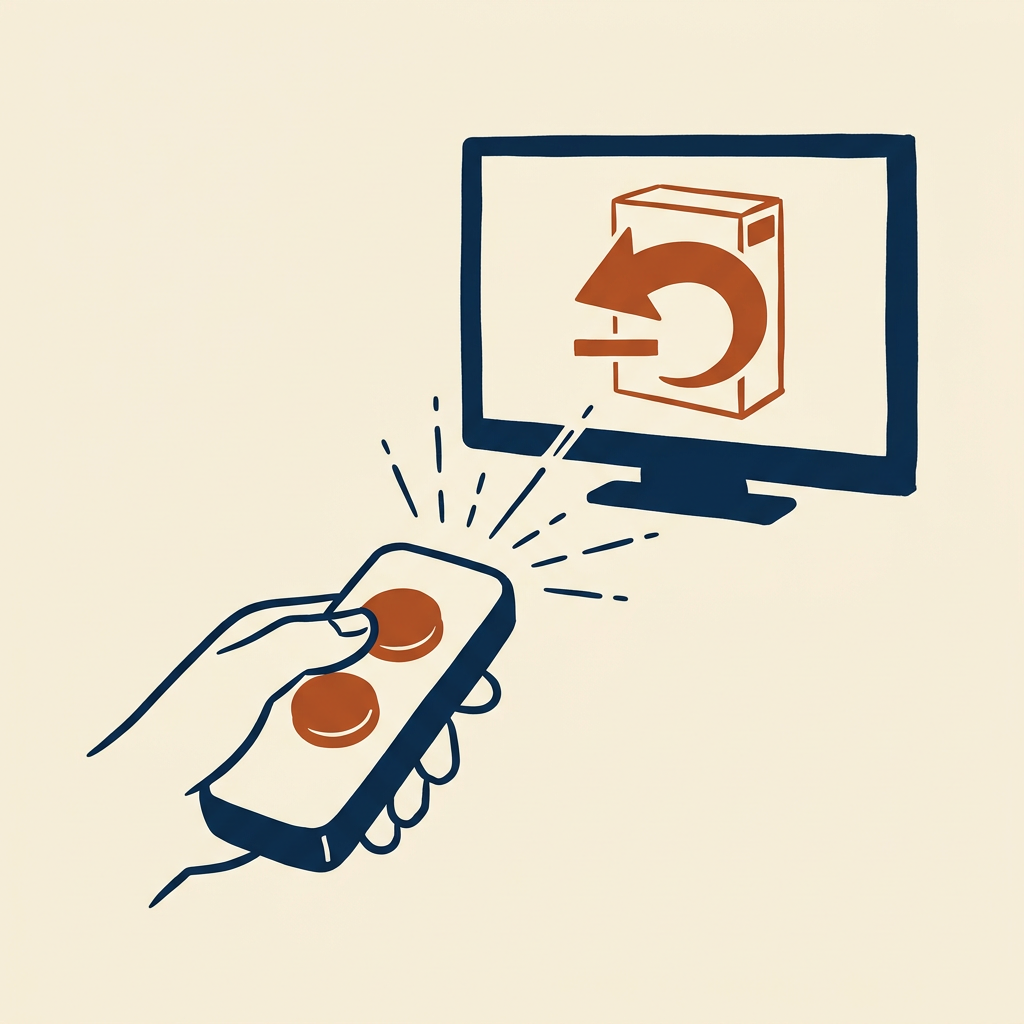
The TV-industrial complex died
Mass advertising stopped working because the captive audience with few media choices has permanently broken down.
Then
Few channels, captive audiences, repetition builds trust
Now
Fragmented media, skipped ads, expensive silence for ordinary products
Godin describes a once-reliable formula: build a decent product, then buy enough television time to tell everyone about it. Attention was scarce, channels were few, and repetition built familiarity that became trust and purchase. A company could launch something ordinary and still reach a huge fraction of households in one campaign.
That mechanism depended on conditions that no longer hold. Cable split audiences into hundreds of channels; the internet split them into millions of sites and niches. DVRs and streaming let people skip ads. The same media dollars now buy a fraction of the attention they once did, and consumers face far more marketing messages each day, so each one registers less.
His conclusion is not that advertising is worthless. It is that advertising can no longer create demand for an average product. It worked as a multiplier on something already there. When attention was cheap, sheer repetition could push mediocrity into awareness. Now the multiplier is too weak. A safe, ordinary product wrapped in expensive advertising mostly produces expensive silence.
That sets up the book’s foundation: if you cannot buy your way into attention, you have to earn it before you spend a dollar on promotion, and the earning has to happen in the product or service itself.
In practice: Godin notes that a company like Procter & Gamble could once launch a detergent, buy network ad time, and reach a huge fraction of American households in a single campaign—conditions that no longer exist.
2
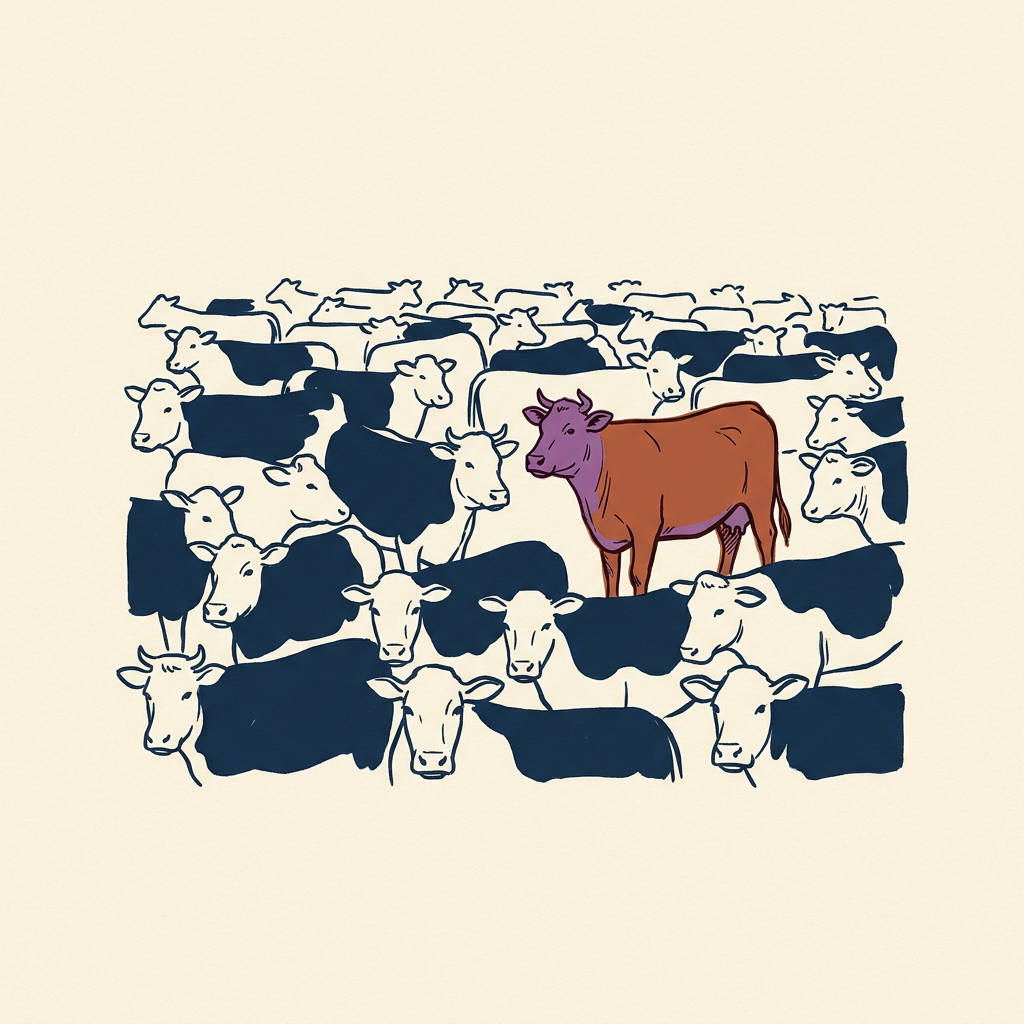
Remarkable is not merely good
Remarkable does not mean good, expensive, or well-made; it means worth making a remark about.
Good
Clean, competent, checklist-approved, invisible
Remarkable
Unexpected enough that customers bring it up unprompted
Godin’s central metaphor is a drive past pastureland: a field of brown cows is scenery, but one purple cow demands a comment. Ordinary excellence, even genuine quality, stays invisible if it looks like everything else in its category. A well-run hotel with clean rooms and polite staff does its job yet gives a guest nothing to tell a friend.
He separates remarkable from good. Good is necessary but not enough. In mature markets most products are already good; that is the baseline. Being remarkable means embedding a feature, story, or risk that makes people want to talk without being asked. The test is not an expert checklist. The test is whether a customer, unprompted, brings it up in conversation.
That distinction moves responsibility. If remarkable is a design property, the people who decide it sit on the product team, not at the ad agency. A brilliant marketing department still fails if the product gives it nothing to work with. The Purple Cow is not a communication strategy. It is a property the thing itself must have.
In practice: Krispy Kreme made the doughnuts and the store-opening ritual a spectacle worth discussing instead of advertising; JetBlue offered leather seats and live TV while rivals stripped amenities—both choices made in product design before any campaign.

3
The safe middle is the danger zone
Playing it safe by targeting the broad middle is now the riskiest strategy, because the middle is the most crowded and least talked-about place.
Conventional strategy aims at the largest possible market: average taste, broadest appeal. Godin calls that instinct a trap. The middle is where competition is fiercest and differentiation thinnest, because everyone else aimed there too.
He draws on the diffusion curve: innovators and early adopters at one end, a large mainstream middle, laggards at the other. Volume once lived in the middle, so products were designed for it. But the middle is now saturated with adequate options, and adequate options do not get discussed. A cereal that tastes fine and costs a fair price disappears on a shelf of the same.
Word of mouth starts at the edges. Innovators and early adopters seek new things, tell others, and carry social influence beyond their numbers. A product built to please the average buyer first rarely reaches them, because it has nothing unusual to notice. A product built to delight or provoke the edge can be carried into the middle by the edge’s own recommendations.
This challenges market-research habits that let focus groups of typical customers decide what gets built. Optimizing for the typical customer’s comfort, Godin claims, produces a product the typical customer never hears about.
In practice: A cereal that tastes fine and costs a fair price simply blends into a shelf of cereals that also taste fine and cost a fair price—nothing for anyone to remark on.

4
How an ideavirus actually spreads
A remarkable product spreads because it gives a specific, motivated group a low-friction reason to spread it themselves.
Building on his earlier work on ideaviruses, Godin lays out the mechanics. Being interesting in the abstract is not enough. Spread needs sneezers—people with the social reach and credibility to infect others—and those sneezers need a concrete, easy reason to talk.
He distinguishes a product that is merely liked from one that functions as a story. A story is compact, concrete, and repeatable in a sentence or two. A restaurant that serves one absurdly good dish hands customers a ready-made line; a broad competent menu gives them nothing that specific to say.
Word of mouth is not democratic. It depends on finding the small number already inclined to talk about the category—hobbyists, enthusiasts, people whose identity is wrapped up in being first. A wine fanatic will proselytize an unusual bottle to other obsessives in a way an average shopper never would about an average bottle.
The practical implication is sharp: you cannot bolt incentives or contests onto an ordinary product and manufacture spread. The mechanism sits downstream of the product decision. Without something remarkable, the sneezer has no sentence to repeat and the virus has nothing to carry.
In practice: A restaurant that serves a single absurdly good dish spreads faster than one with a broad competent menu, because customers leave with a ready-made sentence: there is a place that only serves one thing, and it is incredible.
5
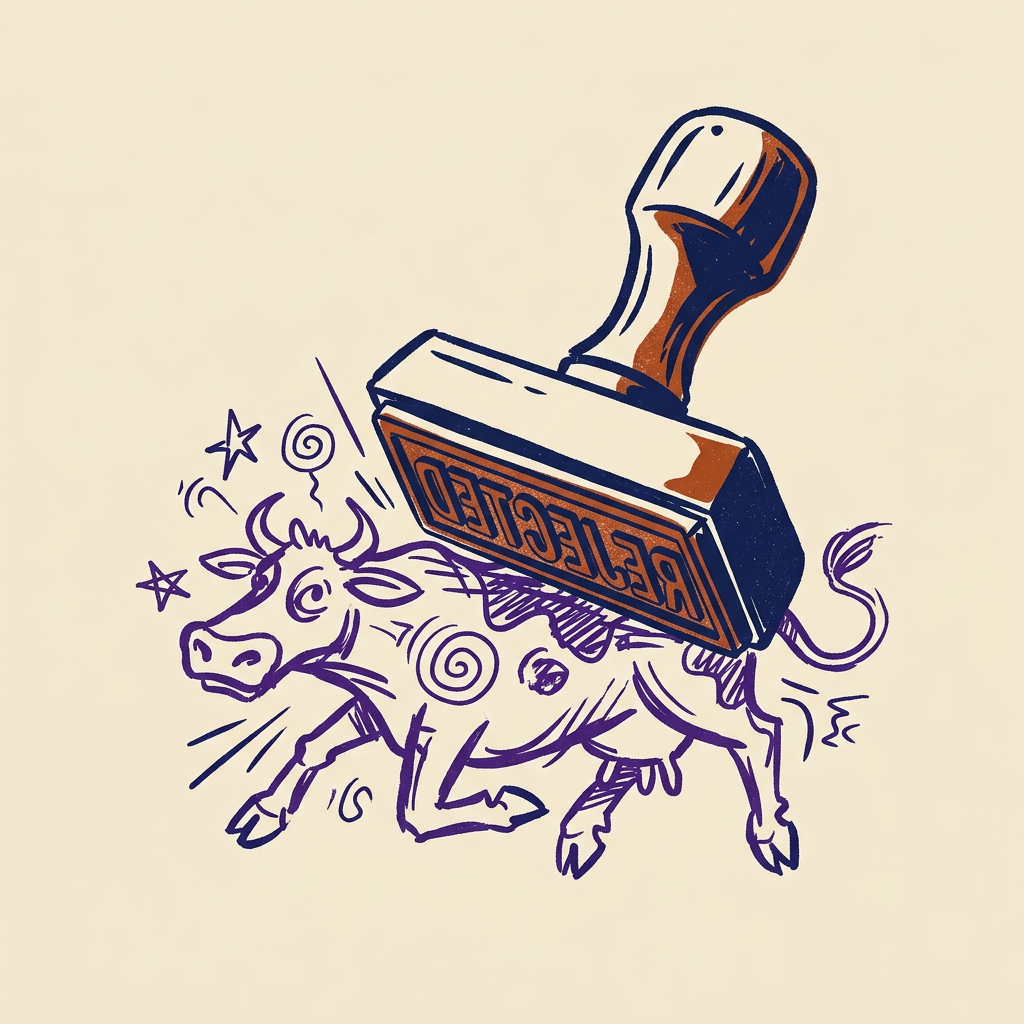
Fear keeps companies beige
Companies default to boring products not from lack of ideas but from aversion to the visible risk that a remarkable product might fail loudly.
Visible bold failure
Often costs a manager the job
Quiet mediocrity
Rarely traced to anyone, so it persists
If remarkable products spread and average ones do not, why do so few companies build them? Godin’s answer is organizational. Large companies punish visible failure far more than they reward missed opportunity. A loud flop can cost a manager a job; a mediocre unnoticed product rarely traces back to one decision-maker.
That asymmetry creates systematic bias toward the safe middle. Committees, focus groups, and approval layers exist to sand down anything unusual, because unusual is what gets blamed when it fails. The very process meant to reduce risk—extensive testing and consensus—guarantees blandness. A truly new idea has no precedent for a focus group to like.
Internal incentives reward the appearance of diligence over the outcome of remarkableness. A brand manager who launches something safe that quietly underperforms is rarely fired. One who launches something bold that fails publicly often is. Over time organizations learn to prefer slow invisible failure over fast visible risk, even though the slow kind damages the business more in aggregate.
The fix he proposes is not another process. It is changing what gets measured and rewarded: treat the failure to be remarkable as the real risk, and run small cheap experiments that test unusual ideas without betting the whole company on any one of them.
In practice: Godin notes that a brand manager behind a safe, unremarkable launch that quietly underperforms rarely loses the job, while one behind a bold public failure often does—training the whole organization toward beige.

6
Spend the budget inside the product
The most effective marketing money is spent inside the product before any ad is bought, because design is what generates the story people repeat.
Dollar on ads
Temporary rental of attention that ends with the budget
Dollar in design
Unusual feature people describe to each other for free
Once remarkableness must be built in and organizations resist building it in, Godin turns to where money should actually go. The R&D budget and the product design process are marketing expenses, whether or not the company labels them that way.
He contrasts two uses of the same dollar. One company spends it on an ad campaign describing a feature. Another spends it making that feature so unusual people describe it to each other for free. The second creates a durable asset—ongoing conversation. The first rents attention that vanishes when the budget stops.
The remarkable element is often structural, not cosmetic. Design choices made before any campaign can generate attention no later promotion could match at the same cost. That implicitly rewrites the org chart: if the product decision is the real marketing decision, marketers need influence over development, not just over how a finished average object gets described.
Companies that keep the functions separate—engineers optimizing for cost and reliability while marketers receive a finished ordinary thing to promote—structurally guarantee themselves nothing to work with.
In practice: Method’s translucent sculptural soap bottles turned a commodity cleaner into something people displayed instead of hid; the Motley Fool wrote about investing with humor instead of the sober tone the category assumed was required—both design-stage choices that generated attention campaigns could not have bought as cheaply.

7
Niches are the growth path
Serving a narrow audience extremely well is not a consolation prize; it is a more reliable path to growth than mass marketing.
Businesses often treat niche focus as what you settle for when you cannot compete broadly. Godin inverts that. In a fragmented attention landscape, niches are usually the only viable start, because a narrow audience is small enough and connected enough for a remarkable idea to reach saturation and then spread outward.
The reasoning ties back to the diffusion curve. A tiny well-defined niche—ultramarathon runners, vintage typewriter collectors—has dense internal communication. Everyone talks to everyone else at races, in forums, at conventions. A product remarkable enough to dominate conversation inside that dense group can achieve total penetration quickly, something impossible in a broad diffuse mass market.
Once the niche is saturated, its members become the sneezers who carry the idea to adjacent larger groups. Specialty foods, craft beverages, and enthusiast hardware have repeatedly followed the path: total dominance of a small opinionated community first, mainstream adoption later, driven by that community’s credibility rather than mass ads aimed at the mainstream from day one.
The strategic implication is counterintuitive for growth-minded executives: shrinking the initial target is often the fastest route to eventual scale. Trying to appeal to everyone from the start dilutes the unusual quality that would have made the product remarkable to anyone, and lands it back in the crowded silent middle.
In practice: Godin points to specialty foods, craft beverages, and enthusiast hardware that first dominated small opinionated communities, then reached the mainstream through those communities’ credibility rather than through mass advertising.

8
Decide whom you will repel
Building something remarkable necessarily alienates some potential customers; refusing that trade-off leaves you remarkable to no one.
Try to please everyone
Edges sanded off, nothing left worth remarking on
Accept the trade-off
Specific enough to delight some and lose others on purpose
A direct consequence of the niche argument is stark: remarkable products offend or bore some segment by design. The features that excite one group make the product irrelevant or unappealing to another. There is no version that keeps both groups equally happy.
Most companies, facing the trade-off, soften the edges to avoid losing anyone and thereby lose the quality that made the product worth discussing. The instinct to be liked by the largest possible number is, in Godin’s framing, incompatible with being remarkable to any specific group. Trying to satisfy both the adventurous and the cautious eater with one menu produces a menu neither finds worth mentioning.
Alienation is not good in itself. It is an unavoidable byproduct of specificity, and specificity is what generates word of mouth. A company that treats every complaint as a flaw to correct will, over time, sand the product back toward the beige middle that killed differentiation.
The discipline required is deciding in advance who the product is not for, and being willing to lose that segment’s business without treating it as failure—psychologically hard for managers trained to see every lost sale as a problem to solve.
In practice: A restaurant that serves only one strange intense dish delights adventurous eaters and repels people who want a familiar safe meal; softening the menu to keep both groups produces something neither group mentions.

9
First to attention beats later and better
Being early to a remarkable idea matters more than being the best version of it, because attention cannot be caught up on later.
Godin closes by addressing timing. Remarkable is not permanent; a Purple Cow that gets copied stops being purple once enough competitors have similar cows. The advantage is temporary, and the company that moves first captures most of the attention value, even if a later rival builds a technically superior version.
Journalists and critics look for what is new to write about, not what is currently best by some objective measure. A second company to introduce a similar unusual feature, even an improved one, is no longer news—the story has already been told. That is why many category-defining companies are not the ones with the most refined product years later, but the ones who arrived first with something different enough to earn a first mention.
The pressure is to act before an idea feels fully validated, which collides with the risk-aversion described earlier. Godin’s answer is not recklessness but small, fast, cheap tests: launch a limited version to a small niche, see whether it generates real conversation, and scale only what actually spreads. That captures first-mover advantage in attention without betting the entire company on an untested idea.
The threads tie into a cycle: find a niche, build something specific enough to alienate some and delight others, launch fast and small, then move to the next Purple Cow before the current one turns brown.
In practice: Godin notes that a second company introducing a similar unusual feature—even an improved one—is no longer news to journalists and critics, because the story has already been told by the first mover.
Key terms
- Purple Cow A product or service so unexpected it demands attention and prompts people to talk about it unprompted.
- TV-Industrial Complex The old formula of building a decent product then buying enough mass television advertising to create demand.
- Remarkable Worth making a remark about; different from merely good, well-made, or high-quality.
- Sneezers People with the social reach and credibility to spread an idea to others, like carriers of a virus.
- Ideavirus An idea that spreads through a population via word of mouth once it has a compact story and the right carriers.
- Safe middle The crowded mainstream of a market where products are adequate, competition is fiercest, and almost nothing gets discussed.
- Beige Godin’s shorthand for boring, average, risk-sanded products that organizations default to when they fear visible failure.
What to do
- List what your product does that your three biggest competitors also do, cross those out, and spend budget expanding whatever remains rather than describing it in ads.
- Identify the smallest, most tightly connected group of potential customers who would care most about that remaining difference and launch to them first.
- Track whether those customers mention the product to each other unprompted within two weeks; if they do not, treat the product as not yet remarkable.
- Write down explicitly who your product is not for and get comfortable losing their business without treating it as failure.
- Run one small, cheap experiment of an unusual idea aimed at a niche instead of waiting for full consensus and market testing.
Questions to think with
- What single sentence would a real customer use, unprompted, to describe your product to a friend?
- Which segment are you willing to alienate on purpose so another segment has something worth remarking on?
- Where in your organization is visible failure punished harder than the quiet failure to be remarkable?
- If you spent the next marketing dollar inside the product instead of on promotion, what would actually change?
- Which dense niche could you dominate with conversation before you ever tried to reach the mainstream?
The other side
The book is a polemic built on favorable anecdotes—Krispy Kreme, JetBlue, Method, the Motley Fool—without a systematic sample of bold attempts that failed, so survivorship bias is baked in; several flagship examples later hit serious trouble, the advice for what to do after the cow turns brown is thin, whole categories face legal or economic limits on differentiation, not everything discussed is commercially valuable, and the book offers almost no way to measure in advance whether an idea will actually spread.
Who it's for
Entrepreneurs launching in a crowded market who need a reason for anyone to notice, marketing managers watching ad spend buy less each year, and product designers who want a framework for building differentiation into the thing itself rather than the campaign around it.