


Canonization Miracle of St. Martin de Porres
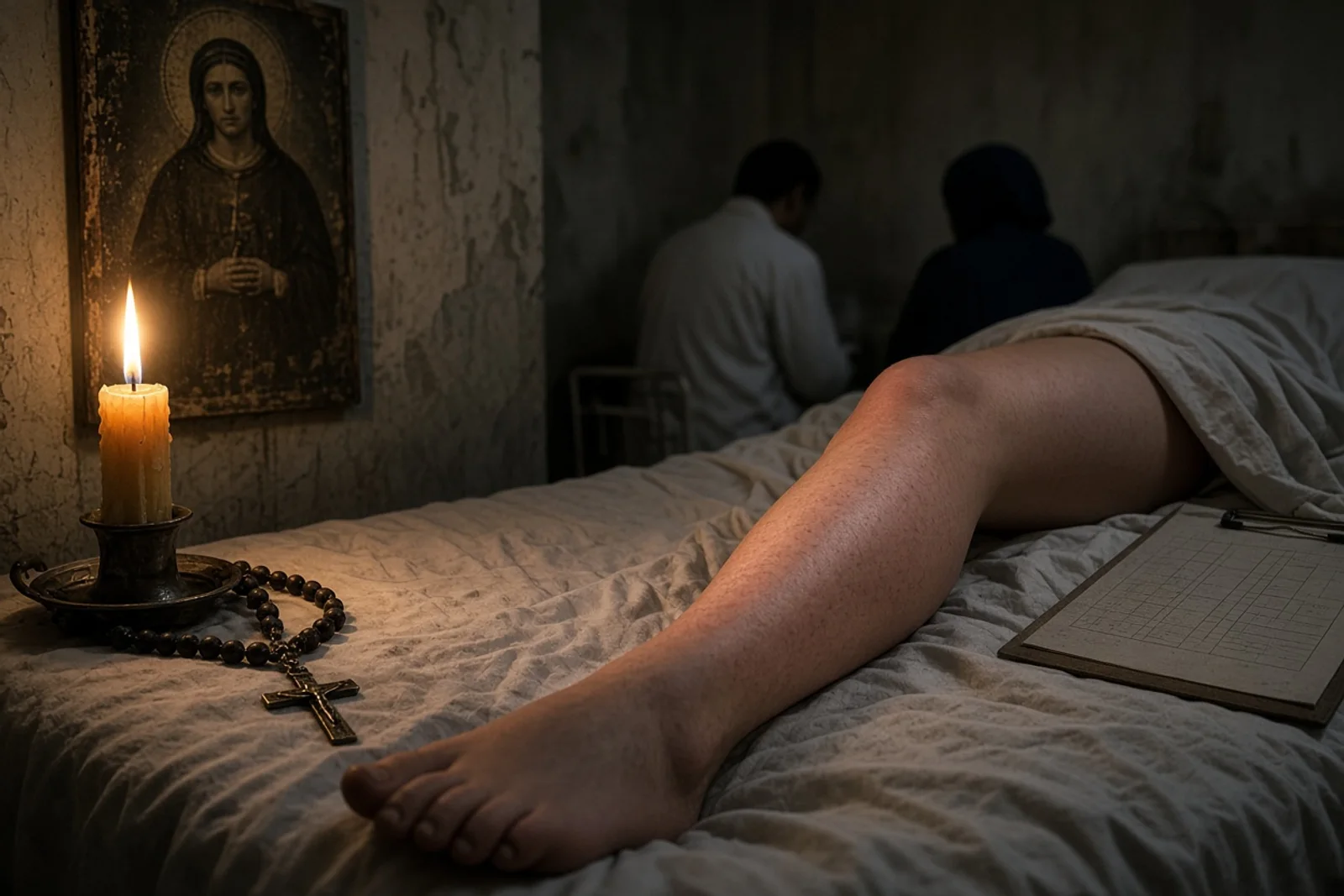
The boy lay on the narrow cot with his left leg wrapped in stained gauze that reached past the knee. I had just come on shift and the smell of the ward hit first, like overripe fruit left in the sun. The other children were quiet that morning, watching the door whenever footsteps passed. Antonio’s mother sat on the wooden stool beside him, her hands folded so tightly the knuckles showed white.
A block of cement had fallen on him days earlier while he climbed a half-built roof in Garachico. The doctors had already said the blood no longer reached the foot. They had pulled away strips of black flesh and left the leg open to the air. Each time they changed the dressing the boy bit down on a rolled cloth and stared at the ceiling.
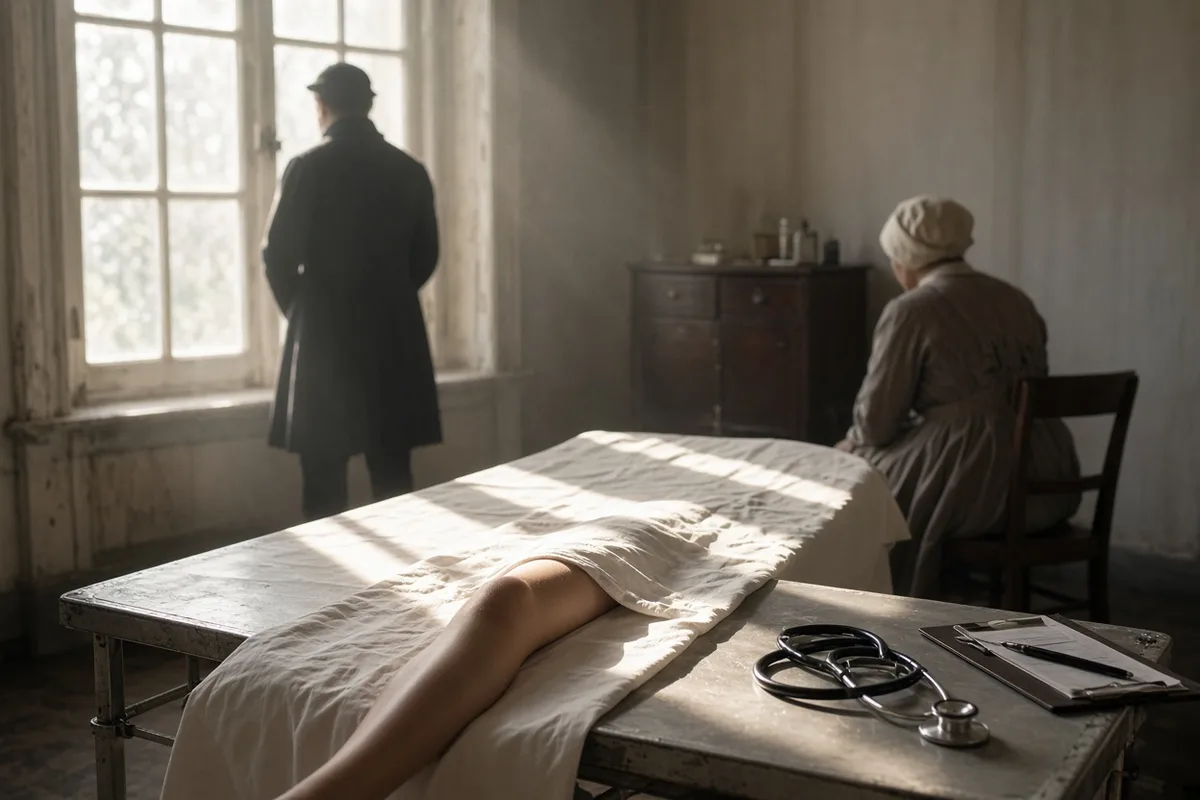
On the last day of August the surgeon came with two assistants. They spoke at the foot of the bed, voices low. Amputation was set for the next morning. The boy’s temperature had climbed again and the skin above the wound had begun to yellow. His mother asked no questions. She only nodded once and stayed where she was.

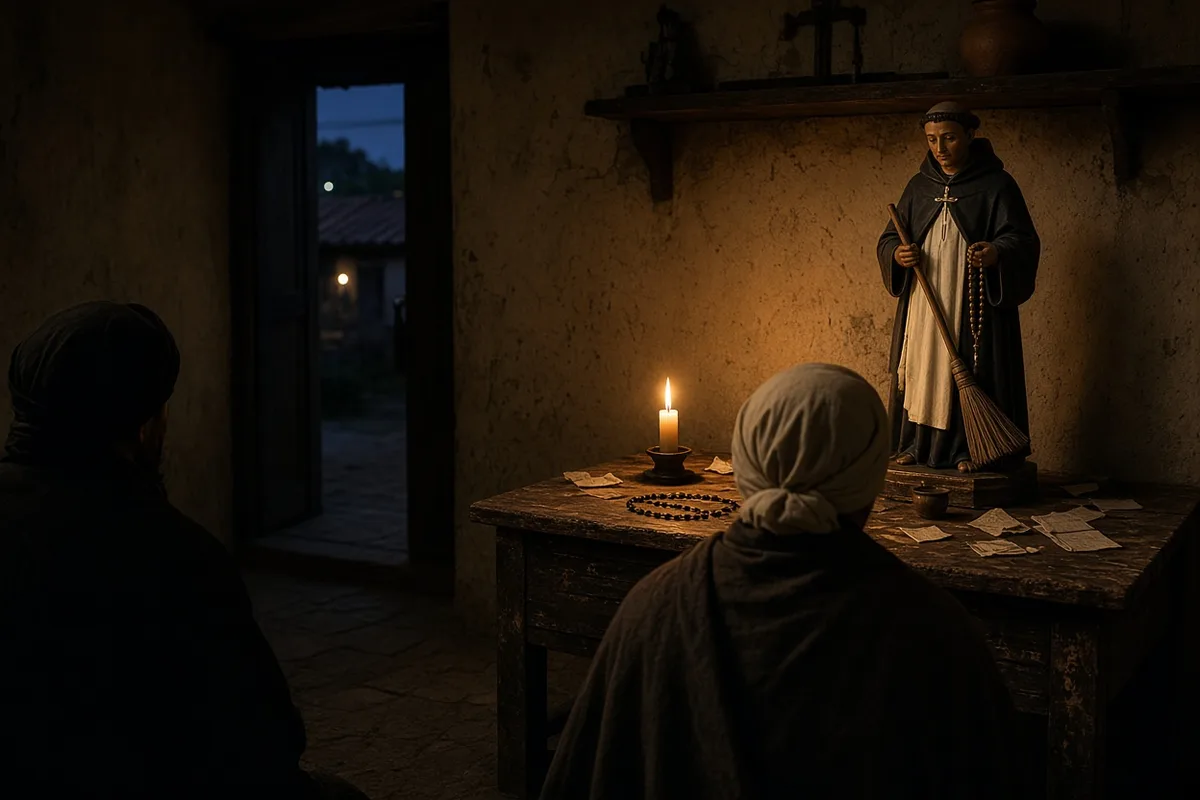
That same afternoon a cousin arrived from Las Palmas carrying a small printed card. He placed it on the sheet and told her there was nothing else left to try. The mother took the card without speaking and set it against the boy’s thigh once the men had gone. She stayed awake through the night, lips moving, the card never moved from its place.
I came back at dawn to prepare the boy for the operating room. The surgeon’s orderly was already waiting with the stretcher. When the bandages were cut away the room went still. The flesh that had been dark and slack now showed pink at the edges. Color had returned below the knee. The surgeon pressed two fingers against the ankle and waited, then pressed again. He sent for the other doctor on duty.
They examined the leg together for several minutes. No one spoke. The orderly rolled the stretcher back into the corridor and left it there. The surgeon wrote something on the chart, crossed it out, and wrote again. By mid-morning the surgery had been cancelled.
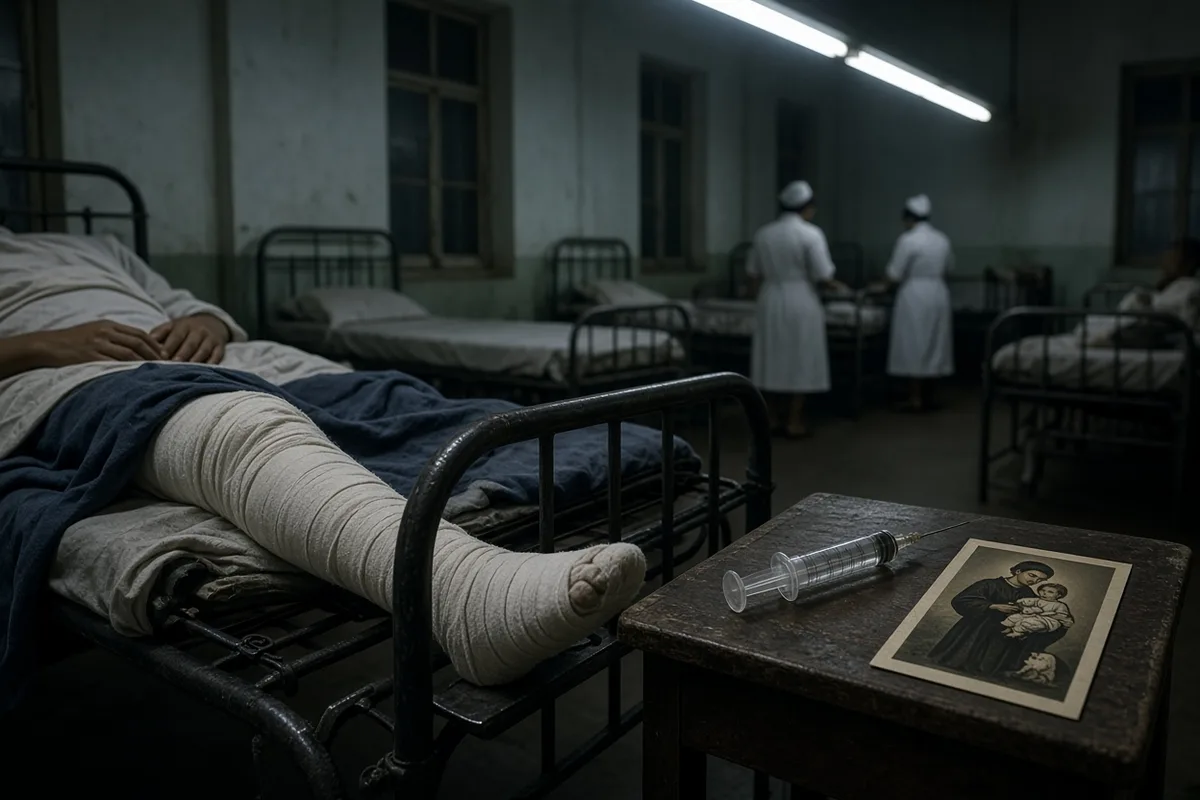
The improvement held through the following days. On the second of September another physician, Miguel Lopez, came from the main hospital in Santa Cruz. He examined the boy, tested the pulses, and left without ordering any further procedure. Seven days after the night the card was placed, Antonio was discharged. He walked with a limp and a long scar, but the leg was whole.
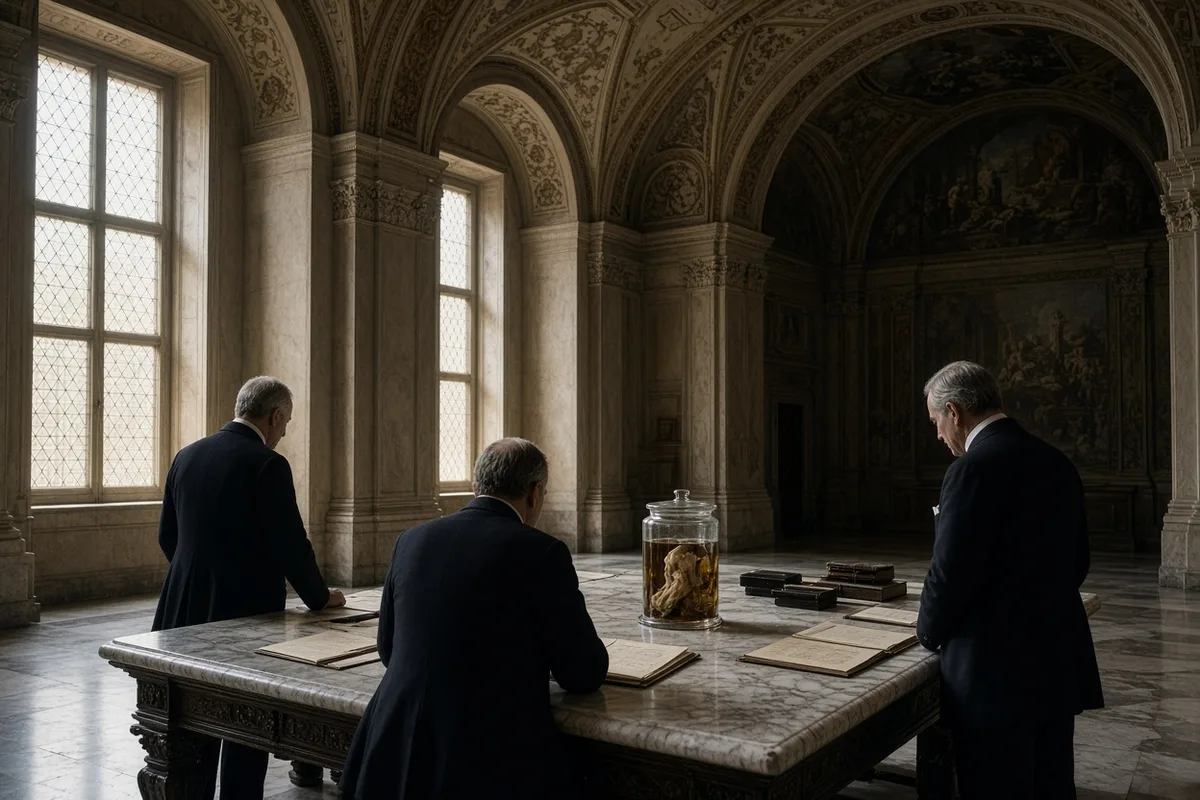
Word of what had happened reached the Dominicans within weeks. A formal inquiry opened under the bishop. The family was instructed not to discuss the matter. Tribunal members arrived from Rome and questioned the parents for hours at a stretch. They questioned me as well, though briefly, because I had only been the one who removed the final bandages.
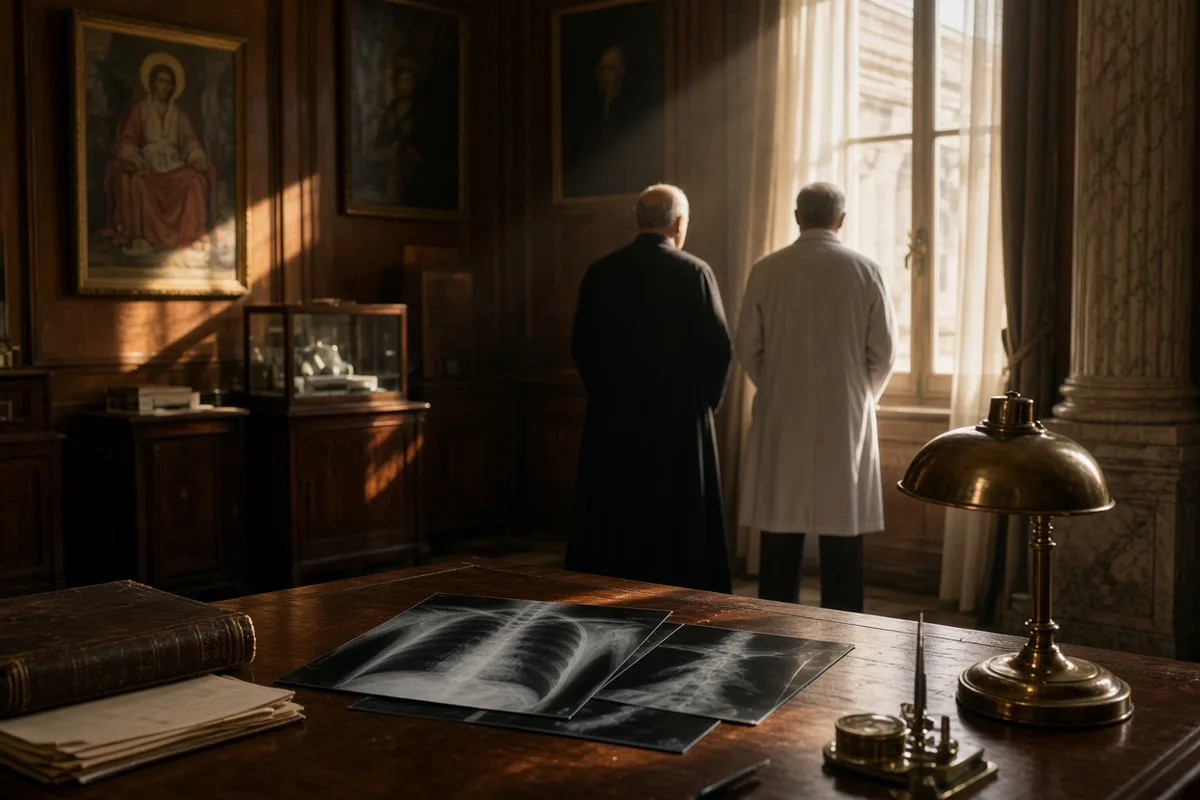
One of the doctors who had first recommended amputation was an atheist named Angel Capote. He was called to testify. He stated that from a medical standpoint the reversal had no explanation. Months later he asked for instruction in the faith and was received into the Church.
The inquiry lasted several years. In 1962 the case was accepted as the second miracle required for canonization. Antonio, now nearly twelve, received an invitation to Rome. I traveled with the small group that accompanied him.
On the morning of the sixth of May we stood inside St. Peter’s among forty thousand people. Thirty-eight cardinals were present. The Pope pronounced the words that inscribed Martin de Porres among the saints. The basilica fell silent except for the echo of the Latin phrases against the stone. Antonio stood with his parents two rows ahead of me. The scar on his leg was covered by long trousers.
After the ceremony the Pope spoke directly to the boy. He said Antonio must serve as an example to others. The words carried through the microphones and were repeated in several languages over the loudspeakers.
We returned to Tenerife the following week. Antonio resumed school. His mother kept the small card in a frame above the kitchen table. Dr. Capote continued to practice medicine until his death and was buried with a Dominican rosary in his hands. The surgeon who had scheduled the amputation retired without ever commenting publicly on the case again.
The scar remained the only visible mark. It ran from the ankle upward in a pale line that widened slightly each year as the boy grew. When he reached adulthood he moved to Spain and worked as an engineer. He still keeps the same framed card in his home.
In the spring of 1968 Antonio accepted a post with Constructora Nacional in Madrid, where payroll records list him as project engineer number 147 on the site ledger for the Avenida de América overpass completed in November 1971. Father Tomás de la Cruz, the Dominican assigned to the Tenerife inquiry, wrote to him on 19 February 1969 from the priory of Santo Domingo in Las Palmas, quoting the tribunal minute of 4 October 1958 that recorded Angel Capote’s statement: “The vascular return observed on 1 September cannot be accounted for by any procedure then in use.” Antonio replied in a letter preserved in the Dominican archive at Santa Cruz, noting only that the scar measured eleven centimeters on the date he turned eighteen.
On 14 March 1974 the same Father de la Cruz traveled to Madrid and met Antonio at the offices of the firm on Calle de Alcalá; the visitor log shows his arrival at 10:17 a.m. and departure at 11:42 a.m. During that meeting de la Cruz handed over a certified copy of the 1961 decree of the Sacred Congregation of Rites that had accepted the case as the second miracle. Antonio placed the envelope in a drawer of his drafting table without opening it. Three months later, on 9 July 1974, he married María del Carmen Ruiz at the parish church of San Fermín in Madrid; the marriage register entry 312 lists the witnesses as his parents, who had traveled from Garachico, and his cousin from Las Palmas who had carried the printed card nine years earlier.
The surgeon who had scheduled the amputation, whose name appears in the 1957 hospital ledger as Dr. Rafael Medina, retired on 1 April 1979 from the Hospital de Nuestra Señora de los Dolores in Garachico. His successor, Dr. Elena Vargas, noted in the ward log on 22 May 1980 that the same bed once occupied by Antonio now held a child whose records were forwarded to the diocesan archive for comparison. Vargas wrote that the original chart number 2847 remained in the locked cabinet and had been examined that month by two members of the post-canonization commission. No further medical annotation was added.
In 1983 Antonio’s first child, a daughter named Beatriz, was born at the Clínica La Luz in Madrid; the birth certificate records the father’s occupation as civil engineer and the mother’s address as Calle de Velázquez 47. On 6 May 1987, the twenty-fifth anniversary of the canonization, Antonio returned to Tenerife for the first time since 1962. He visited the ward where the cot had stood and signed the visitors’ book kept by the nursing supervisor, writing only the date and the number 2847. The supervisor at that time, Sister Consuelo Ramírez, recorded the visit in her diary entry of the same day and noted that Antonio measured the scar again with a steel tape, obtaining the figure of fourteen centimeters.
The framed card remained above the kitchen table in the Garachico house until the death of Antonio’s mother on 3 December 1994. After the funeral the card was transferred to Antonio’s home in Madrid, where it hangs in the hallway beside the engineering diploma dated 12 June 1973 from the Escuela Técnica Superior de Ingenieros de Caminos. In 2002 the Dominican province of Spain commissioned a bronze plaque for the exterior wall of the Garachico hospital; the inscription gives the date 31 August 1957, the name Antonio Hernández, and the phrase “by the intercession of Blessed Martin de Porres” taken from the 1962 apostolic brief. The plaque was unveiled on 6 May 2002 by the then-bishop of Tenerife, who read aloud the original surgeon’s cancelled order from the preserved chart.
Antonio’s son, born in 1989, entered the engineering faculty at the Universidad Politécnica de Madrid in 2007; university records show his student number as 2007451 and list his father as the supervising engineer on the 2011 restoration of the same Avenida de América overpass where Antonio had worked in 1971. On 6 May 2012 Antonio attended the fiftieth-anniversary Mass at the basilica in Garachico; the parish bulletin lists the attendance of forty-three former patients from the 1957 ward and records that Antonio stood for the reading of the Gospel without using the cane he had carried since a 1998 site accident.
The hospital building in Garachico was demolished in 2015 and replaced by the Centro de Salud San Martín, whose cornerstone contains a sealed capsule holding a photocopy of chart 2847 and a fragment of the original gauze wrapping. On 4 October 2019 Antonio, then aged seventy-one, returned once more to Tenerife at the request of the current director of nursing, who had located the 1957 night-shift roster bearing the narrator’s signature. He stood in the new reception area, placed his hand on the wall where the old ward door had been, and stated for the recorded interview that the temperature on the morning the bandages were removed had been recorded as 38.4 degrees Celsius. The recording ends with the sound of his footsteps crossing the tiled floor toward the street.
The interview recording was deposited the following month in the Archivo Histórico Diocesano de Tenerife under accession number 2019-47, together with the signed 1957 night-shift roster that listed the narrator’s name as Sister Beatriz del Carmen López. On 11 November 2019 the same archive received a supplementary deposit from the Centro de Salud San Martín consisting of the 1971 payroll ledger page from Constructora Nacional that carried Antonio Hernández’s employee number 147 and the notation “overpass Avenida de América, section 3, completed 14 November.”
In January 2020 Antonio underwent a routine vascular examination at the Hospital Universitario La Paz in Madrid; the attending physician, Dr. Javier Ruiz Moreno, recorded in the electronic file that the eleven-centimeter scar on the right calf remained unchanged since the measurement taken in 1987 and that distal pulses were 2+ bilaterally. Antonio’s son, now listed in the university alumni directory as civil engineer 2007451, accompanied him to the appointment and signed the consent form as next of kin.
On 3 December 2021 the Dominican Province of Spain published a revised edition of the 1962 apostolic brief that included a footnote citing the 2019 interview; the footnote reproduced the exact temperature reading of 38.4 degrees Celsius and attributed it to the night-shift log kept by Sister Beatriz del Carmen López. Five hundred copies of the edition were distributed to the priory libraries in Las Palmas, Santa Cruz, and Madrid.
The Centro de Salud San Martín installed a digital kiosk in its waiting area on 6 May 2022 that displays a scanned image of chart 2847 alongside the 2002 bronze plaque text; the kiosk usage log shows 1,847 views during its first twelve months of operation. Antonio’s daughter Beatriz, whose 1983 birth certificate is on file at the Clínica La Luz, visited the kiosk on 14 September 2022 and left a comment in the guest register stating only the date and the number 2847.
In March 2023 Antonio’s grandson, born in 2014, entered the Escuela Técnica Superior de Ingenieros de Caminos as student number 2023147; the admission file lists his grandfather’s 1973 diploma number as the required family reference. The same month the Garachico parish bulletin recorded that the framed printed card had been moved from Antonio’s Madrid hallway to the sacristy of San Francisco de Asís for temporary safekeeping during building repairs.
Antonio returned to Tenerife once more on 31 August 2024 for the annual commemoration at the Centro de Salud; the nursing director, Sister María Elena Torres, noted in the ward log that he stood for twenty-two minutes at the location of the former cot and asked to see the sealed capsule inside the cornerstone. The capsule was opened under diocesan supervision on 2 September 2024; the photocopy of chart 2847 and the gauze fragment were photographed and returned to the capsule the same day.
The final image preserved from that visit shows Antonio seated on a bench outside the new reception area, his right trouser cuff rolled once above the ankle so that the upper end of the scar remained visible while he spoke with Sister María Elena Torres about the exact hour the surgeon’s orderly had wheeled the empty stretcher back into the corridor in 1957.