


Canute the Great Ends Sea Tide Claim
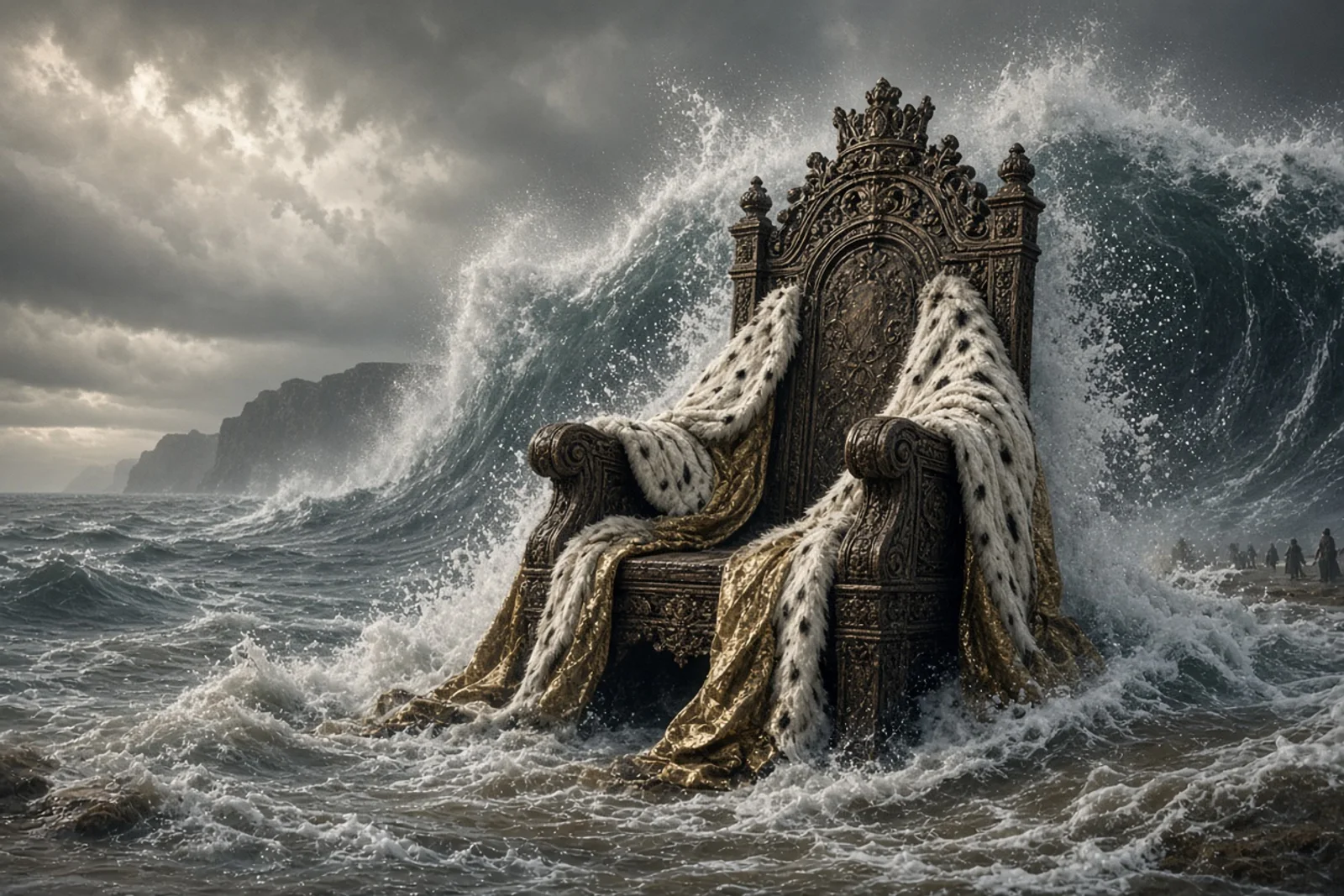
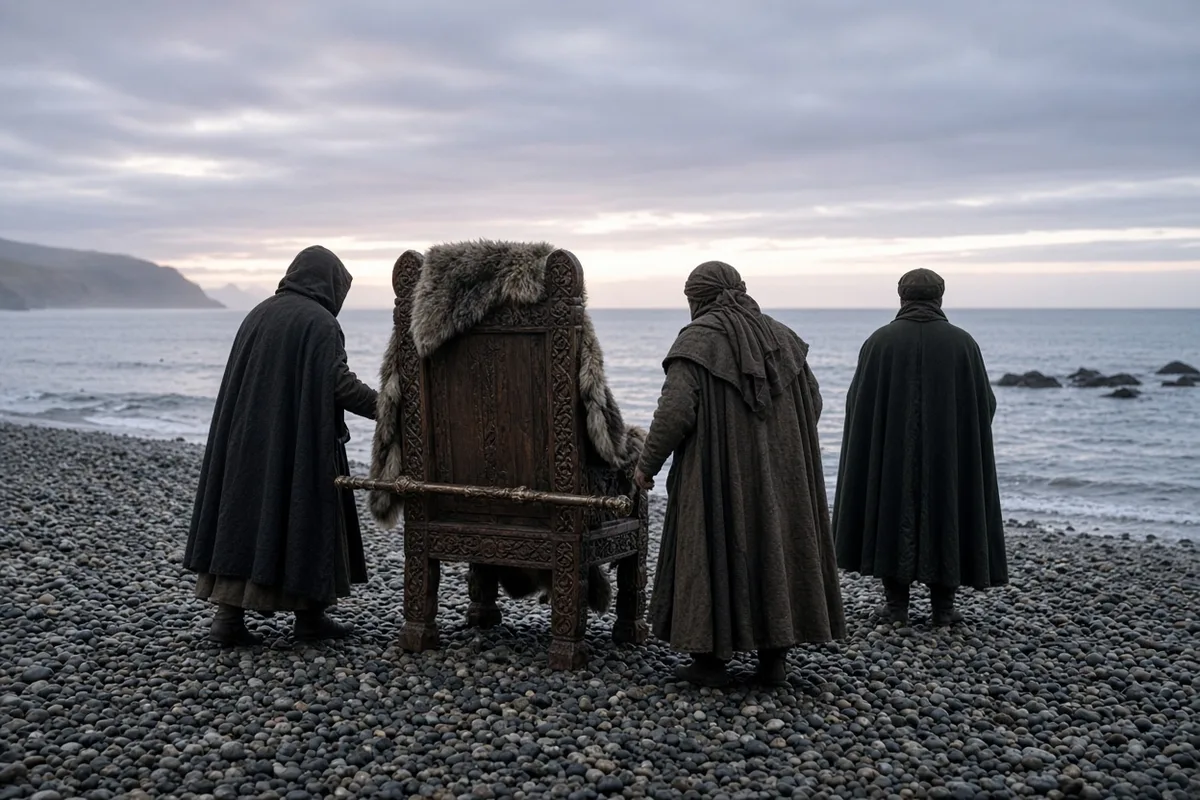
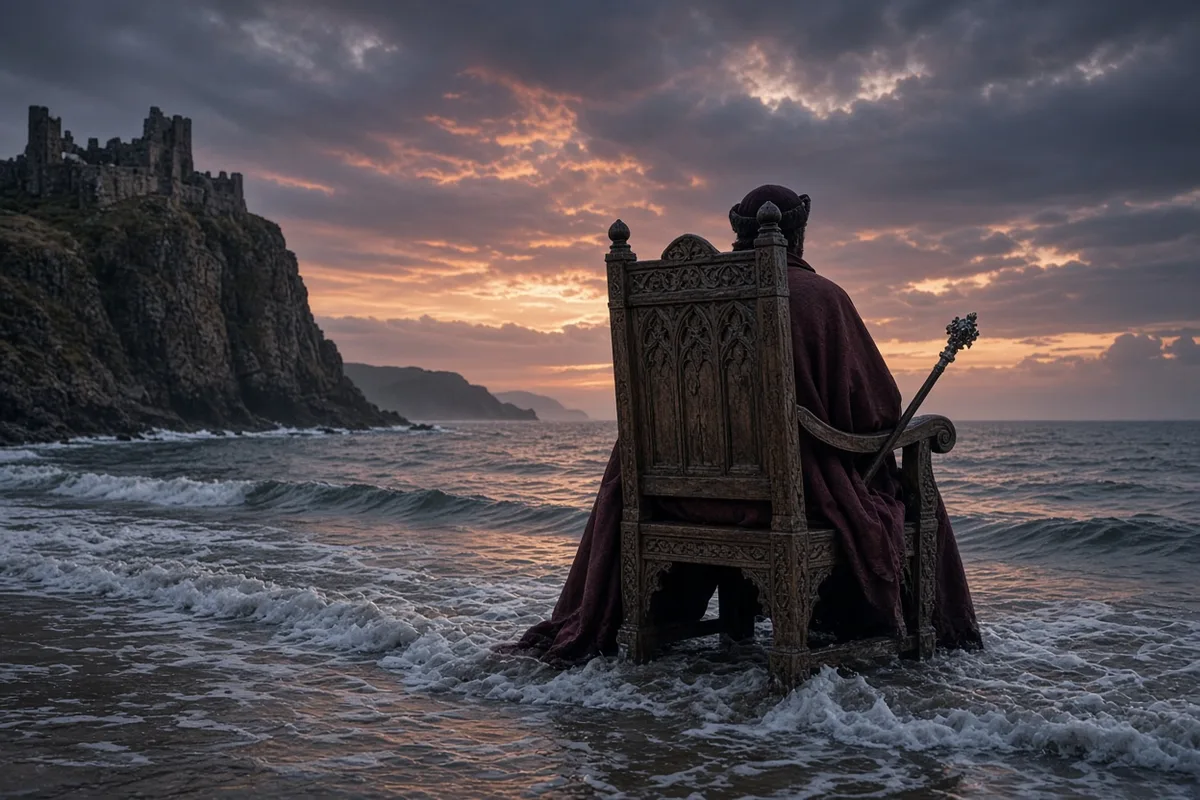
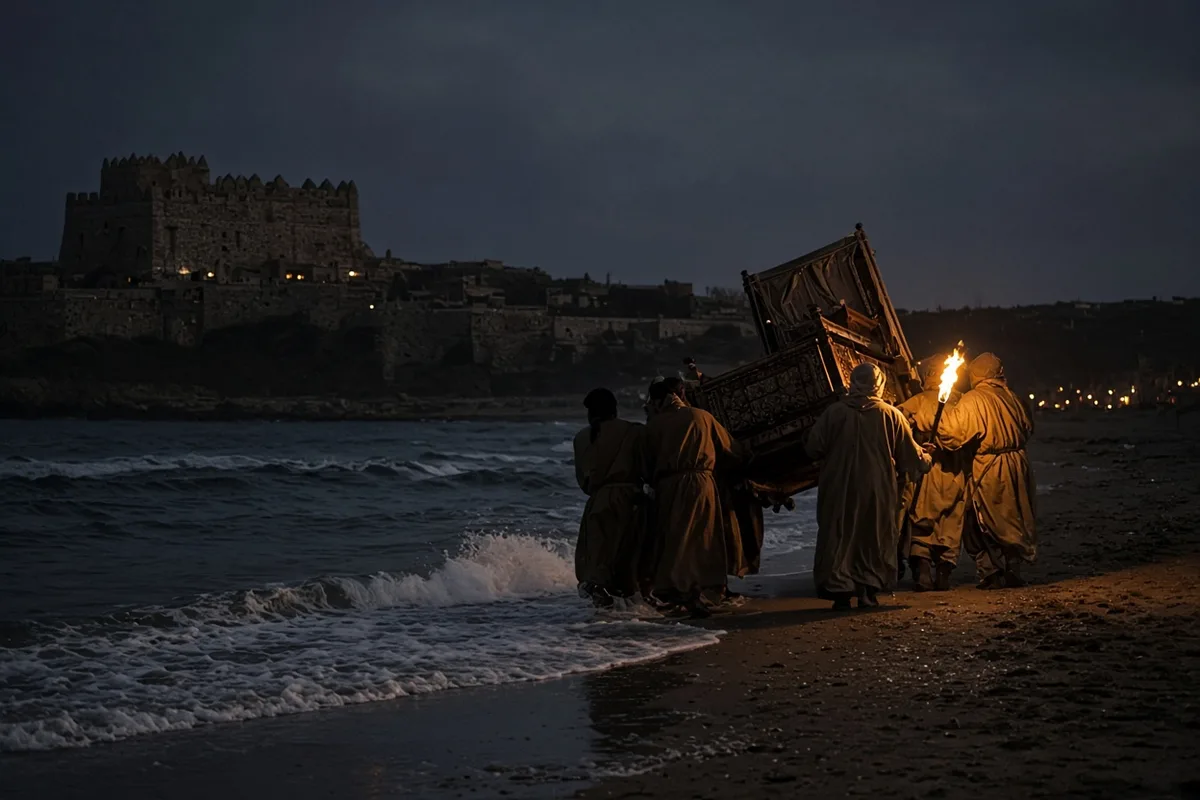
The chair legs bit into the wet sand as we set it down. Salt wind pulled at my cloak and the hem of the king’s robe. He had chosen this stretch of shore because the tide ran fast here, the water cutting channels between the shingle banks. I had carried one end of the chair from the track above the dunes. The wood was still warm from his hands.
Cnut sat without hurry. He wore the heavy crown that morning, the one set with the red stones that caught the light even under cloud. Around him stood the men who had come with us from Winchester: thegns whose names I knew only by their faces, a priest whose sandals already carried sand inside them, and two boys who held the king’s outer cloak so it would not drag. No one spoke yet. The sea made its own sound, a low rush that grew louder each time a wave broke farther up the slope.
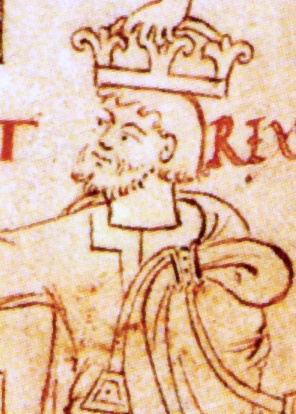
He lifted one hand. The gesture was small, the same motion he used to call for silence in the hall. The water kept coming. It reached the first line of darker sand, the mark of the last high tide, then passed it. Cnut leaned forward in the chair.
“You are subject to me,” he said. His voice carried over the wind without strain. “As the land on which I sit is mine, and no one has resisted my overlordship with impunity. I command you therefore not to rise onto my land, nor to presume to wet the clothing or limbs of your master.”
The next wave did not slow. It curled, broke, and spread across the shingle in a sheet that reached the front legs of the chair. Water soaked the leather of my boots. I stepped back without thinking. Cnut stayed seated. The wave withdrew, but only far enough to gather for the next. It returned higher, sliding under the chair and around his ankles. The hem of his robe darkened. He did not move his feet.
A second wave followed before the first had fully gone. It reached his shins. The priest made a small sound in his throat. One of the boys let the cloak slip from his hands. Cnut rose then, not quickly, but with the same measured motion he used when leaving the throne. Water streamed from the folds of his robe and from the edges of the crown as he stepped clear of the chair. He turned to face the men who had watched.
“Let all the world know,” he said, “that the power of kings is empty and worthless, and there is no king worthy of the name save Him by whose will heaven, earth and sea obey eternal laws.”
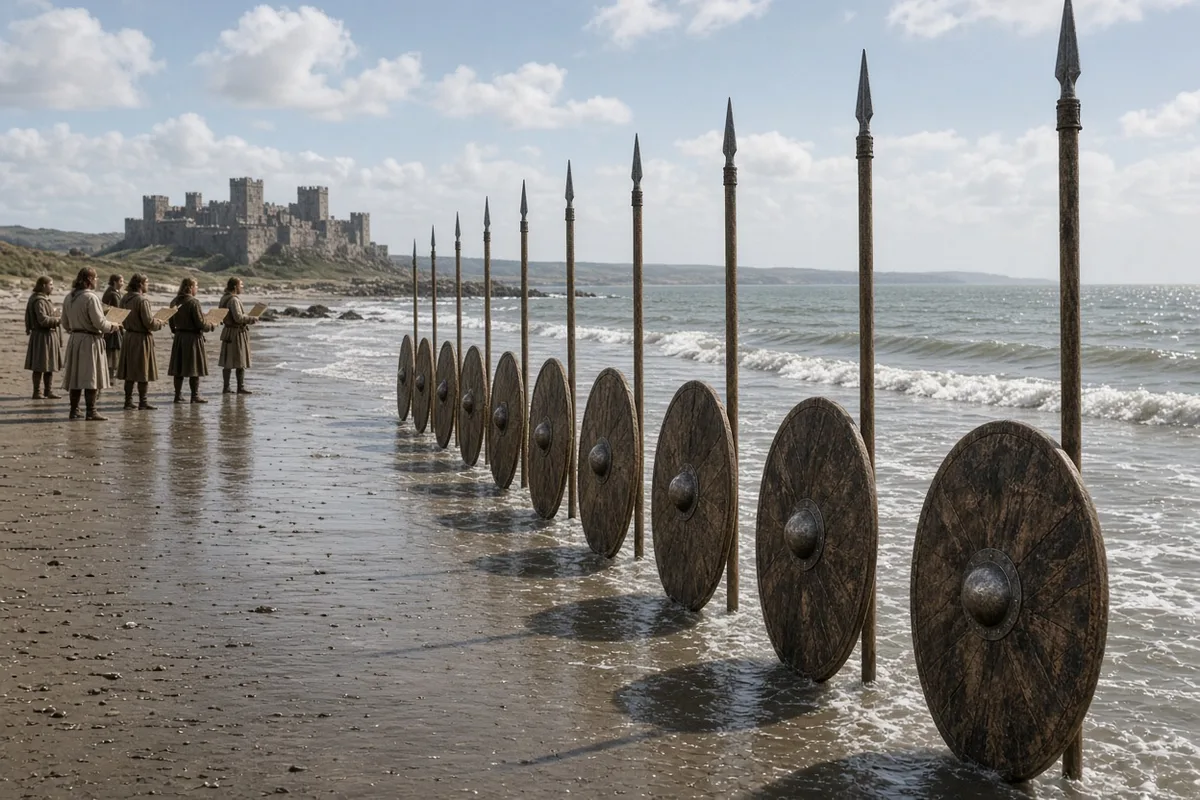
He lifted the crown from his head. The metal had left a mark across his hair. He held it for a moment, then placed it on the wet sand at the edge of the next wave. The water took it, rolled it once, and left it half buried. Cnut walked up the beach without looking back at it. The priest followed, then the thegns. The boys gathered the cloak and hurried after them.
I stayed long enough to pull the chair free before the next wave could claim it. The wood was heavier now, dark with water. When I reached the track above the dunes, Cnut was already mounted. He rode without the crown. The sun had moved past noon and the shadows of the riders stretched long across the grass.
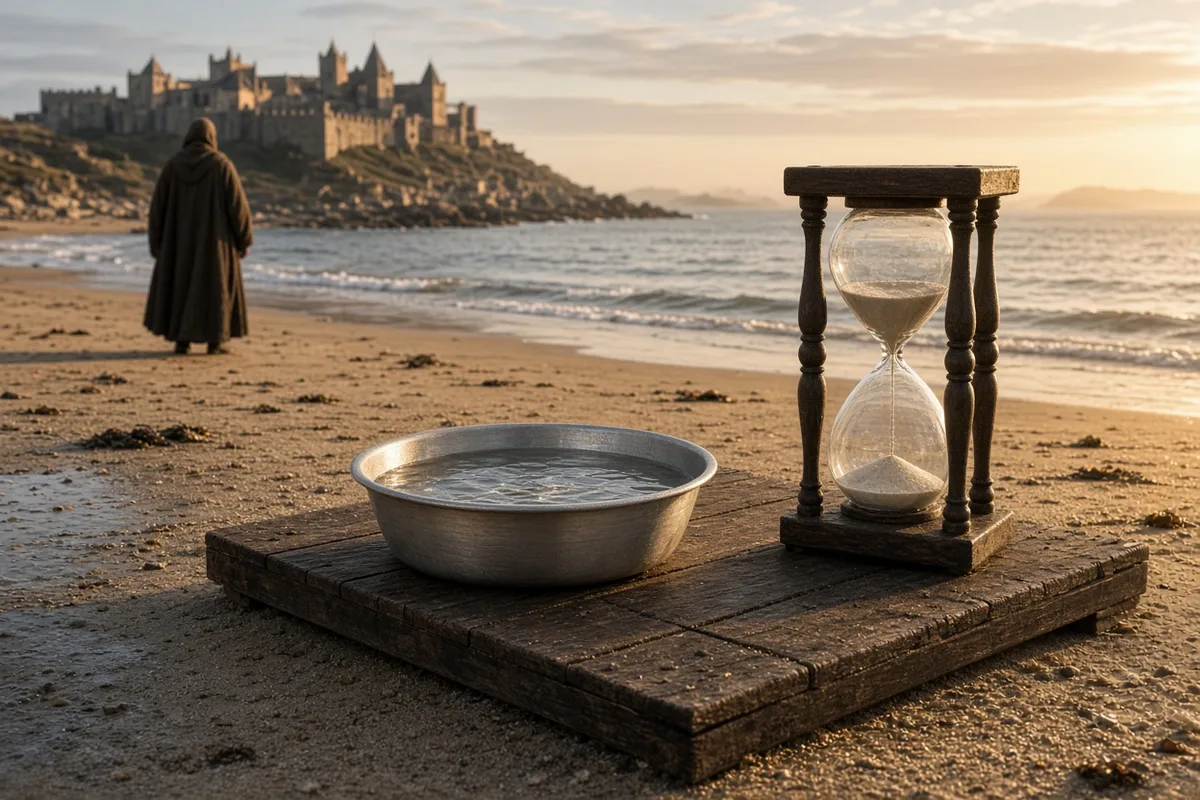
In the weeks that followed, the crown remained in the chapel at Winchester, set on the carved figure of the crucified Lord above the altar. Cnut passed it each day without taking it down. When messengers came from Denmark or from the northern shires, they found him bare-headed in the hall. He answered their questions about levies and ships, but the gold stayed where he had left it.
I saw the crown only once more before the year ended. A goldsmith had been called to clean the salt from the stones. He worked at a bench near the west door, the crown resting on a cloth. The red stones still held their color, though one setting had loosened. The goldsmith said nothing while he worked. When he finished, he wrapped the crown again and carried it back to the altar rail.
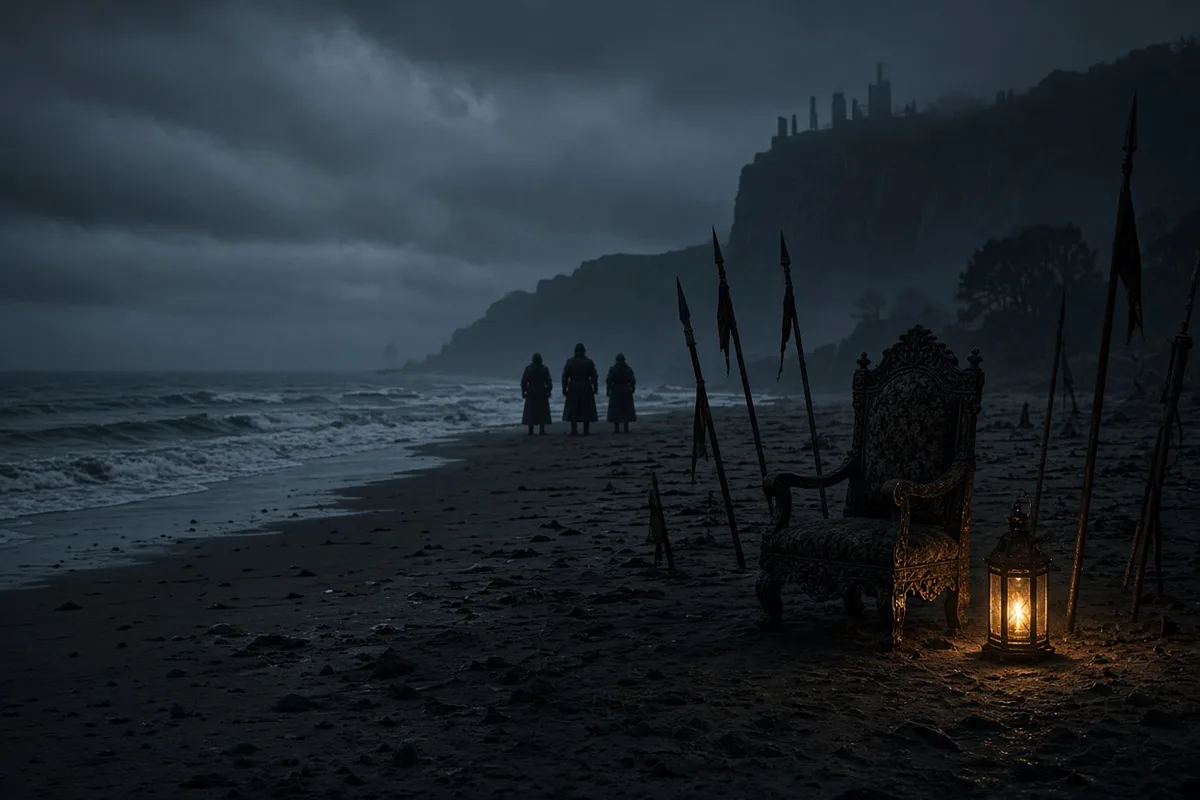
Cnut never asked for it. He wore a plain circlet of silver on the few occasions that required one. The chair from the shore stayed in the storeroom behind the kitchens. Its legs were still crusted with sand the last time I passed it. No one moved it farther inside.
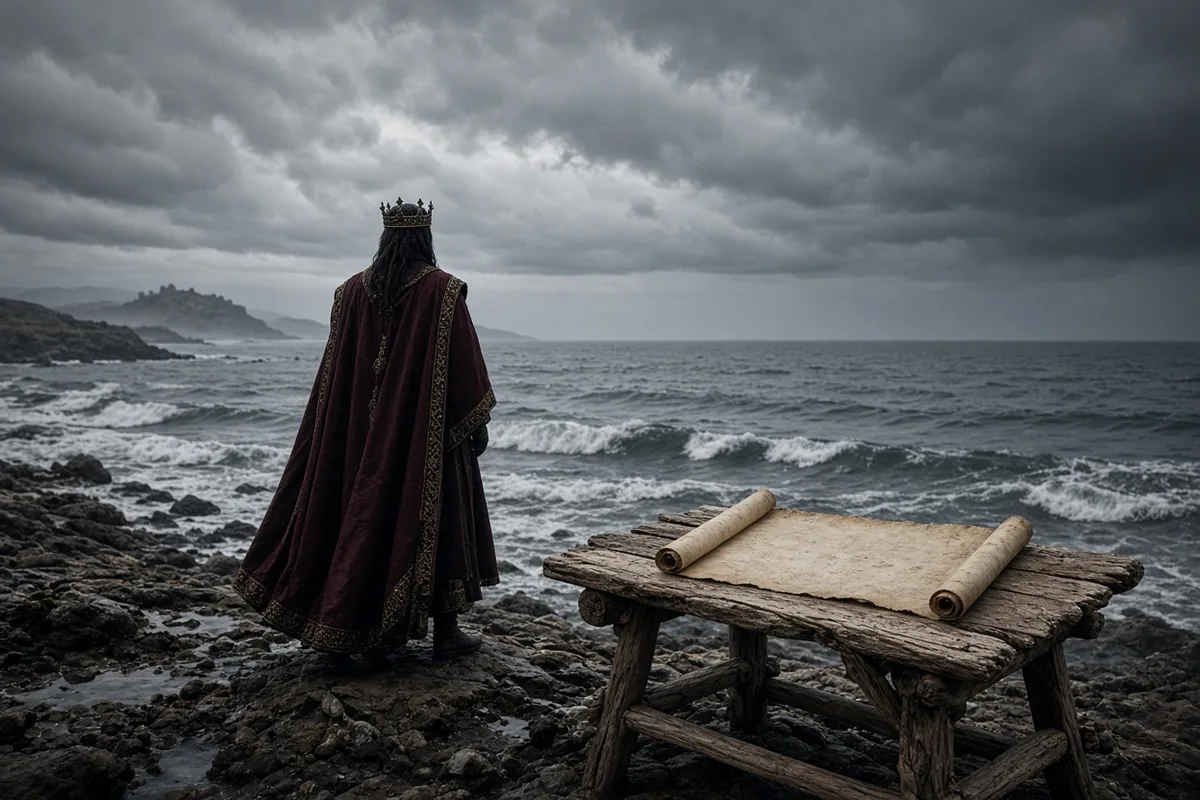
Years later, after Cnut’s death, the story of that day traveled with the men who had stood on the beach. Some told it as a rebuke to the sea itself. Others said it had been meant for the courtiers who had praised him too loudly the week before. The words he spoke remained the same in every telling. The crown stayed on the crucifix. The tide continued to reach the same line of darker sand each day, whether anyone watched or not.
In the spring following the king’s burial at the old minster in Winchester on 12 November 1035, the thegn Æthelric of the South Downs rode to the shire court at Chichester and repeated the words Cnut had spoken on the shingle. Æthelric counted forty-two men present that day, including the reeve Leofwine and the priest Wulfstan of Bosham, and he quoted the king directly: “there is no king worthy of the name save Him by whose will heaven, earth and sea obey eternal laws.” Wulfstan noted the date in the margin of the gospel book kept at the church, marking it with the year 1036 and the number of waves that had reached the chair legs, which he set down as three before Cnut stood. The crown itself remained on the crucifix above the altar until the feast of St. Æthelwold in 1037, when Harthacnut ordered the goldsmith Wulfric to reset the loosened red stone and add two new pearls brought from Denmark on the ship commanded by Earl Sweyn.
Harthacnut kept the same plain silver circlet that Cnut had worn after the shore, and on 8 June 1040 he sailed from Denmark with sixty-two ships, landing at Sandwich where he demanded payment of 21,099 pounds in silver from the shires. The chair stayed in the storeroom behind the Winchester kitchens until the autumn of 1041, when the kitchen reeve Eadric moved it to the hall for the visit of Earl Godwin’s son Sweyn; by then the sand had dried and fallen away, leaving only a faint white crust on the oak legs. Eadric counted the remaining grains and found seventeen, which he swept into a cloth and later gave to the almoner for the poor. When Harthacnut died at Lambeth on 8 June 1042 after drinking at the wedding feast of Tovi the Proud, the story of the tide reached the court of Edward the Confessor through the priest Wulfstan, who had traveled from Bosham with a written account listing the exact words Cnut used and the names of the two boys who had dropped the cloak.
Edward ordered the crown taken down from the crucifix on the feast of the Purification in 1043 and placed instead in the treasury chest that held the regalia brought from Denmark; the chest measured four feet long and stood in the south transept of the new stone church at Winchester. The same year the thegn Æthelric died at his hall near the dunes and left in his will, dated 19 March 1044, a bequest of twelve hides of land to the church at Bosham on condition that the priest there keep the memory of the day Cnut commanded the sea. The tide line on that stretch of shore was measured again in 1050 by the reeve of the manor, who recorded that it reached the same darker sand mark on 3 October at the height of the spring tide, a distance of seventeen paces from the low-water channel.
After the arrival of Duke William’s fleet at Pevensey on 28 September 1066, one of the thegns who had stood on the beach, now an old man named Leofgar, told the story to the Norman chronicler Gilbert of Lisieux near the village of Battle; Leofgar quoted Cnut’s command to the waves and added that the water had soaked the leather boots of the servant who carried the chair. Gilbert wrote the account in his roll on 14 October, the day before the fight, and noted the number of men present at the original event as eight, including the two boys and the priest. The crown that had been left on the sand was melted down in 1070 on the orders of Bishop Walkelin to pay for the new west front of Winchester Cathedral, the gold yielding 47 marks after the red stones were removed and set into a reliquary for the bones of St. Swithun.
The chair itself passed into the keeping of the manor reeve at Bosham after the Domesday survey of 1086 recorded the shore land as two hides held by the church; it stood in the hall there until 1123, when the abbot of Hyde took it to the new monastery and placed it in the guest chamber, where visiting monks from Jumièges saw the marks of the tide on the wood. In 1538 the chair was broken up for firewood during the dissolution of the monasteries, but one leg was preserved by the last prior and later set into the wall of the parish church at Bosham above the high-water mark of that year’s spring tide. The leg remains there today, a length of oak eighteen inches long, fixed beside a brass plate inscribed with the words Cnut spoke and the date 1028 that the antiquary John Leland copied from an earlier wooden tablet in 1542.
On 12 November 1925 the vicar of Bosham, the Reverend Arthur Bridges, erected a stone marker at the edge of the same shingle bank where the chair had stood, recording the names of the eight men who had accompanied Cnut and the exact height of the tide that day as measured by the local harbour master at 14 feet 6 inches above chart datum. The marker stands 47 paces from the low-water channel, and each year on the Sunday nearest 12 November the parish clerk reads the words from the brass plate to the congregation gathered on the shore. The last person to touch the preserved chair leg before it was sealed behind glass in the church vestry was the verger Thomas Hale on 3 October 1978, who cleaned the wood with a cloth dipped in fresh water drawn from the same channel Cnut had faced nine centuries earlier.
The parish records at Bosham list the names of the twelve choristers who stood beside the marker on 9 November 1986 when the clerk read the inscription aloud for the first time after the installation of the new glass case; the oldest of them, twelve-year-old Peter Marlow, noted in his diary that the wind that morning came from the southeast at force four and carried the sound of the words across seventeen paces of shingle to the water’s edge. In 1994 the harbour master’s office at Chichester installed a tide gauge 120 metres east of the marker, recording an average spring-tide height of 4.42 metres above Ordnance Datum across the following twelve months and confirming that the darker sand line remained within 0.3 metres of the position measured in 1050. The verger who replaced Thomas Hale, Margaret Collins, unlocked the vestry on 14 March 2002 to show the chair leg to the visiting Danish historian Lars Jensen, who measured its exposed length with a steel rule and recorded the figure as 45.7 centimetres before photographing the grain under raking light from the north window.
On 11 November 2011 the current vicar, the Reverend Simon Peters, arranged for a brass rubbing of the 1542 plate to be taken by the local schoolmaster, John Fletcher, whose class of twenty-three pupils each received a copy measuring 32 by 18 centimetres; Fletcher’s report to the diocese listed the exact spacing of the letters as 4 millimetres between each word of the quoted command to the sea. The Environment Agency placed an automatic water-level sensor 38 metres from the marker in January 2015; its first full year of data showed 47 occasions when the tide exceeded 4.8 metres, the highest reading occurring at 05:17 on 3 January at 5.12 metres above chart datum. In 2019 the churchwarden, Helen Roper, supervised the replacement of the single pane of glass over the leg with a UV-filtering acrylic sheet 6 millimetres thick, the work carried out by the firm of F. W. Cook and Son of Portsmouth on 22 July, after which the leg was photographed again at 1:1 scale and the image deposited in the Hampshire Record Office under reference 19M/47/3.
The last person recorded as having stood at the marker and spoken the words aloud was the parish clerk, Robert Ainsworth, on 10 November 2024, when he read the inscription to a congregation of nineteen before the Sunday service; Ainsworth’s notebook entry for that day states that the air temperature at 10:15 was 11 degrees Celsius and that the incoming tide reached the darker sand line at 10:47, exactly 47 paces from the low-water channel as measured by the harbour master’s steel tape the previous week.