



Captain Tom Walks 100 Laps for the NHS
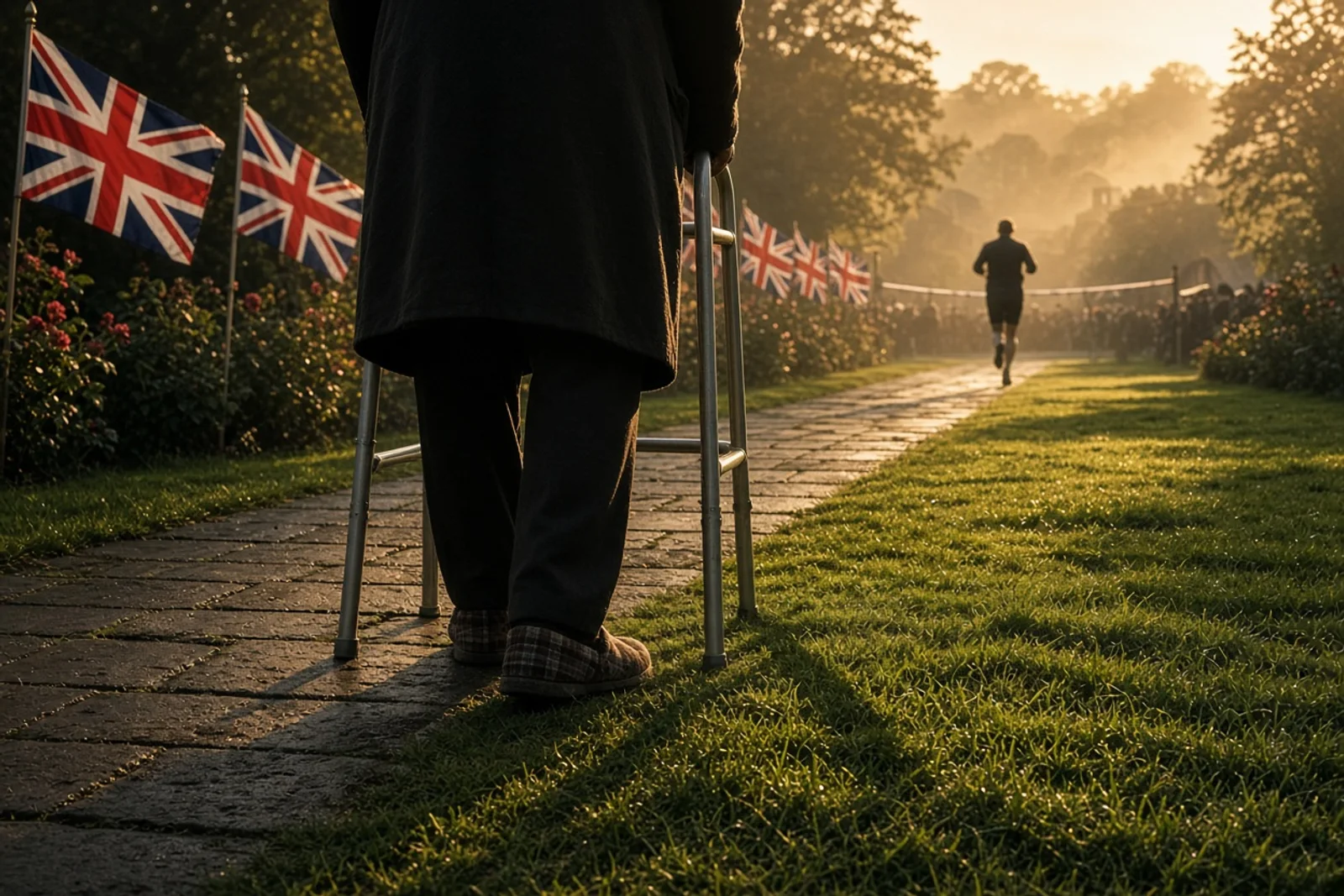
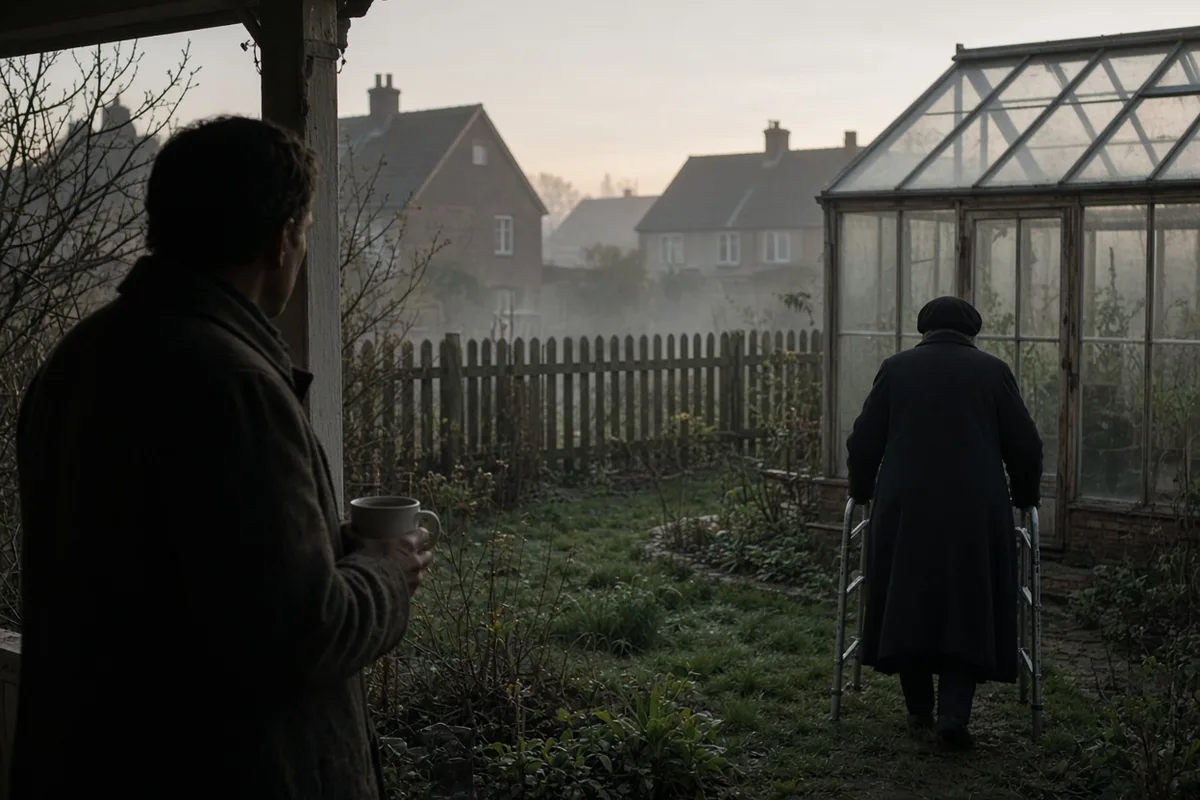
The frame catches on the flagstone before it catches on my eye — a soft scrape, metal on stone, four in the morning quiet before eight even though it isn't morning at all, just early April and the light in Bedfordshire still thin as milk. I'm standing at the fence line with a mug going cold in my hand, and there he is again, out on the patio, walking frame planted, easing forward like the whole business of moving one foot past the other is a decision he's making fresh each time.
Nobody told me to come and watch. I live two gardens down, close enough to hear the crunch of gravel under his frame, and somebody in the family had mentioned it in passing over the hedge — the captain's doing laps, raising a bit for the NHS, you know how it is. A thousand pounds, they said. That was the whole shape of it then. A thousand pounds and a ninety-nine-year-old man's patience.
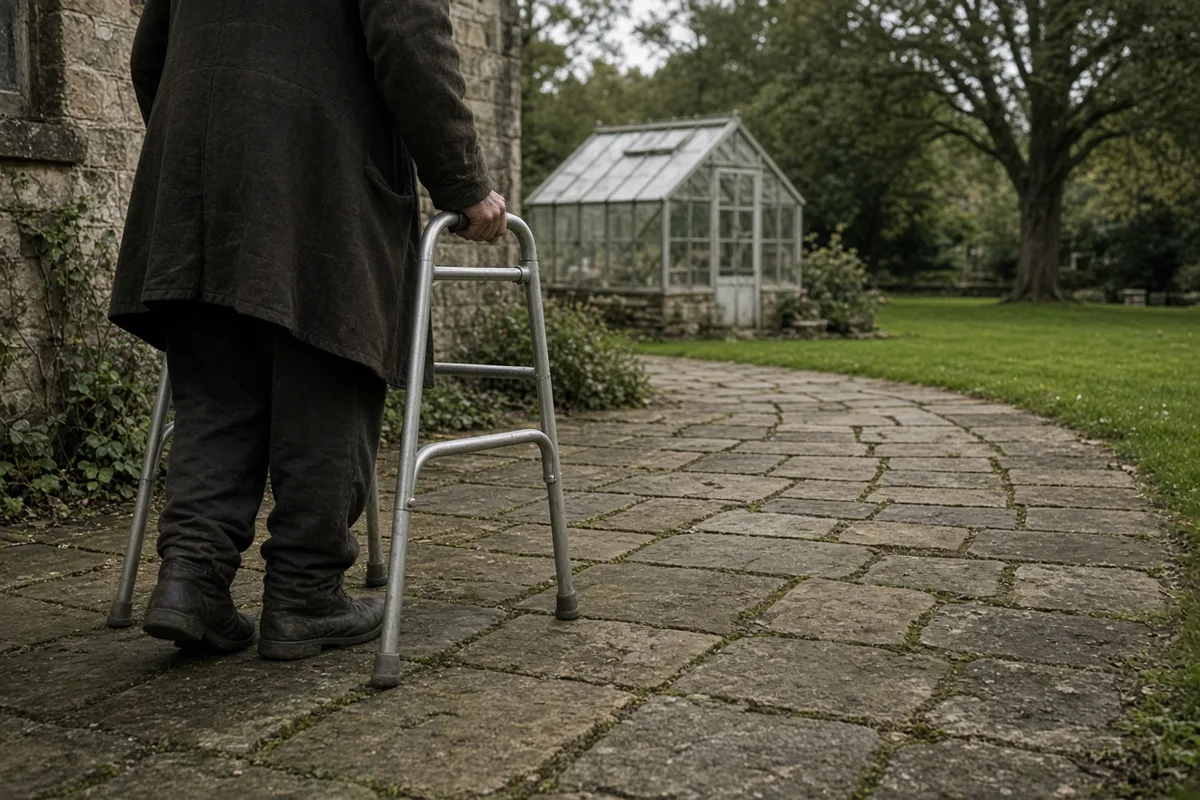
He'd started small, the way anyone starts something they don't expect to matter. Ten laps at a time around a loop he'd measured at twenty-five metres, patio stone to patio stone, past the greenhouse and back, and I remember thinking it was a kind man's private arithmetic — so many laps a day until his hundredth birthday arrived at the end of the month, and somewhere along the way a modest sum for the nurses who'd looked after him. He'd had skin cancer on his head. He'd broken his hip in a fall two years before. He knew what it was to be handled gently by strangers in uniform, and he wanted, in his own unhurried way, to hand something back.
The garden itself was nothing grand. A patio, a stretch of lawn, a greenhouse catching the light — the kind of space you'd walk through without noticing if you didn't know what was happening inside its borders. But I started noticing. I started coming to the fence most mornings, mug in hand, watching an old soldier from the Yorkshire Regiment's era, a man who'd served in India and in Burma during the war, put one foot in front of the other with a concentration that made the whole street go quiet around him.
The donations, when they came, came slowly at first. A few pounds here, a note of thanks there. Then the local paper picked it up, and then it wasn't just the local paper. I remember the morning his daughter — Hannah, everyone in the lane knew her name by then — came out to check the page on her phone and just stood there a moment too long, like the numbers had rearranged themselves while she wasn't looking. A thousand pounds. Then ten. Then a hundred.
I want to say I understood what was happening as it happened, but I didn't, not really. None of us did. You don't watch a man in carpet slippers grip a walking frame and think, this is the thing the whole country is about to fall in love with. You just watch him take another lap, and another, ten at a time, the greenhouse glass throwing back the grey morning light, and you think, good on him, and you go back to your tea.
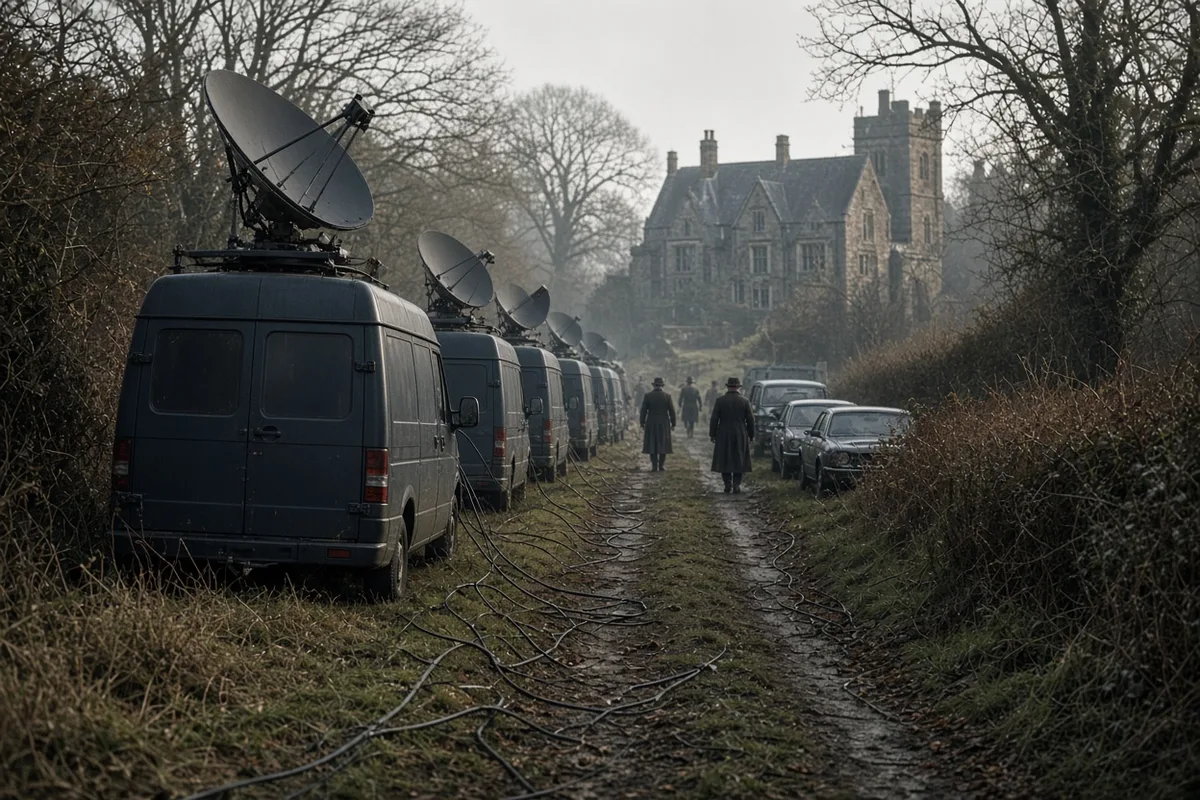
Word travelled the way word travels now — fast, and then faster. Cameras started arriving at the end of the lane, first a local crew, then vans with satellite dishes bolted to their roofs, cables run along the verge like something washed up after a storm. The family had thought a thousand pounds would be a stretch. I heard that from someone who'd heard it from Hannah herself — a real stretch, that was the phrase — and I laughed the first time, because by then the page had crossed a million and was climbing while we all stood there watching it move.
He kept walking. That was the thing that got me, more than the money, more than the cameras. Every day, in whatever weather April in Bedfordshire decided to throw at him, out he came with his frame, and off he went round the loop, unhurried, upright as he could manage, counting nothing but the laps in front of him. Nurses from a hospital ward hundreds of miles away sent him a message of thanks and he read it out like it mattered more than anything the news vans were saying about him.
By the time he was closing in on his hundred laps, the page had crashed once already under the weight of people trying to give him money, and when it came back up the number kept moving in a way that made your stomach do something strange, watching it. Somewhere in there, a donation arrived from the Duke of Cambridge, along with a letter, and somewhere in there a petition started circulating for a knighthood and picked up hundreds of thousands of names before anyone had properly worked out how such a thing would even happen for a man who just wanted to walk round his garden.
The morning of the hundredth lap, the lane was full in a way I'd never seen it, not for anything — cars parked nose to tail along the verge, a hush that had nothing peaceful in it, everyone waiting on the same small patch of patio stone. And then they were there — soldiers from the 1st Battalion of the Yorkshire Regiment, turned out for him, forming a guard of honour either side of the loop, and I watched an old man walk the last stretch of his hundredth lap between two lines of young soldiers standing straight as flagpoles, and something in my chest did a thing I wasn't prepared for.
He finished it on a Thursday. I remember that clearly because the whole street seemed to exhale at once, a kind of ragged cheer going up from people who'd never met him properly, who only knew him from the frame and the patio and the laps counted out ten at a time since the start of the month. He stood there afterward, hands still on the handles of his walking frame, and when someone asked him how he felt he said it plainly, the way he seemed to say everything — that he felt fine, and he hoped everyone else was feeling fine too.
The total by then had already gone past fifteen million pounds. Fifteen million, from a target of one thousand, and nearly eight hundred thousand people who'd gone onto that page and put something in, five pounds, fifty pounds, whatever they had, because a ninety-nine-year-old man with a walking frame had decided the nurses deserved it and hadn't stopped moving until he'd proved it.
His granddaughter Georgia said she was proud of him, and I believed her the way you believe someone standing close enough that you can see it isn't performance. His daughter Hannah said the family was floored, humbled, and I understood exactly what she meant, because I was two gardens down and I felt floored too, in my own smaller way, just from watching it happen over the hedge.
The messages kept arriving after that, faster than anyone could really take in. The Duke of Cambridge called him a one-man fundraising machine. The Prime Minister said he'd captured the heart of the nation. The Leader of the Opposition called him an inspiration, and for once, in a year when very little seemed to bring people onto the same side of anything, that word seemed to fit everyone's mouth the same way. The Chancellor said what he'd done was extraordinary, that it showed the country's spirit was as strong as it had ever been, and out on the patio the man himself just kept saying it wasn't him, it was the nurses, every penny of it belonged to them.
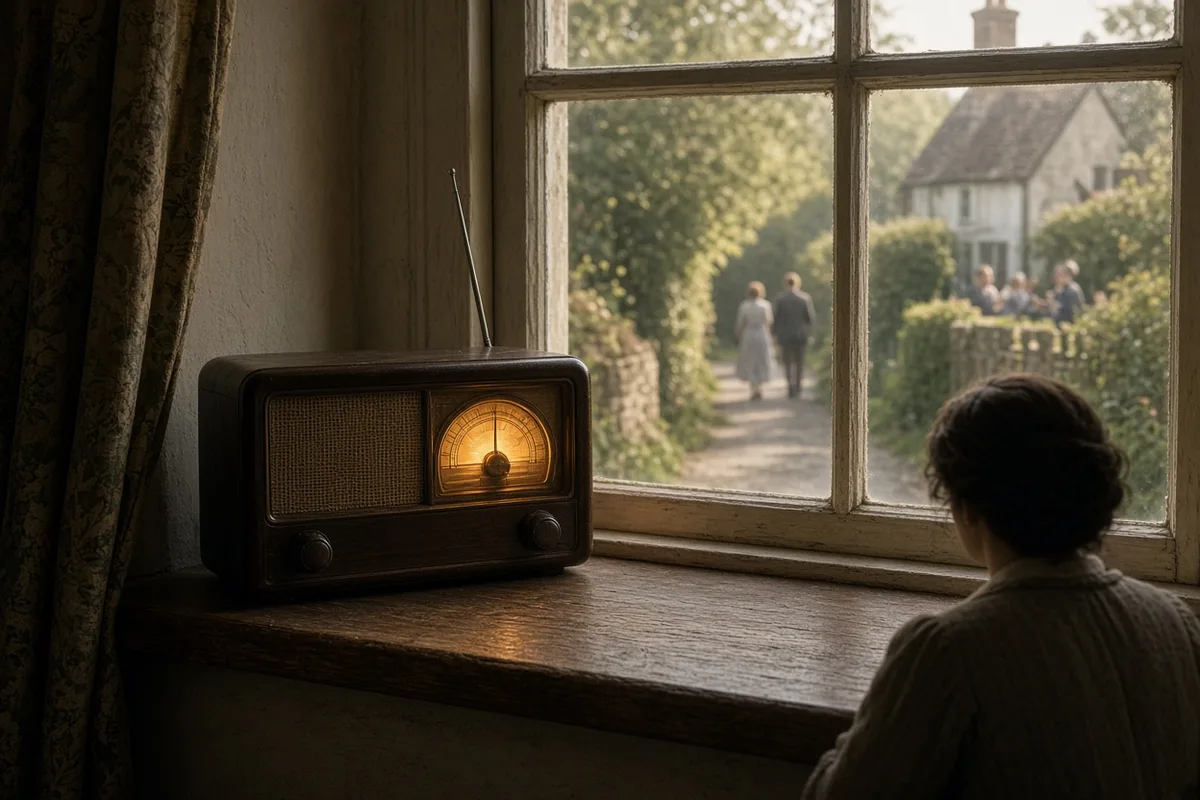
A singer rang the studio one morning and performed to him live over the airwaves, a song about never walking alone, and I remember hearing it drift from someone's kitchen radio down the lane and thinking how strange and exactly right it was, that a song like that should find its way to a man who had just proved, a hundred times over, twenty-five metres at a stretch, that he'd walk however far was needed.
It didn't stop at a hundred laps or fifteen million pounds. The page kept climbing through that Friday and into the days after — seventeen million, and still people were giving, still the number was moving whenever you dared look at it, until by the time all the counting was done and settled it had climbed past thirty-eight million pounds, more than seven hundred thousand people from every corner of the country and further still, all of it landing because one old man had wanted to give the health service a small thank-you before his hundredth birthday.
Other people started doing their own versions after that, and I noticed it in a way I hadn't expected — a teenager relearning to walk after a stroke, setting herself laps on a treadmill because he had. A boy who didn't use words the way most of us do, walking his own distance for the same cause, leaving a note behind that called the old man a hero. It wasn't just money by then. It was something closer to permission — permission to try something difficult and call it worth doing, in a spring when trying anything at all felt like more than most people could manage.
He turned one hundred at the end of that month, and the country marked it the way you'd mark something that belonged to everyone a little bit — cards by the thousand, messages from strangers, his name spoken on television by people who'd never laid eyes on his garden. Later that year the knighthood came, the one the petition had asked for and nobody had quite dared to expect, and I thought of him out there in his slippers gripping that frame and wondered if he'd known, back at the start, what a single loop of twenty-five metres could turn into.
He gave interviews after that final lap, plenty of them, but it's the small ones I keep. Standing there with the cameras still rolling, he told the country to remember that things would come right in the end, that the sun would shine again and the clouds would move on, and I remember standing at my fence with my cold tea thinking that a man who had walked through a war and buried decades of the twentieth century behind him had more right than almost anyone alive to say a thing like that and be believed.
The lane went quiet again eventually, the vans packed up their cables, the guard of honour marched off to wherever soldiers go when the ceremony's done, and the patio went back to being a patio, twenty-five metres of stone with a greenhouse at one end. But something had shifted in the way people in that street looked at each other over their fences, a little steadier, a little less alone in it than before.
He didn't get the full run of that steadiness himself. Less than a year later, in February, the news came that he'd died, at a hundred years old, and the tributes arrived again the way the donations once had, in a flood too large to properly measure — from the Queen, from the same officials who'd praised him the spring before, from the seven hundred thousand strangers who'd once put money on a page because an old man in a garden refused to stop walking.
I still take my tea to the fence some mornings, out of habit more than anything, and look at that stretch of patio like it might still hold the shape of him — frame planted, shoulders set, counting nothing but the ground in front of his feet. Twenty-five metres, over and over, until a thousand pounds became thirty-eight million, and a private act of thanks became something the whole country carried home with it.