


Catherine Mumford Booth's Consecration

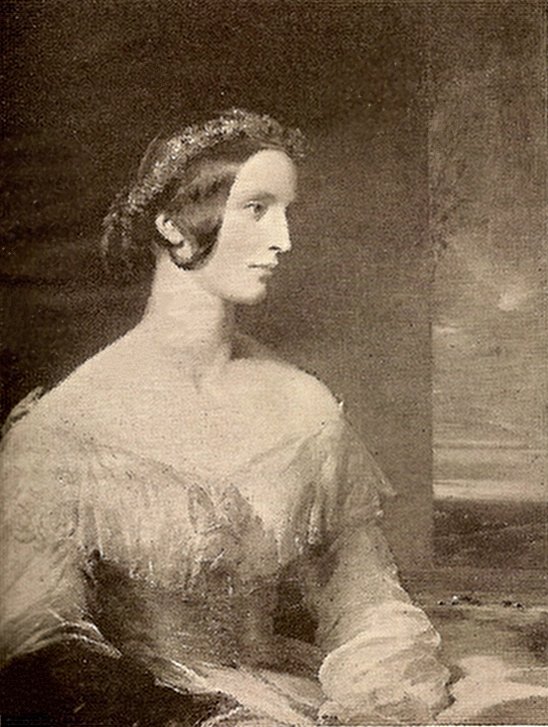
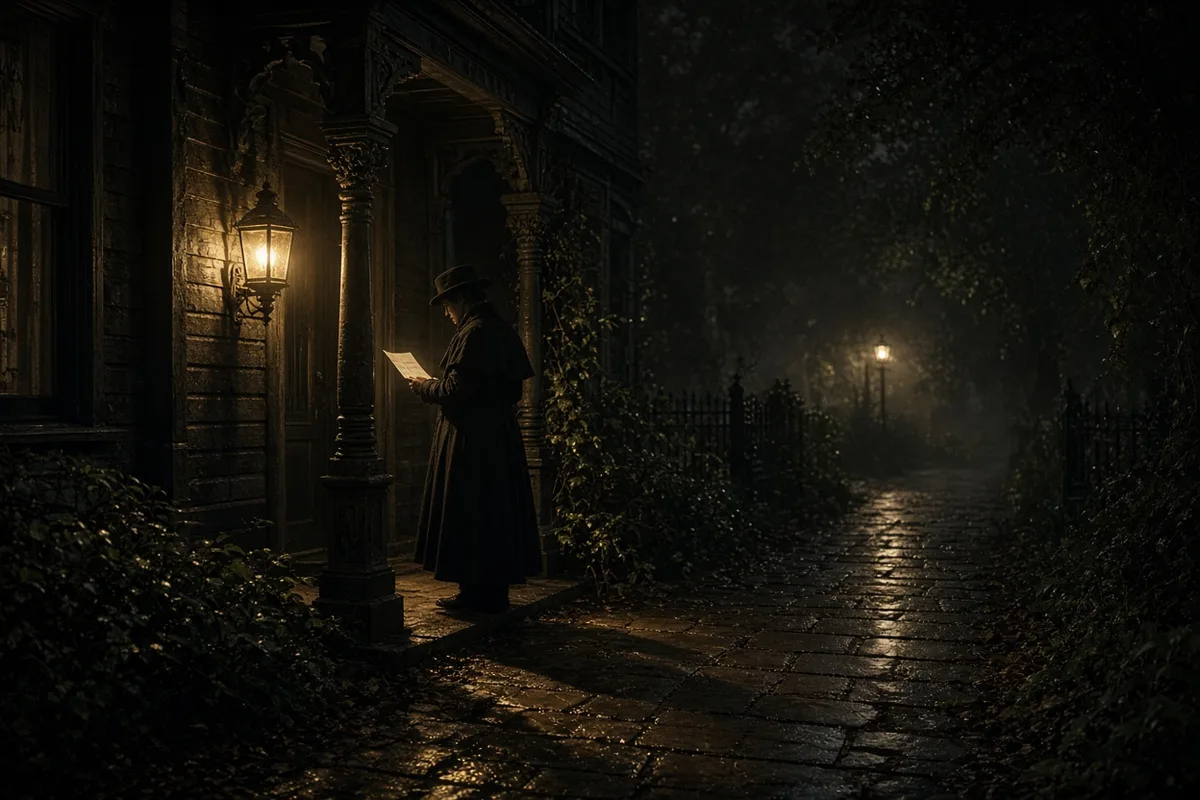
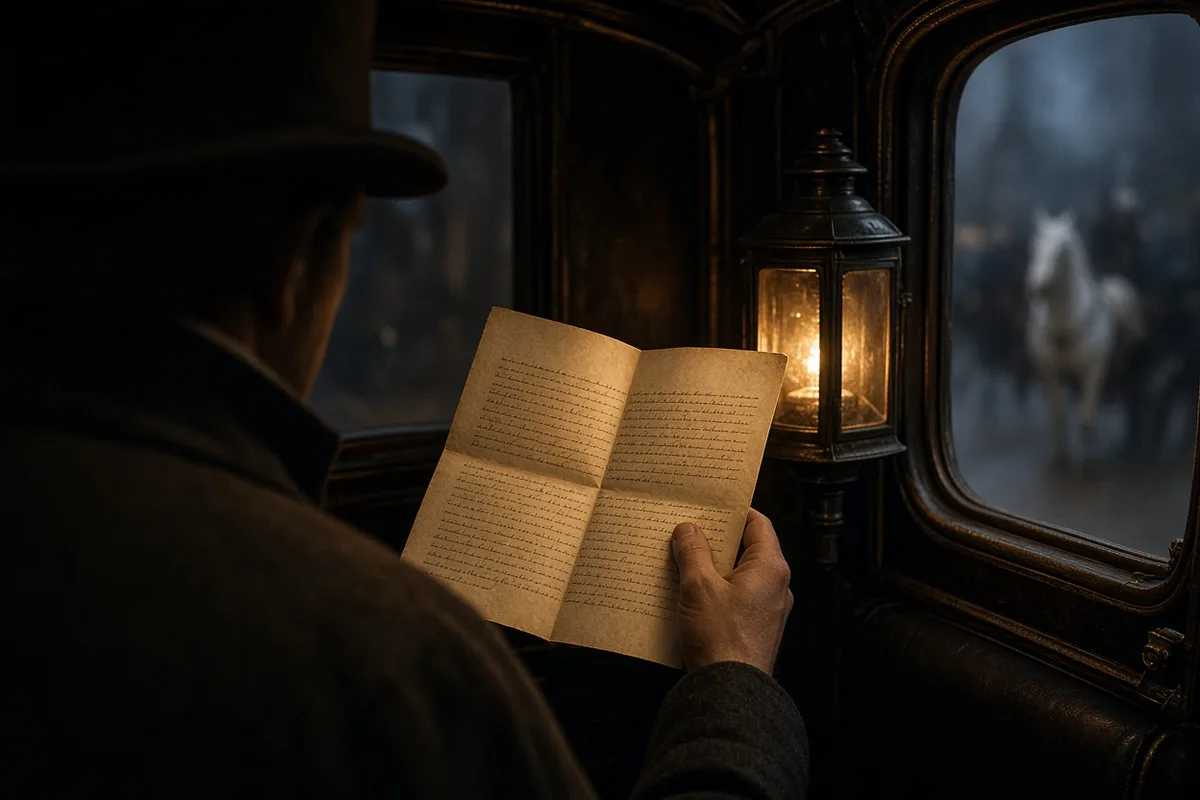
The coach wheels rattled over the last stretch of road into Brixton just after dusk, the horses blowing hard from the long pull out of Derbyshire. I stood with my father at the edge of the yard where he kept his small stable, watching the Mumford carriage draw up. John Mumford climbed down first, his coat dusty, and then Sarah helped Catherine out. The girl was seventeen, thin from the years of illness, her bonnet strings loose at her throat. She carried a Bible bound in worn calf under one arm and a bundle of letters in the other.

We had heard the family was coming south because of the carriage work. My father offered the use of his shed for the first weeks. Catherine did not speak much that evening. She stood near the lamp and looked at the rows of houses pressing close along the lane, her face set as if she were measuring the distance between one life and the next.
Within a fortnight she was at the Wesleyan chapel on the high street every Sunday morning and again at the prayer meeting on Wednesday. The congregation was plain, the benches hard, the singing steady rather than loud. Catherine sat with her mother on the left side, three rows from the front. After the service she would linger by the door while the older women spoke of household matters. She listened but rarely joined in. One afternoon I saw her copy out a passage from Isaiah on a scrap of paper and fold it into her glove before she left.

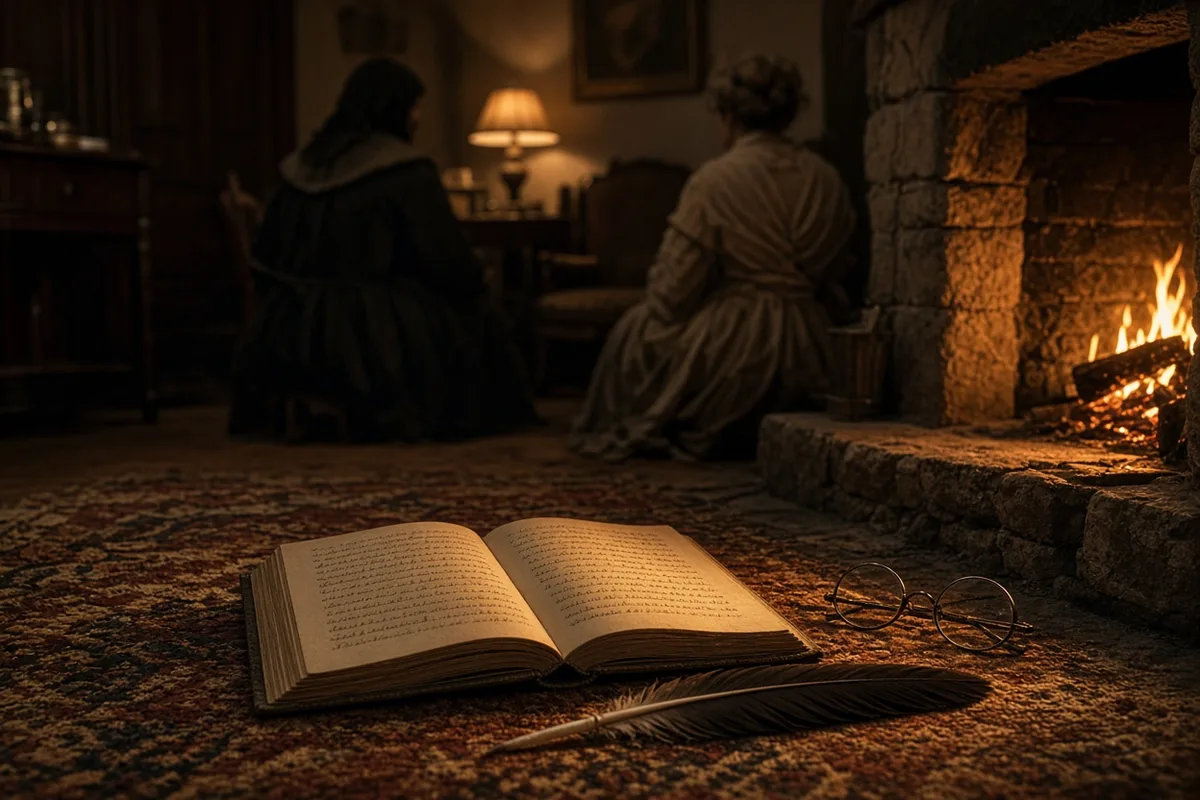
Her father’s drinking had already begun to pull at the edges of the household. Some evenings John Mumford came home late and unsteady, and Sarah would send Catherine to the back room with her books. The girl never complained. She simply closed the door and read until the house grew quiet again. By the end of that first winter she had finished the Bible through once more and started marking passages that spoke of entire surrender. She showed none of them to me, but I saw the pages when she left the book open on the table.
In the spring she joined the Juvenile Temperance Society that met above the ironmonger’s shop. She kept the minutes in a small ruled notebook, her handwriting neat and small. At the meetings she sat near the back at first, then moved forward when asked to read the pledge aloud. Her voice carried without effort. After one meeting she stayed behind to help clear the benches. I asked her why she had come so far from her own county. She said the work here needed steady hands and that London had more souls to reach than Derbyshire could count.

By midsummer the chapel leaders asked her to help with the younger children on Sunday afternoons. She agreed without hesitation. The room they gave her was small and smelled of damp wool. She brought her own copy of the catechism and a handful of printed temperance cards. The children listened when she spoke because she never raised her voice above what the farthest bench could hear. One boy asked her if God could forgive a man who drank away his wages. Catherine answered that grace reached farther than any debt a man could owe. The boy came back the next week and brought his sister.
Her mother’s health had begun to trouble her by then, and Catherine took on more of the household duties. She rose before daylight to see to the fires and the bread. In the evenings she wrote letters to friends in the north, urging them to hold fast to the temperance pledge. She never mentioned her father’s condition in those letters. When visitors asked after him she simply said he was occupied with business.
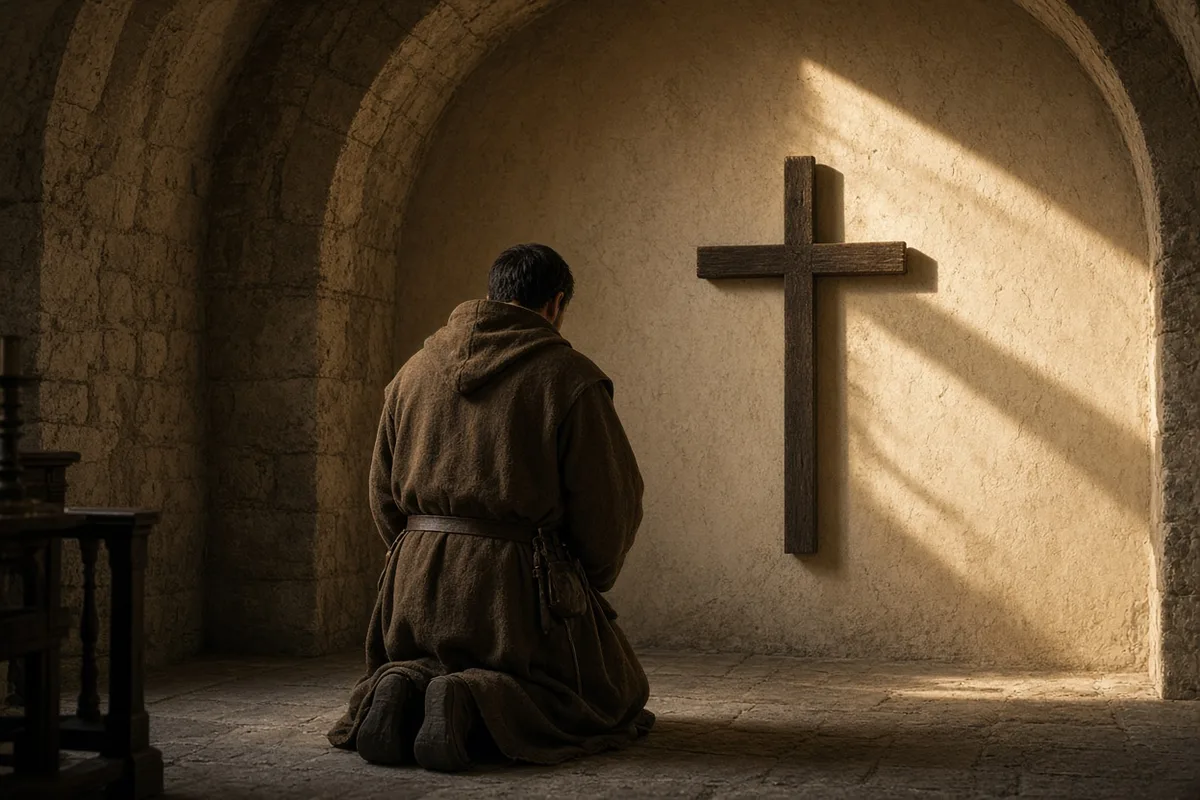
One Wednesday evening in October the prayer meeting ran long. The gas lamps had been turned low to save oil. Catherine remained kneeling after most had risen. I stayed in my seat at the side because I did not want to disturb her. She stayed there until the caretaker came to lock the doors. When she finally stood, her knees were stiff and she had to steady herself against the bench. She looked straight ahead as she walked out, but her face had changed. The tightness around her mouth was gone.
From that night she began to speak more openly in the meetings. She did not preach; she simply told what the Scripture had shown her about giving the whole life rather than pieces of it. The older members listened. Some nodded. A few of the younger women began to sit nearer to her. Catherine never asked for their attention. She simply kept speaking when the moment came.
Her father’s work grew less steady after that winter. Catherine took in extra sewing to help with the rent. She kept the temperance notebook updated and the children’s class running. When the Reformers began to meet separately she went with them, carrying her mother’s arm on the walk to the new room. She did not look back at the old chapel.
Years later, when she stood beside William Booth in the East End, people remarked on the steadiness of her voice. I remembered the night she stayed kneeling in the Brixton chapel until the lamps were turned out. The same steadiness had been there then, only quieter and known to fewer. She never spoke of that evening as a turning point. She simply continued the work that had already begun.

In 1855 she married William Booth on the seventeenth of June at Stockwell New Chapel, the same building where the Reformers had gathered after leaving the Wesleyan circuit. I stood among the fifty or so guests and heard John B. Waddington read the service from the Book of Common Prayer while Catherine repeated the vows in the same steady tone she had used when reading the pledge above the ironmonger’s shop. Their first address was two rooms at 5½ Pyrmont Villas in Hackney, where she kept a small table for correspondence and a secondhand harmonium that William had bought for twelve shillings. By the following spring she had written the twenty-four-page pamphlet “Female Ministry,” printed at her own expense by J. W. King at 35 City Road, in which she answered objections with direct quotations from the Greek New Testament and from Phoebe Palmer’s “The Way of Holiness.”
The Christian Mission began its open-air work at Mile End Waste on the second of July 1865, with William preaching from a chair borrowed from a nearby public house. Catherine stood at the edge of the crowd of roughly seven thousand and handed out printed cards that read, “No cross, no crown,” a phrase she later repeated in a letter to her mother dated 9 August 1865. Within three years the Mission had rented the People’s Hall in Whitechapel, seating eight hundred, and Catherine conducted women’s meetings there every Tuesday afternoon, recording in her notebook that attendance averaged one hundred and forty-three. She gave birth to eight children between 1856 and 1871, the last, Lucy, arriving on the twenty-eighth of April at 1 Cambridge Lodge Villas; the older ones, Bramwell and Ballington, began selling the “East London Evangelist” on the streets at threepence a copy.

By 1878 the name had changed to the Salvation Army, and Catherine drafted the “Orders and Regulations for Soldiers,” printed that October at 272 Whitechapel Road, which required every member to sign a pledge against tobacco and alcohol. She travelled to Paris in 1881 and spoke at the Salle des Conférences on the Rue de la Madeleine, where she told an audience of three hundred that “the uniform is not a costume but a declaration,” words later printed in the French edition of “The Salvationist.” In 1886 she addressed the annual meeting at Exeter Hall on the Strand, citing the figure of 1,200 corps operating in Britain and the United States, and she closed by reading from Isaiah 58 as she had once copied it onto paper in Brixton. The following year she suffered the first severe attack of what doctors at the London Hospital diagnosed as carcinoma; she underwent surgery on the twenty-third of May 1888 at the home of Dr. Thomas Barnardo in Stepney.
She spent her final weeks at Fairlight, the rented house in Clacton-on-Sea, where she dictated letters to the Army’s officers in India and Canada. On the third of October 1890 she asked Bramwell to read the fourteenth chapter of John, then said, “I am going to the glory; do not be sorry,” according to the account he later published in “The War Cry.” She died the next afternoon at four o’clock, and her body was taken by train to London for the funeral service at Olympia on the thirteenth, attended by more than twenty thousand people who filed past the open coffin between ten in the morning and midnight. William Booth continued to lead the Army until his own death on the twentieth of August 1912 at Hadley Wood, after which Evangeline Booth, their seventh child, became General in 1934 and oversaw the opening of the International Headquarters at 101 Queen Victoria Street.
The Army’s headquarters moved to 101 Queen Victoria Street in 1901, where the archives still hold Catherine’s temperance notebook from Brixton, its ruled pages filled with minutes dated between April and October 1853. Today the organisation lists 1.7 million members and operates 15,000 centres in 130 countries, running 2,700 hospitals and clinics whose annual patient count exceeds 20 million. In London the original People’s Hall site is marked by a plaque unveiled in 1928, and the Salvation Army’s International Staff Band still performs the same marches she first heard at the Whitechapel meetings. The last image I carry is of a young officer in the uniform she helped design, standing at the same Mile End Waste corner on a winter evening in 2023, holding a brass cornet and speaking quietly to a line of men waiting for the night shelter that bears Catherine Booth’s name.
The officer that evening was Lieutenant James Fletcher, who had joined the Mile End corps in 2019 after completing the ten-week residential course at the William Booth College on Denmark Hill. He spoke to each man by name from the shelter roster, noting that the Catherine Booth Night Shelter at 21 Stepney Way had recorded 4,872 admissions in the twelve months ending December 2023, with an average stay of eleven nights and a daily provision of 312 hot meals prepared in the kitchen once operated by the original Whitechapel food depot. One recipient, a man named Thomas Reilly who had first used the shelter in 2017, asked Fletcher about the origin of the cornet tune, and the lieutenant answered by quoting Catherine’s 1881 remark printed in the French edition of The Salvationist that the uniform served as declaration rather than costume. Fletcher then handed Reilly a printed card bearing the same phrase “No cross, no crown” that Catherine had distributed at the 1865 Mile End Waste meeting.
In the archives at 101 Queen Victoria Street the ruled notebook from the Brixton Juvenile Temperance Society remains on shelf 3B, its final entry dated 12 October 1853 recording an attendance of nineteen and a collection of two shillings and four pence toward the purchase of pledge cards from the printer J. W. King. Beside it lies the twenty-four-page manuscript of Female Ministry with Catherine’s marginal notes citing the Greek text of 1 Corinthians 14:34 and Phoebe Palmer’s account of her own 1837 experience of entire sanctification. Staff archivist Margaret Ellison, who catalogued the collection between 1998 and 2004, added a cross-reference card noting that the harmonium purchased for twelve shillings in 1855 was later used at the 1878 conference that adopted the name Salvation Army.
After William Booth’s death in 1912 the leadership passed to his son Bramwell, who expanded the international work to thirty-eight countries by 1919 and established the first Red Shield hostel for merchant seamen at 1 ½ Commercial Road. Evangeline Booth, the seventh child, served as General from 1934 to 1939 and during that period opened the first Salvation Army radio station, WBBR, broadcasting from 122 West 14th Street in New York with a nightly audience estimated at 250,000. Her successor, George Carpenter, oversaw the transfer of headquarters operations to the new building at 101 Queen Victoria Street in 1963, where the cornerstone bears the inscription “Holiness unto the Lord” taken from the 1880 edition of the Army’s Handbook of Salvation Army Doctrine.
Today the organisation maintains 15,409 centres across 133 countries and reports an annual worldwide attendance of 1.2 million at its 45,000 weekly worship meetings. In Britain the original People’s Hall site at 30 Whitechapel Road now carries a blue plaque installed by the London County Council in 1928, while the adjacent Booth House hostel, opened in 1906, provides 184 beds and recorded 67,412 overnight stays in the financial year 2022-2023. The International Staff Band, whose membership has remained fixed at thirty-five since its formation in 1891, performed its annual carol concert at the Royal Albert Hall on 17 December 2023 before an audience of 3,812, concluding with the march “Catherine” composed in 1890 by Bandmaster William Appleby.
The night shelter at Mile End continues under the direction of Major Helen Carr, who assumed command of the Tower Hamlets cluster in January 2022. On the evening of 14 February 2024 she noted in the duty log that seventy-three men had been admitted, including four first-time users referred by the local council’s rough-sleeping outreach team. One of those men, identified only as “D.” in the confidential register, asked whether the brass cornet carried any special significance, and Carr replied by reading aloud the entry Catherine had written in her notebook on 9 August 1865 describing the distribution of cards at the original open-air meeting.
Further east the Salvation Army’s international headquarters still receives weekly reports from the 2,748 hospitals and clinics it operates, the largest of which, the Booth Memorial Hospital in Flushing, New York, treated 118,463 outpatients in 2023. In India the work begun by Frederick Booth-Tucker in 1882 now encompasses 421 centres, including the Catherine Booth Hospital at Nagercoil that performed 4,912 cataract operations in the twelve months ending March 2024. The hospital’s current medical superintendent, Dr. Priya Menon, keeps a framed copy of Catherine’s 1886 Exeter Hall address on the wall of the outpatient waiting area.
The last human image I carry is of an elderly woman named Doris Wainwright, aged ninety-four, who stood at the same Mile End Waste corner on the morning of 2 July 2024 holding a single temperance pledge card she had kept since 1947. She handed the card to Major Carr and asked whether the printed words remained unchanged from the ones Catherine had first used; Carr confirmed that the text matched the 1865 original and invited her inside the shelter for tea. Wainwright accepted and sat at the long table where the brass cornet rested between sessions, her hands folded around the card until the room filled again with the day’s arrivals.