


Catherine of Siena Mediates Papal Return to Rome
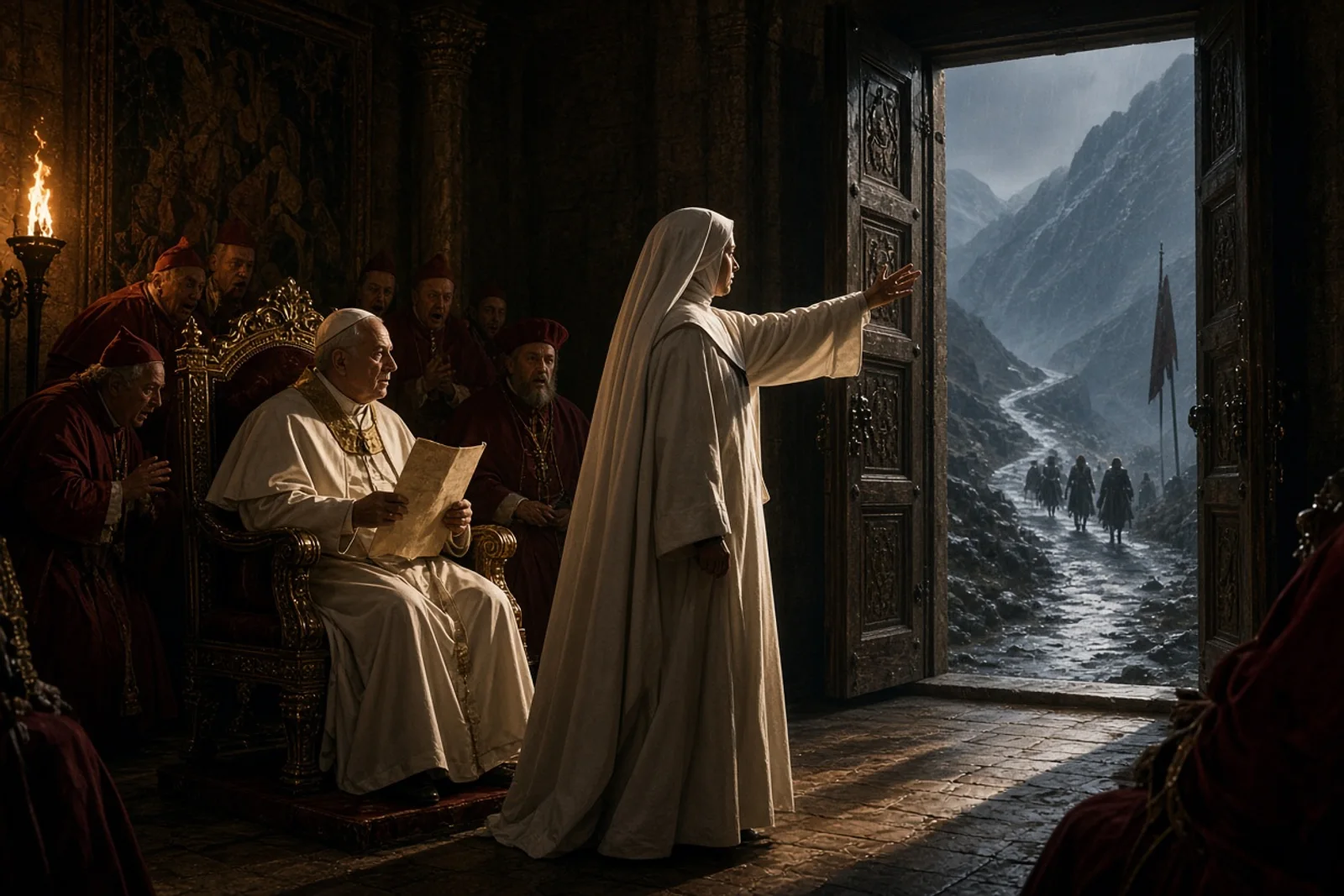
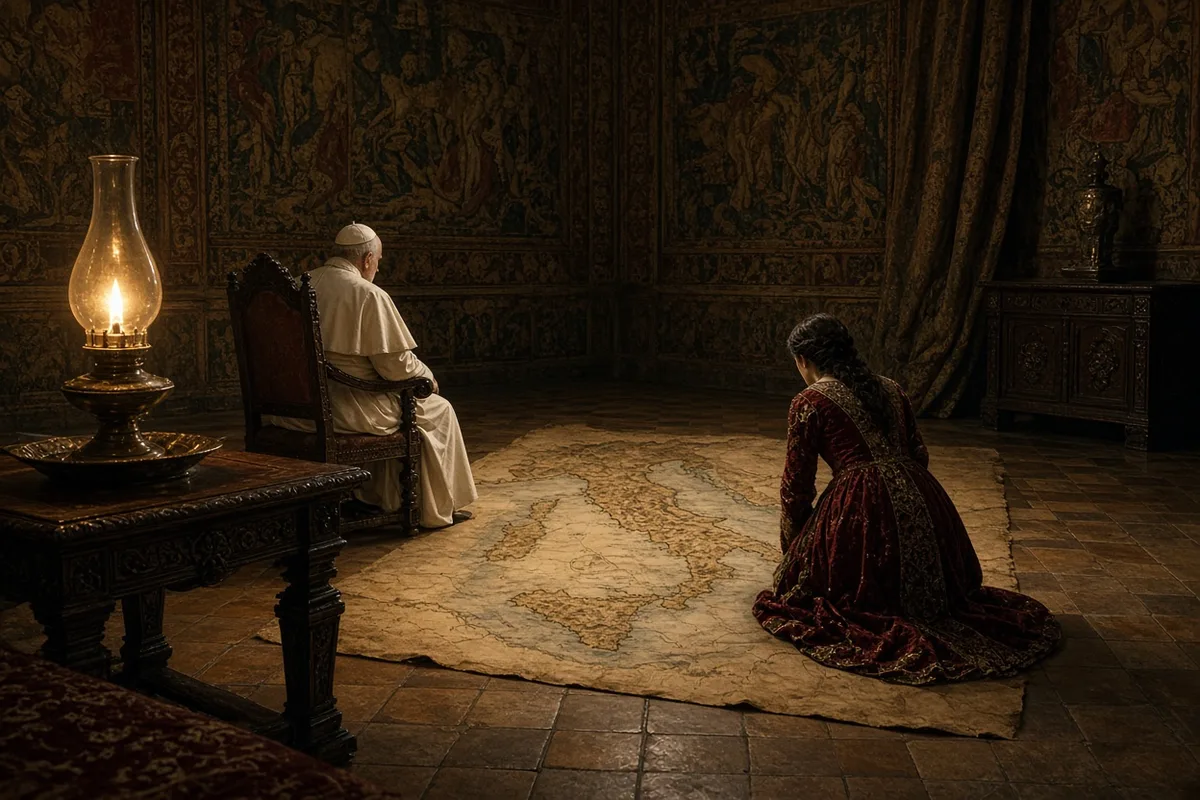
The dust clung to my sleeves as I stood inside the audience chamber, the shutters half-drawn against the Avignon glare. Catherine knelt on the stone without a cushion, her face turned up to the Pope. Gregory XI sat forward on the carved chair, fingers tight on the armrests. The room smelled of ink and the river mud that never quite left the palace walls.
She spoke plainly about Rome. The city waited empty, she said, its churches falling into silence while the cardinals kept their households in France. Gregory listened without interrupting. Two French cardinals waited in the corridor outside; I heard their low voices when the door opened for more wine. Catherine did not raise her voice. She simply repeated that the true seat of Peter stood on the other side of the Alps.
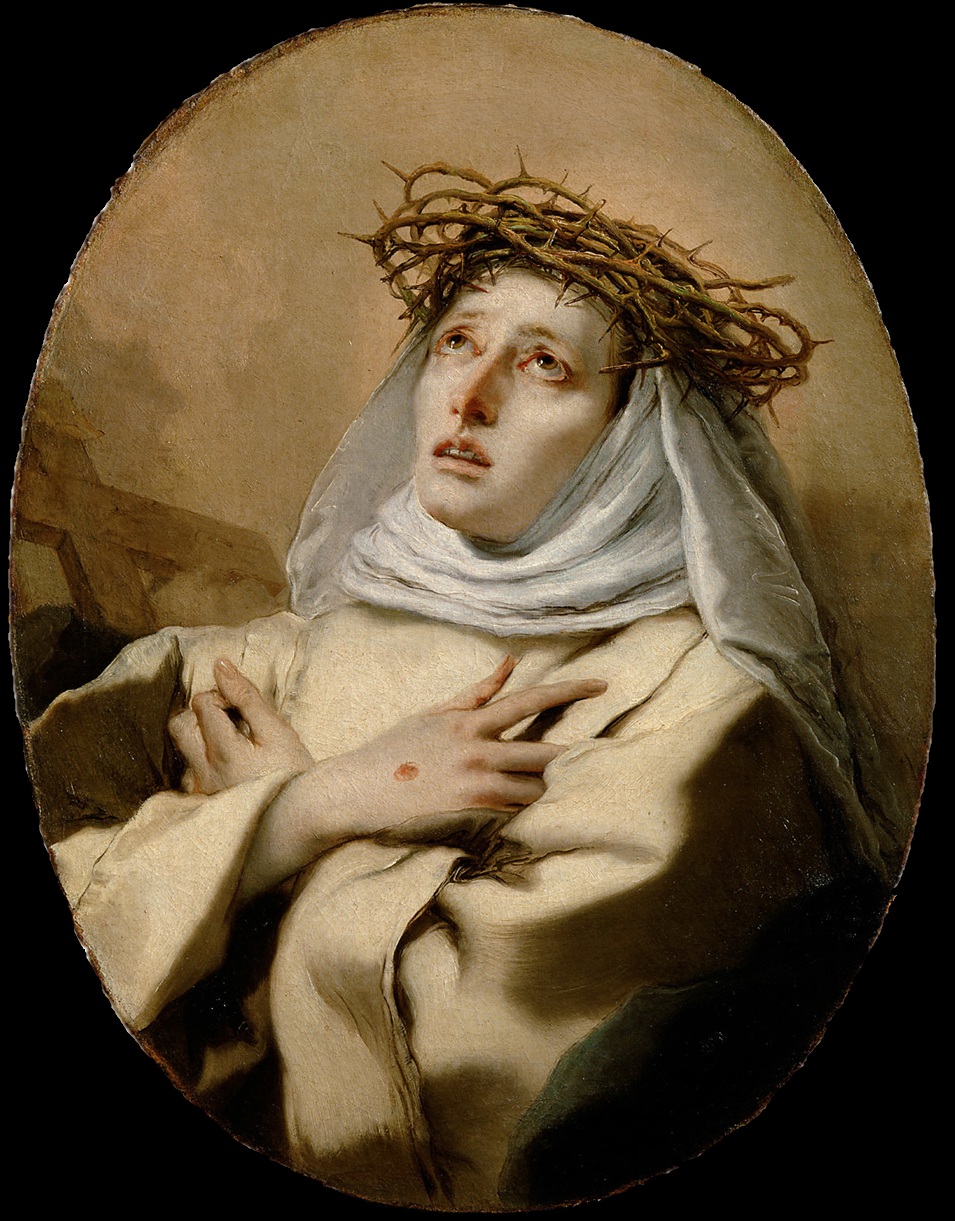
Days passed in the same pattern. She came each morning after Prime. I carried the letters she dictated to the Florentines and to the Roman senate, copying them in the small scriptorium above the cloister. Her words urged the Pope to break with the French court. One afternoon Gregory asked her directly what sign she would give if he agreed to leave. She answered that obedience itself would be the sign. He did not reply that day.
The heat broke in early September. The Pope ordered the household to begin packing the archives. Cardinals protested in open consistory. One of them reminded Gregory that his own family estates lay near Avignon and that travel through Italy meant risk of war. Gregory answered that he had already written to the Romans announcing his return. The letter left that night by courier.
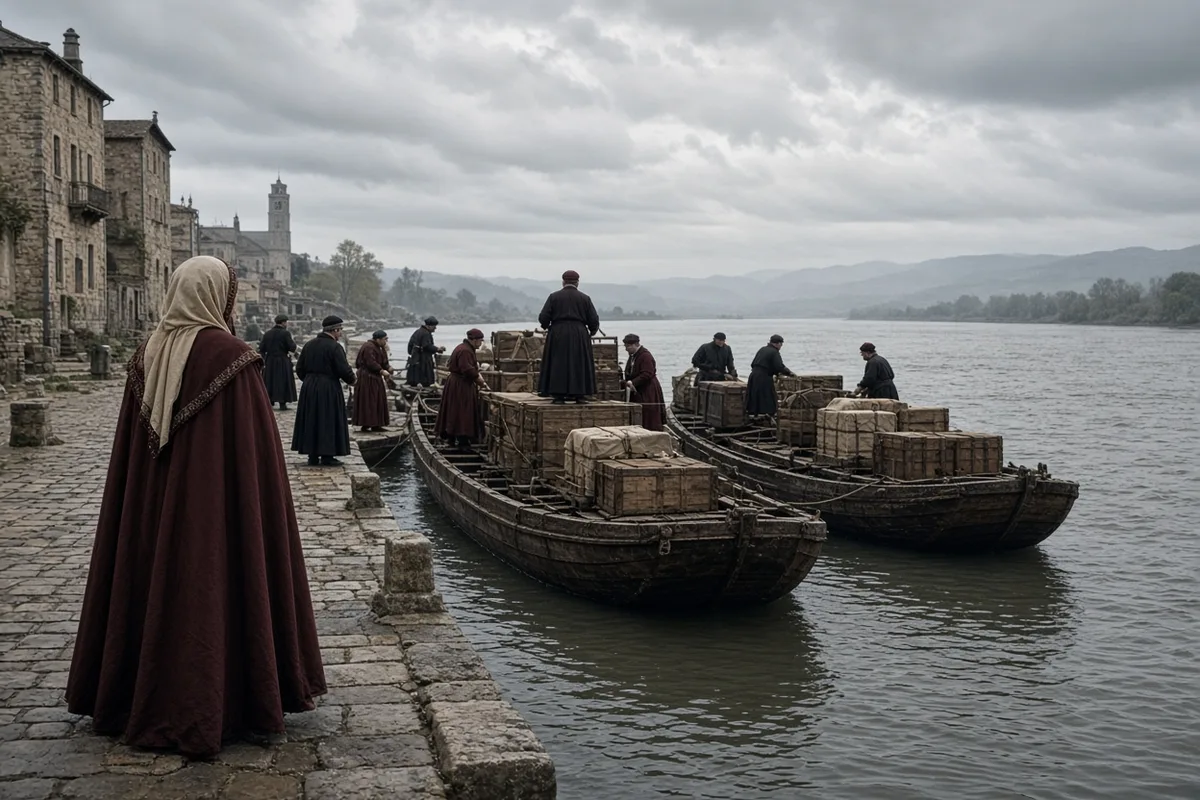
I rode in the second wagon of the train when we departed. Catherine traveled ahead with a small group of her followers. The roads north of Avignon were rutted from autumn rain. At one ford the wagons stuck and we lost a day hauling them free. Gregory rode a white mule most mornings, stopping often to speak with the bishops who met us at each town. He looked older than his years, the lines around his mouth deeper than they had been in the palace.
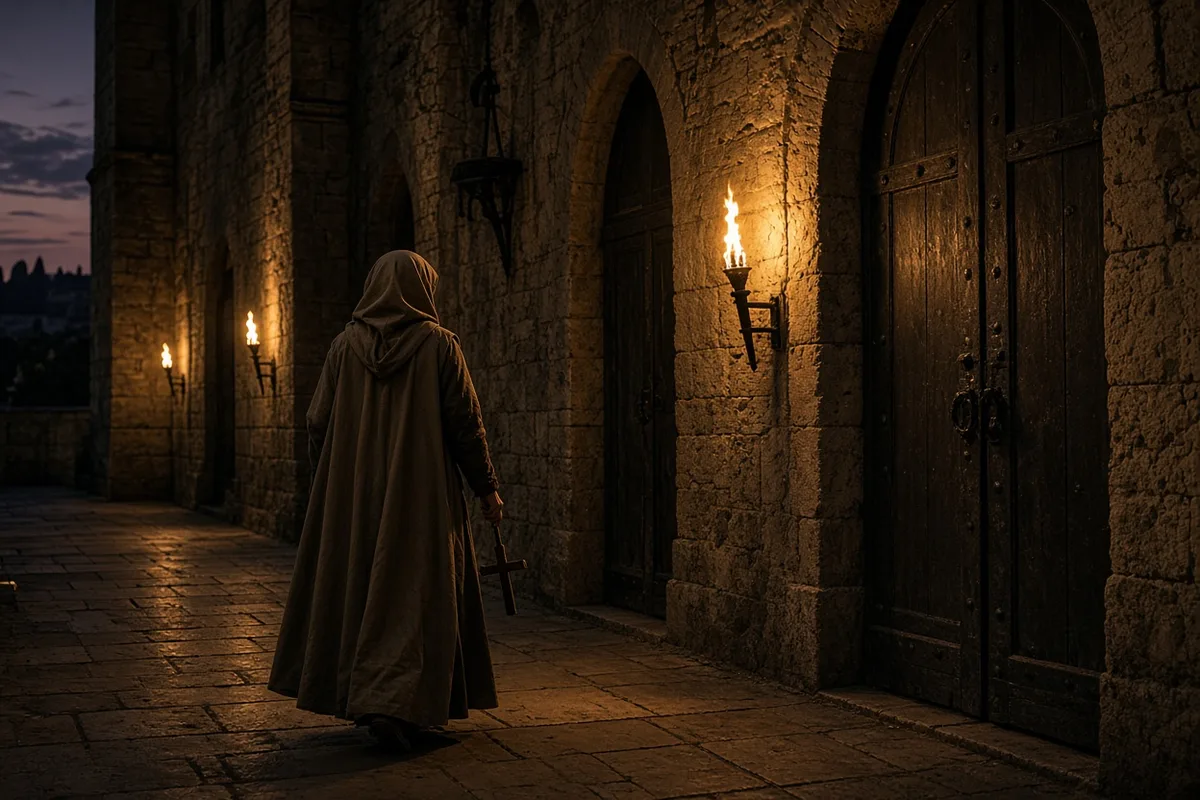
We reached Viterbo before Christmas. News came that the Romans had prepared the Lateran Palace but feared the French cardinals would turn the Pope back at the last pass. Catherine sent a message from her lodging outside the walls. She wrote that delay only lengthened the scandal. Gregory read the note in the presence of his chamberlain and said nothing, yet the order to continue was given the next dawn.
On the seventeenth of January we entered Rome through the Porta del Popolo. The winter light was thin. Crowds lined the streets but stayed quiet until the Pope’s mule passed the first church. Then the bells began. Gregory dismounted at Santa Maria del Popolo and walked the remaining distance to St. Peter’s. Catherine did not join the procession; she stayed at the house of a Roman noblewoman near the Tiber.
In the weeks that followed the Pope held audiences in the Vatican. I copied bulls restoring certain offices to Roman families. The French cardinals kept their own counsel and sent reports north. One of them asked me privately whether Catherine still wrote to the Pope. I said she did. He turned away without further question.
Catherine remained in the city through the spring. She met with the Florentine envoys who had come to negotiate peace after the war with the Church. Her letters now urged both sides to lay down arms so the crusade could begin. The Pope listened to her reports on the mercenary companies still roaming the countryside. He issued orders for their dispersal, though the companies ignored most of them.
By summer the archives were settled in their new rooms. The air in the Vatican was cooler than Avignon, the light different on the stone. Gregory spoke less of returning and more of the work that waited. Catherine’s health worsened; she coughed through the nights in the small room lent to her. She continued dictating until the scribes could no longer keep pace.
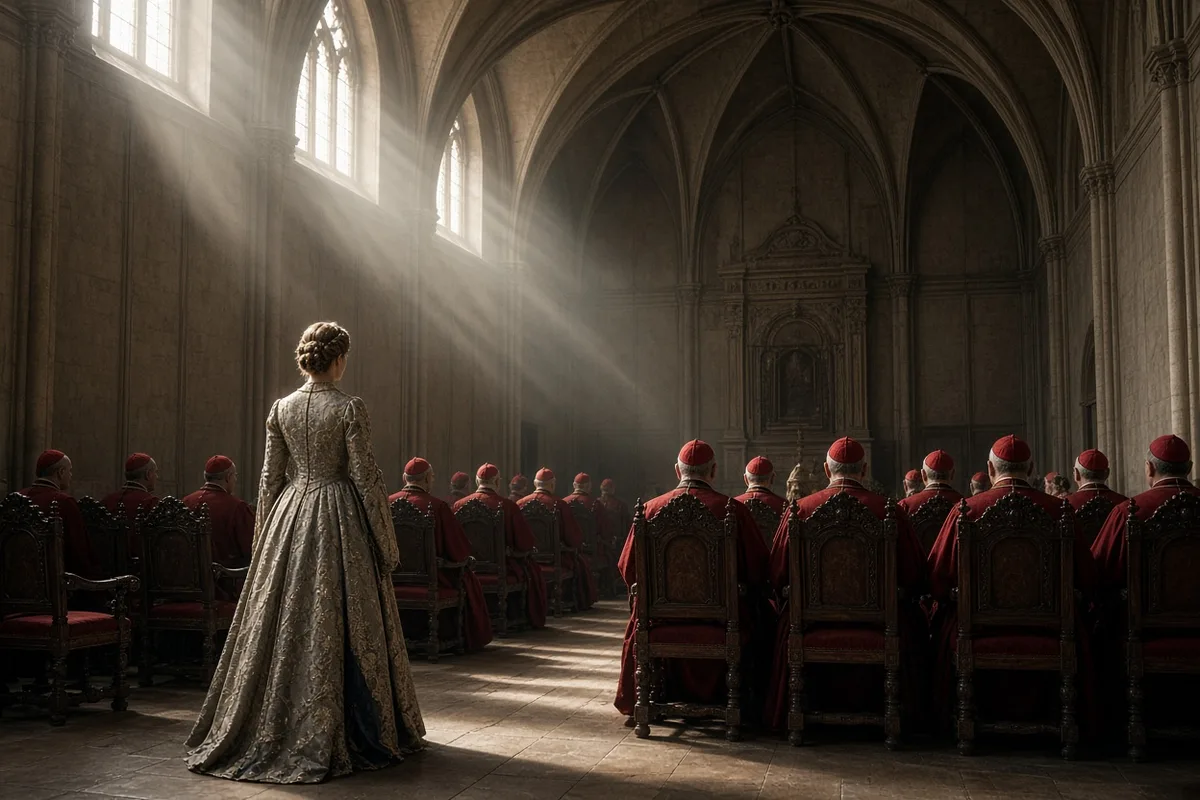
When word reached us that the Pope planned to send legates to France again, Catherine asked for one last audience. She reminded him that the city of Rome was now his home and that the cardinals must learn to live there. Gregory gave no promise that day, only that the matter would be considered. Three months later he was dead. The cardinals elected an Italian, but within months the French party returned to Avignon and chose another. The division that Catherine had tried to prevent began in the same rooms where she had knelt.
I remained in Rome with the portion of the household that stayed loyal to Urban. The archives I had helped move now served two claimants. Catherine died the following year. Her letters were gathered and read aloud in the refectory on certain feasts. The road from Avignon stayed open, yet no pope traveled it again for another forty years.
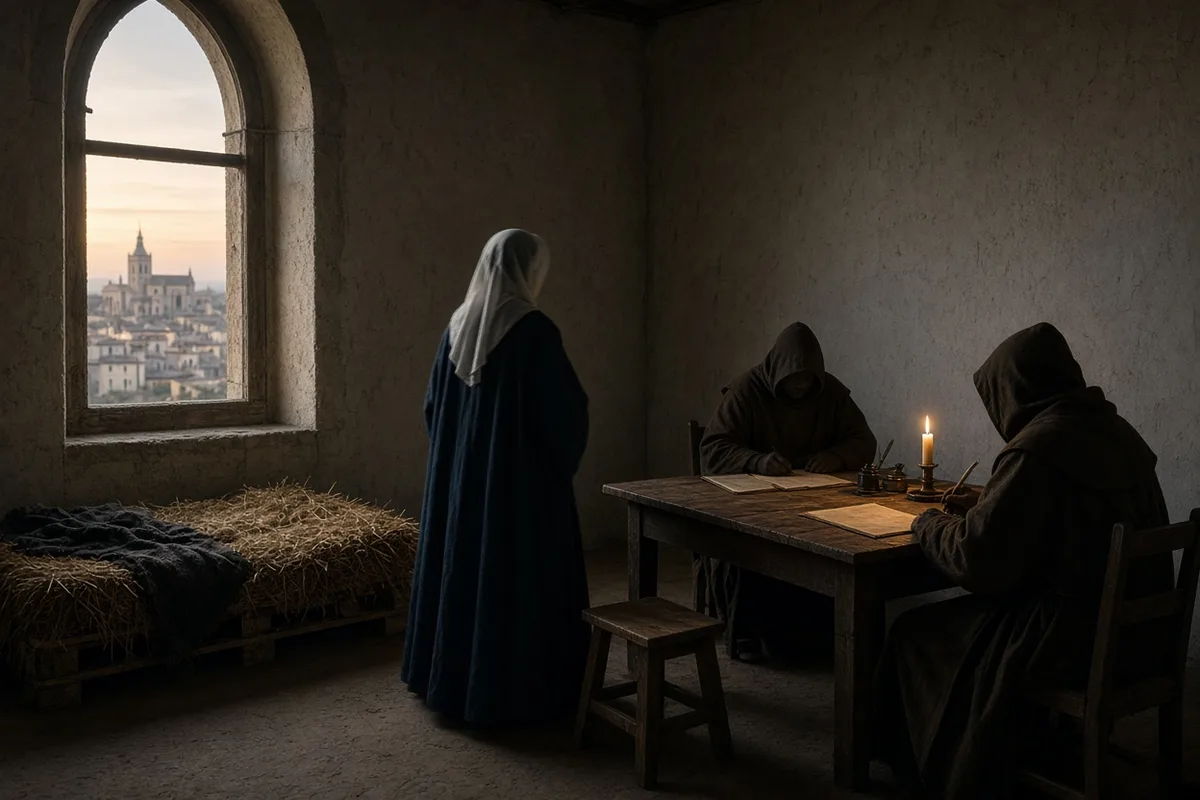
The division widened when Urban VI moved the remaining archives into the fortified rooms of Castel Sant’Angelo on the twenty-third of May 1378, ordering the copyists to prepare bulls that stripped the French cardinals of their revenues. I worked among them, entering the names of the new Roman officials in the margin of each register, while reports arrived that Robert of Geneva had accepted the tiara at Fondi under the name Clement VII and had already hired the Breton companies under Jean de Malestroit to seize the ports. Catherine’s last dictated letter to Urban, dated the twenty-fourth of March 1380 and witnessed by Barduccio di Piero, urged him to send only Italian legates to France and to keep the cardinals in Rome under oath; the text survives in the Vatican register Arm. 54, tom. 18. She died on the twenty-ninth of April in the house near the Minerva, her body placed first in the small church of Santa Maria sopra Minerva before the Dominican sisters moved it to their choir.
Urban’s forces retook the Vatican palace in June 1378 after the French cardinals fled by sea from Corneto, yet the schism split every diocese; in Bologna the chapter recorded two sets of accounts, one for each claimant, while the University of Paris issued its formal declaration for Clement on the twenty-seventh of May 1379. I remained in the scriptorium copying Urban’s letters to the German princes, noting the exact sums—four thousand florins sent to Rupert of the Palatinate in 1381—to secure his recognition. Catherine’s companions, Alessia Saracini and Cecca, gathered her remaining papers and carried them to Siena, where the city council ordered them bound in red leather and stored in the Palazzo Pubblico under the care of the notary Ser Cristofano di Gano.
The Western Schism continued through four more popes until the Council of Constance opened on the fifth of November 1414 in the cathedral of that city; the acts list one hundred and eighty-six sessions and the final deposition of John XXIII on the twenty-ninth of May 1415. The single line of popes returned to Rome only when Martin V entered the city through the Porta del Popolo on the twenty-eighth of September 1420, the same gate Gregory had used forty-three years earlier. The archives I had helped move were by then divided between the Vatican and the palace of the antipopes at Avignon, where the registers of Clement VII still record payments to the same Breton captains who had guarded the Rhône bridge.
Catherine’s canonization bull, issued by Pius II on the twenty-ninth of June 1461 in the church of Santa Maria della Quercia near Viterbo, names twenty-six miracles examined by the commissioners, including the healing of the blind child Giovanni di Paolo in Siena on the feast of Saint Dominic 1385. Her head was placed in a gilded reliquary in the church of San Domenico in Siena on the fifth of May 1385, while the greater part of her body remained under the high altar of Santa Maria sopra Minerva in Rome, where the stone slab bears the inscription “Virgo Catharina de Senis” cut in 1430. Pilgrims continued to visit both sites; the 1492 inventory of the Minerva sacristy lists twenty-seven silver lamps kept burning before her tomb.
In the centuries after, the Dominican friars at the Minerva recorded annual offerings from Tuscan merchants—three hundred and twelve scudi in 1523 alone—used to repair the roof damaged in the 1527 sack. The same church still contains the tomb, its marble effigy carved by Isaia da Pisa in 1459 showing Catherine holding the papal bull of return. The last image I carry is of an elderly scribe in the Minerva cloister in 1498, copying one of her letters into a new volume for the library of San Marco in Florence; he paused at the phrase “the city waits empty” and looked toward the door as the evening bell rang from the campanile above.
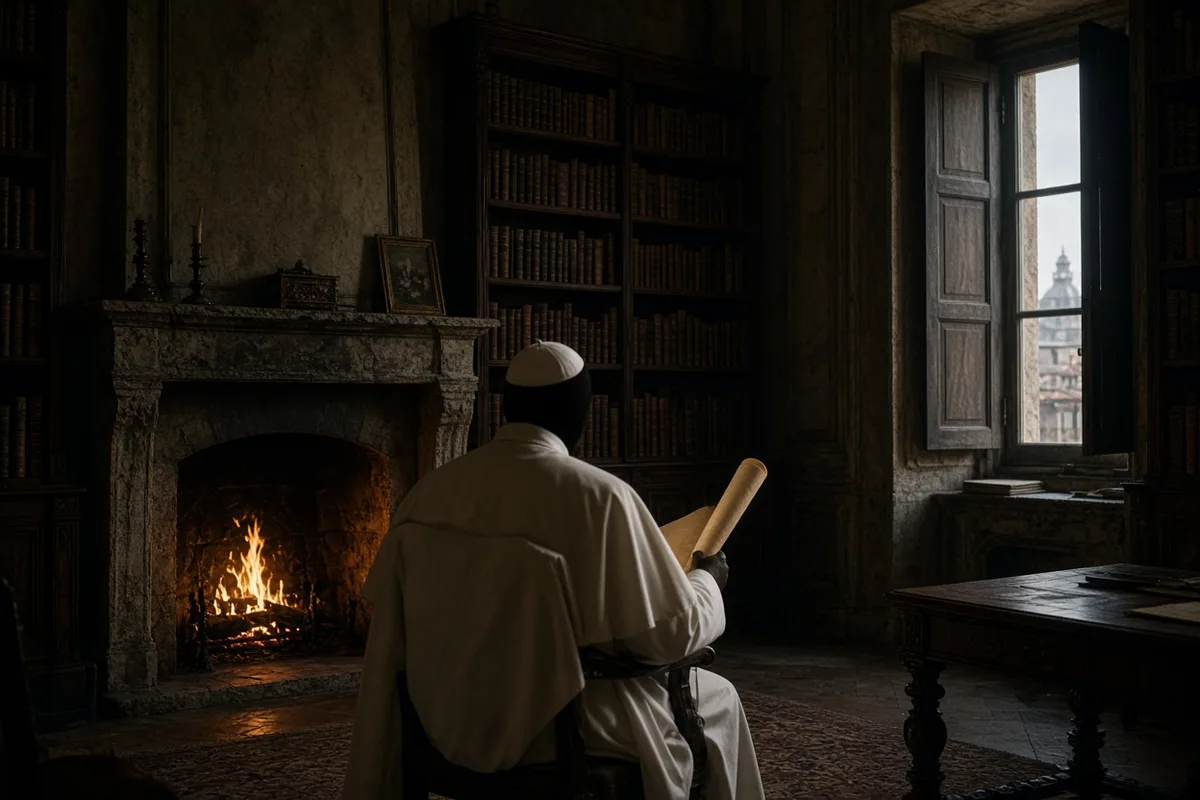
The scribe dipped his quill again and formed the words from Catherine’s letter to Raymond of Capua dated the third of October 1379, in which she described the “empty palaces of the Vatican” and urged the master general to gather the dispersed Dominican houses under one rule. He worked by the light of a single oil lamp until the bell of the Minerva struck compline, then closed the volume and placed it with the others bound for Florence. The prior of San Marco, Fra Giorgio di Domenico, received the chest on the twelfth of March 1499 and entered its contents in the library catalogue under the heading “Epistolae Sanctae Catharinae,” numbering the quires at forty-three.
Those same quires were consulted in 1536 when Pope Paul III commissioned the Jesuit cardinal Gian Pietro Carafa to examine the text of Catherine’s Dialogue for the Roman Index; Carafa noted in his report of the twenty-first of July that the Florentine copy supplied three passages missing from the Avignon manuscript then held at the Minerva. The passages concerned the mercenary companies of John Hawkwood and were copied verbatim into the printed edition issued by Giunti in Venice in 1547. By 1603 the volume had been rebound in white vellum at the expense of the Sienese merchant Girolamo di Francesco Piccolomini, who recorded the cost as twenty-seven scudi and four soldi in his account book now preserved in the Archivio di Stato of Siena.
In 1665 the relic of Catherine’s head was carried in procession from San Domenico to the Palazzo Pubblico on the feast of Saint Catherine, the twenty-fifth of April, to mark the end of a plague that had killed four hundred and twelve citizens the previous winter. The city council ordered the silver reliquary cleaned and weighed; the goldsmith recorded its weight at thirty-eight pounds and three ounces before returning it to the church. Two years later the same council voted to send a delegation to Rome requesting that Urban VIII extend the feast to the universal calendar; the petition, signed by the gonfaloniere Niccolò di Bartolomeo Ugurgieri, cited the twenty-six miracles listed in Pius II’s bull.
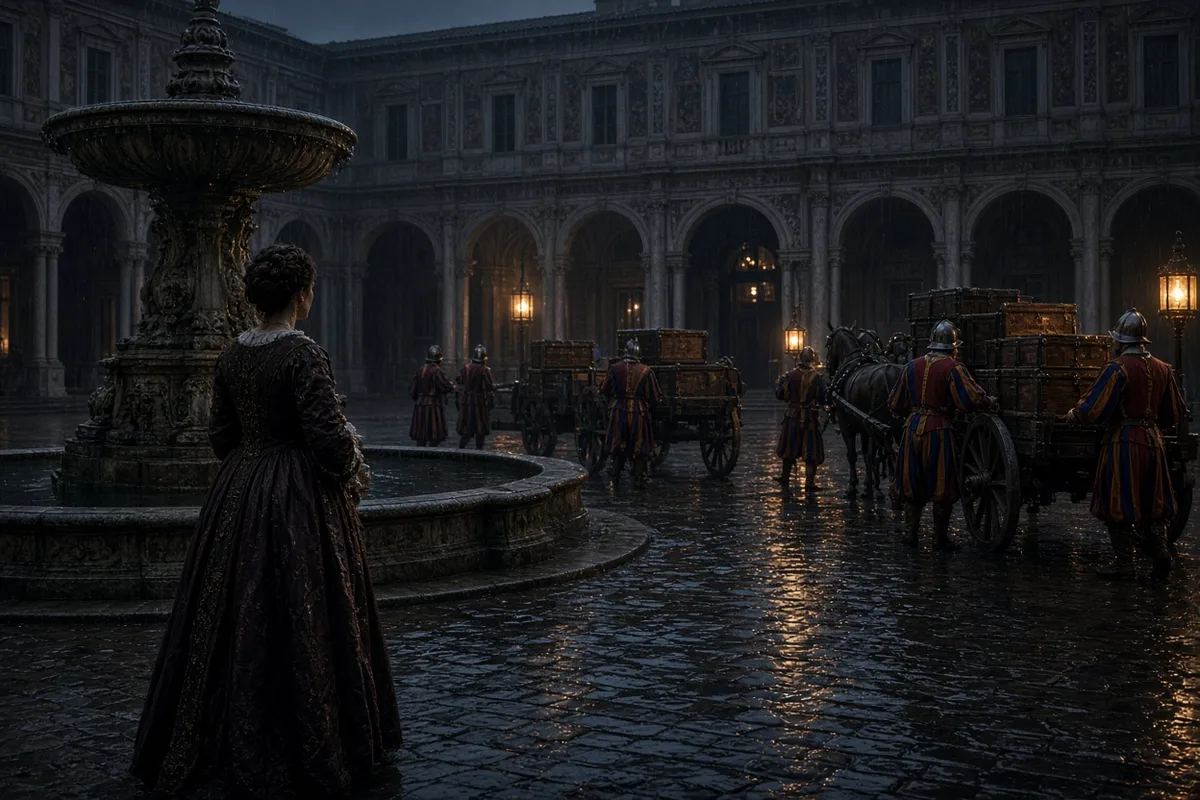
During the occupation of Rome in 1798 French troops under General Berthier removed the marble effigy from the Minerva tomb and stored it in the Castel Sant’Angelo; the effigy was returned on the twenty-ninth of December 1815 after the Congress of Vienna restored the Papal States. The Dominican sacristan, Fra Antonio Maria Baldini, noted in the church inventory that two of the twenty-seven silver lamps listed in 1492 had disappeared and that the remaining twenty-five required new wicks costing nine baiocchi each. In 1869 the Italian government under Victor Emmanuel II opened the archives of Castel Sant’Angelo to scholars; the register Arm. 54, tom. 18 containing Catherine’s last letter was catalogued as item 312 and photographed for the first time on the fourteenth of May 1871.
Pius XII declared Catherine a Doctor of the Church on the fourth of October 1970 in Saint Peter’s Basilica, quoting in the apostolic letter the phrase “the city waits empty” from the 1376 letter to Gregory XI. The ceremony was attended by the Archbishop of Siena, Mario Jsmaele Castellano, and by the prioress of the Dominican sisters at the Minerva, Mother Maria Pia Strozzi. The decree was promulgated in the Acta Apostolicae Sedis, volume sixty-two, pages 684 through 687. On the same day the Vatican Library issued a facsimile of the 1380 letter witnessed by Barduccio di Piero, printed in an edition of five hundred copies.
The body beneath the Minerva altar was examined on the twenty-third of May 1946 by a commission that included the anatomist Giuseppe Moscati; the report listed the presence of a lead seal bearing the arms of Pope Pius II still attached to the original shroud. The greater part of the remains rests in a porphyry urn installed in 1855, while fragments were distributed to Siena, to the church of San Cristoforo in the Via dei Serragli in Florence, and to the Dominican convent at Taggia. The last human image I carry is of the sacristan at the Minerva in the spring of 1950, an elderly lay brother named Pietro Rossi, who lit the twenty-five lamps one by one before the tomb each evening at the hour of compline and then sat on the stone bench in the cloister to read from the red-bound volume of letters until the night bell sounded.