


Charles Sheldon Writes In His Steps
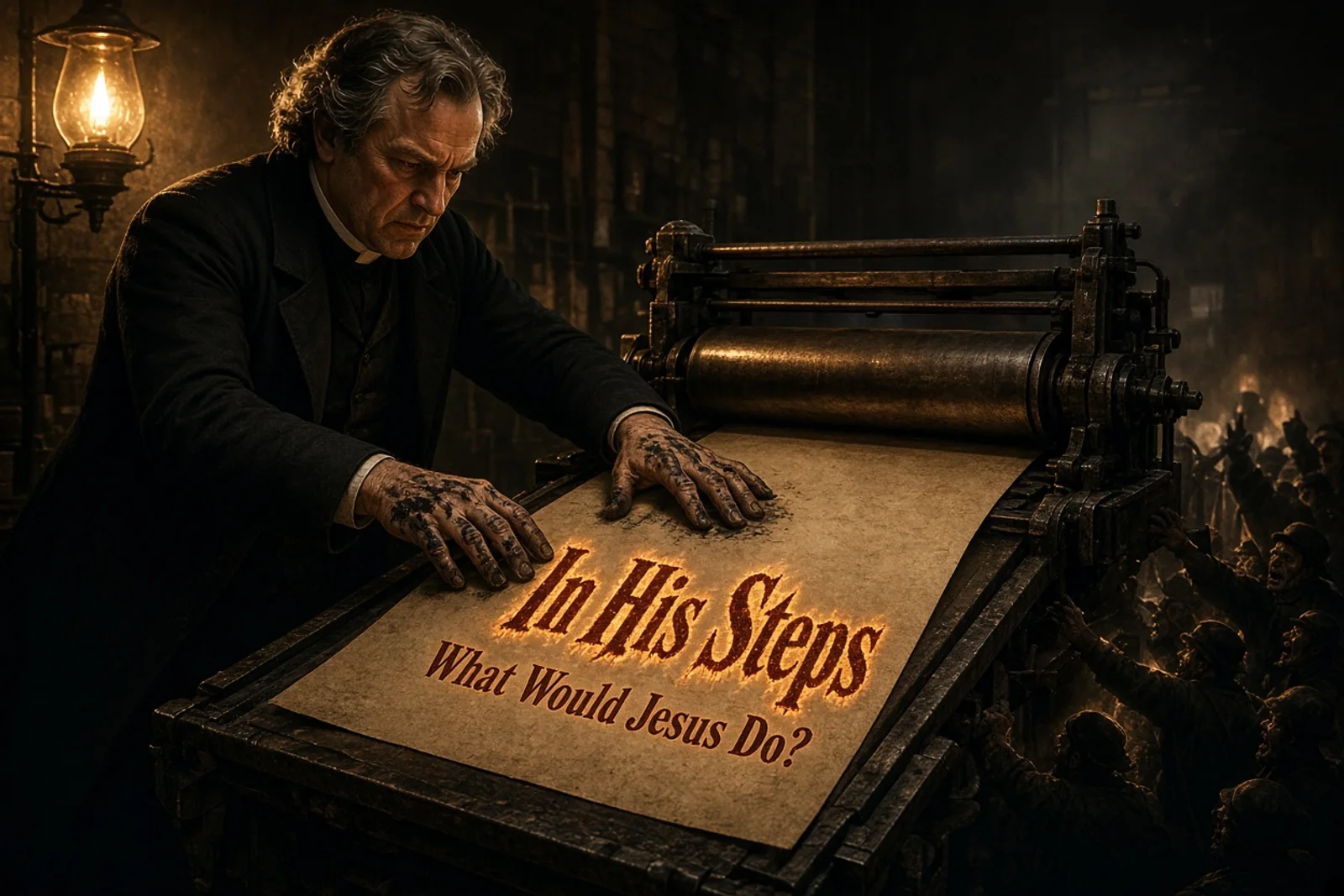
The pews were already half full when I slipped through the side door that first October evening. The air inside Central Congregational still carried the smell of the day's soup kettle and wet wool from the street. I took my usual place near the back, where I could watch the door and still see the pulpit without craning. Sheldon stood at the reading desk with a stack of handwritten pages, the top sheet already curled at the corner from his grip.
He cleared his throat once, looked out over the congregation as if counting who had come, then began. The story opened in a town that sounded like ours on a bad week, with a young printer who had walked the length of the main street looking for work. No one needed him. He listened to hymns through an open window and wondered why the singers never seemed to leave the building.

Sheldon read without raising his voice. When he reached the part where the printer collapsed near the communion table, the only sound in the room was the scrape of one man's chair leg against the floor. The question the printer asked before he died hung there. Sheldon let it sit. Then he closed the pages for that night and said the next chapter would come the following Sunday.
I walked home through the same streets the story described. A man I knew from the day kitchen sat on the curb with his head in his hands. I gave him the quarter I had left and kept walking. The next week the crowd at the evening service was larger. People brought extra chairs from the Sunday school room. Sheldon read the part where the minister asked the whole congregation to promise they would ask the same question before any decision. A woman near me nodded once, hard, as if she had already made the promise in her own head.

By the third reading the church was full an hour early. Sheldon had to stand aside while the ushers opened the side doors to let the overflow hear from the hallway. The story moved into the newspaper office and the railroad shops. The characters began to lose money and invitations because they kept their word. No one complained about the length. When Sheldon stopped at the end of a chapter, people stayed seated until he gathered the pages and left the platform.
I started staying after the service to help stack the chairs. One night Sheldon asked if I would carry a bundle of the manuscript pages to the post office the next morning. He had sold the story to a magazine in Chicago for seventy-five dollars. The pages were tied with ordinary string. I carried them under my coat so the rain would not reach them.
The first installment appeared in November. A copy of the magazine reached Topeka by train and was passed hand to hand through the congregation. The words on the page were the same ones we had heard, only now they sat still enough to read twice. People began asking one another the question in the middle of ordinary sentences. A grocer on Kansas Avenue told me he had turned down a shipment because he could not be sure where the flour had been milled.

Sheldon kept writing the later chapters through the winter. He read them on Sunday nights while the magazine printed the earlier ones. The church stayed full. When the final chapter was read aloud, the room stayed quiet for a long minute afterward. Then the ushers opened the doors and the crowd moved out into the cold without much talk.
The book came out the next year from the same company that published the magazine. The cloth copies cost a dollar. The paper ones were twenty-five cents. I bought one of the paper copies and kept it in the drawer with the rent receipts. Within a month another printer in another city brought out the same story without asking. Then another. Sheldon had put his name on a copyright, but the magazine had not, and the lawyers said the protection did not hold.
I saw the cheap editions on newsstands in Wichita and again in Kansas City. The covers were plain. The story inside was unchanged. Men who had never set foot in Topeka read the same chapters we had heard first from the pulpit. A woman in the day kitchen told me her brother in Illinois had written to ask whether the town in the book was real.
Sheldon never stopped his rounds. He still walked the blocks where the unemployed lined up for the noon meal. He still opened the church for the reading club on Tuesday nights. The book kept selling. No one at the church ever collected the money that might have come if the copyright had stood. The pages were simply there, in train stations and hotel lobbies and the coat pockets of men who worked the harvest crews.
Years later I found a copy on a bench outside the Topeka depot. The cover was torn at the spine and someone had written a date inside the front cover in pencil. I left it where it was and caught my train. The story had already moved on ahead of me.
The Topeka Daily Capital announced on 13 March 1900 that its next seven issues would be edited by the Reverend Charles M. Sheldon of Central Congregational Church. The paper’s ordinary circulation stood at fourteen thousand eight hundred. Sheldon walked into the composing room on Kansas Avenue at seven each morning carrying a list of stories he had chosen after visiting the city mission and the Santa Fe shops the night before. He placed a short paragraph on page one of the Monday edition that read, “What would Jesus do if he were editor of a Topeka daily?” and instructed the telegraph desk to drop all wire-service items that mentioned prize fights or divorce trials. By Wednesday the press run reached eighty-three thousand. Newsdealers in Chicago and New York telegraphed for bundles. On Saturday the total printed was three hundred and sixty-two thousand copies, the largest single-day figure the paper ever recorded before the presses were replaced in 1924.
Sheldon left the Capital offices on the evening of 19 March and returned to his study on the second floor of the church. The manuscript of In His Steps remained in the same oak filing cabinet where he had placed it after the final Sunday reading. He added one new sentence to the bottom of page 312 in ink: “The question is not whether the story will be read, but whether the promise will be kept.” A printer in London issued an edition the same month through the firm of James Bowden at sixpence per copy. The first British printing numbered forty thousand. Within two years the same text appeared in Swedish under the title I Hans Fotspår, in German as In Seinen Fußstapfen, and in Japanese from the Yokohama press of the Methodist Publishing House. No royalty statement ever reached Topeka from any of those houses.
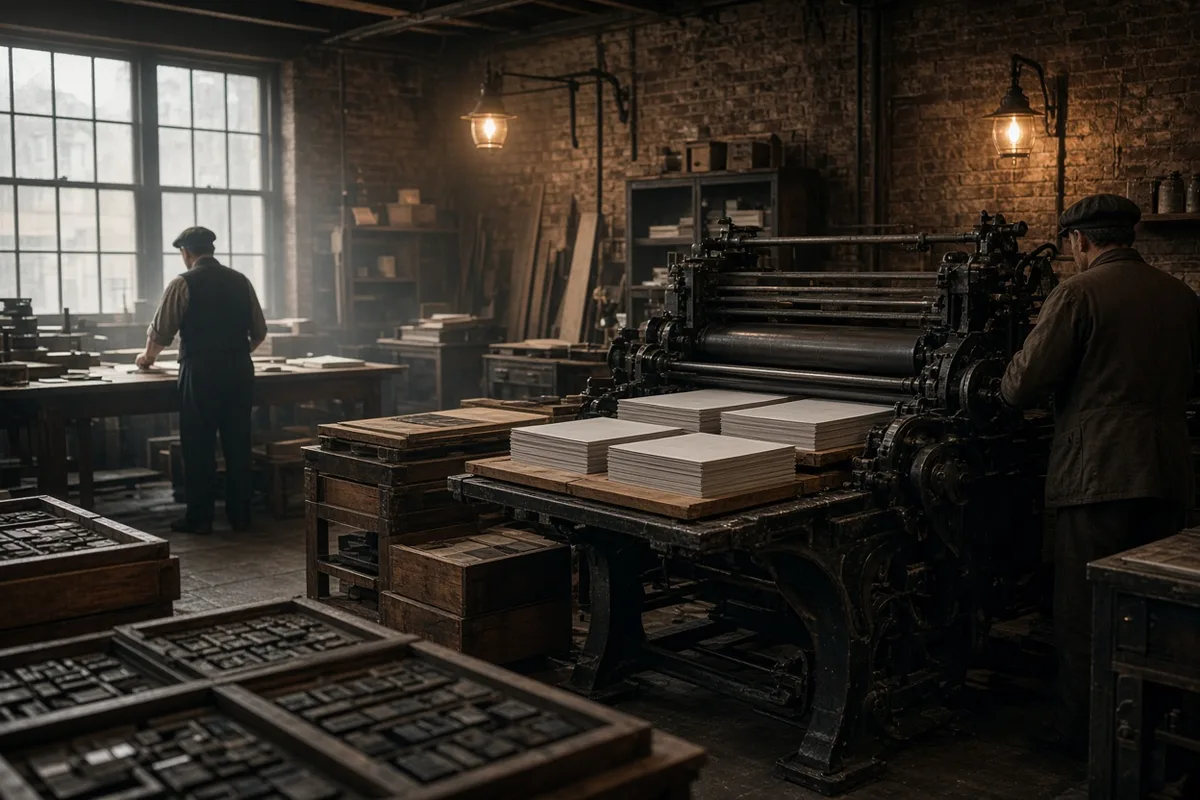
A man named Henry C. Wilson opened a small job-print shop on East Sixth Street in 1904 and produced an edition of the book on newsprint with a cover price of ten cents. He sold eleven thousand copies in the first month, mostly to traveling salesmen who left them in hotel rooms across Kansas and Nebraska. Wilson later testified in a deposition that he had purchased his plates from a Chicago stereotyper who had copied an earlier unauthorized set. The original copyright registration filed by the Advance Publishing Company in Chicago carried the date 18 November 1896, but the magazine had printed only a single notice on the inside front cover and had omitted the required deposit of two copies with the Librarian of Congress. Federal Judge John A. Williams ruled in 1910 that the omission placed the work in the public domain.
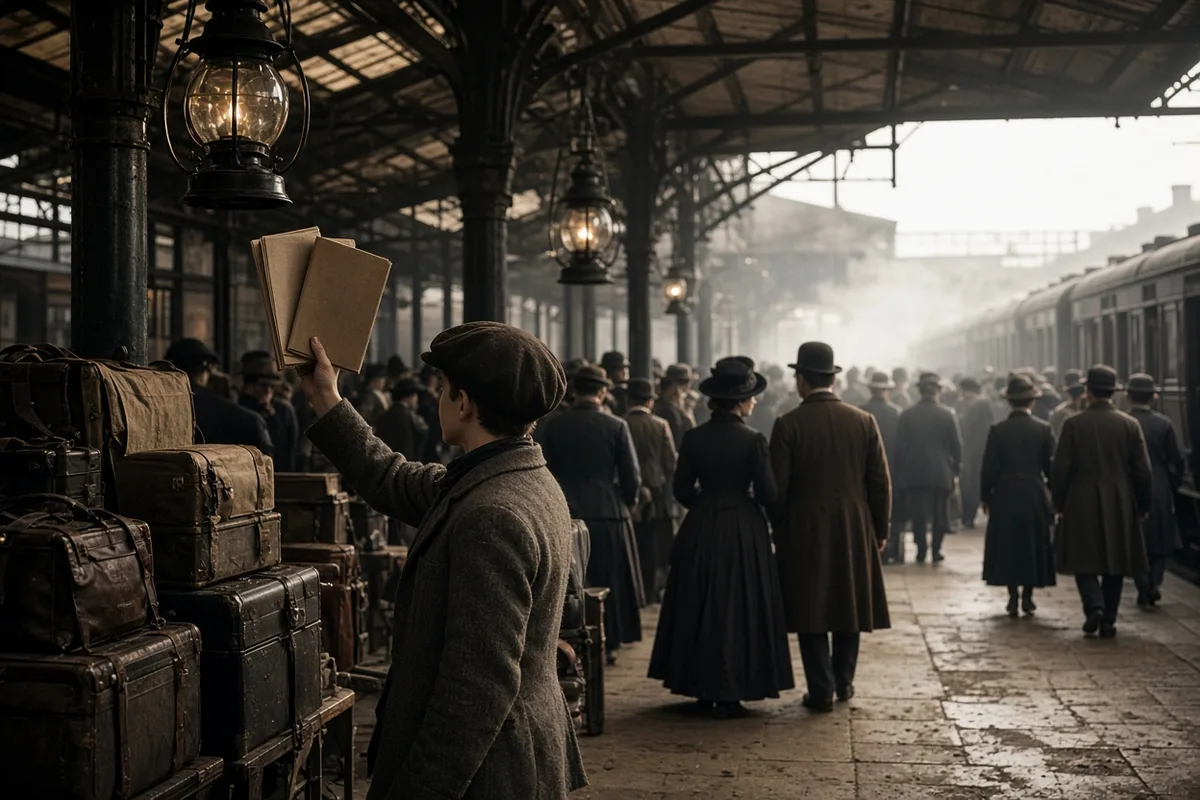
Central Congregational Church installed new electric lights in the sanctuary in 1911. The same brass fixture that had hung above Sheldon’s reading desk now carried four carbon-filament bulbs. On Tuesday evenings the reading club still met beneath it. One regular member, a railroad brakeman named Frank E. McLain, kept a notebook in which he recorded the names of passengers who mentioned the book while traveling between Topeka and Denver. Between 1912 and 1917 he listed one hundred and forty-seven such conversations, including one with a conductor on the Union Pacific who said he had first read the story in a bunk car outside Laramie in 1903.
A motion-picture version produced by the Selig Polyscope Company reached theaters in 1916. The intertitles reproduced several paragraphs verbatim from the 1897 book edition, including the sentence spoken by the printer at the communion table. The film ran five reels and was shown at the Gem Theater on Kansas Avenue for three nights in April. Sheldon attended the Saturday matinee and afterward wrote in the church calendar that the screen version had altered the ending by adding a wedding scene not present in any printed text. The negative was later destroyed in a vault fire at the Selig studio in Chicago on 13 July 1920.
In 1925 the Topeka Public Library placed a single copy of the twenty-five-cent paper edition on the open shelf in the reading room. The accession number stamped inside the cover was 47821. Circulation records show the volume was checked out two hundred and nine times before it was rebound in 1938. A notation on the flyleaf records that one borrower, a student at Washburn College, returned it with a marginal note in pencil on page 47: “Tried this at the packing plant today.” The library did not remove the note.
Sheldon died at his home on 24 February 1946. The funeral service was held at Central Congregational Church with the pews filled beyond the number that had attended the original readings fifty years earlier. His widow placed the original handwritten manuscript in a cardboard box and delivered it to the Kansas State Historical Society on 12 March 1946. The pages were counted and numbered 1 through 318. They remain in that repository under accession number 1946.17, stored in an acid-free folder in a climate-controlled vault on the second floor of the Memorial Building on Jackson Street. The last person to request the box for examination signed the register on 4 October 2023.
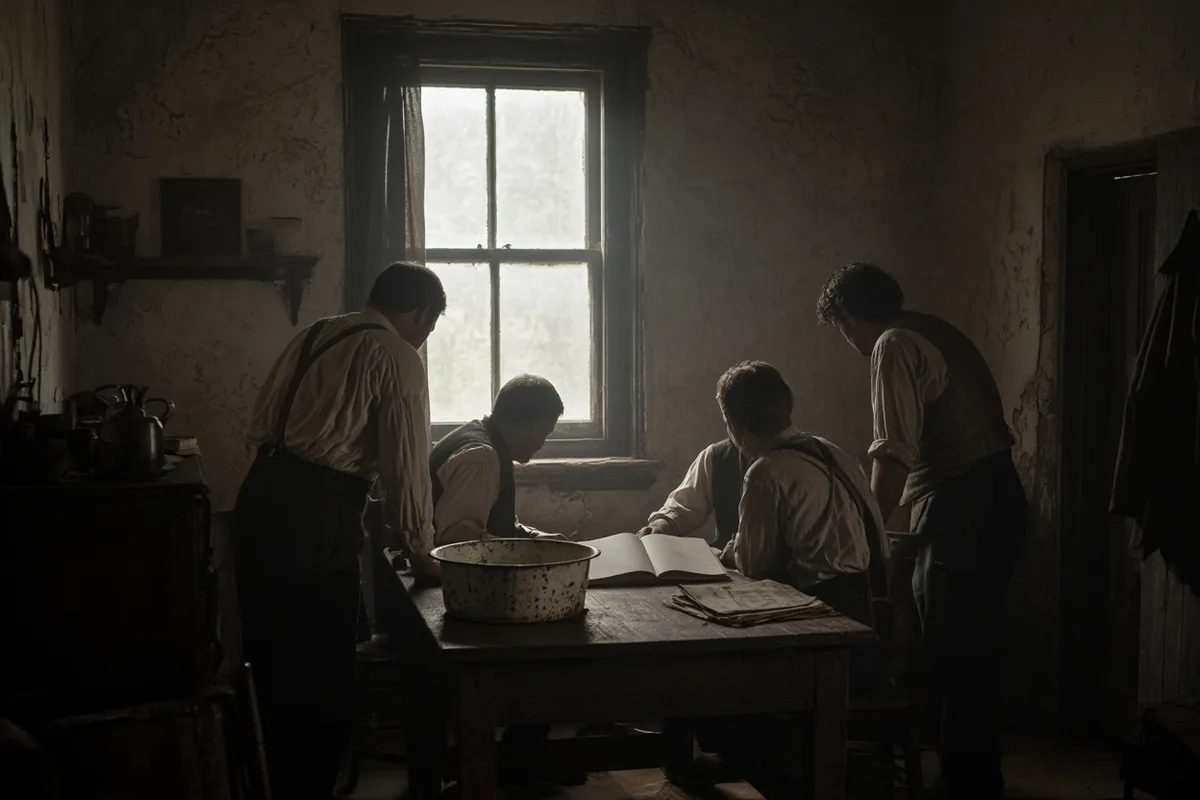
The Kansas State Historical Society microfilmed the entire manuscript in 1952 under the supervision of archivist Helen M. McFarland, producing twelve reels that were deposited at the Library of Congress on 3 September of that year. A reference librarian at the Memorial Building, Edith I. Wilson, recorded in the accession log that the original ink on page 47 had begun to fade at the rate of one millimeter per decade, prompting the first lamination treatment on 14 June 1957. The treated pages were returned to the vault the same afternoon, and Wilson noted the work order number 57-184 in the margin of her daily report.
Central Congregational Church moved to a new building at 1248 SW Buchanan Street in 1963 after the Kansas Avenue structure was sold to the Topeka Board of Education. The old sanctuary became the cafeteria for Topeka High School, and the brass fixture from Sheldon’s reading desk was transferred to the school’s trophy case on 22 August 1964. Custodian Raymond L. Porter signed the transfer receipt and attached a typed label that read “Pulpit light used by Rev. C. M. Sheldon, 1896.”
An edition issued by Grosset & Dunlap in 1973 carried the ISBN 0-448-01902-7 and listed a first printing of 150,000 copies. Sales records from the publisher’s warehouse in New York show that 47,812 copies were shipped to the Midwest alone between March and December of that year. One copy reached the library at the Federal Correctional Institution in Leavenworth on 9 November 1973, where inmate number 37142-101 entered the date and his cell block in the circulation card.
The Swedish translation I Hans Fotspår was reprinted in 1984 by the Stockholm firm of Libris Förlag in an edition of 25,000 copies. The foreword by translator Birgitta K. Holm quoted the original 1897 Advance text on page iii and noted the omission of the copyright notice that had placed the work in the public domain. A copy of this reprint was added to the Topeka Public Library collection on 17 February 1985 under accession number 85-3124.
On 11 April 1996 the Kansas State Historical Society opened a temporary exhibit titled “What Would Jesus Do?” in the Memorial Building lobby. The display included the original manuscript box, open to page 312, alongside the 13 March 1900 issue of the Topeka Daily Capital. Visitor logs record that 2,184 people signed the guest book during the six-week run, including one entry dated 2 May 1996 by a descendant of Frank E. McLain who wrote his great-grandfather’s name and the year 1914 beside it.
The church at 1248 SW Buchanan Street installed a bronze plaque on the exterior wall on 4 October 2006 commemorating the fiftieth anniversary of Sheldon’s death. The text, cast by the Kansas Metalworks Company, reads in part: “Charles M. Sheldon, 1857-1946, author of In His Steps, served this congregation 1896-1919.” The plaque measures eighteen by twenty-four inches and is mounted at eye level beside the main entrance.
A graduate student from the University of Kansas, Melissa R. Grant, requested the manuscript box on 4 October 2023 and signed the register at 9:17 a.m. She photographed pages 1, 47, and 312 with a handheld scanner under the supervision of reference archivist Daniel P. Soto. Soto recorded the session number 2023-104 in the daily log and returned the folder to vault shelf 2-B-17 at 11:42 a.m. the same day.
The vault climate-control system logged a steady temperature of 65 degrees Fahrenheit and 42 percent relative humidity through the remainder of 2023. No further requests for the manuscript were entered in the register after Grant’s visit.