



China keeps ownership as loaned pandas head to Atlanta
By The Conservative Desk (/journals/conservative-desk)
In late 2024, four giant pandas left Zoo Atlanta for China. Lun Lun, Yang Yang, Ya Lun, and Xi Lun boarded the return flight after a 25-year run that had produced seven cubs. For several months afterward, no giant pandas remained on public display anywhere in the United States.
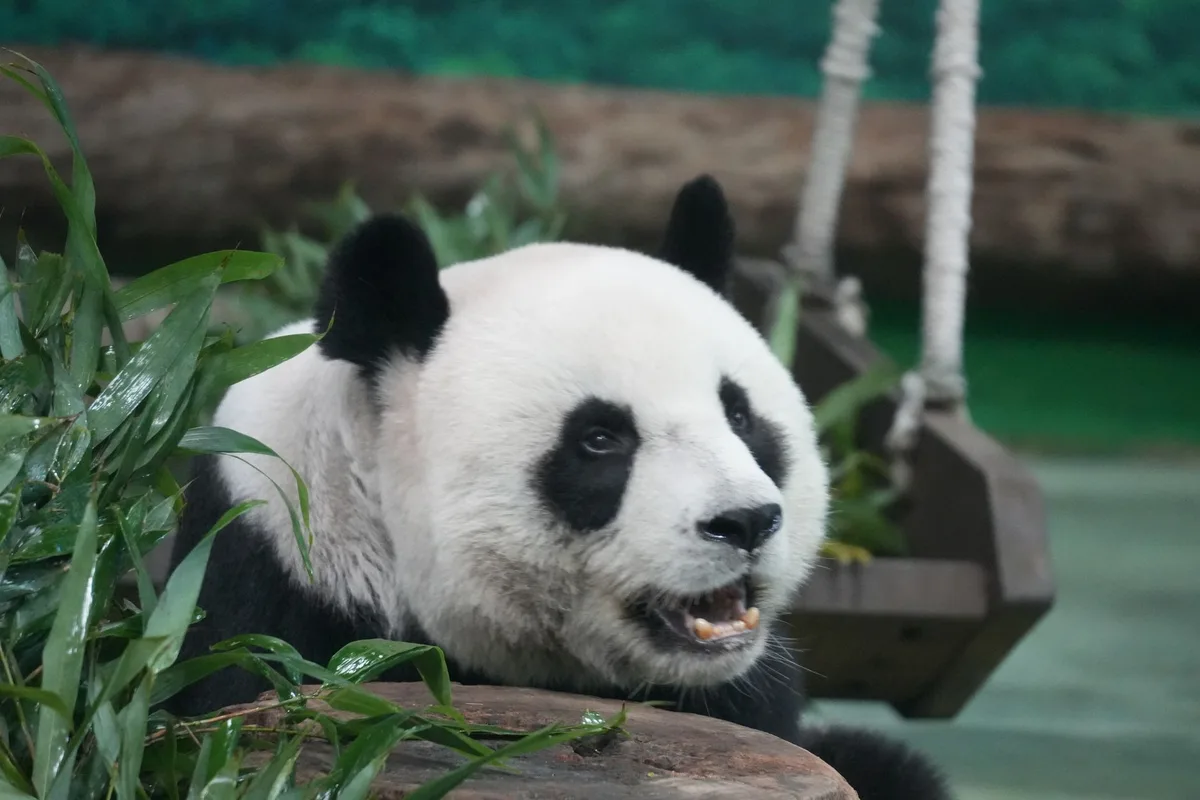
That gap is about to close. Two new animals, the male Ping Ping and the female Fu Shuang, will arrive at Zoo Atlanta within days.
Chinese President Xi Jinping made the timing public Thursday during arrival-ceremony remarks at the White House, just before his meeting with President Donald Trump. "The giant panda has been an envoy of friendship between the Chinese and Americans," Xi said. "Here, I have a piece of good news. In a few days, two pandas ‒ Ping Ping and Fuhuan ‒ will come to their new home in Zoo Atlanta and meet with the American people."
Trump had greeted Xi on the tarmac at Joint Base Andrews the day before, a gesture rarely extended to visiting heads of state. The three-day Washington visit carried an agenda of trade, technology, and security. The pandas landed in the opening statements.
Both animals were born at the Chengdu Research Base of Giant Panda Breeding in Sichuan Province. They travel under a 10-year protection cooperation program between Zoo Atlanta and the China Wildlife Conservation Association. The two sides announced the agreement in April. China retains ownership of the bears and of any cubs born abroad. The arrangement is a lease, not a transfer of title.
Zoo Atlanta president Raymond B. King welcomed the April deal in plain terms. "We can't wait to meet Ping Ping and Fu Shuang and to welcome our members, guests, city, and community back to the wonder and joy of giant pandas," he said. The zoo described itself as "delighted and honored to yet again be trusted as stewards of this treasured species." Facility renovations have already been carried out with technical assistance from Chinese experts. The zoo has said it will not share the precise arrival date and has no further information to release.
The pattern is older than the current loan. In April 1972, after President Richard Nixon's trip to China, Ling Ling and Xing Xing arrived at the National Zoo in Washington. More than 8,000 Americans stood in the rain to greet them. More than one million visitors came in the first month. That pair was presented as a gift. By 1984 Beijing had shifted to leases, citing population pressure, and has kept legal title ever since.
The leases have tracked the temperature of the broader relationship. San Diego Zoo's program lapsed from 2019 to 2024 before Yun Chuan and Xin Bao arrived in June 2024. The National Zoo returned three pandas in 2023 and received Bao Li and Qing Bao in October 2024. Atlanta's four animals left in October 2024, closing the last U.S. enclosure for a stretch of months. When relations cooled, the animals went home. When Beijing chose to restart the optics, new pairs followed.
China's foreign ministry spokesperson Guo Jiakun framed the latest shipment as conservation and goodwill. The cooperation, he said, would help panda well-being, biodiversity protection, and friendship between the peoples. Xi called the species an envoy of friendship. A Chinese academic put the political logic more bluntly: "Panda diplomacy conveys a message of friendship and goodwill from China. Americans may not like China, but they will certainly like pandas."
That is the argument on its own terms. Friendship and scientific exchange are the stated goods. Joint work on behavior, nutrition, genetics, and disease has produced breeding successes—seventeen cubs across three American zoos over three decades, seven of them in Atlanta. The International Union for Conservation of Nature moved the species from endangered to vulnerable in 2016. Roughly 1,800 animals remain in the wild.
The counter-facts sit in the contract structure itself. China claims ownership of every giant panda on earth. Offspring belong to Beijing and ordinarily return while young. Technical experts from the lending side help redesign the American enclosures. The animals can be recalled when agreements expire or when diplomacy turns. They do not see the title documents or the recall clauses.
For limited government and the taxpayer the question is straightforward. Zoo Atlanta is making a commercial and scientific bargain with a foreign state entity. The sovereignty issue is equally concrete. A foreign government decides which U.S. cities receive the animals, how long they stay, and who owns the next generation. The leverage operates in the softer register of attention and atmosphere: positive headlines during a summit that also covers tariffs, artificial intelligence, and strategic competition.
Free enterprise gains a draw that sells memberships in Atlanta. The same enterprise accepts terms set in Beijing. The record supplies no larger cultural claim.
Previous Atlanta pandas Lun Lun and Yang Yang spent a quarter-century in Georgia and left seven cubs behind in the breeding books before the 2024 return. The new pair resets the clock for another decade under the same ownership rules. National Zoo and San Diego already hold their 2024 arrivals. Atlanta's empty yards are days from being filled again.
The zoo still declines to publish the arrival date. Ping Ping and Fu Shuang will meet the public on Beijing's schedule, under Beijing's title, for as long as the 10-year paper runs.