


Chiune Sugihara Writes Visas Until the Train Leaves
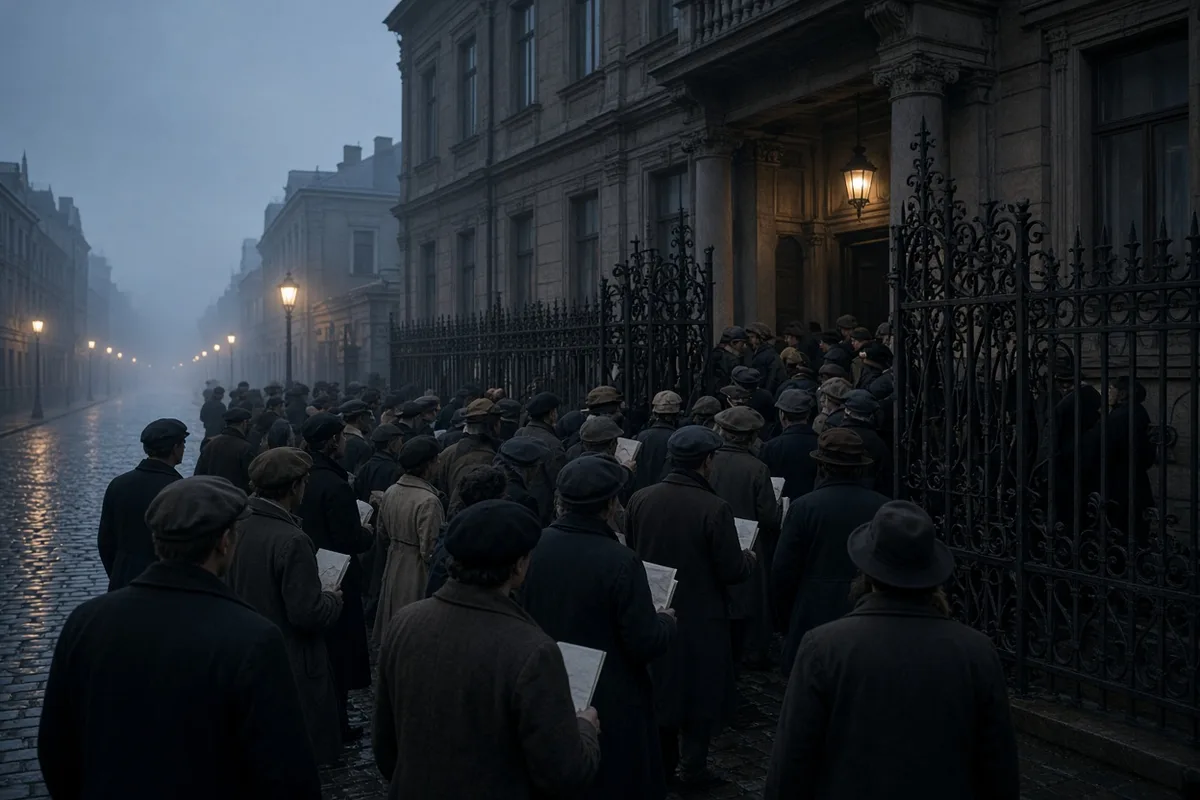
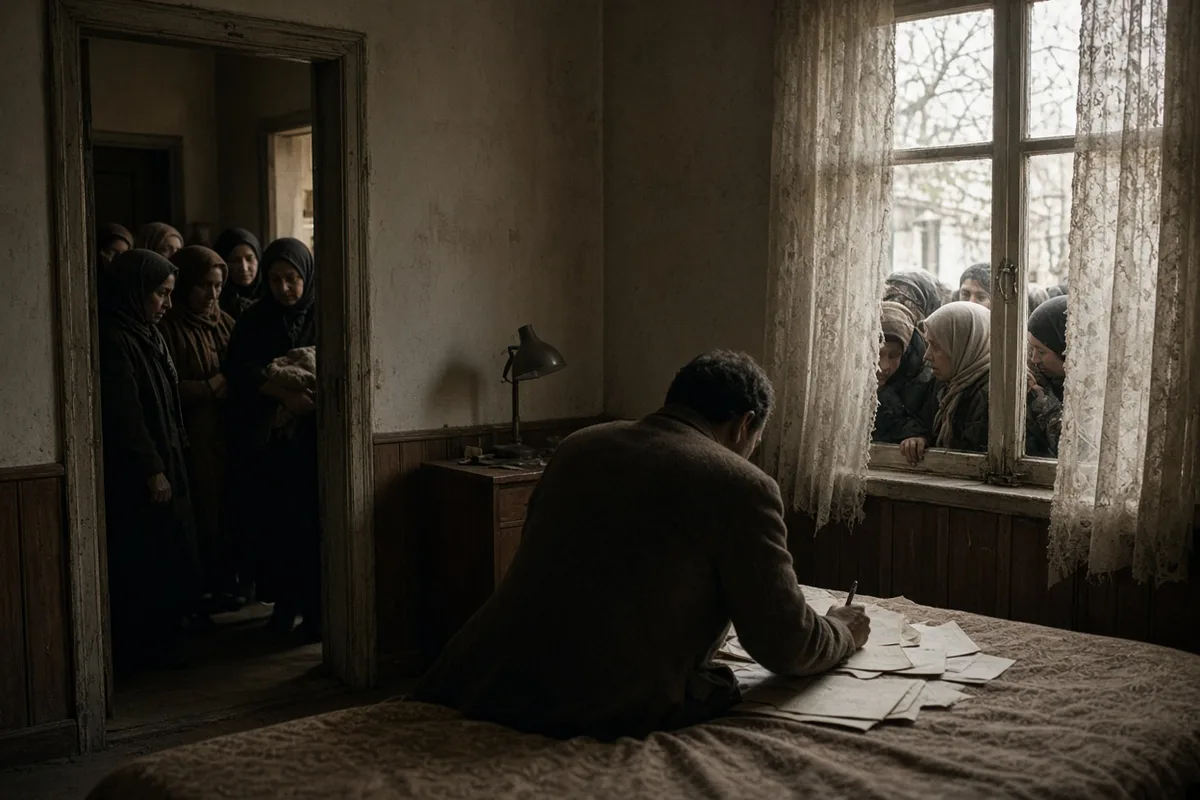
The fence gave first at the corner nearest the linden tree, and I remember the sound of it, a low groaning creak, before I understood what was happening. It was the morning of July 27, 1940, and there were perhaps two hundred of us pressed against the palings of a house on Vaižganto Street in Kaunas, and I had been standing there since before light, my shoes soaked through with dew, watching young men try to climb over while the consulate's own people pushed them back down.
I had come from Poland the autumn before, walking most of the way, and by the time I reached Vilna I had learned to read a map of borders the way other people read scripture — which line meant death, which line meant maybe. Someone in Vilna had told me about a Dutch island called Curaçao, a place none of us could point to on a globe, and about a Dutch consul who was writing visas for it that nobody in Curaçao would ever have to honor. A destination visa. A fiction, but a useful one, because a fiction stamped in the right ink could get you across the next border, and the next, if only some other consul somewhere agreed to let you pass through his country on the way.

That was why we were at the fence. Word had gone through the refugee lodgings like a fever: the Japanese consul in Kaunas might grant transit visas, might let us cross Siberia toward the ocean, if we could only get in front of him and make him listen.
He came to the window of his own bedroom that morning, I was told later, and opened it to find us already there, filling the yard, hands laced through the pickets. He said afterward he had no idea who we were. I believe that. Nothing about our faces could have told him. We were only weight against a fence, only need with no shape yet.
Word passed back through the crowd that he would see five men. I did not know their names then, only that they went in through the gate while the rest of us stood in the sun and waited, and I learned only afterward that among them was a young lawyer named Zorach Warhaftig, and that a man named Samuel Graudenz went in as his secretary, carrying whatever papers might make the case. Inside, they told him what had already happened to towns like mine — the bombing, the occupation, the Germans coming from one direction and the Soviets closing the other. They told him he was the last door left standing.

He believed them. He said as much, later, in his own words — that he wanted to issue the visas but did not know how, that he would need Tokyo's permission first. So he wired the Foreign Ministry. I did not see the cable, of course. None of us did. We only saw him afterward, at the consulate window, and the crowd reading his face like weather.
The answer from Tokyo, when it came, was no. Not an outright refusal of the man, but of the method — the Ministry insisted any visa required a confirmed onward destination and proof of money for the journey, and everyone standing in that yard knew, without needing to be told, that almost none of us had either. Our Curaçao papers were paper only. Our pockets were empty. By every rule the Ministry could cite, we were not eligible for anything.
He cabled again. And again after that. I remember the days more by hunger and weather than by date — one morning cold enough that my breath fogged, another so hot the crowd thinned by afternoon and came back at dusk — and each time, no permission arrived. Still the people kept coming, from Vilna, from villages I'd never heard named, drawn by the same rumor that had drawn me.
His wife came to the window sometimes, and I watched her face more than I watched his, because it was easier to read. She said afterward that she was not frightened by us, only struck by how many of the women stood with their hands pressed together, begging without words, and that she understood, watching them, exactly how far we had come to reach that fence.
What none of us in the yard could have known, standing there hoping for a stamp, was the size of what we were asking him to risk. The Soviets, who now held Lithuania, called emigration treason and punished the arranging of it as a capital matter. Beyond that lay the Reich, moving east with its own reckoning for any official who helped Jews escape it. If his family had been living under German jurisdiction and done what we were asking, his wife said afterward, she did not know what would have happened to them — only that it might have ended in their deaths.
He weighed all of that against two hundred faces at a fence, and then against the ones that kept arriving after those two hundred went home to wait, and somewhere in that arithmetic, at the end of July, he stopped waiting for Tokyo to say yes.
I was not in the room. Nobody in the yard was. But the paper found its way to us within the week — a stamp, a signature, a date — and the story came with it, the way stories always did in that crowd, passed hand to hand faster than the visas themselves: that he had told someone, plainly, that he might be disobeying his government, but that if he had not helped us he would have been disobeying something larger than any government.
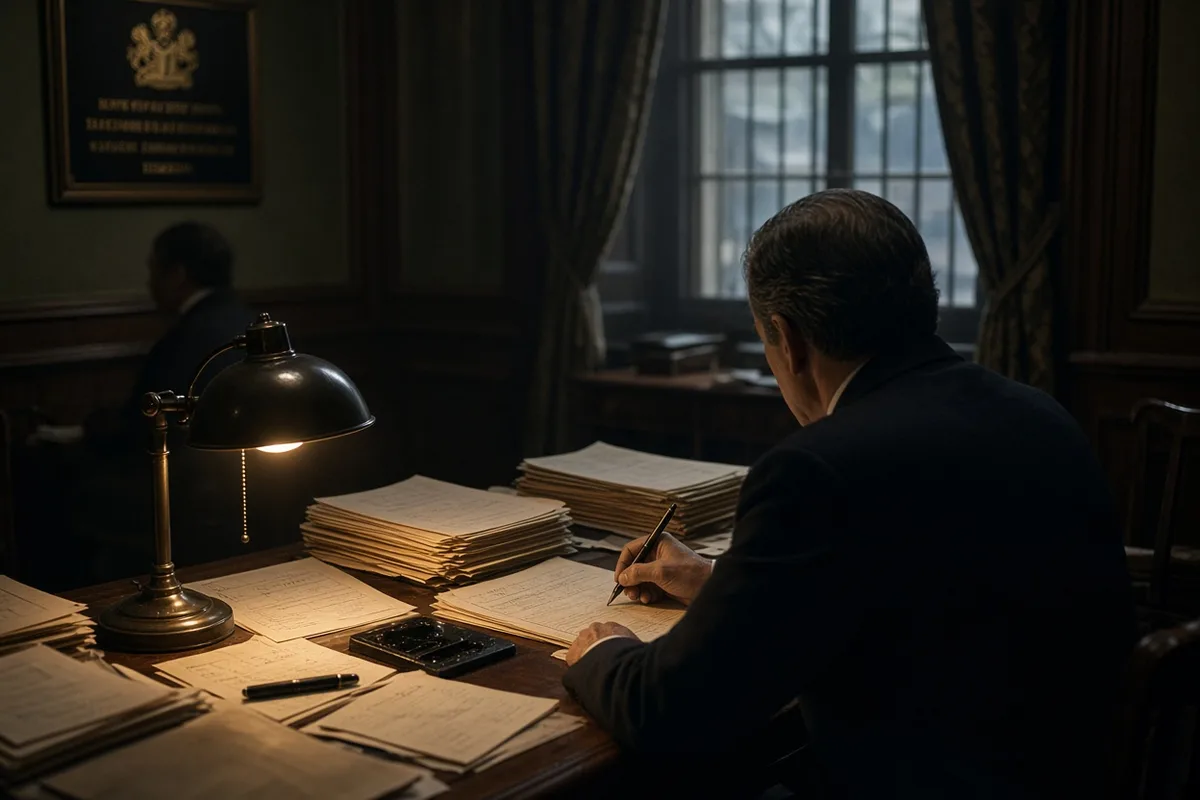
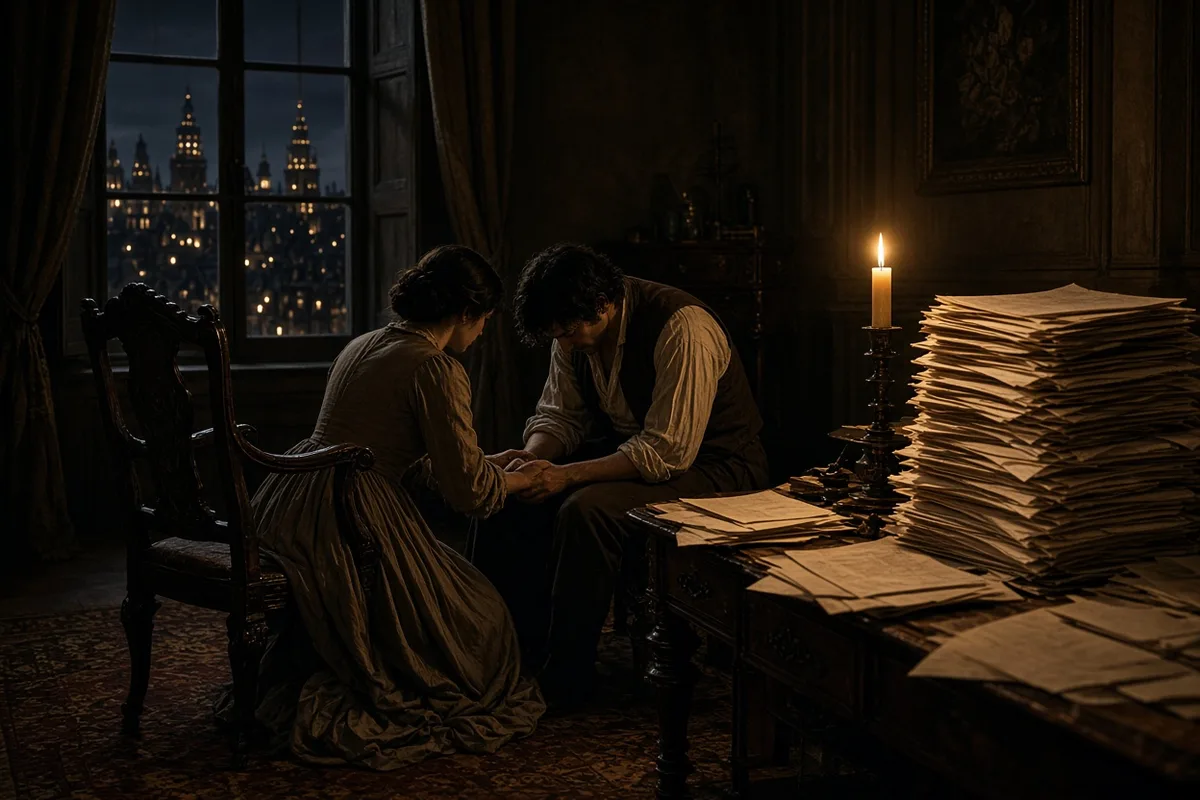
From that morning on, the yard on Vaižganto Street never emptied. He worked from first light until past midnight, they said — eighteen hours some days, twenty on others — bent over a desk with a pen that must have worn a groove into his fingers, because there was no other way to produce that many documents. No stamp could replace a hand-written signature fast enough. Every visa was a name, a date, a consul's own hand moving across paper that might carry that name clear across Siberia.
I remember the room when my own turn came — low light, the smell of ink and wet wool from all the coats that had passed through before mine, ledgers stacked at his elbow, his sleeves pushed back. He did not ask me for money I didn't have. He wrote. Ten days' transit through Japan, the paper said, though everyone in that room understood the ten days were a formality, a number to satisfy some office far away that would never see the actual arithmetic of what came next.
I left with the paper folded inside my coat and stood outside a while just to be sure the ink was real. Around me were others clutching the same kind of page — I would learn much later that a girl named Lucille Szepsenwol Camhi had come through with her sister that same season, bound eventually for Seattle, and that a young bride named Susan Bluman had gotten hers not long after, on her way toward a husband's engineering job in Canada. None of us knew each other's names then. We only knew the shape of the same relief.
The numbers grew past anything the yard could hold. Hundreds a day, then more, families and single men and children carried on someone else's paper, until the total by the time the consulate closed that fall passed two thousand, each one requiring his own hand, no clerk to spread the burden, because no clerk could be trusted with a secret this size or a crime this size, depending on which government was asked.
By autumn the order came that could not be argued with: the consulate would close, and he would leave for Berlin, his posting finished whether Tokyo approved of what he'd done in it or not. But the yard did not know that the door was closing, or did not believe it, and people kept arriving even as the furniture inside was being packed.
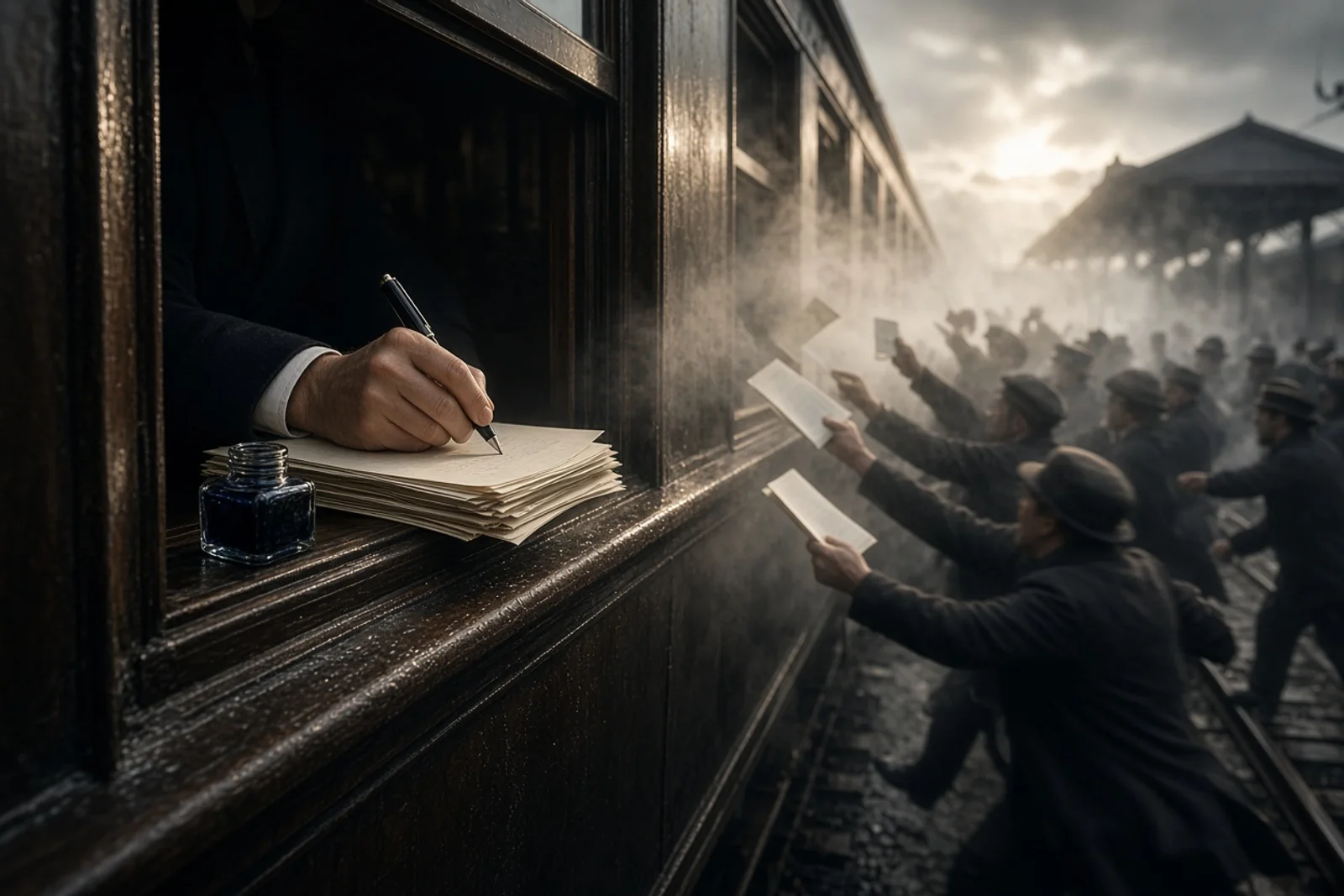
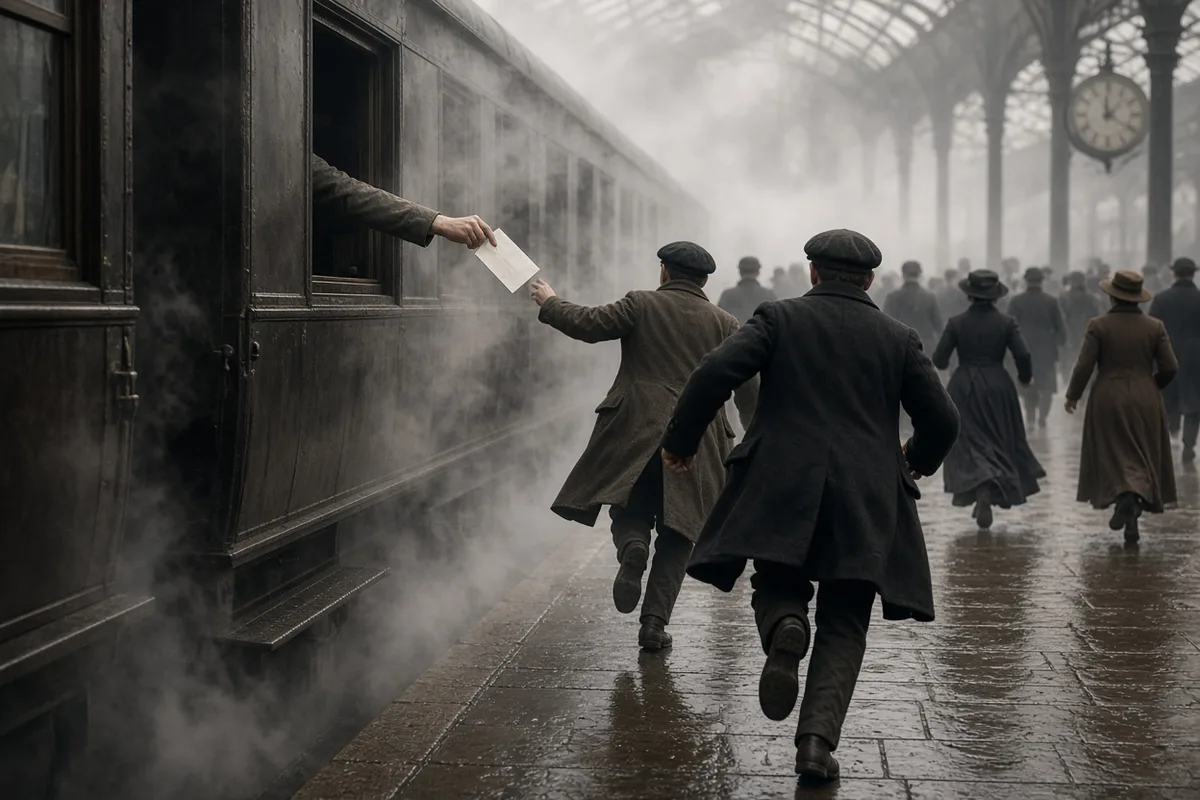
On the day he left for the station, they say he was still signing at the desk almost to the moment the car came, and then in the car, and then, when there was no more desk and no more time, at the window of the train itself, reaching down to take papers passed up to him from the platform, writing his name and the date against the frame of the window because there was no table left to write on. I picture that window more than any other image from that whole season — hands reaching up, his hand reaching down, the whistle already sounding somewhere behind him.
Someone told me he threw the consulate's visa stamp itself out to a refugee on the platform as the train began to move, so that whatever blank paper remained could still be marked officially once he was gone, because a signature could still be forged in gratitude even after the hand that made it legitimate had left the country. I cannot swear to every detail of that last minute. I know only that the train pulled away from Kaunas that day carrying a man who had spent a Foreign Ministry's patience down to nothing, and that behind him on the platform stood people still holding paper up toward a window that no longer had anyone leaning out of it.
Those of us who had gotten out earlier were already crossing Siberia by then, ten days becoming weeks, weeks becoming an ocean, the transit stamp meaning exactly as much as he had bet it would mean to officials on the other end who never checked the fine print about funds or destinations. I reached a port in Japan that same year and did not look back at Lithuania again for a long time, because there was nothing behind me to look back at.
He went to Berlin as ordered, and after that to postings the Ministry moved him through the way it moves anyone it no longer quite trusts, and eventually, after the war, out of the Ministry altogether — a quiet dismissal, no medals, no mention of Kaunas, as though the yard and the fence and the window had all been erased along with the consulate's files. For decades almost none of us knew what had become of him, and I think almost none of the world did either.
It took until 1968 for one of the men he had helped — the same Zorach Warhaftig who had walked through his gate as a young lawyer in July 1940 — to find him in Japan and make sure the debt was spoken aloud again. Years after that, in 1977, a journalist tracked him down in a Moscow hotel room and sat him in front of a camera, an old man by then, and asked him to say once more, for a record that would outlast him, why he had done it. He gave the same plain answer he had given from the start, about believing the people at his gate, about there being no other place for them to go.
He was named among the Righteous long before most of the world outside our own circle had ever heard his name, and the paper he pressed into thousands of hands during those weeks outlived every rule Tokyo had tried to enforce against him. I still have mine somewhere, folded soft at the creases, ink faded to brown, a single signature written by a hand that by the end could barely have felt the pen anymore, given how many times that same hand had already written that same name that day, and the day before, and the day before that, all the way back to a morning in July when a fence gave way at the corner nearest the linden tree.