


Chuck Colson's Prison Conversion
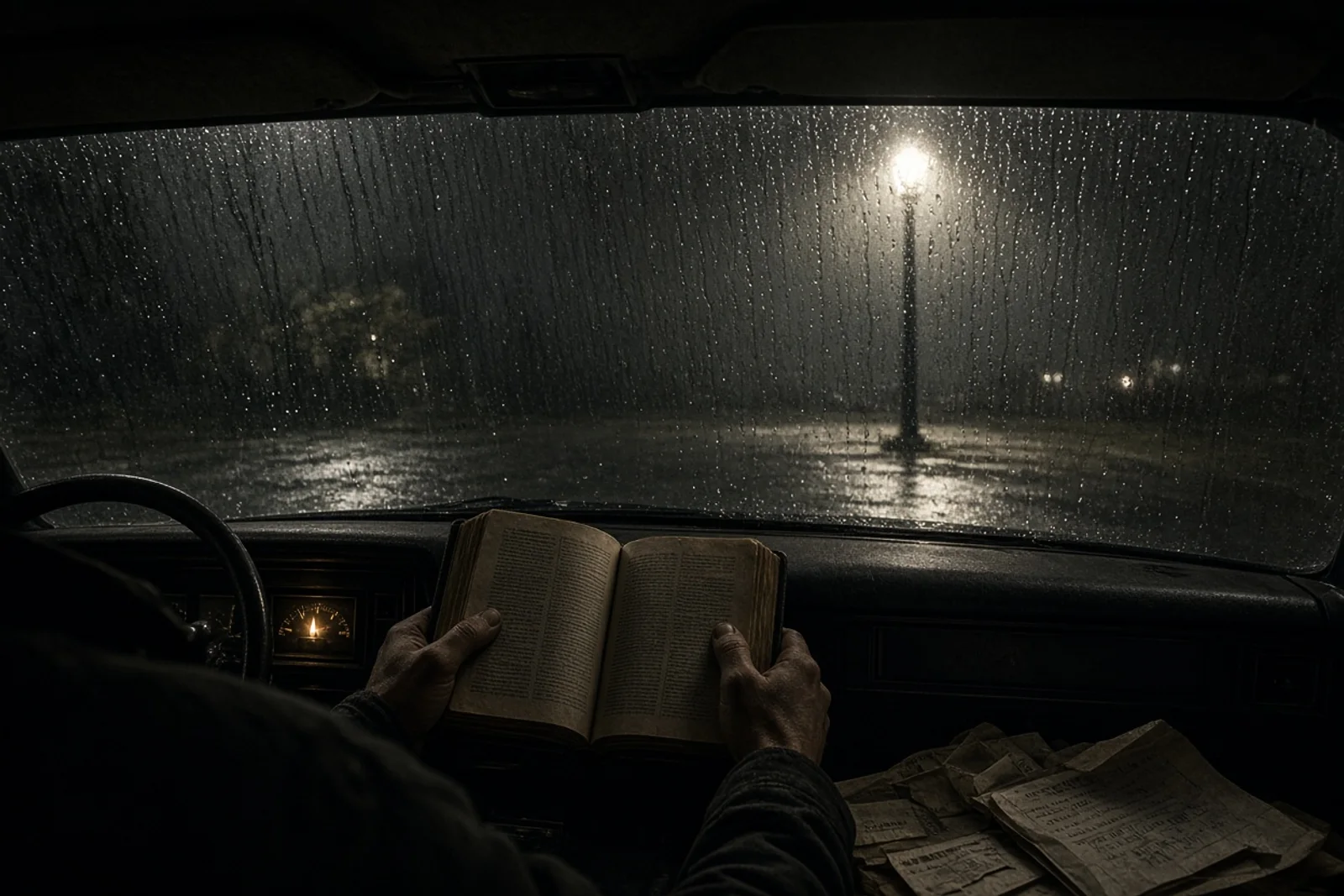
The headlights cut across the gravel drive as the car rolled to a stop in front of the house. I sat in the passenger seat, watching Chuck Colson kill the engine and stare at the steering wheel for a long moment before he opened the door. He had asked me to come along that evening because he needed someone who would not ask too many questions if the visit ran late. We both knew the reason he wanted to see Tom Phillips again after four years. Something had changed in Phillips, and Colson needed to know what it was before the next subpoena arrived.
Inside, Phillips met us at the door without the usual business handshake. He led us into the living room, offered coffee that neither of us touched, and then sat forward in his chair. Colson asked straight out what had happened to him. Phillips answered by reaching for a book on the side table. He opened it to a chapter on pride and began to read aloud. The words described a man who walks through life looking down on everything beneath him and therefore cannot see what stands above him. Phillips stopped after a page and closed the book. He said he had met Christ and could not go back to the way things had been.

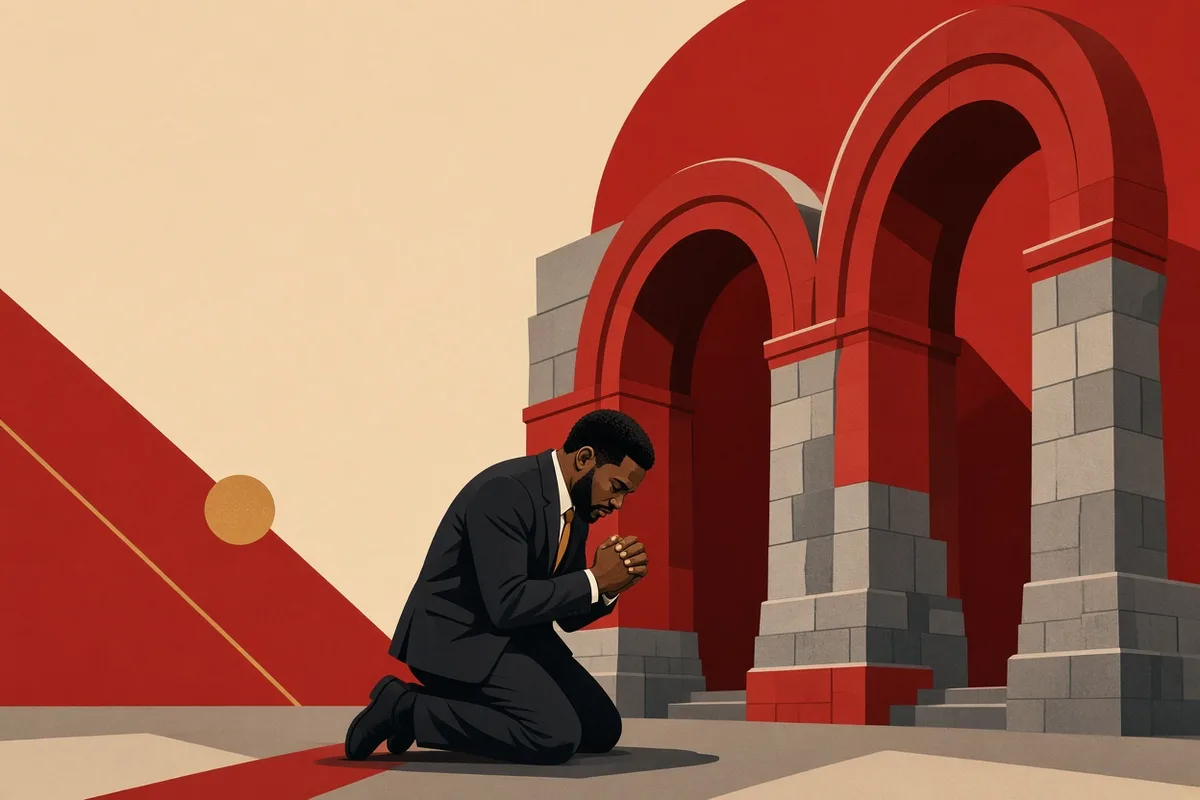
We left after midnight. Colson said little on the way to the car. He slid behind the wheel and turned the key, but the engine stayed quiet because his hands did not move. I waited beside him in the dark. The only sound was the faint tick of the cooling motor. Then his shoulders started to shake. He folded his arms across the wheel and pressed his face into them. I heard him speak the name of Jesus once, then again, the words thick and broken. He stayed like that until the tears stopped. When he finally lifted his head he did not look at me. He started the car and drove us back without another word.
In the weeks that followed he began meeting with Douglas Coe and the small group that already included Harold Hughes and Al Quie. They prayed together in a room on Capitol Hill, sometimes until the night watchman came through. Colson still carried the weight of the indictments, but the conversations changed. He stopped talking about how to beat the charges and started asking what he owed for what he had done. The lawyers told him to stay silent. He told them he could not.

On the day he entered the plea he wore the same gray suit he had worn to the White House every morning for four years. The courtroom was half empty because most of the press had already moved on to the next hearing. He stood, answered the single question from the judge, and sat again. Seven months later the gates at Maxwell closed behind him. The first night he slept on a thin mattress under a light that never went off. In the morning he walked the yard with men who had never heard his name on the evening news.
He wrote letters from that cell every week. Some went to the men who had once worked for him. Others went to strangers who had written after reading the first stories about his conversion. When he came out he carried a list of names and addresses he had collected from the other inmates. He told anyone who would listen that the prisons would not change until someone on the outside decided to walk back inside on purpose.

The organization he started sent volunteers into every federal facility that would open its doors. Within ten years the same men who had once guarded him were calling to ask how many teams they could host in a single month. He never returned to the law firm. The royalties from the books went straight into the work, the same way the Templeton Prize money did later. He kept a single photograph on his desk of the car parked in Phillips’ driveway the night the engine would not start.
Years after the conversion I rode with him again, this time to a prison dedication in another state. The guard at the gate recognized him and waved us through without checking identification. Inside the chapel the inmates stood when he entered. He did not speak about Watergate. He spoke about the night he could not drive home and the book that had been read to him in a living room. When the service ended he stayed behind to shake hands with each man. The last one in line asked if the story was true. Colson nodded once and said the only part that mattered was that the car had stayed where it was until the prayer was finished.
The man at the end of the line gave his name as Robert Ellis and said he had read the letter Colson sent from cell 14 at Maxwell in March 1975, the one that mentioned the exact page in C. S. Lewis where pride is described as the anti-God state of mind. Ellis asked whether the same book had been opened in Phillips’s living room on that night in 1973. Colson answered that it had been Mere Christianity, chapter 8, and that Phillips had read the paragraph beginning “Pride gets no pleasure out of having something, only out of having more of it than the next man.” Ellis then asked if the same words had been read inside the chapel at the Federal Correctional Institution in Danbury on 28 June 1976, the day the first Prison Fellowship volunteer team entered a federal facility under the agreement Colson signed with Bureau of Prisons Director Norman Carlson. Colson said they had, and Ellis folded the paper he had been holding and placed it in Colson’s hand without another word.
Two weeks later the same station wagon carried Colson and three volunteers to the gates of the Louisiana State Penitentiary at Angola. The warden, C. Paul Phelps, met them at the sally port and walked them through the death-row tier where seven men were then under sentence. Colson asked Phelps for permission to hold a Bible study in the same block where the electric chair stood unused since 1961. Phelps granted it for the following Tuesday at 7:00 p.m., provided no more than twelve inmates attended. On that Tuesday the count reached forty-three, and Phelps allowed the overflow into the adjacent tier. Colson read aloud from the same chapter Phillips had read four years earlier, then asked each man to write his name and prison number on a sheet that would be mailed to the volunteer coordinator in Alexandria, Virginia. The coordinator, a retired Navy chaplain named Jim Jewell, logged the first 112 names into a ledger that still exists in the organization’s archives.
By the spring of 1982 the same ledger system had recorded 4,872 inmate names across thirty-seven states. Colson and the board decided to launch the Angel Tree program after a letter arrived from an inmate at the Marion Federal Penitentiary whose two children had received no Christmas packages in four years. The board allocated $18,000 from book royalties to purchase gifts for 500 children whose fathers were incarcerated in federal facilities. The first distribution took place on 18 December 1982 at the Shiloh Baptist Church in Washington, D.C., where 214 children received wrapped packages whose tags carried the fathers’ first names only. By 1985 the program had expanded to 3,200 children in twelve states, with gifts purchased through local congregations rather than centralized funds. Colson kept a single index card on his desk listing the names of the three children from Marion whose packages had been returned undelivered in 1983; he added the word “forwarded” in his own hand after the families were located through prison social workers.
In 1993 Colson received the Templeton Prize at the Washington National Cathedral on 10 March. He directed the entire $1.1 million award to the construction of a training center in Reston, Virginia, that would house the annual two-week seminar for new Prison Fellowship field directors. The center opened in October 1995 with capacity for forty-eight residents. During the first seminar Colson taught a session on 14 November using the original letter he had written from Maxwell on 12 February 1975, the one that quoted Dietrich Bonhoeffer’s sentence “When Christ calls a man, he bids him come and die.” He asked each of the forty-eight directors to copy that sentence by hand before they left for their assigned regions. Twenty-three of those copies were later returned with the directors’ own prison numbers added beneath the quotation.
On 14 April 2012 Colson was admitted to Inova Fairfax Hospital after a cerebral hemorrhage. The following week, on 21 April, he dictated a final message to the Prison Fellowship staff from his hospital bed. The message instructed that the weekly prayer list continue to be mailed to the 1,284 inmates who had requested it the previous month, and that the Angel Tree coordinator in each state be notified that the 2012 distribution would proceed on schedule even if he could not attend the national briefing. He died at 3:12 p.m. that afternoon. His wife, Patricia, and son, Wendell, were present; the only item removed from his hospital tray was the single index card that still carried the three names from Marion and the word “forwarded.”
The headquarters building in Lansdowne, Virginia, now holds the original ledger begun by Jim Jewell in 1976. On the second floor a glass case contains the station wagon key that Colson placed on the table in Tom Phillips’s living room the night the engine would not turn. The key is tagged with a typed label that reads “Phillips driveway, 1973.” Staff members still place new inmate letters beneath the case each Friday. One letter dated 3 June 2023 came from an inmate at the Federal Correctional Institution in Cumberland, Maryland, who wrote that he had copied the Bonhoeffer sentence from the training-center handout and added his own number, 58721-083, beneath it. The letter was filed with the others in the same ledger system that began with the forty-three names at Angola.
The last time I saw the photograph that had stood on Colson’s desk, it was being carried by a volunteer coordinator into the chapel at the Federal Medical Center in Devens, Massachusetts, on 8 November 2023. The coordinator set the frame on the pulpit before addressing the thirty-seven inmates who had gathered for the weekly study. He opened the same chapter Phillips had read fifty years earlier and read the paragraph on pride aloud. When he finished, one inmate asked whether the car in the photograph had ever been moved from Phillips’s driveway. The coordinator answered that it had remained there until the prayer ended and that the key now rested in a glass case two hundred miles south. The inmate nodded, wrote his name and number on the sheet being passed, and handed the sheet back without looking at the photograph again.
The coordinator collected the sheet and counted thirty-seven signatures before folding it into the folder that traveled with the photograph. One name stood out because the inmate had added his Bureau of Prisons number beneath it in the same block letters used on commissary forms: 78432-112. The man had written nothing else. Later that week the coordinator mailed the sheet to the Prison Fellowship office in Lansdowne, where staff entered the number into the same ledger system Jim Jewell had begun in 1976. By December 2023 the ledger held 1,942,317 entries across fifty-one years of weekly reports.
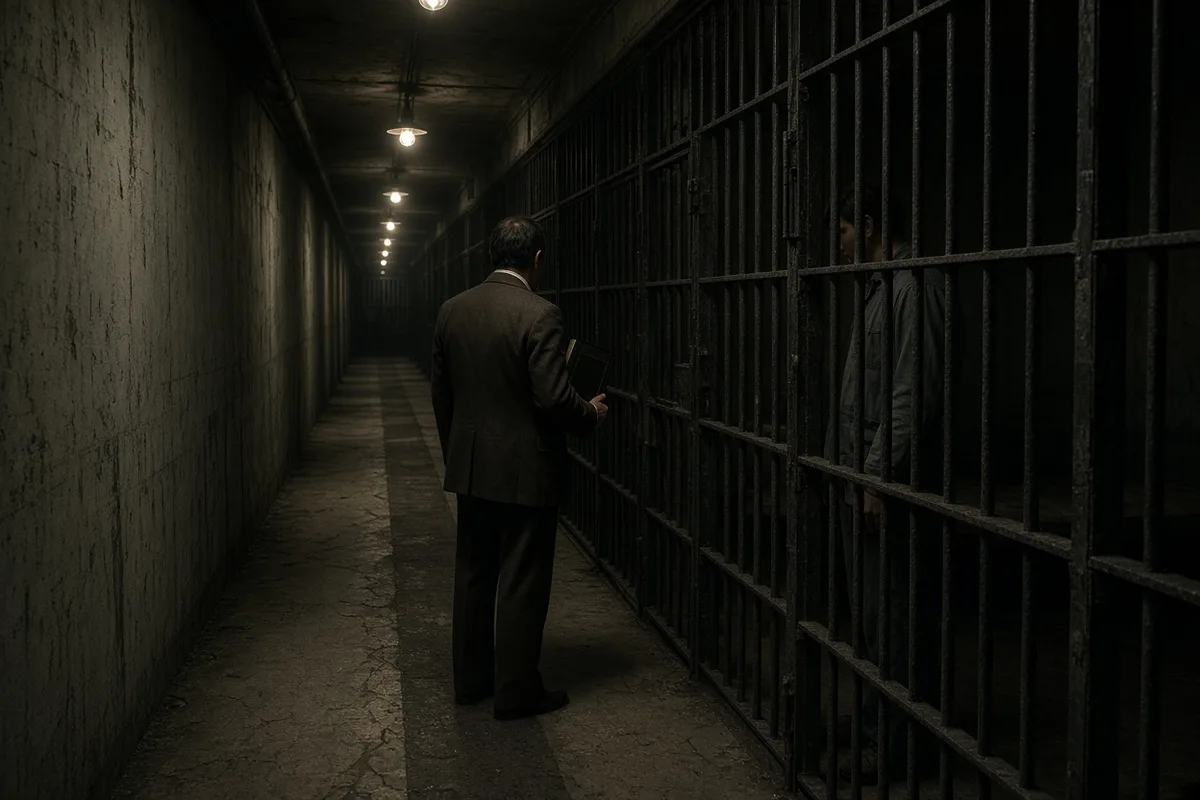
On 12 January 2024 a volunteer team from the Virginia regional office entered the Federal Correctional Institution at Cumberland under an agreement signed with Warden J. Ray Ormond. The team carried printed copies of the 1973 Phillips driveway account and placed one on each chair in the chapel before the 6:30 p.m. start time. Forty-eight inmates attended. The session leader read the paragraph on pride from Mere Christianity and then asked whether any man present had copied the Bonhoeffer sentence from the training-center handout. Nine hands went up. Each man recited the sentence from memory before the group moved to the next item on the printed agenda.
The Angel Tree program that year distributed gifts to 428,000 children whose parents were incarcerated in state and federal facilities. In Virginia alone, 11,472 packages were delivered through 317 local congregations. The coordinator for the Cumberland area, a retired probation officer named Linda Torres, tracked every undelivered package on a spreadsheet that still listed the three Marion names Colson had kept on his desk. Torres added a fourth line in March 2024 after a package addressed to an inmate’s daughter in Baltimore was returned because the mother had moved without a forwarding address. The line read “forwarded 14 March 2024 via social worker contact at Maryland Division of Corrections.”
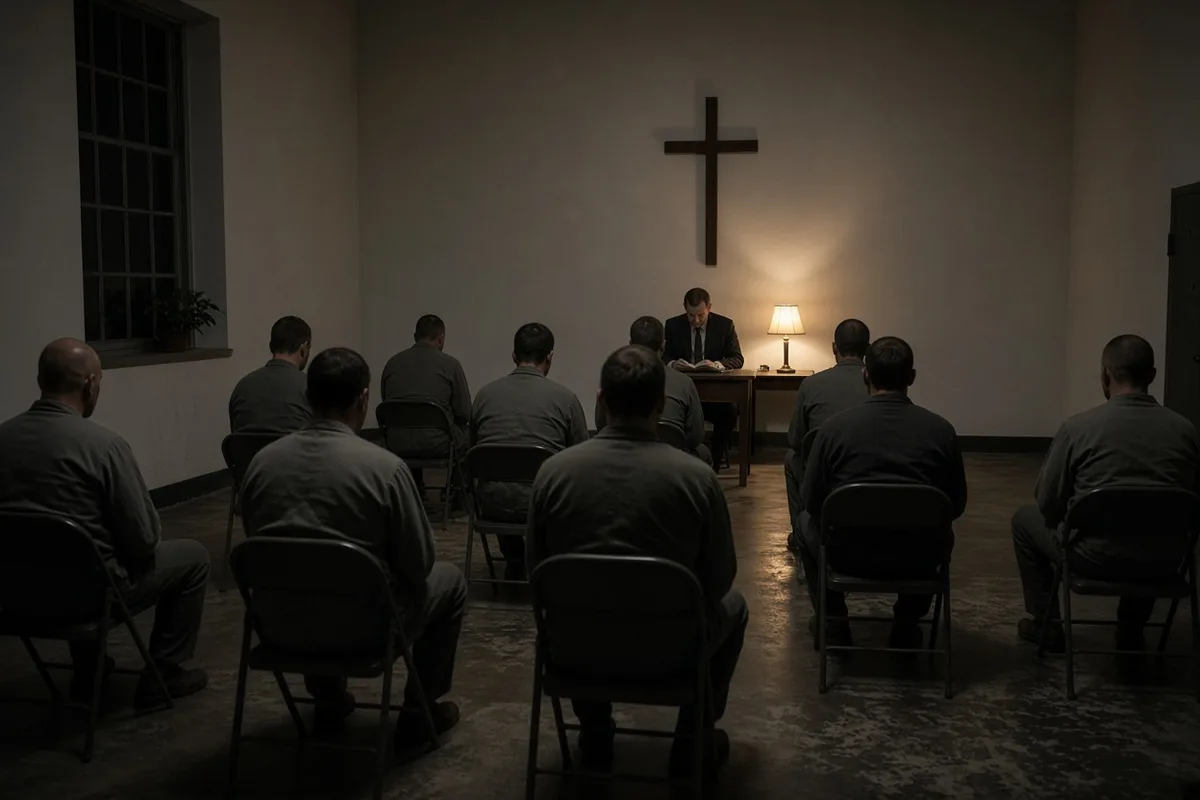
At the Reston training center the spring seminar for new field directors opened on 4 March 2024 with forty-one participants. The session on 6 March used the original Maxwell letter of 12 February 1975. Each director copied the Bonhoeffer sentence by hand and added his or her own identification number beneath it. One director, assigned to the Southeast region, wrote the number of the inmate he had visited the previous month at the Federal Detention Center in Miami: 96541-054. The copy was later filed in the glass case beside the station-wagon key.
On 9 October 2024 the same photograph was carried into the chapel at the Federal Medical Center in Lexington, Kentucky, by a Prison Fellowship staff member named Marcus Hale. Hale set the frame on the pulpit and addressed sixty-two inmates who had gathered for the weekly study. After reading the paragraph on pride he asked whether anyone knew the name of the man who had first placed the key on Tom Phillips’s table. An inmate in the third row answered, “Colson,” then asked whether the same key still rested in the Lansdowne case. Hale confirmed it did. The inmate then wrote his name and number on the sheet being passed and handed it forward without looking again at the photograph.
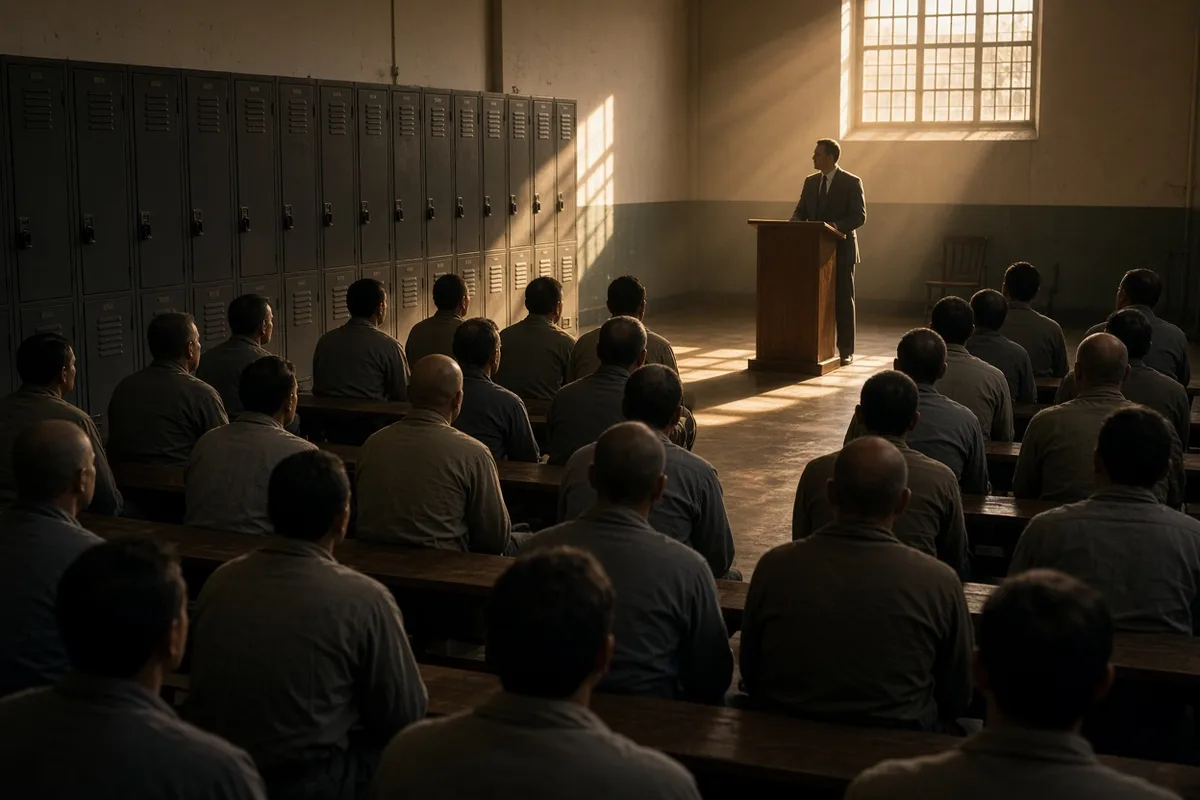
The final entry logged at headquarters before the ledger was digitized in November 2024 came from an inmate at the Federal Correctional Institution in Danbury. The letter, dated 2 November 2024, stated that the writer had copied the Bonhoeffer sentence onto the back of his disciplinary report form after the weekly study and added his number, 31287-038. The letter was scanned and attached to the existing digital file that already contained the forty-three names from Angola and the 112 names logged by Jim Jewell. The original paper copy was placed in the same folder that holds the 1973 Phillips driveway photograph.
The last human image connected to the original conversion occurred on 18 December 2024 at the Shiloh Baptist Church in Washington, D.C., during the annual Angel Tree distribution. A volunteer named Ruthanne Miller handed a wrapped package to a twelve-year-old girl whose father’s name appeared on the tag. The girl asked whether the man who had started the program had ever seen a package delivered in person. Miller answered that he had not, then added that the photograph of the station wagon still traveled to prison chapels each week. The girl placed the package under her chair, wrote her father’s name on the back of the tag, and returned the tag to Miller without opening the gift.