



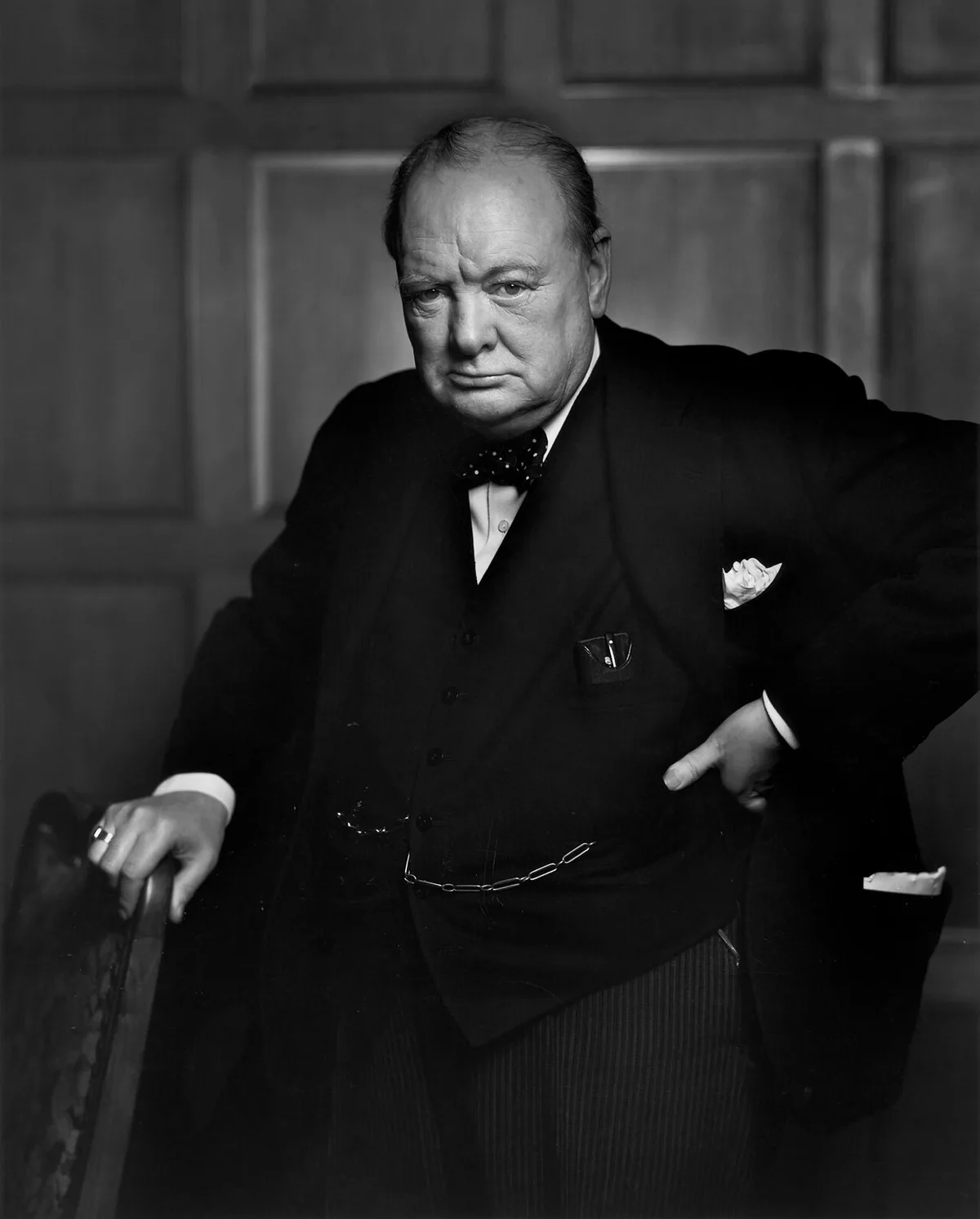
Larson shows Churchill building authority through staged acts of resolve in 1940
In 60 seconds
- Churchill took office in May 1940 as a distrusted outsider whose authority had to be performed into existence, not granted by consensus.
- After France fell he closed off a real cabinet path toward Italian-mediated talks with Hitler rather than treating continued war as inevitable.
- From September 1940 London endured fifty-seven consecutive nights of bombing that forced ordinary routines to reorganize around nightly raids.
- Ultra decrypts left him knowing dangers he often could neither share nor fully prevent without exposing the broken codes.
- Staged diplomacy with Roosevelt and Hopkins produced Lend-Lease in March 1941 while actual US entry still waited on Pearl Harbor.
- By May 1941 the same performance of unbroken resolve had visibly exhausted Churchill, Clementine, and the staff who kept it going.
The big idea
Larson argues Churchill’s real power in 1940–41 lay less in grand strategy than in managing the emotional life of a nation under sustained terror—projecting unbroken defiance while privately absorbing catastrophic odds, secret intelligence, and household strain. Public resolve, on his account, was manufactured daily through staged visibility, controlled disclosure, and a domestic circle that carried the cost.
The book in brief
The narrative opens on 10 May 1940 with Churchill’s fragile appointment. Chamberlain’s resignation left a wartime coalition that needed a figure many Conservatives still viewed as an erratic adventurer; even King George VI preferred Halifax. Larson shows legitimacy arriving only through immediate performance—the blood-toil-tears-and-sweat speech, night dictation from bed, tours of wreckage within hours—before France’s collapse tested whether that performance could hold without tipping the public into despair.
Attention then shifts inside the household at Downing Street and Chequers. Clementine regulated moods and access; nineteen-year-old Mary’s diary supplies texture of raid nights and strategy arguments; Randolph’s debts and Sarah’s affair run parallel private strain. Larson treats the family not as refuge but as the mechanism that let public composure be temporary rather than total.
After Dunkirk and France’s surrender, Britain stood alone with its army stripped of heavy equipment. War-cabinet debates reveal Halifax pressing Italian mediation while Churchill used procedure and force of personality to shut the option down. The July scuttling of the French fleet at Mers-el-Kébir, killing more than 1,200 French sailors, becomes Larson’s proof of how far Churchill would go to convince Roosevelt and his own public that Britain would fight at any cost.
From September the Blitz turns existential threat into nightly routine across fifty-seven consecutive London raids and the Coventry strike that killed roughly 568 people in one night. Larson follows households, wardens, and ministers as they invent habits—which shelter, which sound means danger, how to sleep through noise—while theaters stay open and Mary still goes to parties. Churchill’s dawn tours of craters supply the visible proof that leadership shared the risk.
Two quieter burdens compound the strain: Ultra intelligence from Bletchley forced him to carry warnings he could not always act on without revealing the source, and the long courtship of Roosevelt required staging what Harry Hopkins saw so that Lend-Lease could pass in March 1941 even though American combat entry remained months away. By May 1941, as the Blitz eased when Hitler turned east, doctor’s notes and staff diaries show the biological price—overwork, drink, exhaustion—paid by the circle that had redistributed national fear for a full year.
Context
Erik Larson’s 2020 narrative history draws on diaries, intelligence files, and household records to follow Churchill’s first year as prime minister from May 1940 to May 1941. It mattered as an immersive study of leadership performed in public under the real possibility of invasion and nightly terror rather than as conventional military chronology.
The key ideas

1
Authority built by performance
Churchill’s May 1940 appointment was a political gamble by an establishment that neither trusted nor respected him, so early legitimacy rested entirely on staged acts of resolve.
- 10 May 1940Chamberlain resigns; Churchill becomes PM despite party distrust
- Weeks laterFrance collapses; he must announce it without triggering despair
- July 1940Orders Mers-el-Kébir to prove Britain will fight at any cost
- Sept 1940–May 1941Sustains the performance through the Blitz year
When Chamberlain resigned on 10 May, Churchill became prime minister because no one else could hold a wartime coalition together, not because Conservatives wanted him. Many still saw the twice-switched-party backer of Gallipoli as an erratic adventurer; the King preferred Halifax. Larson opens here to show authority that had to be built in real time.
The mechanism was deliberate seizure of the emotional register before events could define it. The blood-toil-tears-and-sweat speech to Parliament was a first move, not mere rhetoric. He immediately restructured his own days—waking late, working from bed, dictating through the night, appearing in bombed streets within hours—to match the urgency he demanded of others.
That performance faced its first severe test when France collapsed weeks later. Communicating the shock without triggering despair showed how quickly a mis-timed display could undo the fragile legitimacy just constructed.
Larson’s larger claim starts here: crisis leadership is partly perception management, timed and staged as carefully as any policy.
In practice: Churchill’s dawn tours of fresh bomb damage, which staff feared exposed him to further raids, functioned as visible proof that the new prime minister shared the risk he was asking the public to bear.
2
Family as political instrument
Churchill’s household, especially Clementine and daughter Mary, operated as an extension of his political machine that absorbed private rage so public composure could be restored.
Larson gives substantial space to life at Chequers and Downing Street because cabinet minutes alone cannot explain how the public performance held. Clementine managed access and was often the only person who could tell him he was wrong. Mary, nineteen when the year opened, kept the diary that supplies raid-night and dinner-table texture.
The mechanism was candid domestic space. Randolph’s gambling debts and Sarah’s affair with a married entertainer created parallel private strain; Churchill could vent, rage, and recover inside that circle before the next public appearance. Public composure was therefore underwritten rather than continuous.
This matters for the book’s central argument. The theatrical resolve visible outside was sustainable only because it was never the whole story; the household carried the emotional cost that speeches could not.
Private tears after grim war news, recorded by Mary and other intimates, complicate any myth of unbroken bulldog defiance and set up the more complex portrait that follows.
In practice: Mary’s diary entries of air-raid nights and strategy arguments at the table let Larson show the family’s inner circle absorbing strain that never reached the public stage.
3
War chosen over negotiation
Britain’s decision to fight on after June 1940 was contested inside the war cabinet; Churchill suppressed a genuine Halifax faction seeking terms through Italy rather than treating continued resistance as inevitable.
Halifax path
Explore peace terms via Italian mediation; rational calculation of long odds alone
Churchill path
Close off negotiation by procedure and force of personality; prove resolve even by attacking former allies
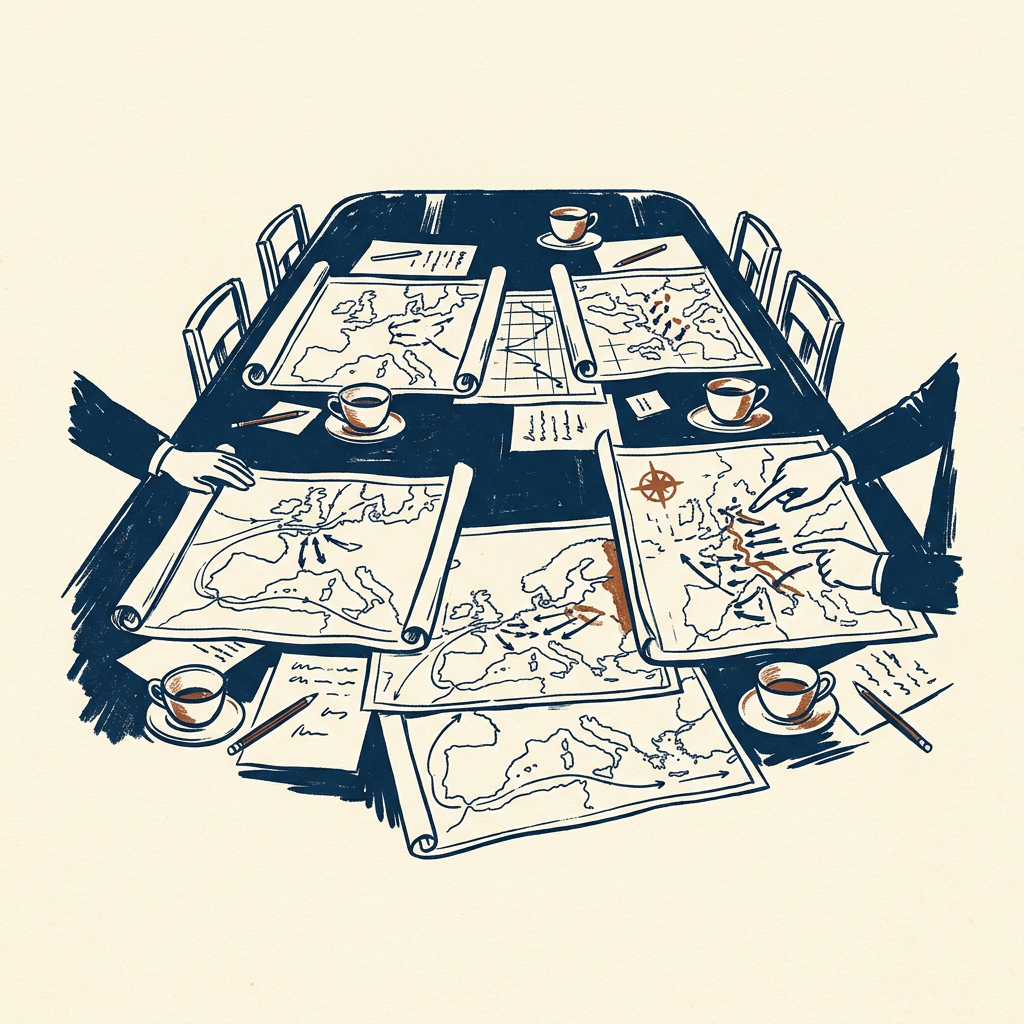
After France’s surrender Britain stood without a continental ally and with an army that had escaped Dunkirk only by leaving most heavy equipment behind. Larson recounts cabinet debates in which Halifax pushed Italian mediation—a fork earlier documented by John Lukacs and treated here as real, not retrospective fantasy.
Churchill did not merely out-argue the peace option; he outmaneuvered it. Cabinet procedure and personal force closed the path before it gathered momentum. Emotional conviction itself became a political weapon against colleagues making a colder calculation of Britain’s odds.
The outward speeches of resolve therefore hid an inward contest decided by a narrow circle. Continuing the war was a choice manufactured at the top, not a national inevitability.
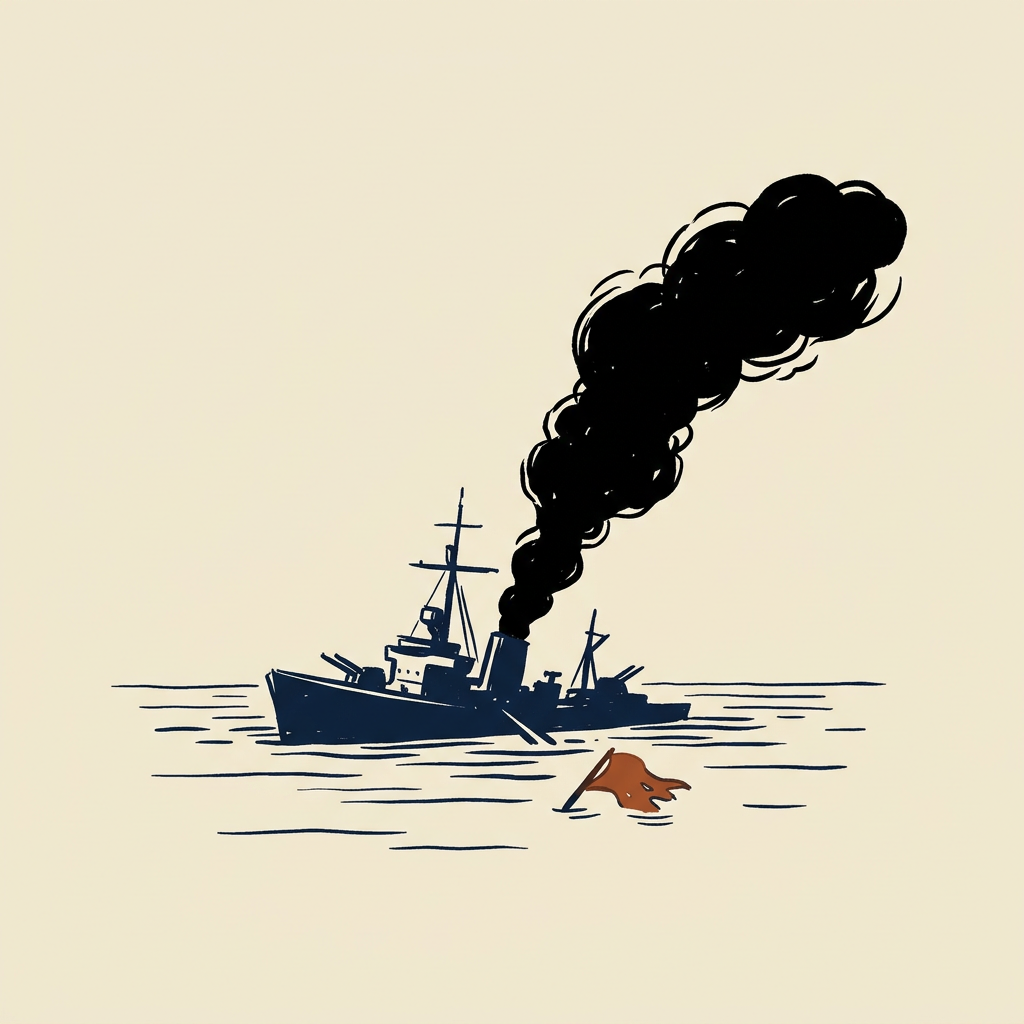
How far that choice would go appeared at Mers-el-Kébir in July, when Churchill ordered the French fleet destroyed to keep it from German hands.
In practice: The attack at Mers-el-Kébir killed more than 1,200 French sailors and served as deliberate proof to Roosevelt and the British public that Britain would fight regardless of cost.

4
Bombing turned into routine
The Blitz’s true weight appears less in casualty totals than in how Londoners rebuilt ordinary habits around the certainty of nightly attack across fifty-seven consecutive nights.
German bombers struck London from September 1940 for fifty-seven nights running, later hitting cities such as Coventry. Larson’s method tracks specific households, air-raid wardens, and officials through individual nights rather than abstract statistics, showing extreme danger becoming ordinary.
People invented micro-routines: which shelter, which engine note meant a bomb was close, how to sleep through the noise. Resilience, on Larson’s account, was not a fixed national character trait but something manufactured daily through small adaptations and the decision to keep normal functions alive—theaters open, cabinet meetings held, Mary still attending parties.
Churchill’s personal tours of sites the morning after raids extended the same logic upward. Staff worried about his exposure; Larson frames the walks as essential to the public performance begun in May—visible proof leadership shared the risk.
Normalized functioning under bombardment, more than any single speech, becomes the substance of British defiance in this telling.
In practice: The November 1940 Coventry raid destroyed the cathedral and killed roughly 568 people in a single night, yet Larson still emphasizes the surrounding pattern of habit and continued ordinary life over the one-night total.

5
Isolation of secret knowledge
Ultra decrypts from Bletchley Park forced Churchill into a uniquely lonely position: he often knew more about coming attacks than he could act on or even discuss without exposing the broken codes.
The Government Code and Cypher School supplied intercepts of German communications that gave advance warning at the price of absolute secrecy. Acting too openly, or visibly forewarning a target, risked revealing that the codes were read.
That constraint created a category of dread distinct from ordinary wartime pressure. Churchill sometimes had to let attacks proceed, or at least refrain from clear public warning, to protect the source. The burden compounded the isolation already created by relying on family as emotional ballast; this dread could not be shared even inside that circle.
Larson handles the popular claim that Churchill knowingly let Coventry burn to protect Ultra with explicit caution. Most historians, he notes, now dispute the story because the decrypts reportedly did not name Coventry. The broader intelligence load still deepens the psychological portrait.
Secret knowledge thus reinforced the book’s larger claim: public strength depended on privately absorbing stresses most leaders never carry.
In practice: Larson flags the Coventry-foreknowledge anecdote as debated legend while still using the verified Ultra burden to show a dread Churchill could not voice even to intimates.
6
Courtship of American power
Britain’s material survival required drawing the United States closer through persuasion that resembled courtship more than ordinary diplomacy, staged for Roosevelt’s trusted eyes.
Britain could neither manufacture enough war material nor hold out indefinitely without American supply, yet Roosevelt faced strong isolationist sentiment and a public unwilling to enter another European war. Larson tracks the extended correspondence and the early-1941 London visit of aide Harry Hopkins, who became Roosevelt’s firsthand witness.
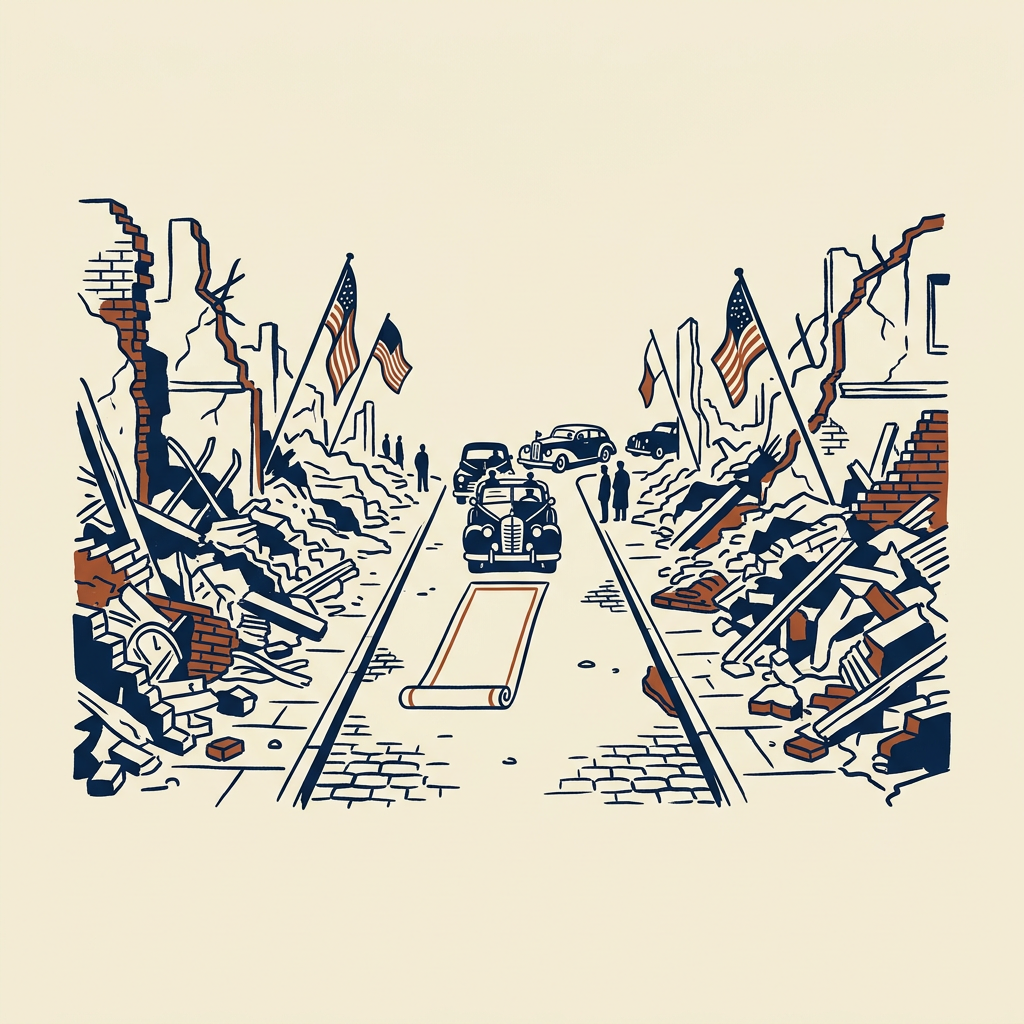
Churchill staged the sequence Hopkins saw—bomb damage, cabinet firmness, ordinary stoicism—so the report home would carry controlled emotion rather than abstract argument. The same skills of disclosure and timing used on the British public and on Ultra secrecy were now applied to a foreign leader’s opinion.
Lend-Lease in March 1941, allowing supply without immediate payment, is presented as the payoff. Larson is explicit that actual American entry still lay nine months away and would come through Japan’s attack on Pearl Harbor, not through anything Churchill arranged.
All three simultaneous tasks—secret intelligence, domestic morale, foreign persuasion—demanded the same managed performance.
In practice: Hopkins’s carefully sequenced tour of bomb sites, cabinet sessions, and street-level stoicism gave Roosevelt a trusted account of British resolve that abstract cables could not.

7
Body price of sustained will
By spring 1941 a year of near-constant bombing, maneuvering, and loss had visibly degraded Churchill and his inner circle, showing performed resolve carried real biological cost.
Public display
Unbroken defiance, dawn bomb-site tours, theaters kept open, speeches of certainty
Private ledger
Exhaustion, drink, poor sleep, staff strain, grief inside the circle, dread that could not be spoken
Larson closes the arc around May 1941 after continuous political strain, personal loss inside the circle, and the physical habits that sustained the performance—overwork, poor sleep, heavy drinking and smoking recorded in the doctor’s private notes.
Clementine’s exhaustion receives equal weight; so does the toll on staff such as private secretary John Colville, whose diaries supply much of the book’s texture. The resolve chronicled since the first days of May 1940 was not costless heroism but a sustained act of will that wore down the people enacting it even while it kept Britain in the war.
This is the culmination of Larson’s argument. Leadership under existential threat is not only right decisions or right words; it is the absorption and redistribution of fear across household, cabinet, and nation, at a price that outlasts the immediate crisis.
The Blitz’s official easing as Hitler turned toward the Soviet Union ends the book’s timeframe without ending the human toll already documented.
In practice: Doctor’s notes and Colville’s diaries at the close of the year record the cumulative effects of overwork, drink, and sleeplessness on Churchill and the staff who had carried the performance with him.
Key terms
- Performed resolve Larson’s name for public defiance treated as managed emotional display rather than fixed character
- Ultra Decrypts of German communications from Bletchley Park that gave warning but could not be openly acted on without exposing the source
- The Blitz Sustained German bombing beginning September 1940, including fifty-seven straight nights on London and the Coventry raid
- War cabinet fork The June 1940 debates in which Halifax sought Italian-mediated terms and Churchill closed the path
- Lend-Lease March 1941 US measure allowing war material to reach Britain without immediate payment
- Chequers and household The domestic setting Larson treats as political instrument and emotional ballast, not private refuge
- Mers-el-Kébir July 1940 attack on the French fleet ordered to keep ships from Germany and to prove Britain would fight at any cost
What to do
- Build a small trusted circle where fear and uncertainty can be spoken honestly while public messaging stays steady.
- Show up in person where damage is worst; presence after the hardest night outweighs distant statements.
- Time what you disclose so that full transparency does not create harm you cannot reverse, without letting secrecy become permanent isolation.
- Treat rest and physical limits as operational requirements for yourself and your team, not luxuries postponed until the crisis ends.
- Keep ordinary functions running—meetings, culture, small routines—so extreme pressure does not become the only reality people inhabit.
Questions to think with
- Where does your own leadership rely on a private circle absorbing costs the public never sees?
- When is controlled disclosure necessary protection, and when does it become isolating habit?
- How would your team’s routines have to change if extreme pressure lasted fifty-seven nights without relief?
- What visible acts of shared risk matter more than statements issued from safety?
- After a year of sustained crisis, what biological and emotional bills would come due for the people performing resolve?
The other side
Larson works almost entirely from Churchill’s admiring inner circle—Mary’s diary, Colville’s notes, elite memoirs—so ordinary Londoners remain scenery and the unified-stoicism story is largely retold rather than tested against evidence of looting, class anger, shelter-policy fury, and regional unevenness that historians such as Angus Calder have long emphasized; the Empire’s troops and resources and the Battle of Britain air crews receive little space, operational military analysis is thin, and dramatic anecdotes sometimes outrun the archive even when flagged.
Who it's for
Readers who want immersive narrative history and leadership students tracing how morale is built under existential threat will gain the most; those seeking rigorous campaign analysis or a full home-front social history will find the lens too narrow and atmospheric.