



Clear nonfiction needs a real person on the page
In 60 seconds
- Good nonfiction works only when a recognizable person shows through, not when grammar alone is correct.
- Most bad writing is overloaded; cutting idle words is the single most reliable fix for any draft.
- Write for one demanding intelligent reader, not a vague mass audience that makes you hedge.
- Settle person, tense, and mood early, spend disproportionate labor on the lead, and treat rewriting as where most real writing happens.
- The same principles of clarity and voice apply across memoir, travel, science, and business, but each form needs different adjustments.
- Fear produces padded impersonal prose; treating writing as a craft you enjoy lets an honest voice survive editing.
The big idea
Zinsser argues that clear nonfiction is not decoration added to information but a direct transaction between writer and reader, built sentence by sentence through clarity, honesty, and personality. Clutter, borrowed voices, vague audiences, imprecise words, and unstable tone all do the same damage: they hide the writer and make the reader work harder than necessary.
The book in brief
Zinsser starts from a plain problem. Most nonfiction fails not because the grammar is wrong but because no real person shows up on the page. Readers who owe the writer nothing will stop the moment the prose sounds evasive, pompous, or bored. He frames writing as a transaction between two people and sets that as the test for every later choice.
He moves first to clutter, the extra words and inflated phrases borrowed from bureaucracies, academia, and business. The fix is mechanical: cross out every word not doing real work, then cut again. A stripped sentence has nowhere to hide if the idea underneath is thin. Decluttering is both a style habit and an editorial test.
What should replace the padding is a natural voice aimed at one demanding reader rather than a mass audience. Word choice must be exact, not fashionable. Person, tense, and mood must stay unified across the piece. The lead must make a concrete promise, and the ending must feel earned instead of summarizing what the reader already heard.
Rewriting is the practical engine. Professionals do full passes, often removing a large share of the draft, because a shorter version says more clearly what the long one struggled to say. He then shows how the same principles bend across forms: interviews, travel, science, business, humor, and sports each need different technical adjustments without abandoning clarity or voice.
He closes on disposition. Fear drives writers toward safe impersonal language. Treating writing as a pleasurable craft, reading aloud, and trusting one honest reader let small risks survive and give the reader someone real to respond to.
Context
Zinsser drew on years as a journalist and on his Yale course. The book mattered in 1976 because it turned decades of craft wisdom from newsroom and classroom into a practical, repeatable method rather than abstract inspiration.
The key ideas

1
Writing as transaction
Good nonfiction succeeds only when the writer's personality comes through on the page, not merely when the grammar is correct.
Committee prose
Safe, flat, interchangeable; could be anyone on any day
Human transaction
A recognizable person risks being present on the page
Zinsser rejects the idea that writing is a technical skill separate from the person doing it. He calls it a transaction between two people. The reader is not obligated to keep reading and will stop the moment the writer sounds evasive, pompous, or bored.
Most weak writing is not incorrect grammar. It is a missing person. Sentences that could have been produced by any committee, on any day, about any subject. Flat institutional memos and press releases fail because nobody recognizable is home in the paragraphs.
Every choice about a word, a sentence length, a joke, or a confession is really a choice about how much of yourself you are willing to risk. That is not a license for self-indulgence. The reader's needs still come first. Hiding behind neutral professional language, thinking it safer, actually fails the reader by giving them nothing to hold onto.
Technique matters. Technique in service of an absent person produces prose nobody wants to read. Later chapters on clutter, voice, and rewriting are elaborations of how to keep that person visible without losing trust.
In practice: From his early journalism Zinsser learned that readers forgive imprecision in fact far more readily than they forgive dullness in voice.
2
The war on clutter
Most bad writing is not wrong so much as overloaded, and cutting words is the single most reliable way to improve any draft.
Clutter is the extra words and inflated phrases that accumulate until meaning is buried. People pick up the habit from bureaucracies, academia, and business, where simple statements get wrapped in unnecessary qualification.
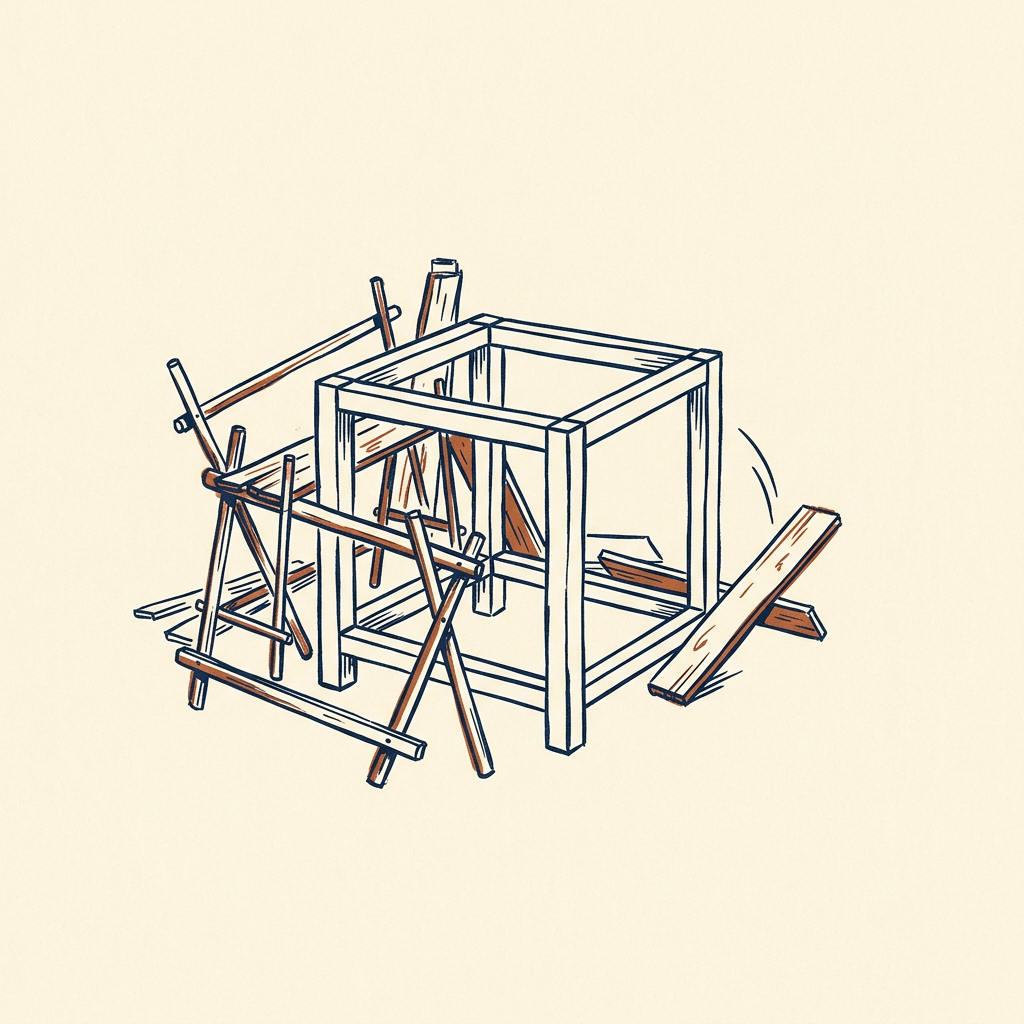
His method is mechanical and repeatable. Go through a finished sentence and cross out every word not doing real work. Then look at what remains and ask whether it can be cut again. He compares the discipline to a carpenter removing scaffolding once the structure stands on its own.
The usual offenders are throat-clearing openers, redundant modifiers, and vague qualifiers that add length without information. Writers add them out of insecurity, as padding meant to sound careful or important. They signal the opposite: a writer who does not trust the plain statement to carry its own weight.
The payoff is not only shorter prose. A sentence stripped of clutter has nowhere to hide. If the idea underneath is thin, cutting will expose that. That is why he places decluttering early, before voice or word choice, as the first habit any writer must build.
In practice: Phrases like “at this point in time” for “now,” “personal friend,” “totally destroyed,” and “a certain amount of” show padding replacing plain statement.
3
Find your own voice
Trying to sound like someone else guarantees mediocre writing, because a reader can tell a borrowed voice from an honest one.
Once clutter is gone, what should replace it is a natural voice specific to the person writing. Students and new writers commonly adopt a stiff formal register they associate with good writing, full of the same padding, because it feels safer than sounding like themselves.
Zinsser says the instinct is backward. Writing that holds attention sounds like one particular person talking, with that person's rhythms, humor, and preoccupations intact, not like an anonymous authority. Imitation has a place early in learning, the way a musician copies a phrase, but it must give way to your own cadence or the prose will always feel secondhand.
From teaching he saw a recurring pattern: a student's private notebook or letter is often livelier and clearer than their formal assignment, because in the letter they were not performing for an imagined judge. Draft as though writing to one trusted intelligent friend. That removes the pressure to sound impressive and restores the actual speaking voice.
Voice is not carelessness. Finding it does not mean abandoning discipline or grammar. It means the discipline serves a real personality instead of erasing it.
In practice: A student's private letter often ran clearer and livelier than the same student's formal assignment because the letter was not a performance for a judge.

4
One reader, not a crowd
Imagining a broad generic audience produces cautious watered-down prose, while imagining one specific intelligent reader sharpens every choice.
Every writer faces the question of audience. The instinct is to picture a mass that must be pleased or, worse, not offended. Zinsser argues that writing for everyone produces writing aimed at no one. You start hedging, qualifying, and softening to avoid alienating any imagined reader.
Write instead to please one demanding intelligent reader. In his own practice that reader is often the writer at their most honest and critical. Pieces aimed at a vague public tend to read flat and evasive. Pieces written with a specific person, publication, or standard in mind read sharper and more confident, even when the final audience turns out broad.
That is not a contradiction. A piece genuinely engaging to one demanding reader tends to travel well to many. A piece engineered to offend no one tends to interest no one. Guesses about what an audience wants are usually wrong and always secondhand.
Voice alone is not enough without a clear sense of who that voice is speaking to. The one-reader standard gives a concrete test for every sentence: would this satisfy a smart skeptical person paying close attention?
In practice: In editing, pieces written for “the public” went flat, while pieces aimed at a specific standard stayed sharp even when many people eventually read them.

5
Precise words only
Word choice is respect for the reader, not decoration, because vague or fashionable words shift work from the writer onto the reader.
Fashionable stand-in
Utilize, interface, facilitate, soft layoff talk
Exact plain word
Use, meet, help, the thing that actually happened
With voice and audience set, Zinsser narrows to individual words. Many writers reach for terms that sound impressive or current rather than terms that are exact. That habit quietly moves interpretive labor onto the reader, who should not have to do it.
He singles out inflated verbs, bureaucratic nouns, and euphemisms that soften meaning until it nearly disappears. The remedy is a simple check on every word: is there a shorter, plainer, more exact word that says the same thing?
A dictionary and thesaurus are tools for precision, not variety. Swapping in a fancier synonym only to avoid repeating a word often brings a different shade of meaning the writer did not intend. Clichés survive not because they communicate but because they let a writer avoid thinking freshly about what they mean.
A writer who respects the reader will not waste their time decoding jargon or reconstructing meaning behind a soft phrase. The same commitment that drove the fight against clutter now applies at the smallest unit of the sentence.
In practice: Corporate language around layoffs or failure shows how euphemism can soften a fact until the meaning almost vanishes.
6
Unity of stance
A piece needs one consistent person, tense, and mood throughout, or the reader loses trust in who is actually talking.
Beyond words and voice, a writer must settle early and firmly on the person, tense, and tone of a piece and hold that choice. Switching from first person to third mid-article, or drifting from past into present without reason, disorients a reader even when they cannot name what went wrong. The piece simply feels unstable.
Make the decision before drafting, not halfway through. A piece written in “I” carries different intimacy and obligations than one written in “you” or impersonal third person. Mixing them mid-stream breaks the contract set up in the opening paragraphs.
Mood works the same way. An essay that begins ironic and turns earnest without a clear pivot, or begins serious and lapses into flippancy, asks the reader to keep recalibrating what kind of piece they are reading. Drift undercuts earlier effects.
Unity is voice sustained under pressure across a whole piece. A distinctive opening is wasted if it is not maintained. Readers build trust through consistency, and that trust is what lets them follow a longer piece to the end.
In practice: Writers who start a humor piece with real jokes and then slide into unearned sincerity undercut the earlier laughs because the contract quietly changed.

7
Leads and endings
A reader decides within the first few sentences whether to keep going, so the opening deserves more labor than any other part of the piece.
No part of a piece matters more than its first sentences. That is where a reader who owes the writer nothing either commits or walks away. The ideal lead makes a specific promise: a concrete detail, scene, or question that pulls the reader forward, not a general throat-clearing claim about the importance of the topic.
Leads that announce a subject abstractly, opening with a broad claim about a whole era or field, do less work than one vivid fact or moment. Writing the lead is worth disproportionate time and rewriting, sometimes more than any other paragraph, because everything downstream depends on the reader still being present.
Endings deserve similar care of a different kind. An ending should feel earned rather than tacked on. Often it circles back to an image, phrase, or question raised earlier so the piece closes with completion rather than simply running out of material.
Endings that summarize everything already said waste patience at the exact moment the reader is deciding what to remember. A lead also sets the person, tense, and tone that unity requires the rest of the piece to honor.
In practice: He favors an ending that lands on a specific detail, a telling quotation, or a small twist that reframes what came before, rather than a wrap-up of points already made.

8
Writing is rewriting
The gap between amateur and professional writing is mostly the willingness to revise a piece many times, not raw talent.
Almost no professional writing is produced in a single pass. What readers meet as finished work is usually the result of several full rewrites, not light polishing. Zinsser drafts, sets the pages aside, then returns to cut and rearrange.
Beginning writers often believe skilled writers produce clean prose on the first attempt and that heavy revision signals weakness. He says the opposite. Writers who never revise are usually the ones leaving clutter, imprecise words, and unstable tone in place, because they have not gone back with the reader's experience in mind.
Read a draft aloud. Ear and eye catch different problems. Treat a first draft as raw material rather than a finished argument to defend. The emotional resistance is real: the urge to keep a sentence because it took effort to produce. A writer needs enough distance to cut lines they liked writing if those lines are not serving the reader.
Rewriting is not a separate stage after writing. It is where most of the real writing happens. Cutting clutter, securing voice, holding unity, and tightening leads and endings all get applied here rather than remaining abstract advice.
In practice: Zinsser often removed a third of the material on rewrite because the shorter version said more clearly what the longer one was struggling to say.
9
Method fits the subject
Nonfiction genres each demand different technical adjustments, so no single formula covers memoir, travel, science, and business equally well.
- PProfilesCapture distinctive speech; do not paraphrase into generic third person
- TTravelOne unrepeatable detail over scenic clichés
- SScienceTranslate jargon without losing precision or talking down
- BBusinessTurn statistics into consequences for a real person
- HHumor and sportsRestraint and fresh observation over borrowed phrases
After the general principles, Zinsser shows how they change shape across kinds of nonfiction. The underlying discipline stays the same; the application must fit the material.
Writing about people depends on capturing distinctive speech and detail from an interview rather than paraphrasing a subject into generic third-person description. Let the interviewee sound like themselves. Travel writing is especially prone to clutter and cliché; phrases that could describe almost anywhere fail. The job is to find the one specific unrepeatable detail that proves the writer was actually present.
Science and technology writing must translate specialized language into plain terms without condescending or losing precision, which means the writer must understand the material well enough to simplify it correctly. Business and economic writing suffers when writers hide behind numbers and abstractions instead of translating statistics into human consequences a reader can picture.
Humor depends on restraint and precise timing rather than piling on jokes. Sports writing often leans on ready-made phrases borrowed from other sportswriters instead of fresh observation. A competent nonfiction writer needs both the general habits and the judgment to bend them to the subject at hand.
In practice: In business writing he wants a budget percentage turned into what it means for a specific worker or family, not left as a floating abstraction.
10
Confidence and the ear
Writing improves when a writer treats it as a craft to be enjoyed rather than a test to be survived, because anxiety produces defensive stiff prose.
In closing Zinsser turns from technique to disposition. Much bad writing comes not from ignorance of rules but from fear. A writer bracing against judgment reaches for safe padded impersonal language—the same clutter and borrowed voice diagnosed all along.
Treat writing as a pleasurable craft, closer to a hobby practiced seriously than a performance under threat. Notice when a sentence gives satisfaction to write and treat that feeling as a signal worth trusting rather than suspecting. Read work aloud. The ear catches falseness, awkward rhythm, and dishonesty that the eye passes over.
If you cannot read your own sentence aloud without stumbling, you have usually written something not yet true to how you actually think or speak. Confidence connects directly to voice and audience. Anxious about a vague judgmental crowd, you write defensively. Settled on one honest reader and trusting your ear, you can risk a joke, an aside, or an unexpected structure.
All the earlier technique only works if you approach it with confidence rather than dread. A writer present and unafraid on the page gives the reader something to respond to. A writer performing correctness from behind a wall of caution gives the reader nothing.
In practice: Reading a draft aloud exposes sentences that are not yet true to how the writer actually thinks or speaks.
Key terms
- transaction Writing as an exchange between two people in which the reader can leave the moment the writer sounds false or dull
- clutter Extra words and inflated phrases that bury meaning and often come from bureaucratic habit
- voice The writer's own rhythms, humor, and preoccupations kept intact on the page
- one reader The single demanding intelligent person you write to instead of a vague mass audience
- unity One consistent person, tense, and mood held from the first paragraph to the last
- lead The opening sentences that make a concrete promise and decide whether the reader stays
- rewriting Full passes of cutting and rearranging; where most professional writing actually happens
What to do
- Cross out every word not doing real work in a recent finished piece, including openers like “it should be noted that” and empty qualifiers.
- Read the cut version aloud and rewrite any line where you stumble or sound like someone else into the plain words you would use with one person you respect.
- Before the next draft, write one sentence naming your single reader plus the tense and person you will hold, then check each paragraph against it.
- Set aside time to rewrite the draft at least once more than feels necessary and cut about a tenth of the length before calling it done.
- When drafting, notice any sentence that feels satisfying to write and keep that signal instead of sanding it into safer institutional language.
Questions to think with
- Where is this draft hiding behind institutional language instead of a recognizable person?
- Who is the one demanding reader I am actually writing to, and would each sentence satisfy them?
- Which words are fashionable or soft rather than exact, and what plain word should replace them?
- Does my opening make a concrete promise, or am I clearing my throat about the topic's importance?
- Have I rewritten enough to cut idle material, or am I defending sentences only because they were hard to produce?
The other side
The book rests on Zinsser's personal taste and decades in American magazine and newspaper journalism, with anecdotal evidence rather than empirical study of how readers process prose; its admired models cluster around mid-twentieth-century, mostly white and male, general-interest nonfiction, the ruthless-cut advice sits awkwardly beside law, science, and policy writing where hedges and repetition do real work, linguists note that some usage judgments mistake ordinary language change for corruption, it offers little on large-scale structure for books or long reports, and it predates internet, search, collaborative, and phone-skimming contexts.
Who it's for
Students and new employees who must write reports, emails, or essays that actually get read; working journalists or bloggers who write fluently but suspect their prose is padded or borrowed; and composition teachers who want a plain-language alternative to grammar-rule textbooks.