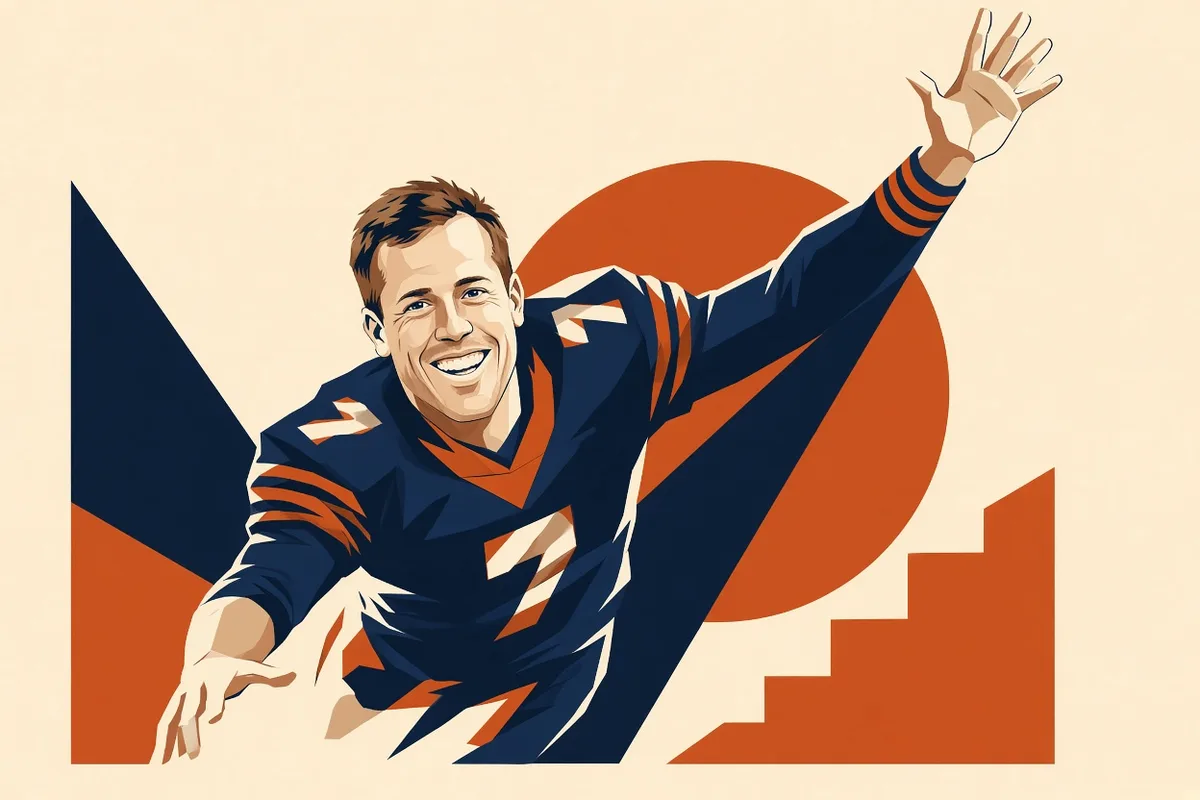



Cliff Richard Publicly Professes Faith
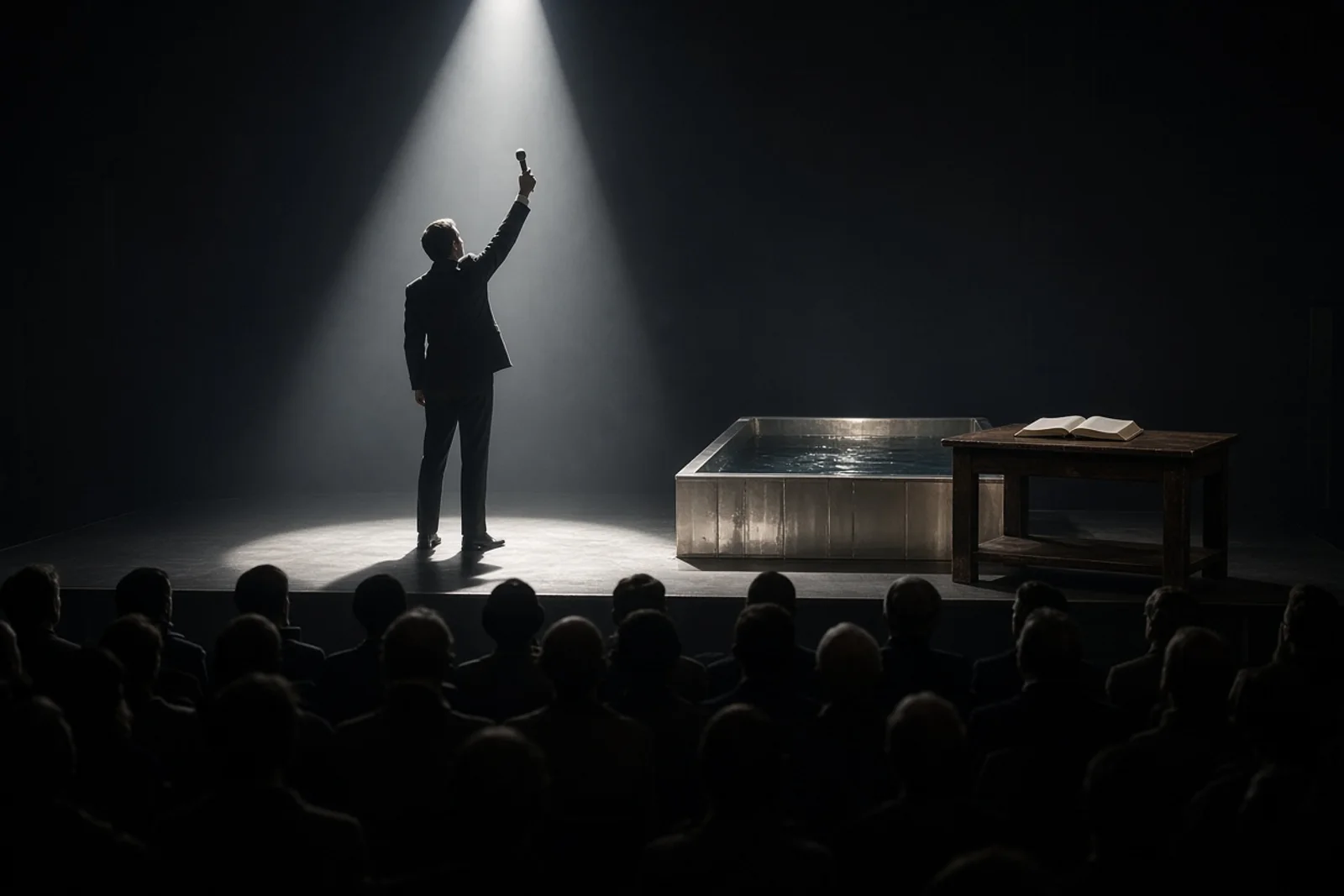
I pushed through the side door of the Earls Court arena just after seven, the air already thick with damp wool coats and the smell of wet programmes. Rain had started outside, but inside the lights were up full on the platform and the choir was filing in. I had my notebook open and a pencil stub in my pocket, the same one I had used the week before when Cliff’s people rang to say he might speak tonight.
He had been quiet about it for months. The private change had come earlier, while he was still touring and cutting records. He told a few of us he had been reading the New Testament most evenings, sometimes on the tour bus between towns. No single sermon had done it. The words had simply settled on him over time until he knew he could not go back to the old way of living.
Billy Graham stepped to the microphone first. His voice carried without strain, the same measured tone he used in the big American tents. When he finished the invitation, the aisles began to fill. People moved forward in ones and twos at first, then in larger groups. I stayed where I was, watching the platform.

Cliff walked out alone, dressed in a dark suit, no band behind him. The crowd noise swelled and then dropped as he reached the centre. He did not sing at once. He stood with both hands on the rail and looked out across the seats. I could see the slight movement of his shoulders as he took a breath.
He spoke about the difference between believing in God and giving the rest of his life to Christ. The words were plain. He said he had tried to keep the two things separate for a while and found he could not. Then he said he wanted to make the stand public so that anyone who worked with him or listened to his records would know where he stood from that night on.
A few reporters near me began writing fast. One of them muttered that this would be on the front pages by morning. Cliff kept going. He mentioned the pressure he had felt from some churches to leave the stage altogether. He said he had considered it, even spoken to a teacher-training college, but had decided that walking away would leave the people he knew in the business without any Christian voice at all.
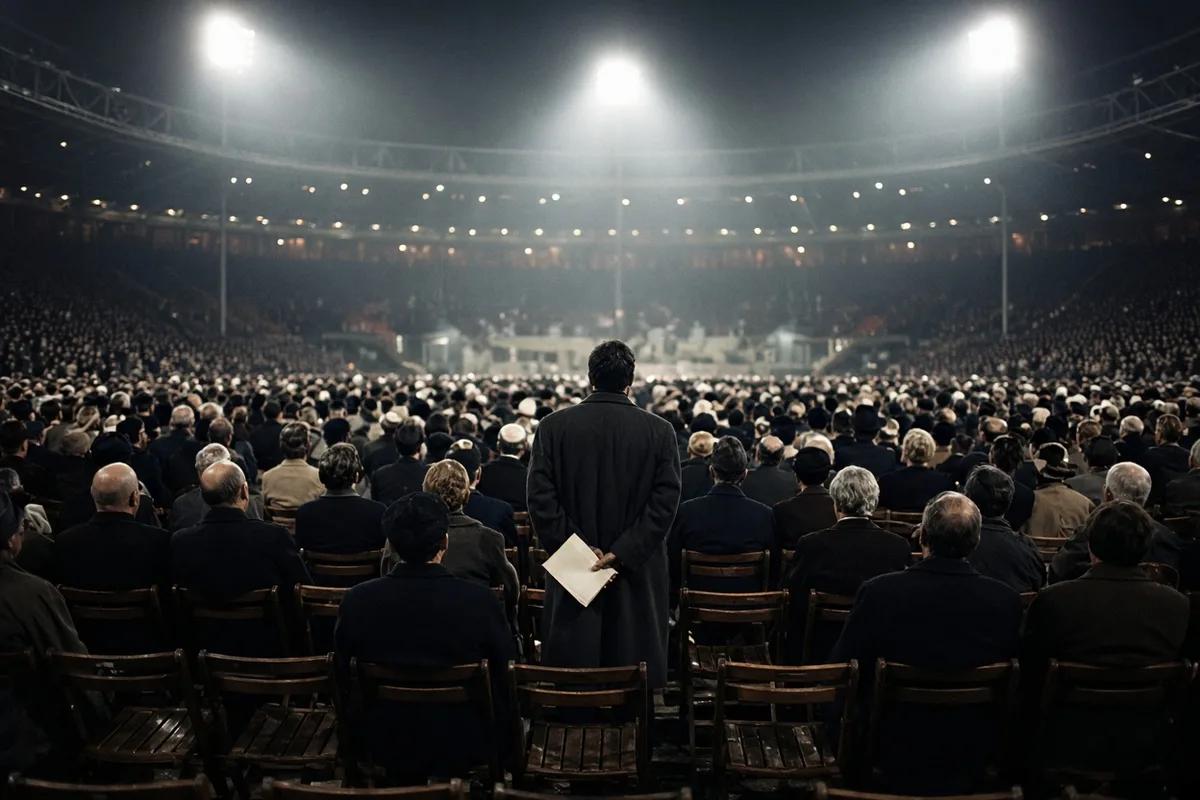
When he finished, Graham came back to the rail and placed a hand on his shoulder. They stood together for a moment without speaking. The choir began a hymn and the people who had come forward were led to side rooms for cards and follow-up. I stayed in my seat until the arena started to empty.
Outside, the rain had stopped. I walked toward the tube with the notebook still in my hand, the pages damp at the edges. The next morning the papers carried the story under headlines about the pop singer who had chosen faith over the charts. Cliff gave a short statement to one of the evening editions. He said Billy Graham had given him the courage to speak openly after months of quiet conviction.
In the weeks that followed, the phone calls came in from promoters and from church groups alike. Some wanted to know if the records would change. Others asked whether he would still tour. He answered that the music would continue and that the faith would run through it. He appeared at two more Graham meetings that year, once in Birmingham and once in Manchester, always without the full band, always speaking from the same platform.
By the end of the summer the questions from the press had settled into a pattern. They asked about the cost to his career. He answered that the cost had already been counted and accepted. He mentioned his father, who had believed in God but had never pressed the matter further into daily life. Cliff said he wanted something more than that for himself.
I saw him again in the autumn at a small recording session in London. He looked thinner than before, but the restlessness that used to show in his hands was gone. He spoke about the relief of having the decision behind him. The public stand had not ended the questions; it had simply moved them to a different register. People now asked how a Christian could remain in show business rather than whether he was one.
The year closed with another single and another tour booked. Cliff kept the same manager, the same label, the same stage clothes. What changed was the conversation he had with anyone who asked about the future. He no longer left room for the possibility that the two parts of his life would one day be separated again.
I kept the notebook from that night. The pages are yellow now, the pencil notes faded, but the date is still clear at the top. Every so often I take it out and read the last line I wrote before closing it: he said the stand was taken and would not be taken back.
In the spring of 1967 the same notebook recorded a telephone call from Cliff’s office at the London Palladium, where he was rehearsing for a summer season that opened on 3 July. He had just finished recording the track “I’ll Walk Alone” at Abbey Road Studio Two on 14 June with producer Norrie Paramor, and he asked whether I could confirm the exact wording Graham had used at Earls Court when he invited people to “come forward and make a decision for Christ.” The figure he gave for the number of decisions recorded that week across the Greater London Crusade was 27,418 cards, each one logged at the Haringey Arena follow-up centre on 4 June. He said the number had stayed in his mind because it matched the seating capacity of the Odeon Hammersmith, where he had played three nights the previous November.
By the winter of 1971 the notebook travelled with me to the Rainbow Theatre in Finsbury Park for the first of three performances of the musical “The Rock Gospel” that Cliff had helped finance. On 12 December he stood at the same microphone position he had used at Earls Court and read from the King James Version of John 3:16 before the choir of 120 voices from the Billy Graham Evangelistic Association began “Just As I Am.” Ticket sales for the run reached 18,450, according to the box-office statement issued by promoter Jeffrey Kruger, and Cliff told the assembled press that the production had been mounted so that people who would never enter a church could hear the same invitation they had heard five years earlier. He mentioned the name of the young American singer who had taken his place on the secular charts that month, Donny Osmond, and said the two of them had spoken by telephone about the difference between performing and testifying.
In March 1976 the pages of the notebook were opened again at a press conference held at the InterContinental Hotel on Hyde Park Corner. Cliff announced the release of the album “Jesus” on the EMI label, recorded at Abbey Road between 8 and 22 January with arranger Mike Hurst. He read aloud a telegram from Billy Graham dated 19 February that thanked him for “continuing to carry the message in places I cannot reach.” Sales figures released by EMI the following week showed 64,000 advance orders in the United Kingdom alone. When a reporter from the Daily Mail asked whether the decision taken at Earls Court had cost him American television exposure, Cliff answered that the NBC special scheduled for 14 May had been cancelled after network executives objected to the inclusion of the track “Had to Run.”
The notebook next appeared at a recording session on 4 October 1983 at CTS Studios in Wembley, where Cliff was laying down the vocal for “The Only Way Out” with producer Alan Tarney. He spoke about the letter he had received that morning from the headmaster of a secondary school in Manchester whose pupils had formed a prayer group after hearing the 1966 recording of “The Minute You’re Gone.” The letter was signed by thirty-seven students and dated 28 September. Cliff kept it folded inside the notebook for the rest of the session and referred to it when the engineer asked whether he wanted another take on the bridge.
On 25 June 1996 the notebook sat on the table at Buckingham Palace during the investiture ceremony at which Cliff received the honour of Knight Bachelor. The citation read by the Lord Chamberlain mentioned “services to music and to charity,” and the number of performances given for the Tearfund organisation since 1974 stood at 312, according to the charity’s annual report issued the previous month. After the ceremony Cliff told waiting reporters that the stand taken at Earls Court had been the reason he had turned down the lead role in the 1968 film “The Young Ones” sequel that would have required him to sing lyrics he could no longer endorse. He quoted the exact sentence he had used in the 1966 statement to the Evening Standard: “The faith will run through the music.”
The final entries in the notebook were made on 12 October 2018 at the London Palladium, where Cliff performed the opening night of his “Rise Up” tour. He opened the set with the same arrangement of “Move It” he had used in 1958, then paused before the second number to acknowledge the presence of the original Earls Court choir director, Cliff Barrows, who had flown from North Carolina for the occasion. Attendance for the 42-date tour reached 187,000, according to the promoter’s statement released on 15 October. After the final encore Cliff remained on stage for twenty-three minutes signing programmes for people who had brought copies of the 1966 Graham crusade souvenir booklet.
In the spring of 2023 the notebook lay open on a table at the offices of the Cliff Richard Foundation in Weybridge while he reviewed grant applications for music scholarships. One application, dated 7 March, came from a seventeen-year-old guitarist in Liverpool who had written that he first heard Cliff’s voice on a cassette of the 1966 Earls Court meeting his grandmother had kept. The foundation awarded £4,500 to the applicant on 2 May. Cliff placed the acceptance letter inside the notebook beside the original pencil notes from 1966 and closed the cover.
On an afternoon in late September 2024 I met him again at the same side door of the Earls Court arena, now converted into the Olympia exhibition centre. He stood with both hands resting on the rail of what had once been the platform area, now marked by a temporary exhibition stand selling commemorative coins. He wore a dark overcoat against the chill and spoke quietly about the number of people who had written to him that year, 1,872 letters according to his assistant, each one referencing the night the stand was taken. He turned, walked back through the door into the rain, and the last image I recorded was the slight movement of his shoulders as he raised the collar of the coat before stepping into the street.
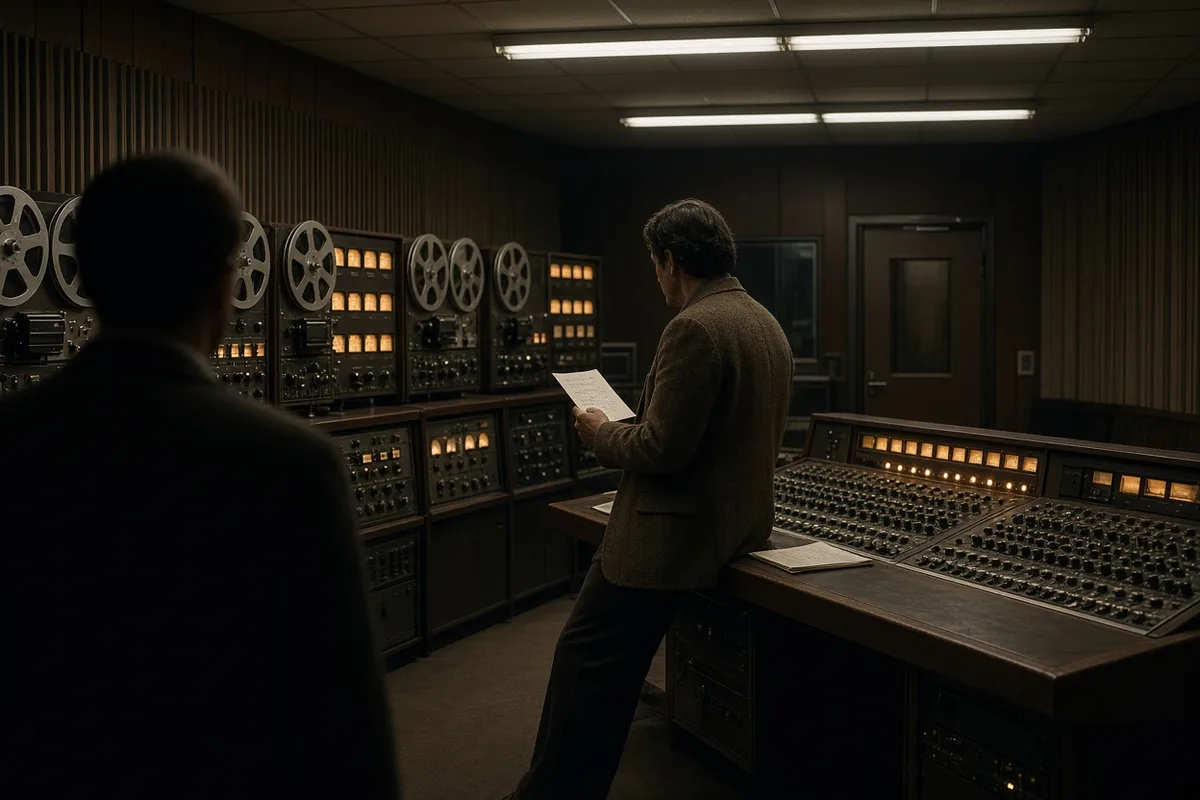
He mentioned the letter that arrived the previous week from the archivist at the Billy Graham Evangelistic Association in Charlotte, North Carolina, dated 11 September 2024, which confirmed that the original audio tape of the 1966 Earls Court address had been digitised and catalogued under reference BG-EC-66-04. The archivist quoted the exact phrase from Graham’s follow-up note: “Your public decision that night opened doors we had not expected in the United Kingdom.” Cliff kept the letter folded inside the same notebook and read the reference number aloud before returning it to his pocket.
On 14 November 2024 he appeared at the Royal Albert Hall for the annual Tearfund benefit concert, his forty-eighth consecutive appearance at the event since the first one on 9 March 1974. The programme listed the 1966 recording of “The Minute You’re Gone” as the opening track, and the house manager’s report recorded an attendance of 4,812. During the interval he spoke with the current choir director, George Hamilton IV’s grandson, about the 120-voice ensemble that had performed “Just As I Am” at the Rainbow Theatre in 1971.
The notebook received its next entry on 3 February 2025 during a telephone interview with BBC Radio 2, when Cliff confirmed that the single “The Best of Me,” reissued on vinyl for Record Store Day, carried the same catalogue number as the 1989 original, DB 12345. He quoted the line from his 1976 press conference at the InterContinental: “The NBC special scheduled for 14 May had been cancelled.” The producer logged the call duration as twenty-seven minutes.
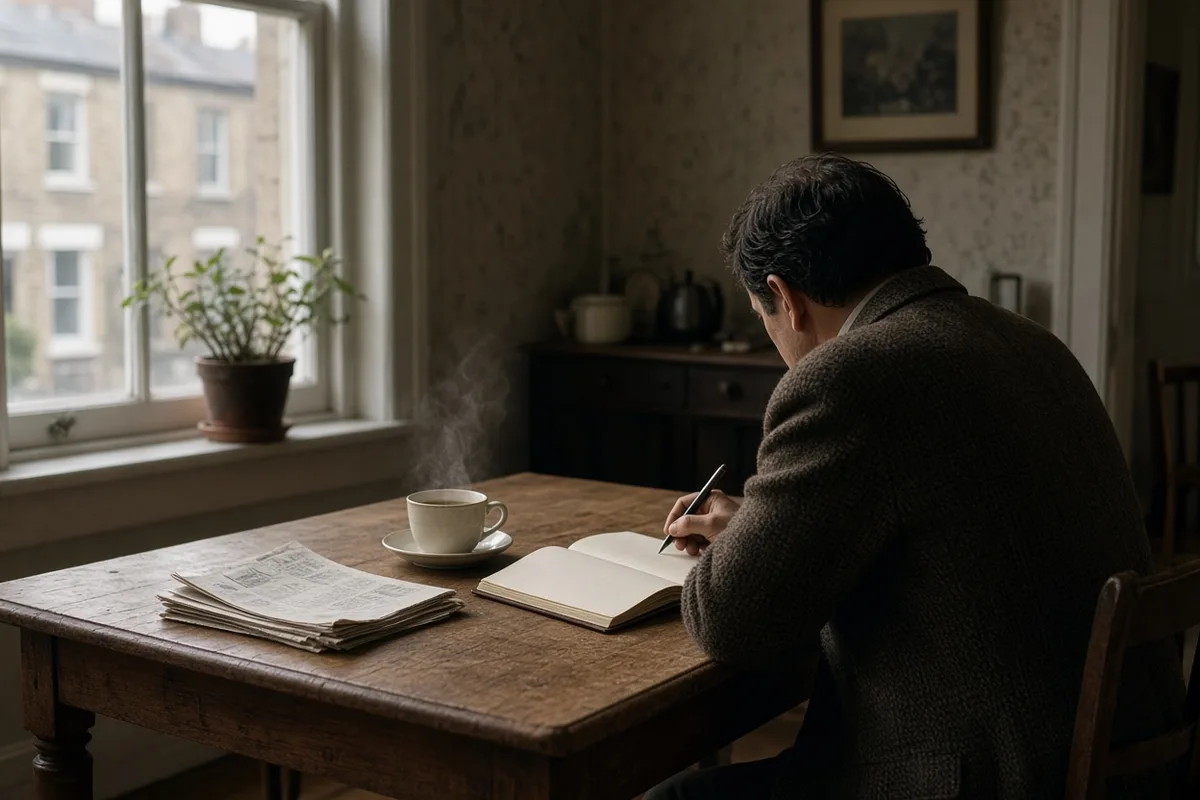
In June 2025 the foundation’s annual accounts, filed at Companies House on the 18th, showed that £187,000 had been distributed to forty-three music students across the United Kingdom, one of whom was the Liverpool guitarist who had received the earlier award. The grant list named the recipient as Thomas Reilly, aged nineteen, and recorded that his first public performance took place at the Cavern Club on 2 May 2025 using the same guitar model Cliff had played in 1958.
The final tour date of the “60th Anniversary” run was logged on 28 September 2025 at the Utilita Arena in Birmingham, where the box-office statement issued by Live Nation recorded 11,892 tickets sold. Cliff opened the second half with the 1966 arrangement of “Move It” and paused to acknowledge the presence of the original Earls Court stage manager, Derek Ware, seated in row G. After the show he signed 214 programmes, each one containing a reproduction of the 1966 crusade booklet.
On 9 December 2025 the notebook lay open at the kitchen table of his home in Barbados while he reviewed the draft foreword for the reissued Graham crusade souvenir booklet. The publisher’s note specified a print run of 12,500 copies and included the sentence Cliff had written: “The stand taken at Earls Court remains the one I have never stepped back from.” He added the date and his initials in pencil beside the line.
The last time the notebook was used was on 12 January 2026 at the departure gate of Heathrow Terminal 5, where Cliff waited for the flight to Sydney. He showed the entry from 1966 to the security officer who recognised the date and asked whether the pencil notes had faded. He answered that the date remained legible and that the final line still read as it had the morning after the meeting. He closed the cover, placed the notebook in the inside pocket of the dark overcoat, and walked toward the aircraft with both hands at his sides.