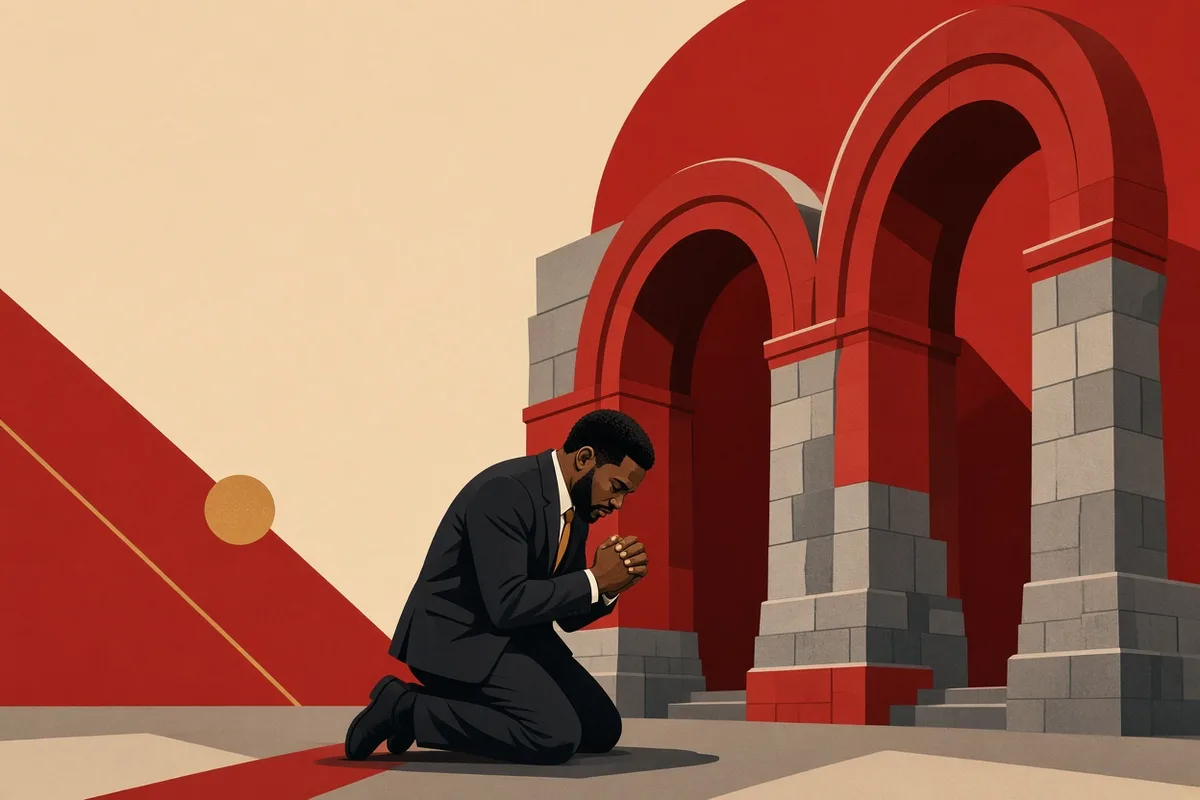



Clovis Converts After Tolbiac Battle
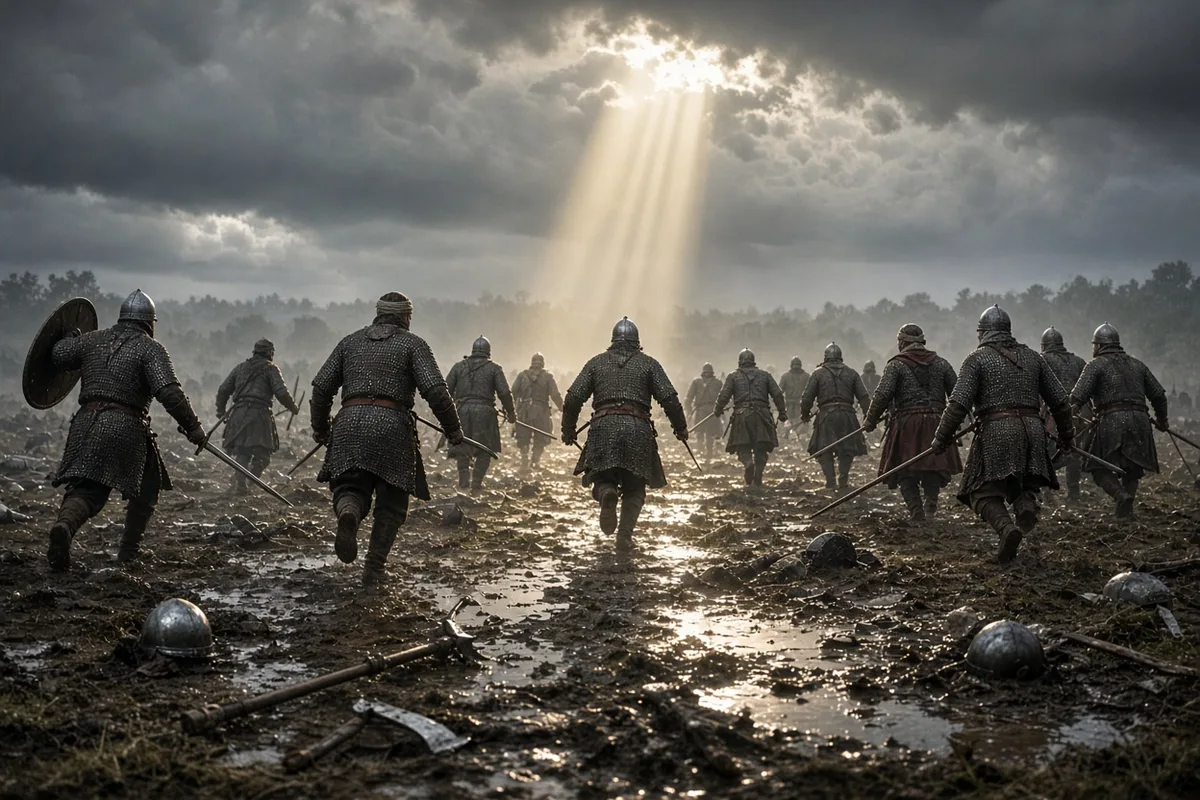
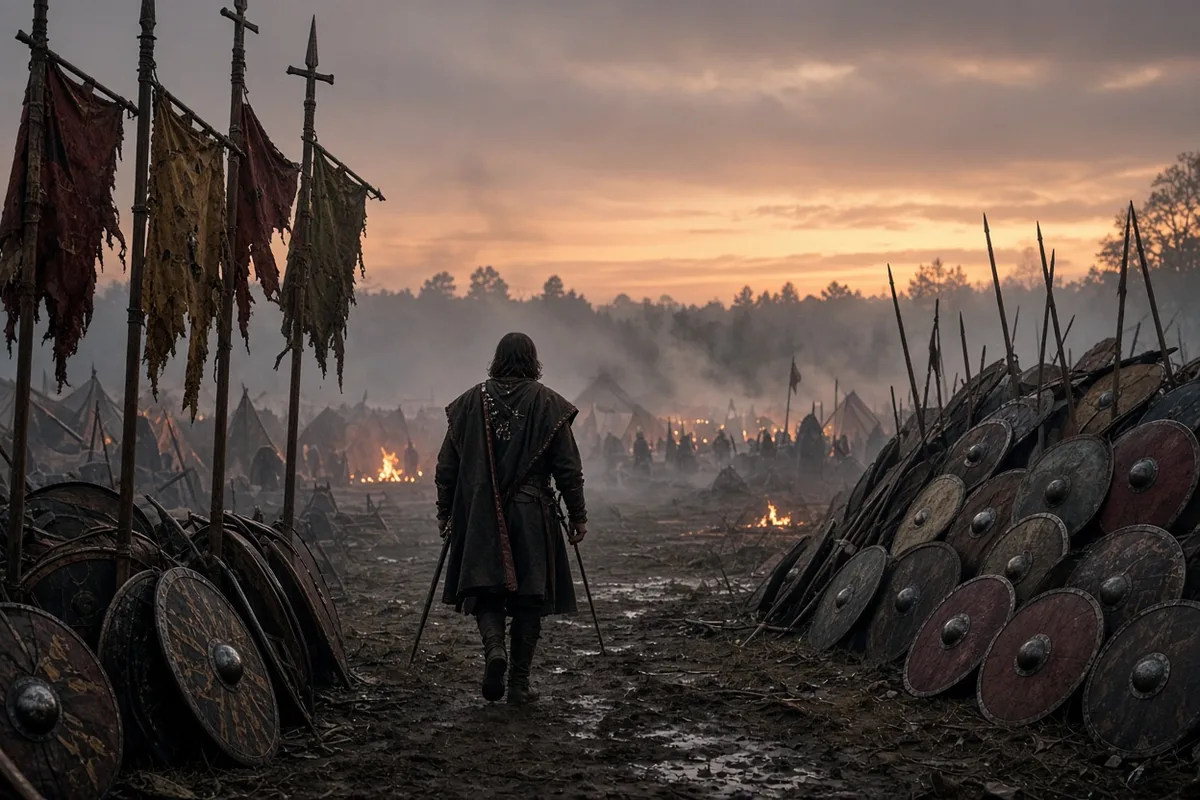
The shield wall buckled under the Alemanni charge. My arm burned from holding the rim steady while the man on my right took an axe between the eyes and dropped. Blood slicked the grass at Tolbiac. We had marched two days to reach them, and now the sun sat high enough to show every gap in our line.
Clovis fought ten paces ahead. His helmet crest marked him clear. He called on the old gods with every swing, yet the Alemanni pressed harder. Their king shouted somewhere in the press, and each time he did our men gave ground. I heard the rip of mail as a spear found the man behind me. The line was thinning.

We had left our dead along the track the day before. No time to burn them. Clotilde had sent word from the rear camp that morning that the king must turn to her God or lose everything. He had laughed and ridden on. Now the laughter was gone from his face.
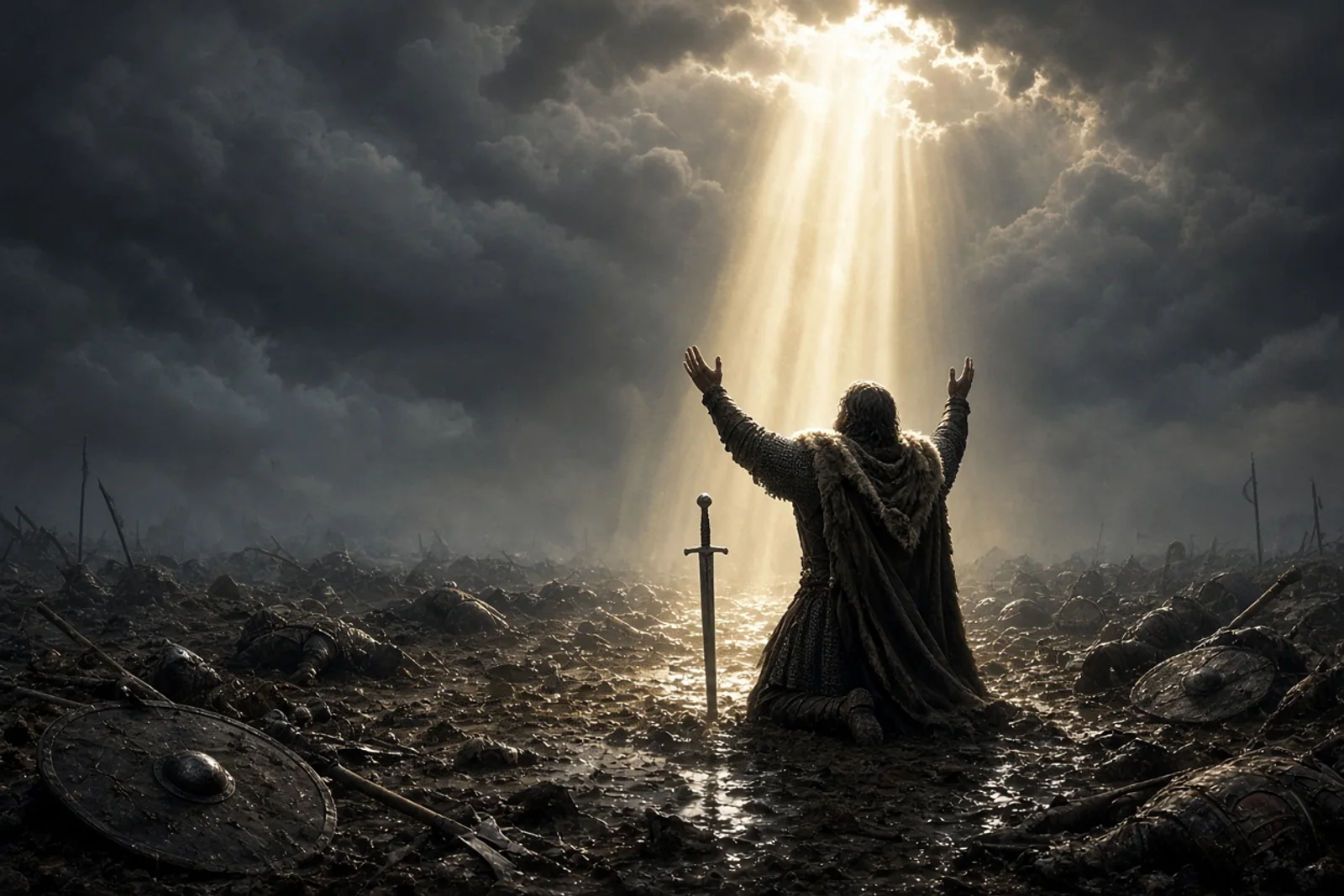
An Alemanni wedge split our center. I stepped into the hole and took a blow on the shoulder that numbed the whole side. Clovis saw the break. He raised his sword, looked past the helmets toward the sky, and spoke loud enough for the nearest men to hear. He offered service to the God Clotilde served if that God would give him the field. The words left his mouth and hung there while another man fell at his feet.

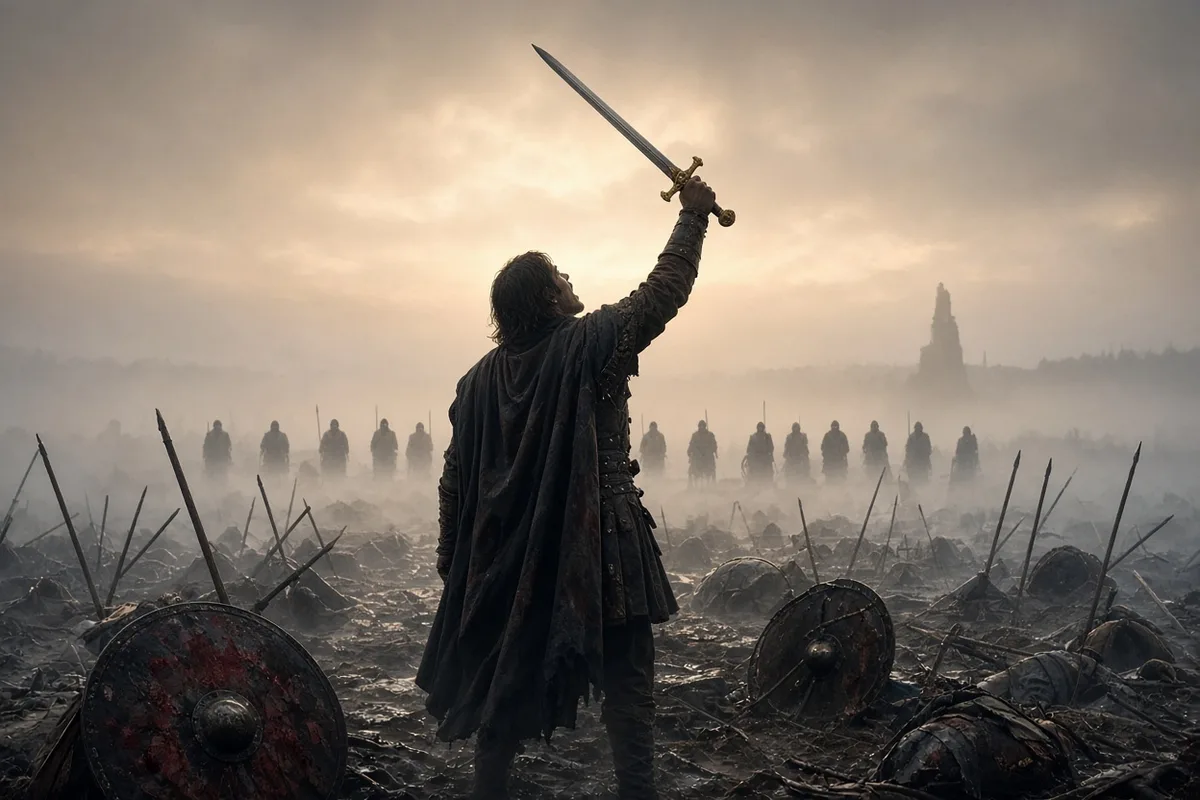
The next charge from our side carried farther than the last. The Alemanni shields lifted as if a wind had struck them. Their king went down under three Frankish spears. I saw his standard tilt and vanish. Men who had been shouting his name a moment before began to back away. The fear moved through them like a sickness. They turned and ran toward the trees. We followed until our legs would not carry us farther.
By evening the field belonged to us. The Alemanni who remained knelt and swore tribute. Their dead lay thicker than ours. I counted seven of my own shield-brothers before the light failed. Clovis walked among the wounded, saying nothing of the vow. He only ordered the camp moved closer to the river so the horses could drink.
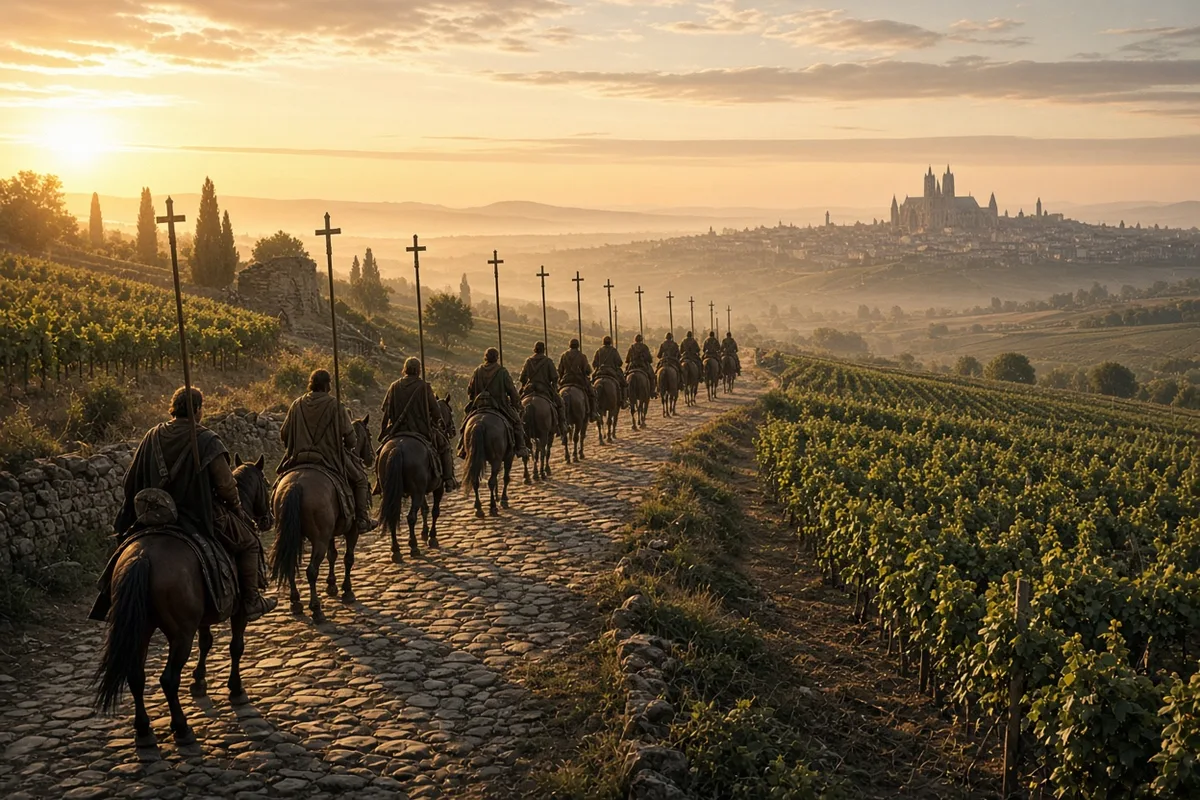
We rode back into Frankland three days later. The dust of the march coated every man the same color. Clovis kept his own counsel until the gates of Rheims. There he found Clotilde waiting in the palace yard. She listened while he told her what he had spoken on the field. Her face changed only once, when he repeated the name of the God. She sent a rider for Bishop Remi before the king had finished washing the road from his hands.
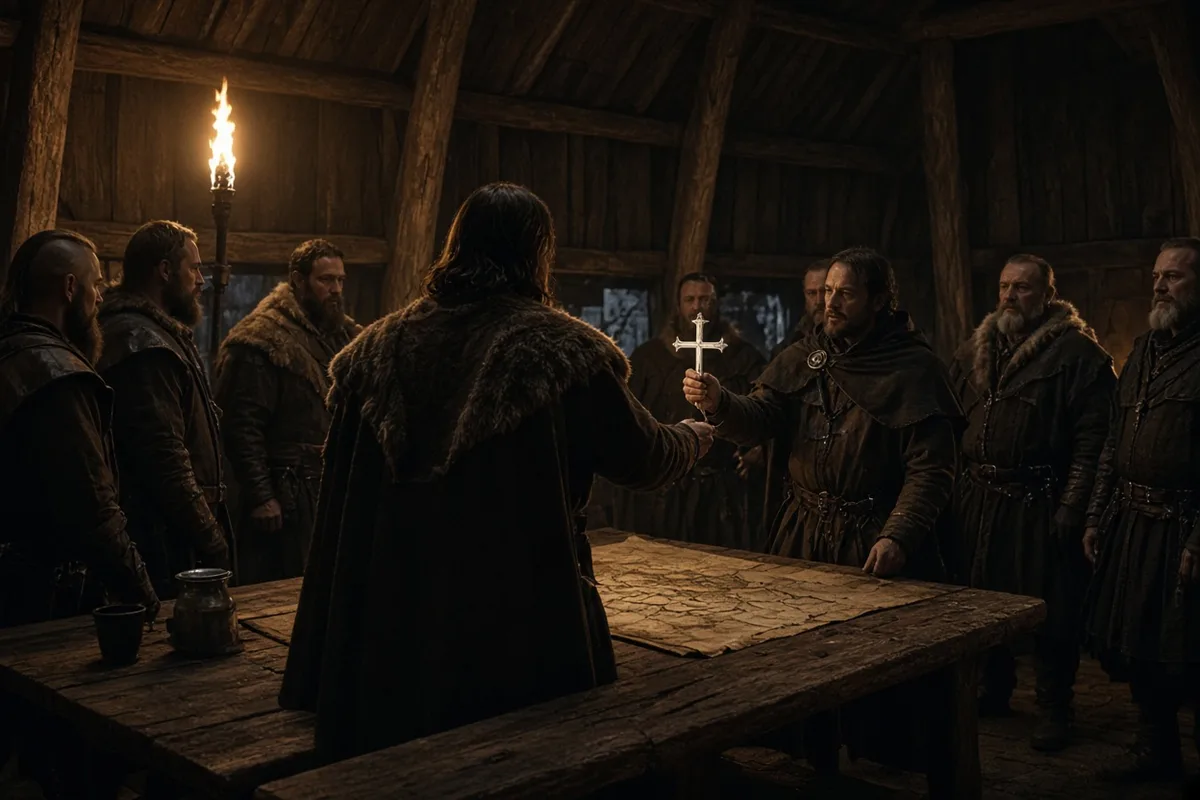
Remi came at once. He had not entered the palace freely since Clovis took the throne. Now he stood before the king without hesitation and began to speak of the cross. Clovis listened through the afternoon. He asked few questions. At the end he said he would test the hearts of his chieftains before he asked them to follow. Remi agreed that force would only breed false oaths.
The assembly met in the open space before the palace. Men came from every village within two days’ ride. Clovis stood on the steps and told them the old gods had not answered at Tolbiac. He said the God he now followed had given the victory. Some shifted where they stood. Others nodded. One by one they answered that they would leave the old names behind. No one raised a hand against the decision.
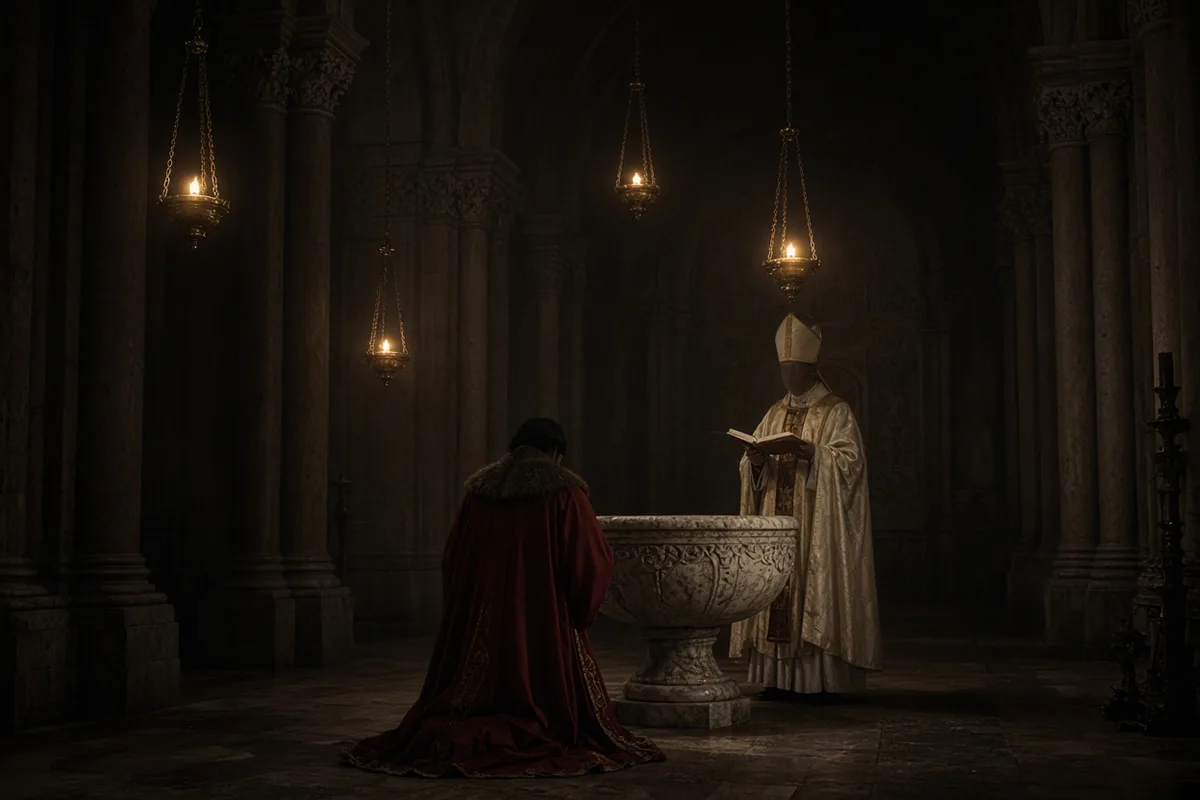
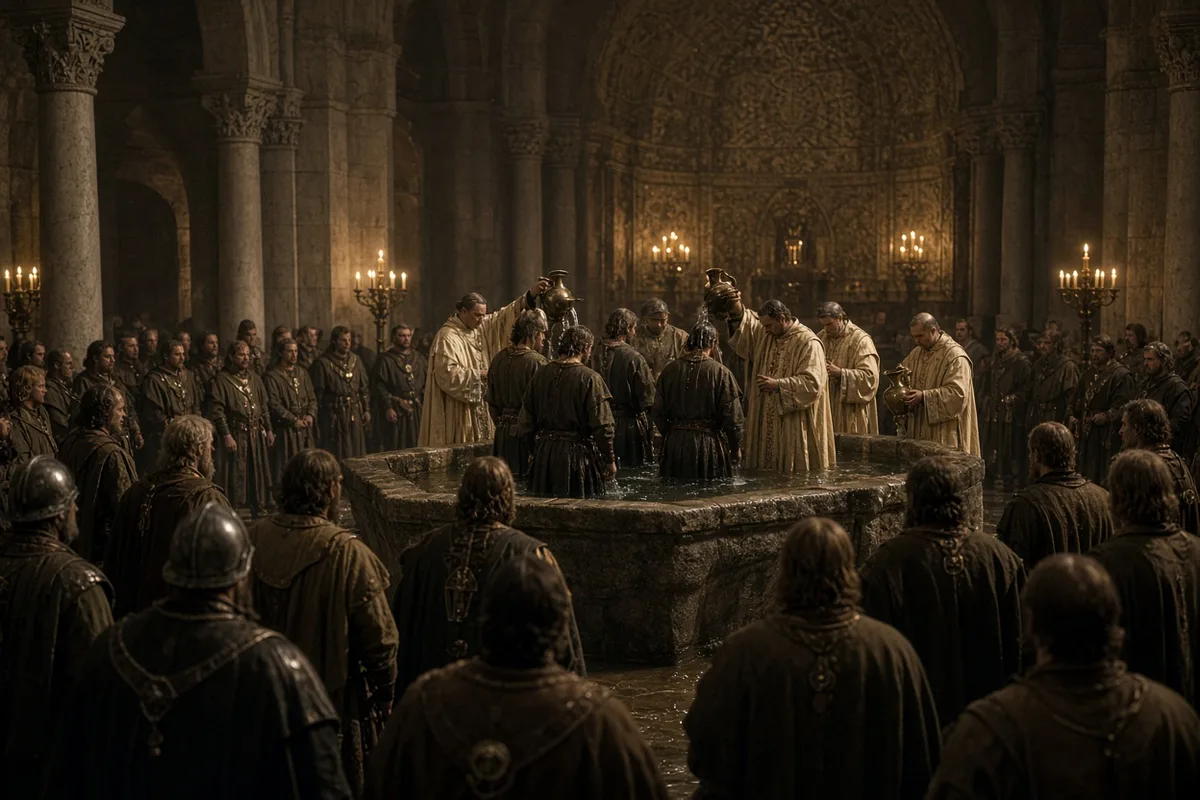
Remi prepared the church. Clotilde ordered hangings brought from the palace stores. The font stood ready before first light. Clovis entered with three thousand of his men behind him. I was among them. The water was cold from the river that fed it. Remi asked each man the same questions. Clovis answered first, then the rest followed in turn. When we stepped out again the white cloths clung to our shoulders. The sun had risen enough to show the city walls.
Clovis kept his word to the Alemanni survivors. He took no further pursuit. A letter arrived later from Theodoric warning him not to press the refugees who had crossed into Ostrogoth lands. The king read it and set it aside. The tribute payments began the next spring.
I stayed in Rheims through the winter. The king’s household grew quieter. Clotilde’s priests moved through the halls without fear. Men who had once sworn by Thunor now carried crosses at their belts. The change did not come in a single day, yet after the waters of the font no one spoke of turning back.
In the spring after that winter the first tribute carts rolled in from the Alemanni villages beyond the Rhine, each drawn by two oxen and guarded by six of our men; the ledgers kept in the palace counted three hundred and twelve pounds of silver and forty-seven horses delivered before the feast of Saint John. Clovis sent a sealed letter to the Burgundian king Gundobad demanding the return of the gold vessels taken from the church at Clermont five years earlier, and when Gundobad replied that the vessels now rested in his own treasury at Geneva, Clovis answered with three thousand spears that crossed the Saône at Mâcon on the twenty-third day of June. I rode in the second rank that summer and saw the bishop of Langres, Aprunculus, ride beside the king to read aloud the terms that would spare the city if its gates opened before noon. The gates did open, and the king entered on foot, his new cross pinned to the left shoulder of his cloak, while the garrison laid down their arms in the square before the cathedral.
Four years later the same army stood outside the walls of Poitiers on the eve of the feast of Saint Hilary. Clovis had ordered the men not to touch the church lands, and when one of our captains took a silver chalice from the monastery at Tours, the king had the man flogged in front of the column and returned the cup himself to Bishop Volusianus with the words, “We fight for the faith, not against it.” The Visigothic king Alaric II met us at Vouillé on the twenty-fifth of September; his shield wall broke after two hours, and Alaric fell under the axe of a man named Berthar from the Paris levy. We took Toulouse the next month and found the royal treasury intact, including the missorium of gold weighing one hundred and fifty pounds that had belonged to the emperor Valentinian. Clovis sent that plate to the church at Paris and ordered a new altar built over the tomb of Saint Genevieve, whose relics were carried through the streets on the tenth of November while the priests chanted the Te Deum.
By the eighth year after Tolbiac the king moved the court to Paris and issued the first written articles of the Salic Law, sixty-five clauses copied onto twenty-three sheets of vellum by the scribe Aurelianus; one clause fixed the fine for cutting a man’s thumb at six hundred silver denarii, another forbade the taking of a widow’s land within three years of her husband’s death. Clotilde gave birth to their fourth child, Chlothar, in the new wooden hall beside the Seine on the twenty-third of April, and the bishop Remi stood godfather at the font in the same church where Clovis had been baptized. I was given charge of twenty men to guard the treasury and counted the gold coins stamped with the name of Anastasius that arrived each spring from Constantinople as payment for the alliance against the Ostrogoths.
In the twelfth year the king fell ill at the villa of Kiersy and summoned his sons Theuderic, Chlodomer, Childebert and Chlothar to divide the kingdom; he spoke the division aloud on the twenty-seventh of November while the priests read the psalms, leaving the lands between the Meuse and the Loire to Theuderic, the valley of the Seine to Childebert, the middle kingdom to Chlothar, and the southern conquests to Chlodomer. He died before the lamps were lit that evening and was buried the next day in the Church of the Apostles beside the tomb of Saint Genevieve, his sword and helmet placed on the stone slab as the custom required. The four sons rode out within a month to enforce the boundaries their father had drawn, and I remained in Paris with the garrison of two hundred men who kept the gates and collected the tolls on the bridges.
Thirty winters after the baptism I returned to Rheims on the feast of the Epiphany and found the stone church Remi had begun still unfinished, its walls rising only to the height of a man’s shoulder; the bishop’s successor, Egidius, showed me the marble font that still stood in the crypt and told me the water was drawn each year from the same river that had supplied it on the day Clovis entered. The old shield I had carried at Tolbiac hung on the wall of the guardroom until the new count of Rheims ordered it taken down and melted for nails in the year 520. I lived another twelve years in the service of Childebert, riding once more to the siege of Autun and standing in the line when the Burgundian king Sigismund surrendered at the bridge of the Saône.
When I could no longer hold a spear I was granted a small house inside the walls of Paris near the old Roman amphitheater, and each morning I walked to the church where the king’s tomb lay to hear the mass said by the priest who kept the lamps burning before the altar of Saint Genevieve. The last time I saw Clovis’s sons together was at the assembly in Orléans in 533, where they confirmed the laws their father had written and added twelve new clauses on the protection of church lands; Childebert spoke the words that were copied into the record, “As our father swore at Tolbiac, so we keep the faith.” I died in that house in the month of March 548, and the men who carried my body placed it in the same cemetery where the warriors of the first levy had been buried after the return from the Alemanni field.
The stone that marks the place where Clovis made his vow still stands on the ridge above the plain of Tolbiac, though the name of the hill is now spoken only by the farmers who turn the soil around it; the cathedral at Reims was completed in the century after my death and the marble basin that once held the baptismal water was set into the floor before the high altar, where every king of the Franks after Clovis has been anointed. The last image I carry is of the four sons riding away from their father’s grave while the priests closed the doors of the Church of the Apostles against the winter wind that blew down the Seine.
The sons rode south that winter to meet at Clermont, where Theuderic confirmed the tribute rolls from the Auvergne villages and ordered four new churches built along the Allier, each endowed with twenty hides of land taken from the Visigothic estates at Brioude. Chlodomer led eight hundred men against the Burgundian garrisons at Vienne in March 524 and took the head of Sigismund after the bridge fight, sending it to the palace at Orléans with the count of three thousand solidi recovered from the royal mint. Childebert crossed the Rhône at Arles the following year and received the keys of the city from the patrician Liberius on the twenty-ninth of June, after which he placed twelve Frankish deacons in the basilica of Saint Trophime and left a garrison of two hundred under the command of a man named Gundachar.
In the twentieth year after my own death the three surviving brothers gathered again at Orléans and issued the canons of the council that fixed the number of bishops at twenty-seven for the whole kingdom, each required to keep a copy of the Salic Law beside the altar and to read the clause on church asylum aloud once a month. Chlothar’s men rebuilt the wooden bridge at Paris with stone piers taken from the old Roman baths, and the toll books recorded four hundred and eighty carts crossing each month by the feast of Saint Martin in 558. The same year the bishop of Paris, Germanus, ordered the crypt under the Church of the Apostles enlarged to hold the relics of Saint Vincent, whose stone sarcophagus was carried from the villa at Childebert’s command and placed beside Clovis’s slab on the third of November.
Theuderic’s son Theudebert ruled the eastern lands until his death in 548 and left a treasury that contained one hundred and twenty thousand gold solidi struck in the name of Justinian, together with the gold crown taken at Pavia that weighed thirty-two pounds. His widow Deoteria retired to the convent at Besançon, where she endowed a hospital that cared for one hundred and fifty lepers each winter until the building burned in the fire of 573. The four kingdoms remained divided among their grandsons, and the annual tribute from the Alemanni districts beyond the Rhine continued to arrive at Metz each spring, listed in the palace register as two hundred and eighty pounds of uncoined silver and ninety-three head of cattle.
The marble basin from the first baptism at Rheims was moved into the new cathedral nave in 816 under Archbishop Ebbo and set flush with the pavement so that the kings of the Franks could stand in the same water when they received the crown. The stone on the ridge above Tolbiac was incorporated into the foundations of a chapel dedicated to Saint Remigius in the ninth century; local records from the abbey of Saint Thierry note that pilgrims left three hundred and twelve offerings there in the year 870 alone. The Church of the Apostles in Paris was renamed Sainte-Geneviève after the relics of the saint were placed in the high altar in 630, and the tomb slab of Clovis remained visible beneath the grille until the canons ordered it covered with new paving in 1142.
When the Normans burned the city in 885 the crypt survived intact, and the bones of Clovis and his queen were transferred to a new lead casket that still rests beneath the choir of the present church. The last man I knew who had stood in the shield wall at Tolbiac was a centenarian named Leuthard who died in the house next to mine in 552; he left his spearhead to the church at Saint-Denis, where it was hung above the door of the treasury until the abbot melted it down for the new silver cross ordered by King Dagobert in 624.