



Coerced success cannot build a self you own

In 60 seconds
- Agassi’s father built a ball machine called the dragon and forced thousands of daily hits in Las Vegas heat, manufacturing brilliance the boy says he hated from the start.
- At thirteen he was sent to Bollettieri’s academy, where constant public rankings and almost no warmth produced rebellion, image-crafting, and skill severed from any sense of ownership.
- He turned pro at sixteen, trapped by fame and the Canon image-is-everything persona he grew to despise, even wearing a hairpiece for years out of fear of exposure.
- By 1997 his ranking had collapsed outside the top 100; crystal meth use and a lied-about failed ATP drug test marked the bottom.
- He rebuilt through satellite tournaments, trainer Gil Reyes, and adult-chosen conditioning, climbing back to world number one in 1999.
- Marriage to Steffi Graf and the Andre Agassi College Preparatory Academy he founded in 2001 became the chosen purpose he ranked above eight Grand Slam titles.
The big idea
Big Idea. Agassi argues that success built on someone else’s compulsion can hollow a person out. Identity forged under coercion has to be rebuilt later through deliberate choice, relationships, and purpose beyond the scoreboard.
The book in brief
Book in Brief. The story opens on a boy whose tennis was never his idea. A driven father turned childhood into quotas and repetition until technical genius arrived without consent. That original force becomes the memoir’s permanent shadow. Institution and commerce take over next. Boarding-school pressure replaces home pressure. Early prize money and camera deals lock in a public costume before any private self has formed. Wins arrive. Ownership does not. The costume frays. Ranking freefall strips away the only mirror that had been supplying identity. Numbness and deception follow. The low point is not a sports slump; it is the collapse of a self that had always been rented. Recovery refuses magic. It is unglamorous, structural, and slow: lesser events, a new trainer, daily work the adult now chooses. Partnership with someone who already knows the cost of scrutiny extends that ownership into private life. The arc lands on a school built for children whose futures might otherwise be dictated by circumstance. Tennis supplied the platform and the money. The chosen project, Agassi claims, supplied the first unguarded pride.
Context
Andre Agassi’s 2009 memoir broke the usual athlete-triumph mold with unusual candor about resentment, addiction, and self-doubt. Ghostwriter J.R. Moehringer’s large role in shaping the prose was later publicly acknowledged, raising fair questions about how much of the voice is raw recollection versus crafted arc.
The key ideas
1
The dragon at home
Extreme early mastery can be evidence of parental coercion rather than any love of the activity.
outward result
manufactured brilliance and future trophies
inward fact
hatred of the ball from earliest childhood
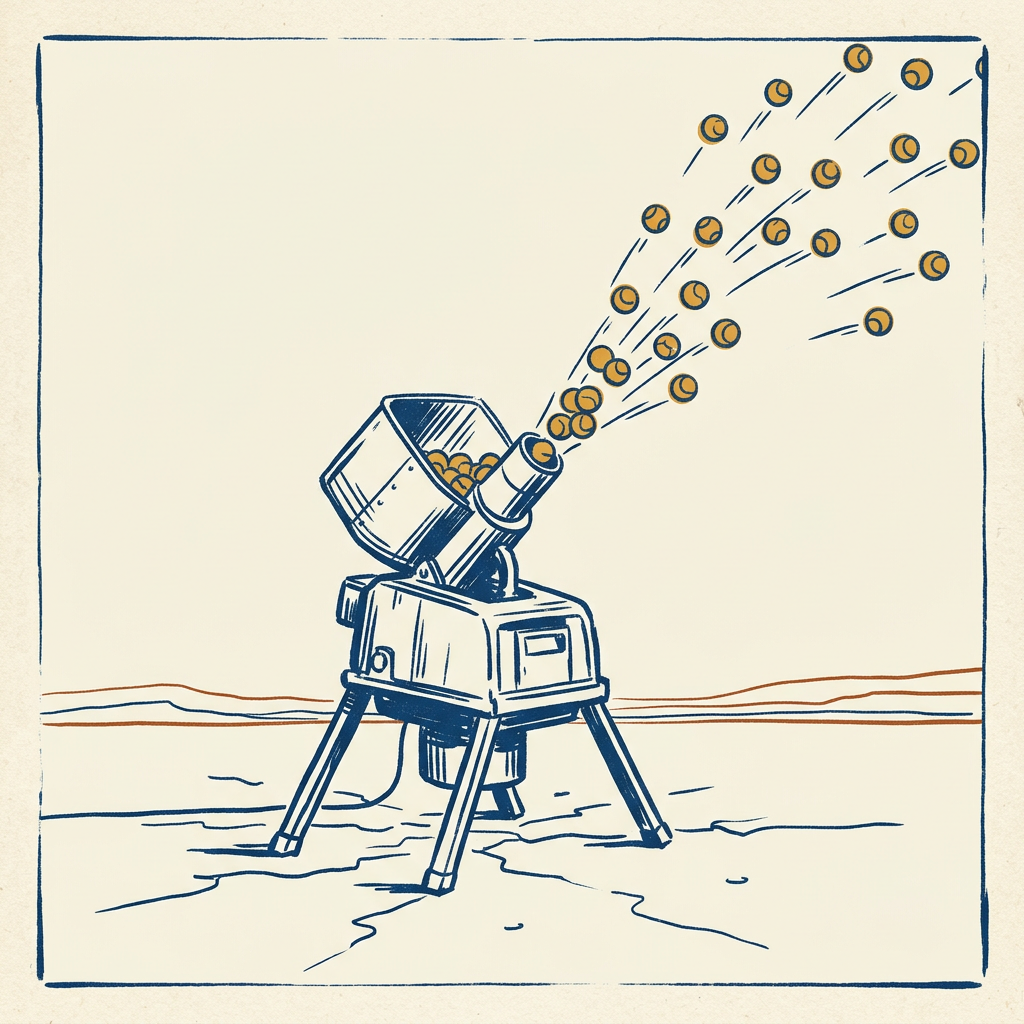
Mike Agassi, an Iranian immigrant and former boxer, constructed a ball machine he named the dragon. He set it to fire harder and faster than any human and made his son hit thousands of balls a day in the Las Vegas heat. Quotas were calculated. The resulting hand speed and return of serve were manufactured before the child could agree. Agassi states he hated the hitting even as a small boy. Tennis was treated as a family project, not a personal pursuit. At thirteen the boy was shipped to Nick Bollettieri’s Florida academy. The chapter forces two facts to sit together without resolution: he became one of the greatest players ever, and he never wanted to play. That unresolved tension haunts every later win.
In practice: The dragon was tuned beyond human pace so the child could eventually beat anyone put in front of him.
2
Academy as exile
Removing a child from family into a hyper-competitive institution accelerates skill while stunting emotional growth.
Bollettieri’s academy ran on relentless drilling and daily public rankings that pitted children against one another. Adult warmth was scarce. Losing brought shame in front of peers. Agassi’s answer was quiet defiance: dyed hair, earrings, a rebellious look the press read as confidence. Bollettieri appears less as mentor than brand-builder who profited from the growing name. Home coercion had simply been handed to an institution with its own commercial reasons to keep producing wins. Skill developed. A feeling of ownership did not. Achievement without belonging becomes the pattern that later crises will expose.
In practice: Constant re-ranking against fellow students sometimes left him humiliated in front of the same kids he had to face the next day.

3
Pro without consent
Early professional success can trap a person inside an identity they never actively chose, making later crisis nearly inevitable.
Agassi turned professional at sixteen, already more famous for image than for fully owned ambition. Canon commercials sold the line that image is everything—a phrase he says came to define him against his will and that he grew to hate. Speed left no room to ask whether he wanted any of it. Early Grand Slam finals in 1990 showed a player competing not to win but to avoid losing, haunted by fear of his father’s judgment. Sponsors needed the long-haired rebel. The persona stayed profitable even while it exhausted the person wearing it. Fame before self-knowledge does not clear confusion; it multiplies the audience that expects the caricature.
In practice: In those 1990 French Open and US Open finals he describes playing defense against collapse rather than chasing victory.

4
Wig and exposure fear
Physical self-concealment during early fame revealed how much of the public identity was performance covering shame.
For years Agassi wore a hairpiece, terrified that thinning hair would be noticed and the constructed image would fall apart. The anxiety, he says, outranked ordinary match pressure. When identity is assembled by others, the carrier lives in constant fear of the costume slipping. There is no solid self underneath to catch the fall. The detail is comic on the surface. Agassi treats it without irony as one of the most grinding aspects of early fame. It explains why a later ranking collapse felt like structural failure rather than a temporary slump.
In practice: During the 1990 French Open final he worried more about the hairpiece staying put than about the score.

5
Crash and crystal meth
A self that depends entirely on ranking and image suffers psychological collapse, not just worse results, when the external supply stops.
141
world ranking near career bottom
By 1997 the ranking sat outside the top 100. Motivation was gone. The marriage to Brooke Shields was coming apart. Agassi describes a stretch of recreational crystal meth use with a friend as numbness-seeking rather than celebration. He failed an ATP drug test and wrote a letter claiming the failure was accidental—a fabrication he admits in the book. The lie let him avoid suspension. Even at the bottom the old habit of managing perception continued. The earlier coercion was not backstory; it had a direct line to self-destruction once winning stopped feeding a sense of self. This admitted low point is what later rebuilding has to climb from.
In practice: The falsified letter to the ATP kept the image intact while hiding meth use that could have ended the career.
6
Rebuilding from zero
Genuine change requires starting over from structural basics rather than trying to will a mental fix onto a broken foundation.
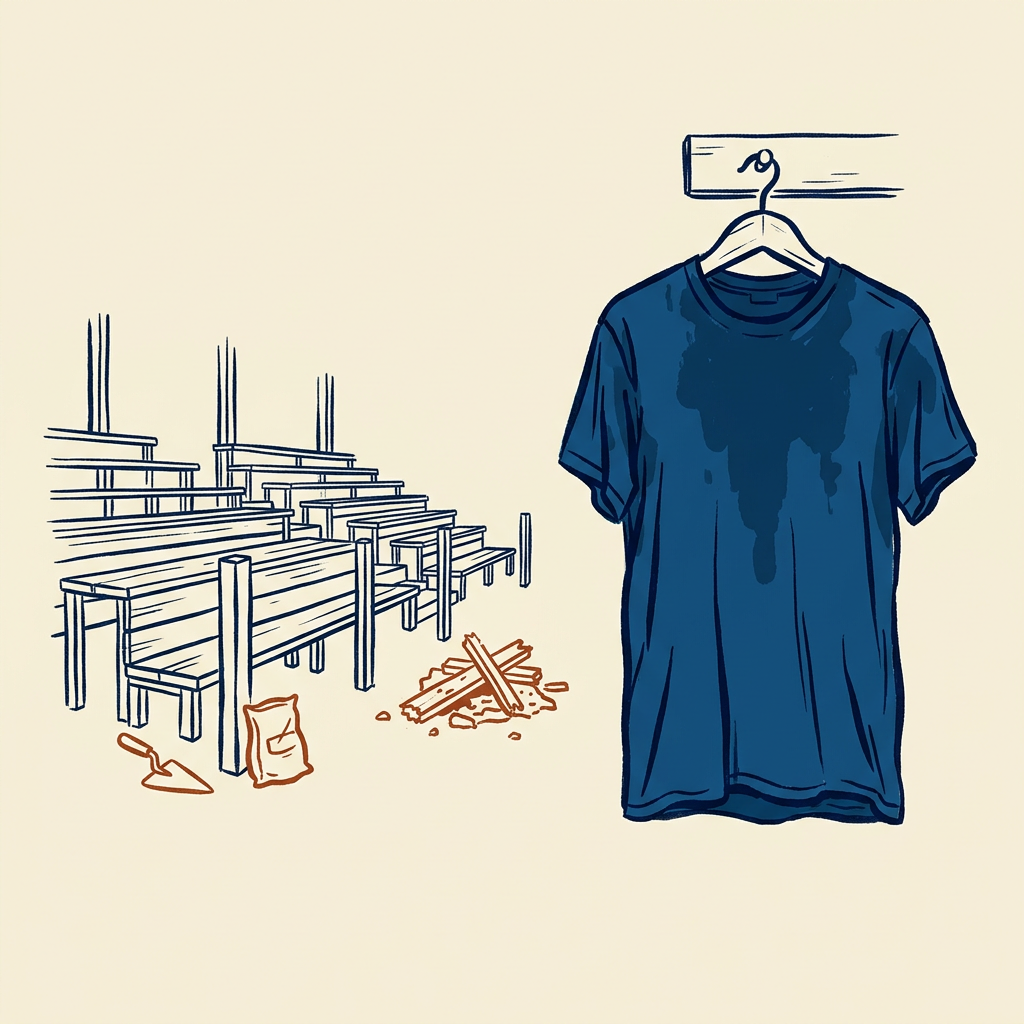
Recovery was not a sudden epiphany. Agassi played satellite and challenger tournaments far below his old stature, often in front of sparse crowds. He hired trainer Gil Reyes to overhaul fitness and adopted a slower, deliberate practice schedule built on conditioning he now controlled. Reyes mattered less as a stroke coach than as the person who helped Agassi treat body and discipline as things he owned. That stood in direct contrast to childhood quotas and academy ranks. The climb back to world number one in 1999 remains one of the sport’s notable comebacks precisely because the fall had been so far. Redemption, the book argues, came from agency over process, not from renewed childhood love of tennis.
In practice: He showed up for minor-tour events he once would have considered beneath him and treated the work as adult choice.

7
Graf and real partnership
A relationship built on mutual respect and shared knowledge of pressure can help repair a self damaged by earlier coercive bonds.
earlier marriage
glamour and mismatched public expectations
life with Graf
shared knowledge of scrutiny’s toll and steady privacy
The earlier marriage to Brooke Shields is framed as glamorous yet mismatched—two public figures with incompatible daily lives. The relationship with Steffi Graf, beginning around 1999 and leading to marriage in 2001, is presented as different in kind. Graf had lived through comparable scrutiny and the complications of a father’s heavy hand in her own career. Shared understanding of what constant competition costs replaced image compatibility. Her steadiness and lack of interest in celebrity trappings let Agassi practice the same ownership off court that Reyes had helped him find on it. Repair is not solitary; certain relationships model a healthier stance toward achievement and eyes on you.
In practice: Agassi contrasts Graf’s indifference to his fame machinery with earlier years when relationships themselves felt like public performances.

8
School as true legacy
Agassi argues his most meaningful achievement was educational, not athletic—purpose found outside the original coerced vocation can outrank mastery inside it.
imposed vocation
eight Grand Slam titles earned under long coercion
chosen work
a charter school built by deliberate adult intention
Later chapters turn to the Andre Agassi College Preparatory Academy, a Las Vegas charter school for at-risk children that opened in 2001. Funding came through his foundation and later the Turner-Agassi Charter School Facilities Fund that financed charter construction nationally. He presents the school as more emotionally significant than any of his eight Grand Slam titles. It was built from intention rather than inherited from a father’s plan or an academy’s commercial design. Visiting the campus, he describes an unguarded pride he says never followed a major trophy. Tennis became, retrospectively, the platform that finally let him choose a project of his own—directed at children whose futures might otherwise be dictated by circumstance.
In practice: He recalls walking the school and feeling pride that major tournament wins had never produced.
Key terms
- the dragon the ball machine Agassi’s father built and cranked beyond human speed to force endless repetition
- Bollettieri academy the Florida boot-camp tennis school that ranked children publicly and replaced family with performance pressure
- image is everything the Canon slogan that Agassi says trapped him in a surface persona he never chose and came to hate
- the wig the hairpiece he wore for years in early fame, a literal cover for the fear that the whole public self would collapse
- ATP letter the false explanation he sent after a crystal-meth drug-test failure so he could avoid suspension
- Gil Reyes the trainer who helped him rebuild fitness and daily discipline as things he owned rather than endured
- challenger circuit the low-level tournaments he entered while ranked near the bottom, the humble ground of his comeback
- College Prep Academy the Las Vegas charter school for at-risk kids he founded and called more meaningful than his titles
What to do
- Ask Monday which current commitments you would still keep if no one watched or rewarded you, then drop one that fails the test.
- Set one concrete process goal this week that you alone control—a training or work routine—rather than an outcome others will judge.
- If you lead anyone, ask one person what they would choose to work on if given real autonomy.
- Write down one project unrelated to your main career that you would build only because you chose it, and take one real step toward it before Friday.
Questions to think with
- Which of your visible achievements still feel like someone else’s project more than your own?
- Where are you still managing a costume because you fear what sits underneath?
- What would rebuilding look like if it started with unglamorous structure instead of a new pep talk?
- Who in your life already understands the specific cost of the pressure you carry?
- What project would you fund or found if trophies and applause were no longer the point?
The other side
Critics and fellow players have called the lifelong-hatred claim an overstatement shaped for narrative punch; sustaining elite discipline across two decades against Sampras and Nadal is hard to square with pure coercion. The crystal-meth lie to the ATP receives relatively brief treatment given its seriousness and the unfair advantage the fabrication may have secured. Mike Agassi is drawn almost entirely from one son’s memory with little room for counter-narrative. The book is thin on tennis as craft, light on hard scrutiny of the school’s financing and long-term results, and openly shaped by ghostwriter J.R. Moehringer’s arc-building skill.
Who it's for
Athletes and former athletes wondering whether their results were ever truly chosen, parents ready to examine how their ambitions colonize a child’s self, and memoir readers who want fame, pressure, addiction, and reinvention without the highlight-reel gloss.