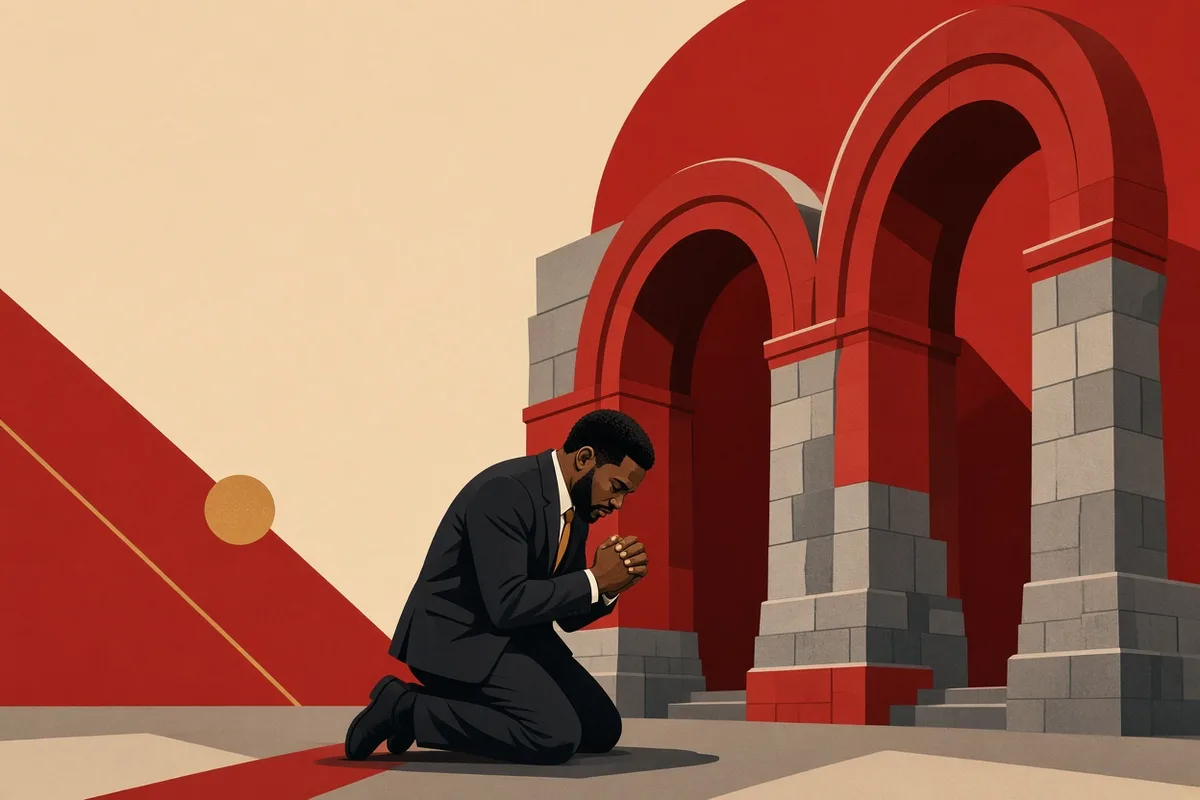



Constantine Sees the Chi-Rho Before Milvian Bridge
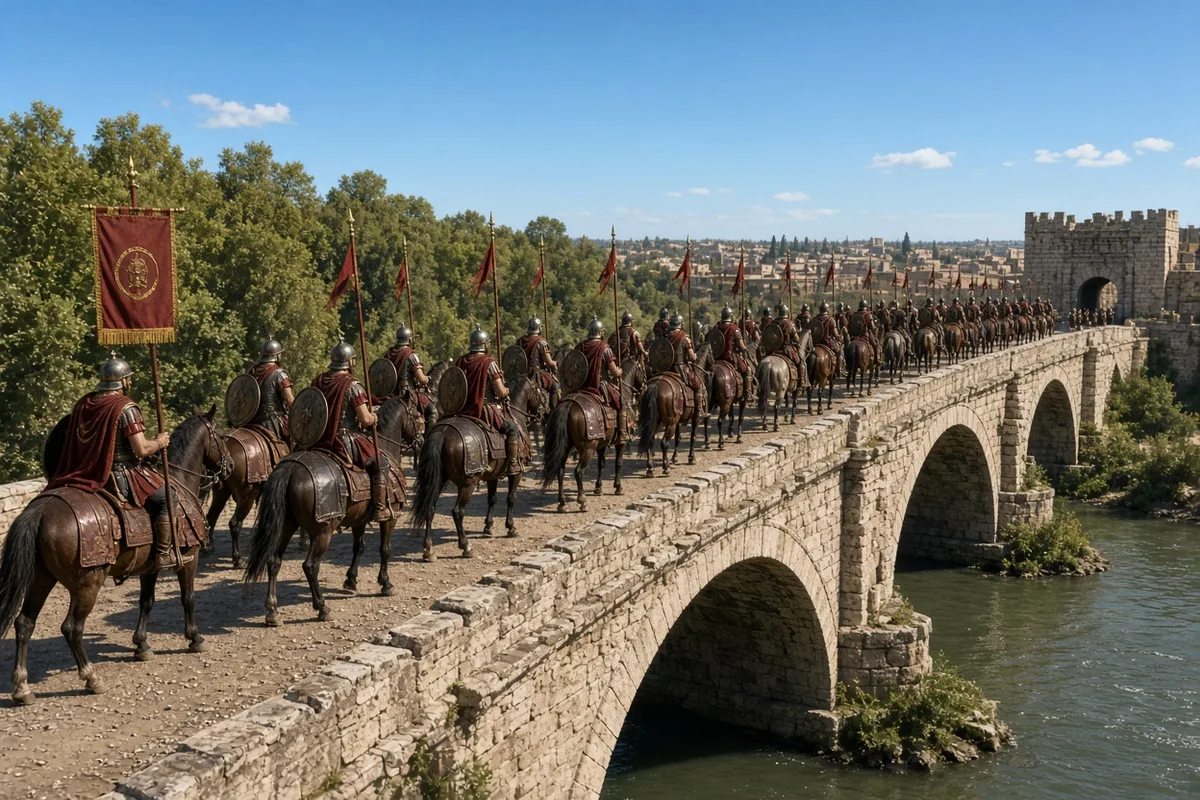
The dust rose in thin sheets from the boots ahead of me. We had marched since first light, the Tiber a dull gleam to our left, and the men kept their eyes on the ground to spare their breath. I carried the century's water skin slung across my chest, its weight slapping my hip with each step. Constantine rode at the head of the column on a bay horse whose coat had gone dull from the road. He had not spoken since the last halt.

A courier came up at a trot and handed him a folded dispatch. Constantine read it, then reined in. The whole line slowed without orders. He dismounted and walked a few paces off the track, the horse's reins loose in his hand. We stood waiting while the sun climbed. No one sat. The order had gone out the evening before that every man was to keep his kit ready and his mouth shut.
He knelt on one knee in the dry grass. The movement was sudden enough that the nearest officers turned their heads. I could see the back of his helmet, the red crest shifting as he lowered it. His shoulders stayed square. He stayed there a long time, the midday light hard on the metal of his cuirass. The rest of us shifted weight from one foot to the other and listened to the river.

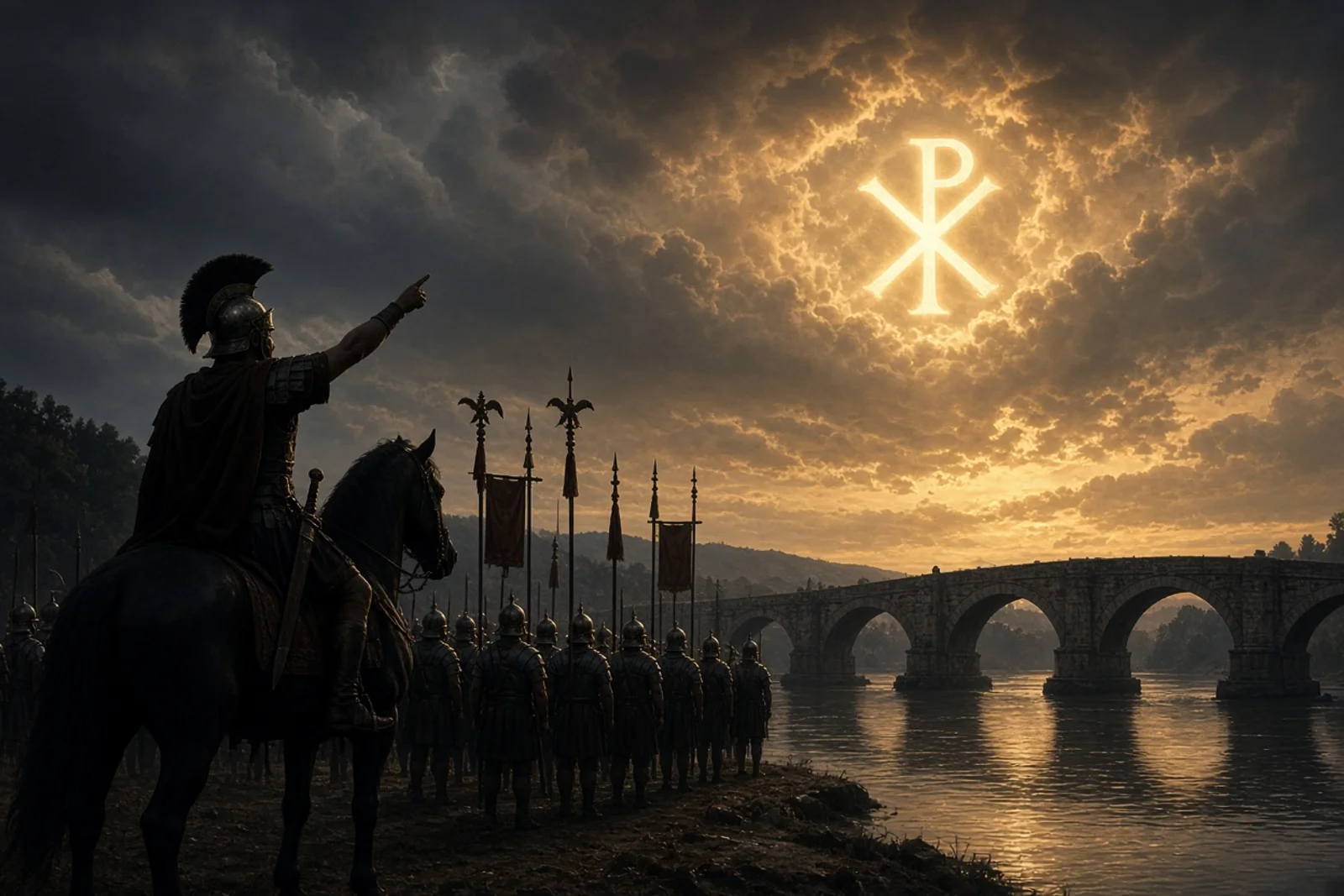
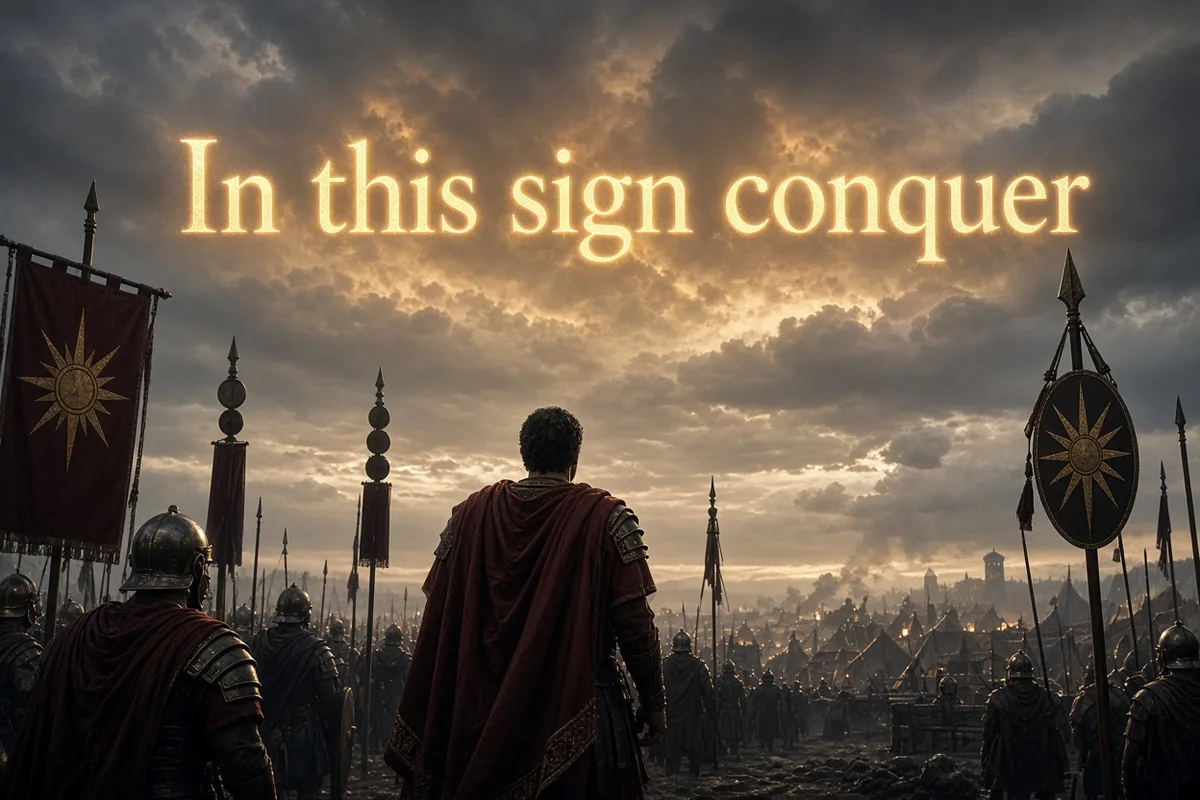
Then the air changed. It was not a sound. The light above the sun thickened and took a shape that was not cloud. A cross of pale fire stood against the blue, higher than the disk itself, and across the upright beam letters formed that every man in the front ranks could read. Conquer by this. The words held steady while the sun itself seemed to dim by comparison. I heard the man beside me draw breath and hold it. No one shouted. The formation stayed rigid because no one knew what command to give.
Constantine rose. He turned his face up and stayed that way until the shape began to fade. When it was gone the ordinary light returned and the heat pressed down again. He walked back to the horse without looking at any of us. The courier was still there, waiting. Constantine took the reins and mounted in one motion.

We made camp before the light failed. Fires were kept low. I passed among the sections with the water skin and heard the same question in every group. No one had an answer that satisfied. The standard-bearers checked their poles twice. The night came on clear, the stars sharp.
Constantine did not eat with the staff. He stayed in his tent with the flaps closed. I was posted on the outer ring and could see the lamp burning through the canvas until well after midnight. When the lamp finally went out the only light left was the watch fires and the low gleam of the river.

I woke before the change of watch. The man on my right was already sitting up. We did not speak. Across the camp a single voice called out, not an alarm, just a summons. Men began to move toward the command tent. Constantine stood in front of it with two of his senior officers. He held a piece of folded cloth in his hands and spoke quietly. The officers listened, then one of them nodded and turned away toward the baggage train.
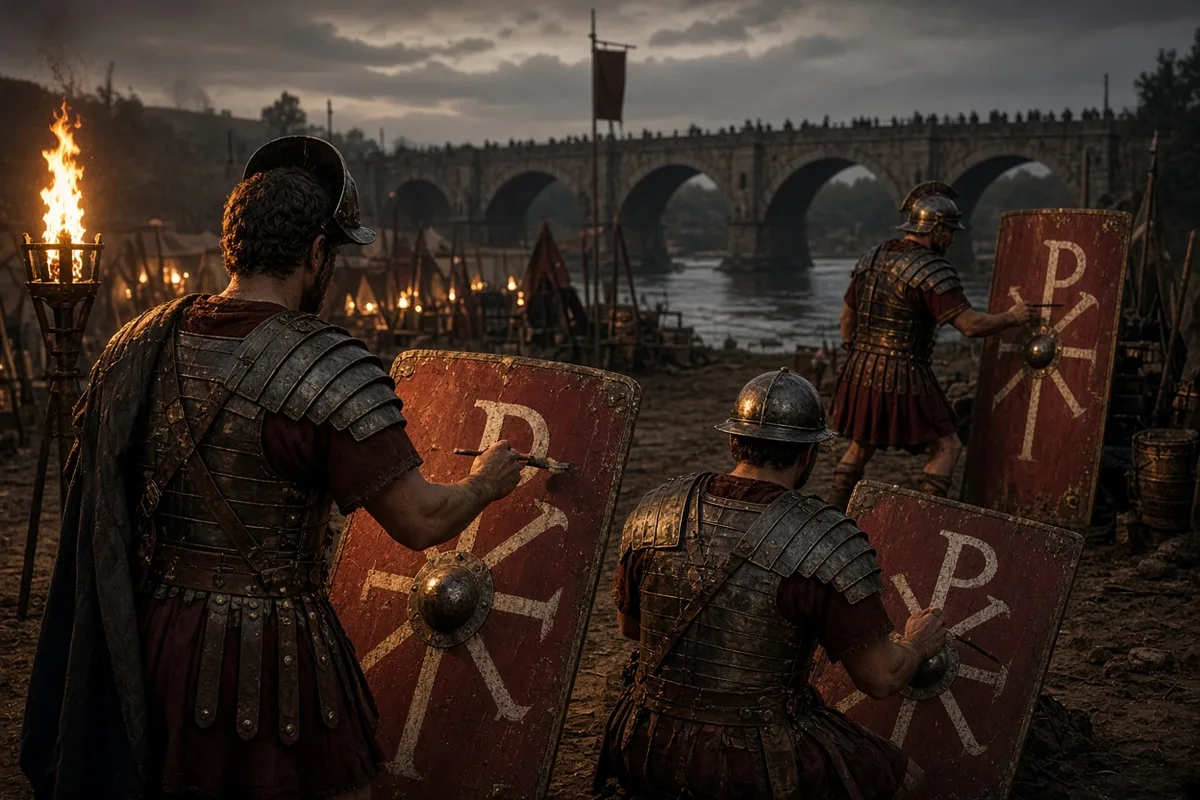
By first light the goldsmiths were at work. They had set up a bench on a flat stretch of ground and Constantine sat on a camp stool in their midst. He described the figure with both hands, the upright and the crossbar, and the monogram that was to sit at the center. The workers bent over their tools and did not look up. The new standard took shape while the rest of the army ate cold rations and checked straps.
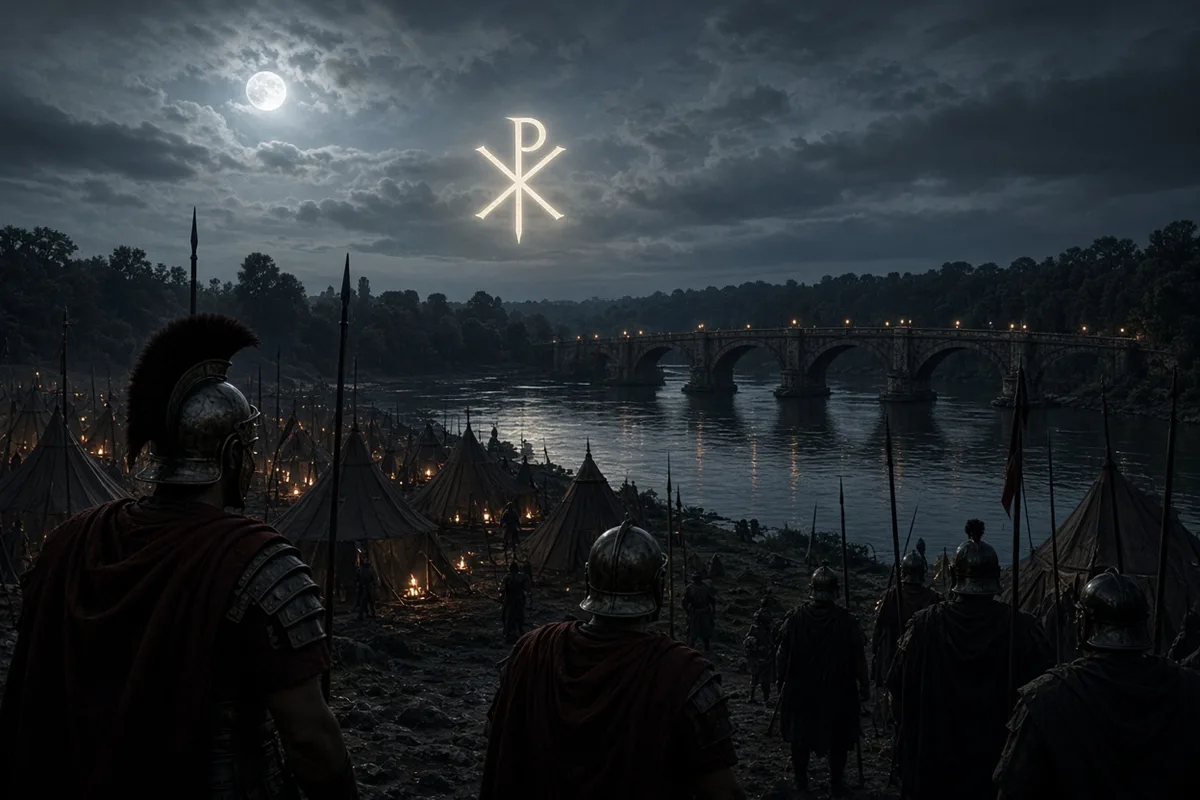
We crossed the last low ground toward the bridge in the middle of the morning. Maxentius had drawn up on the far side with the river at his back. The new standard was carried at the front of our line, the Chi-Rho bright against the purple cloth. Constantine rode directly behind it. The order was simple: keep formation until the trumpets. No one broke ranks when the first arrows came over.
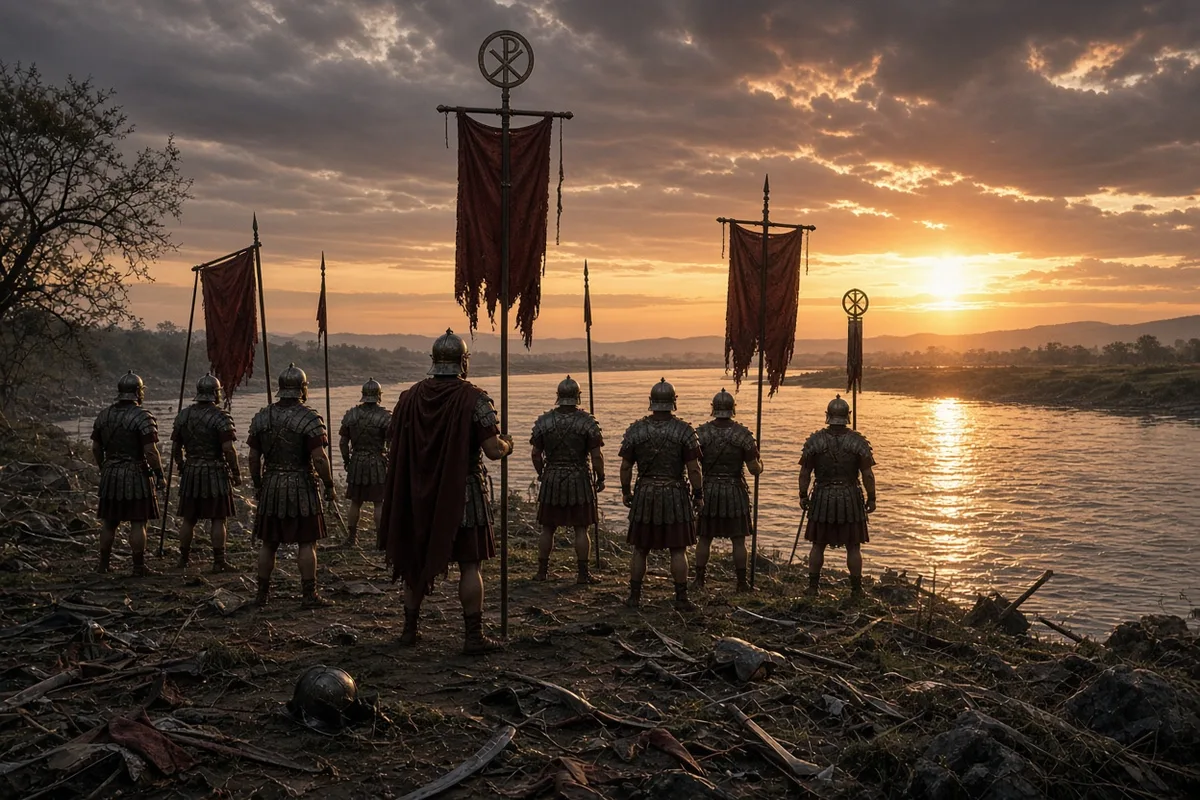
The fighting at the bridge lasted less than an hour. Maxentius's center gave way and the men on the flanks tried to pull back across the single span. The press was too great. I saw him on horseback among the last of his guards, the water already rising around the legs of the animals. The horse went down and he did not come up again. The river took the bodies downstream in a dark line.
We entered Rome three days later through the northern gate. The city prefect met Constantine on the steps of the senate house. The new standard was set upright beside the rostra while the terms were read. No reprisals against the followers of the old gods were declared, and the Christian meeting places were to be returned. The crowd stayed quiet through the reading. Only when the prefect finished did a low murmur run along the steps.
I remained with the century that guarded the standards during the days that followed. The Chi-Rho stayed in its place outside the senate. Men came to look at it and then moved on. Constantine gave orders for the building of a basilica on the Lateran ground. The workers began clearing the site while the army still camped outside the walls.
One evening I was sent with a message to the imperial quarters. Constantine was standing with Eusebius, who had arrived from the east. They spoke of the sign and of the oath Constantine had given after the vision. Eusebius wrote nothing down while they talked. He only listened and nodded once when Constantine finished.
The army was ordered to winter quarters before the first frost. I was posted to a cohort that would stay near the city. On the morning we marched out I passed the new standard again. The cloth had been replaced with a heavier weave against the coming rain. The monogram caught the low sun and held it for a moment before the column moved on.
The cohort reached its winter station at the old Castra Praetoria on the northeastern edge of the city on the third day of November in the consulship of Constantine and Licinius, where the centurion assigned me to the second watch along the northern wall with twelve other men whose names were entered on the duty roster by the optio named Marcus. We received double rations of hard biscuit and sour wine from the stores that had been moved from the Milvian field, and the new standard with the Chi-Rho was mounted on a stone base inside the principia where the watch officer read the daily order that every man was to salute it on entering or leaving the gate. On the Kalends of December a messenger arrived from the palace with orders that the century was to escort a train of wagons carrying marble blocks to the site of the basilica on the Lateran, and I counted forty-two blocks each marked with the quarry stamp from Luna.
Eusebius remained in the city through the winter and was present on the ides of January when Constantine issued the rescript that restored the property of the Christian congregations, the document itself copied by the notarius in the presence of the urban prefect and witnessed by seven senators whose names were recorded in the acta. I stood guard outside the audience hall that day and heard the emperor say that the sign seen above the sun had bound him to grant toleration to all who worshipped the one God, the words repeated later by the criers at the Rostra. In the spring the cohort was ordered to repair the road to the Pons Sublicius, where the bodies from the battle had been recovered and burned on pyres numbered at one hundred and eighty-seven by the burial detail under the command of the tribune named Severus.
By the summer of the following year the new standard had been carried to Mediolanum for the meeting with Licinius, and the century marched with it as far as the twentieth milestone before turning back to guard the supply depot at Ocriculum. There I was detailed to the guard over the goldsmiths who fashioned additional Chi-Rho emblems for the new vexilla, each one stamped with the letters I H S at the center and issued to the legions on the twenty-fifth day of July. Constantine returned from the conference with the copy of the joint edict that was posted on the doors of the Curia, declaring that no one was to be compelled to sacrifice and that the places of assembly were to be returned without delay, the text itself read aloud by the herald on the steps before an assembly of three thousand citizens.
The Arch of Constantine was dedicated on the twenty-fifth of July in the year 315, its attic inscription recording the victory at the Milvian bridge with the words “instinctu divinitatis” cut into the marble in letters two feet high, and I was among the men who formed the honor guard when the emperor passed beneath it on horseback. The frieze on the south face showed the battle itself with the river in the background and the figures of the enemy falling from the bridge, the sculptor having counted two hundred and thirty-two individual soldiers in the relief. Two years later the cohort was sent east with the field army against Licinius, and at the battle near Chrysopolis on the eighteenth of September in 324 I saw the same Chi-Rho standard carried at the head of the line while the enemy lost seven thousand men in the first hour according to the report sent back to the camp.
Constantine was baptized on his deathbed at Achyrona near Nicomedia on the twenty-second of May in 337 by the bishop Eusebius, who had traveled from Caesarea with the emperor’s final instructions for the division of the empire among his three sons, the ceremony witnessed by the deacon named Julian and recorded in the bishop’s own account of the event. The body was brought back to Constantinople and placed in the Church of the Holy Apostles, where the sarcophagus stood beneath a dome painted with the Chi-Rho in gold leaf measuring twelve feet across. I had been discharged two years earlier with a gratuity of two hundred solidi and a plot of land near the Via Flaminia, and on the day the news reached Rome I walked to the Lateran basilica whose nave by then measured three hundred and twelve feet in length and whose apse mosaic showed the emperor presenting a model of the church to Christ.
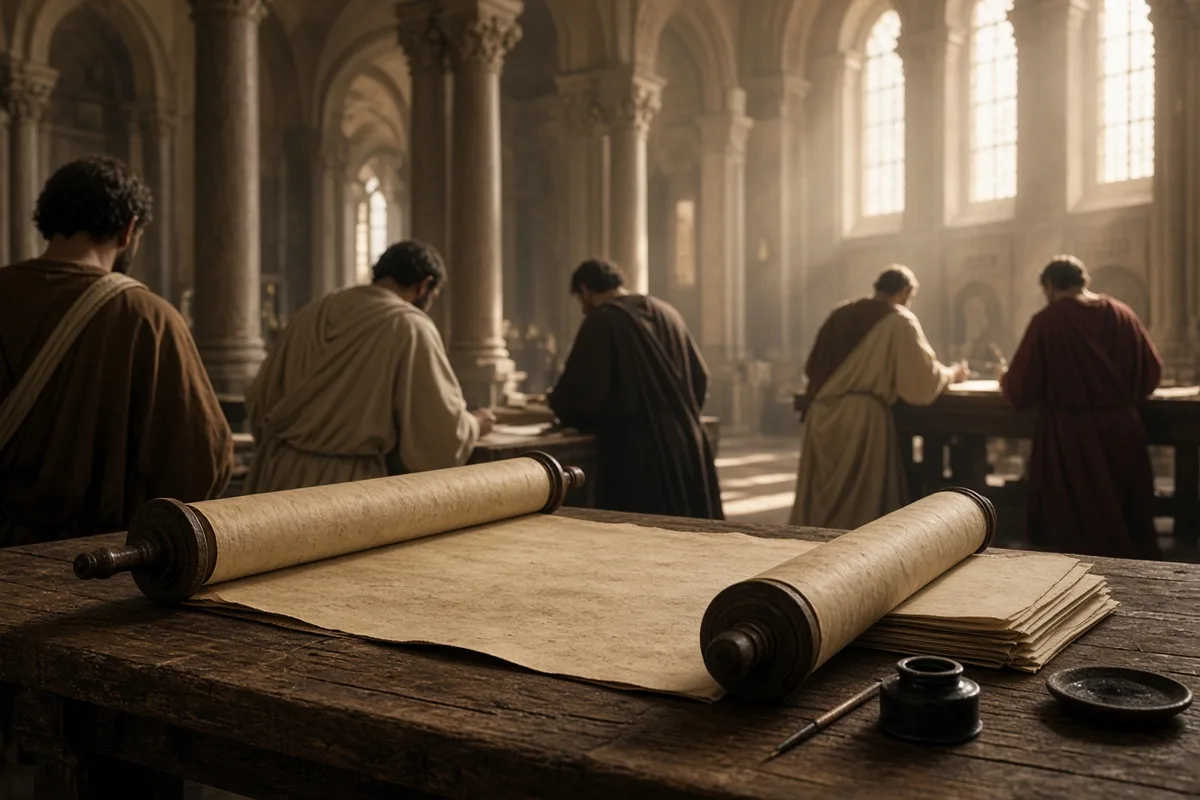
The standard itself was kept in the palace armory until the reign of Constantius when it was carried in procession on the anniversary of the battle, and the last time I saw the original cloth was in 354 when it was brought out for the visit of the Caesar Gallus. After that the monogram appeared on the coinage in every mint from Londinium to Antioch, with the mint mark P for the praetorian issues struck at Rome in quantities exceeding four million pieces during the sole reign of Constantius. The basilica on the Lateran still stands with its original nave columns of red granite brought from the temple of Jupiter at Leptis Magna, and the marble pavement records the names of the donors who contributed to its completion in the years after 313.
On the day of my own death I asked to be carried to the site of the old camp at the Castra Praetoria so that I could see the place where the standard had first been raised, and the last image that remained before my eyes was the outline of the Chi-Rho cut into the keystone of the northern gate, the letters still legible after forty years of wind and rain.