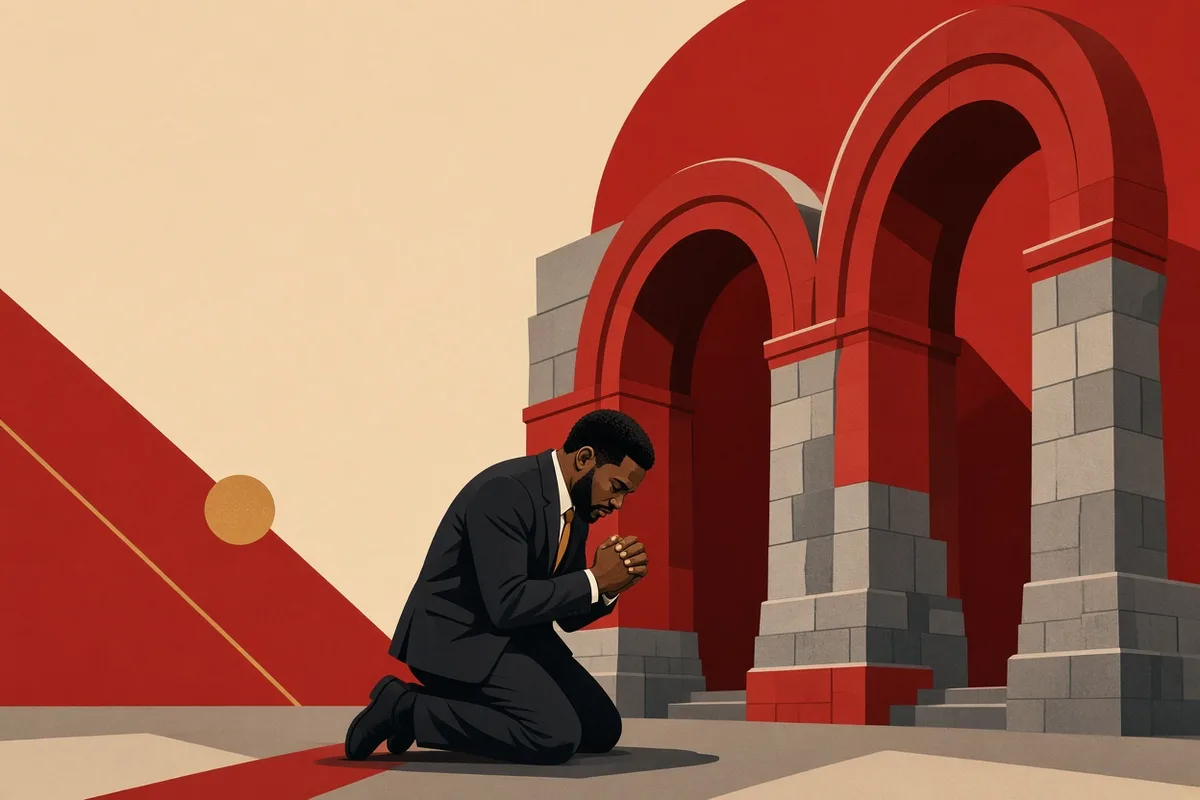



Corrie ten Boom Forgives Her Guard
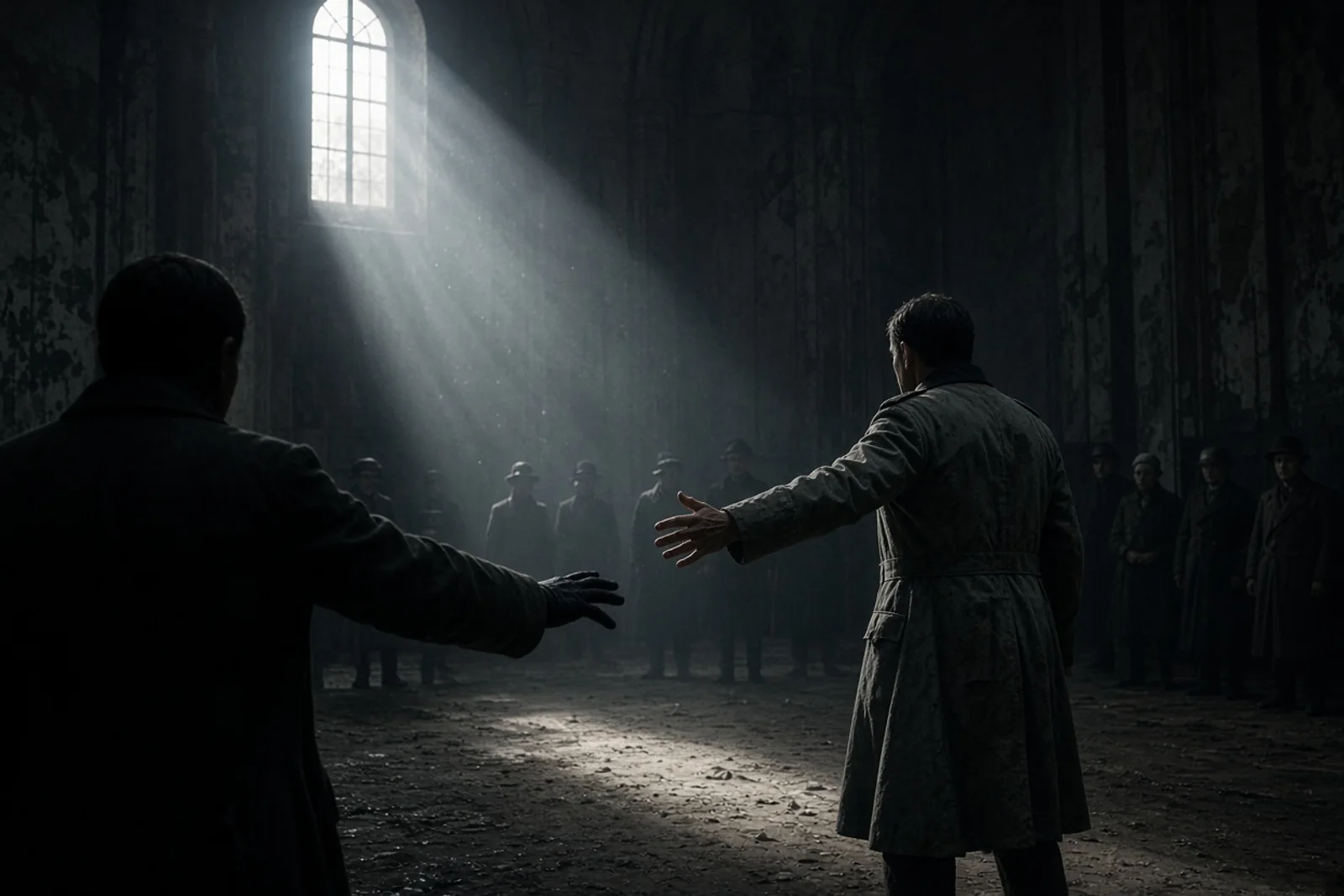
The chairs in that basement were wooden and cold under my hands, and I was stacking them against the back wall when I saw him push forward against the tide of departing coats. Something in my grip went still.
The room smelled of coal dust and wet wool, the smell of every room in Munich that winter of 1947, because half the windows above us had no glass left in them and the cold came up through the floorboards like water rising. I had been gathering hymn sheets from seats where women in patched coats had held them without singing, because there was not much left in that country to sing about. I traveled with Corrie ten Boom's small party that season, one of the ones who carried the boxes, set the chairs, translated when the German got away from her. By then I had heard her tell the story of the ocean perhaps forty times, in forty rooms just like this one.
She told it again that night. When we confess our sins, she said, God throws them into the sea, into the deepest part, where they can never be dredged up again. I watched the faces while she said it. Bombed faces, hollow around the eyes, the kind that had lost a son on the eastern front or a daughter under the incendiaries and could not decide, from week to week, which grief to carry first. They listened the way people listen when they are afraid a mercy might actually be meant for them.

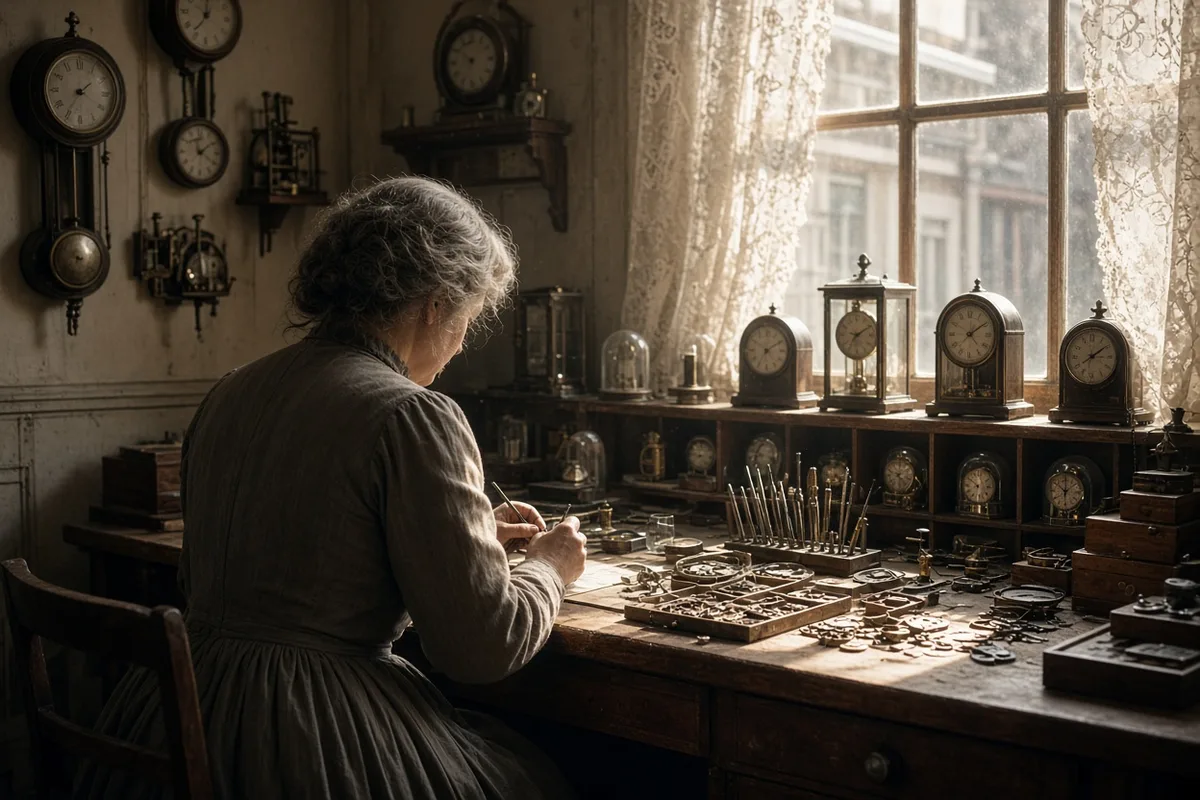
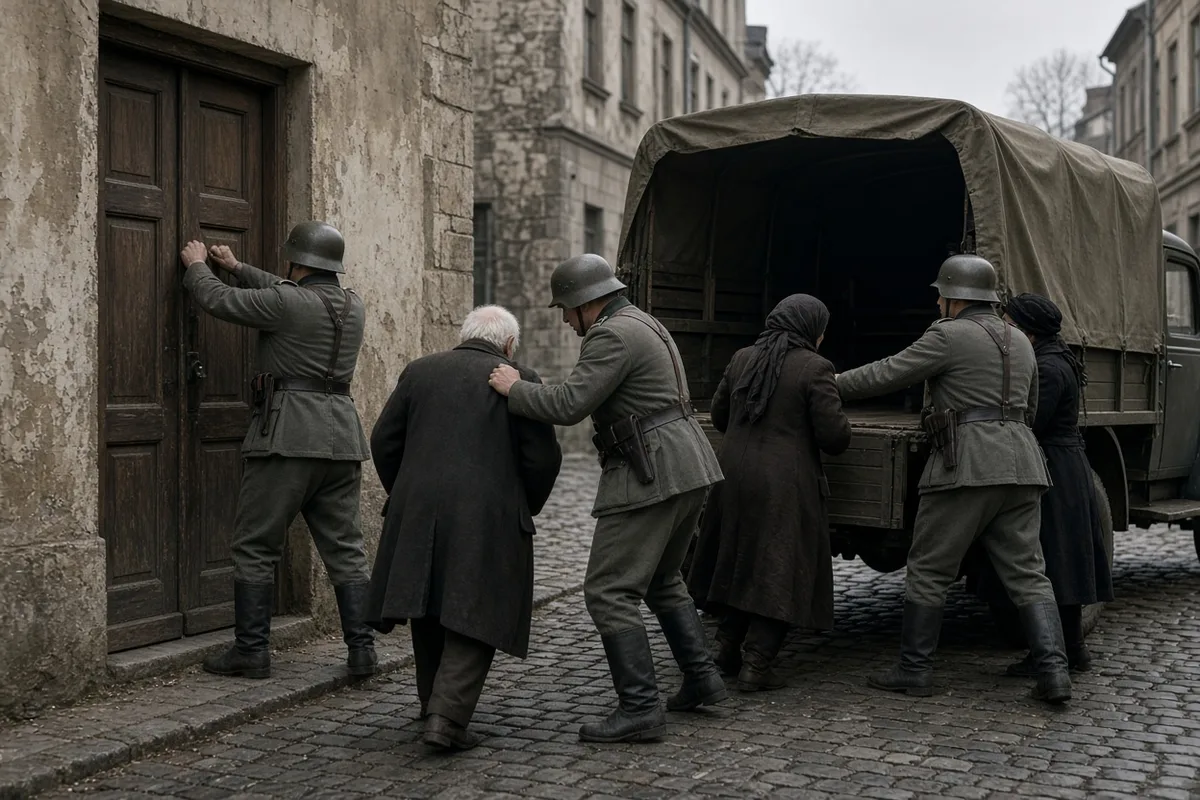
I knew some of what had brought her to that basement, because she had told me on the train from Haarlem, in pieces, the way people tell the worst things. Her father had been a watchmaker on the Barteljorisstraat, and behind her bedroom in that same house there was a space built into the wall where, for two years, Jews had hidden while the Gestapo combed the streets outside. On the twenty-eighth of February, 1944, the house was betrayed and the family was taken. Her father did not survive the arrest by many days. A brother and a nephew were lost to it too. Corrie and her sister Betsie were sent east to Ravensbrück, and it was there, in that camp built for women, that Betsie's body finally gave out on her, just before Christmas, only days before Corrie herself was released on the last day of that terrible year.
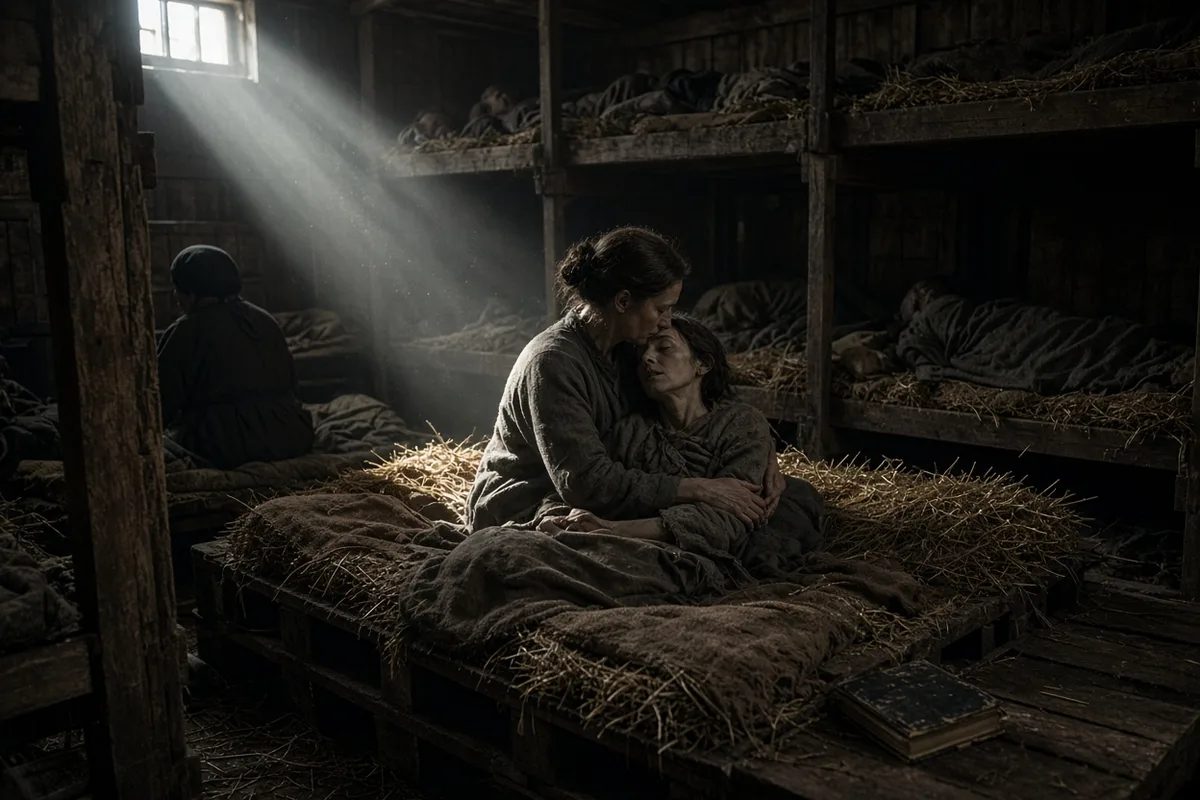
She had told me too about Jan Vogel, the Dutchman who had sold them to the Nazis, and how she had hated him with a hatred that frightened her, and how Betsie, even starving, even freezing on the wooden bunks of Barracks 28, had prayed for their guards by name. Corrie said she could not do that. Not then. She said she had knelt beside her sister once, in the light of a burning Haarlem sky the night the bombs first fell, and whispered to God that He should listen to Betsie's prayer for the German pilots overhead, because she herself could not manage one word of it.
So when the war ended and she came home, she opened a house for the broken ones, for women who had survived what she had survived, and later, harder still, a second house for the Dutch who had collaborated, the informers, the ones nobody in Haarlem would look at in the street. She had decided that forgiving was not a feeling to be waited on. It was a door people had to walk through, one at a time, or stay sick behind it forever. That was the sermon. That was why we were in Munich, in that cold room, with hymn sheets going damp in my hands.
The audience did not clap when she finished. Nobody clapped in Germany in 1947. They stood in silence and gathered their coats in silence and moved toward the door in a long grey line, and that was when I saw him working against that line, coming toward the front instead of away from it.
He was a heavy man going bald, in a gray overcoat too thin for the weather, a brown felt hat turning over and over in his hands the way a man turns a hat when he does not know what else to do with his fingers. For one breath I saw only that — an overcoat, a hat, a stranger. Then something underneath it surfaced, the way a shape rises through water you thought was empty, and I saw a blue uniform instead, and a cap with its silver skull stitched above the visor, and I understood, before Corrie did, or at the same instant she did, that we had both just stepped back into that other room.
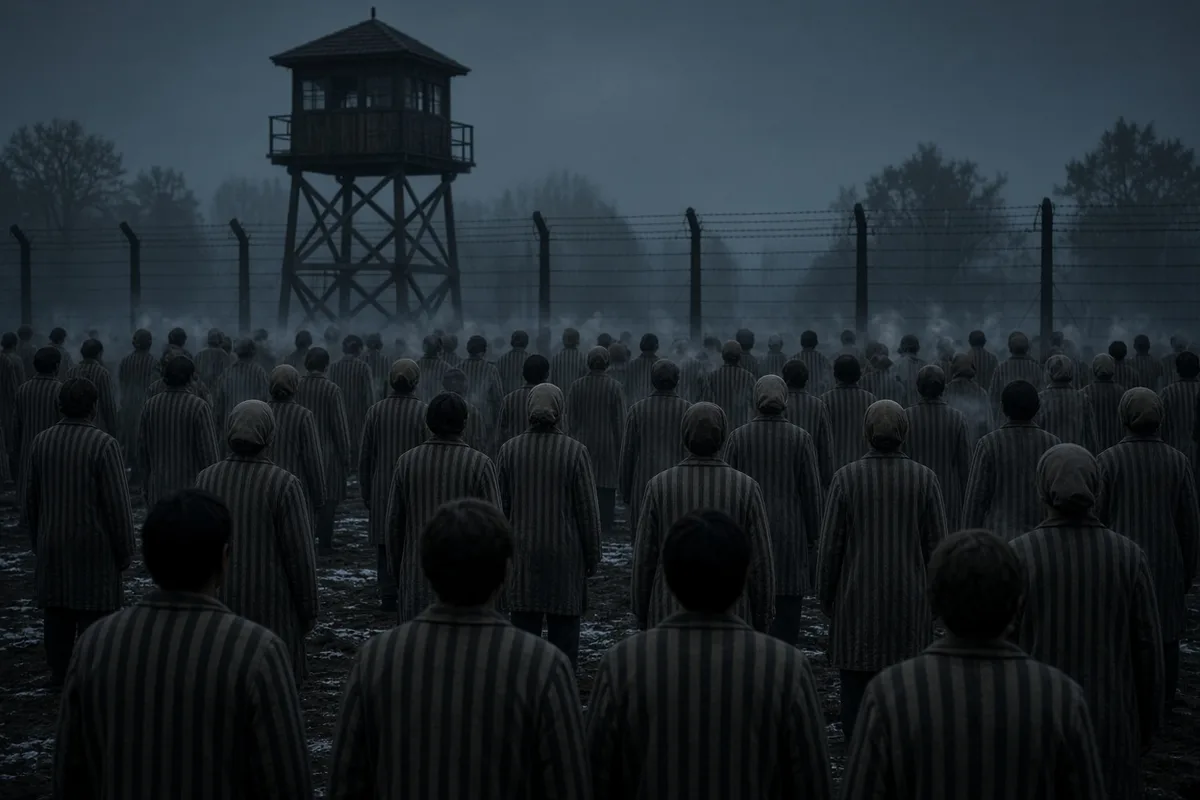
I had never been to Ravensbrück. But I had heard her describe it enough times that I could see it now myself, laid over the basement like a second exposure on a photograph — the harsh lights strung along the ceiling, the mountain of dresses and shoes heaped in the middle of the concrete floor, the line of women made to walk past the guards with nothing on their bodies at all. I saw Betsie in that line, the way Corrie always described her, ribs standing under skin gone the color of old paper. Betsie, how thin you were. I did not say it aloud. I did not need to. Corrie's face had already gone the color of the wall behind her.
He reached her and put his hand out, beaming, entirely at ease. A fine message, fräulein, he said. How good to know all our sins are at the bottom of the sea.
She did not take the hand. She reached into her pocketbook instead, fumbling for nothing in particular, a glove, a handkerchief, anything her fingers could close around that was not his palm.
You mentioned Ravensbrück in your talk, he went on, unhurried, almost pleased with himself. I was a guard there.
He said it the way a man says he once worked at a factory. No recognition crossed his face at all. Why would it? There had been thousands of women who passed in front of him with their heads shaved and their arms crossed over their chests, and to him we were faceless, we were numbers on a card, and Corrie had been one gray shape in a river of gray shapes. He did not remember her. She remembered him down to the leather crop that used to hang from his belt.
But since that time, he said, I have become a Christian. I know God has forgiven me the cruel things I did there. I wanted to hear it also from your lips. Fräulein — and the hand came out a second time, patient, waiting — will you forgive me?
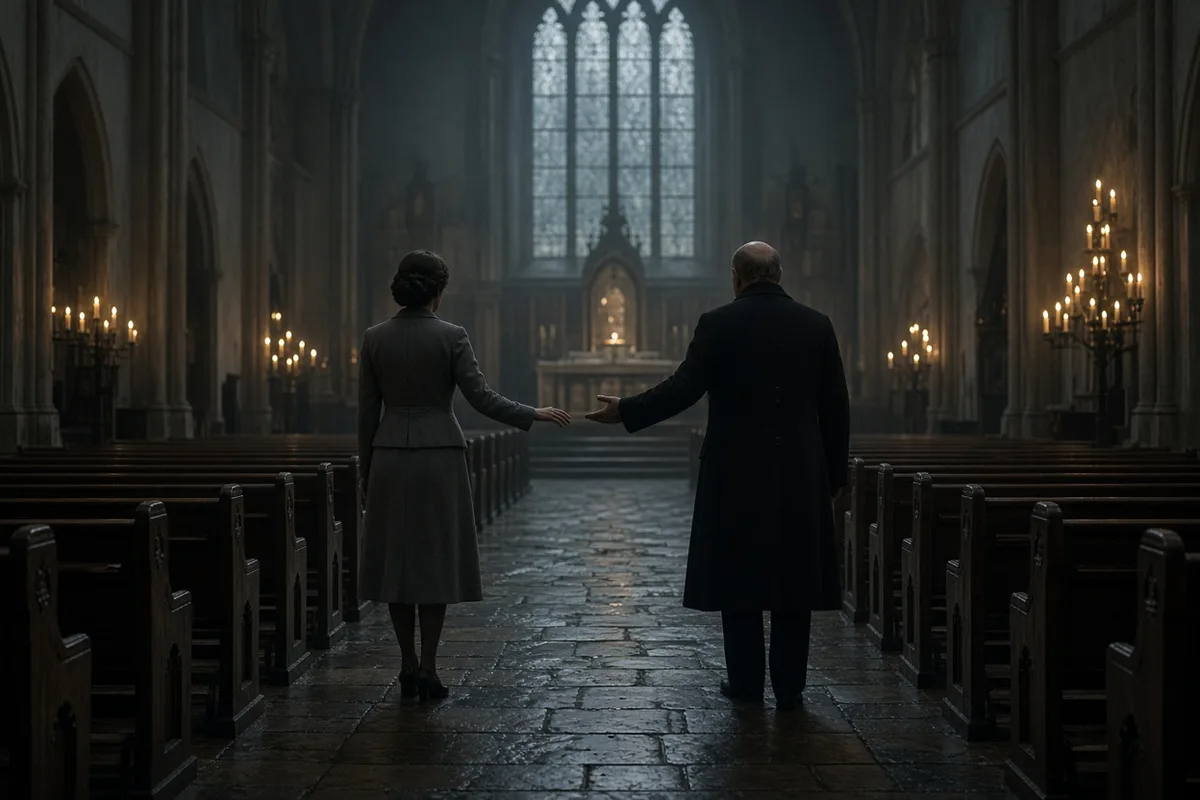
I have stood in rooms where the silence had weight, but I have never felt anything like the silence that came down over that basement then. The last of the crowd had gone. It was only the three of us and the folding chairs and the cold coming up through the floor, and a hand held out in the space between two people, and Corrie ten Boom standing with her arms locked at her sides as if they belonged to somebody else.
I could not have told you, watching her, what was happening behind her eyes, but she told me herself, later, on a night train rattling north with the windows black and the compartment unheated, and I have never forgotten how she said it. She said that standing there she thought of her own sins, the ones forgiven her every single day of her life, and she knew the arithmetic of it left her no honest way out. The very message she had just preached — that God casts our failures into the sea and does not go fishing for them again — carried a condition inside it she could not pretend to have forgotten. If you do not forgive, the Gospel said, plainly, without room to negotiate, you will not be forgiven either. She knew the verse. She had built a house on it. Two houses, in fact — one for the broken, one for the guilty — and here was a guilty man standing directly in front of her asking to walk through the same door she had spent two years holding open for other people.
But knowing a thing and doing it, she said, were separated by a distance no shorter for being invisible. Betsie had died in a place this man had helped to run. Betsie, thin as paper, praying for the flyers overhead while Corrie could not get the words out. It felt, she told me, as though his outstretched hand were asking her to hand over her sister's death and pretend the debt was settled. She stood there with the cold wrapping itself around her heart like a hand of its own, and the seconds went by the way seconds go by in dreams, stretched thin, and she did not move.
She told me she prayed then, not a long prayer, not an eloquent one. Something close to: Jesus, help me. I can lift my hand. That much is mine to do. You will have to supply the rest, because I do not have it in me.
And then — she said the word herself, woodenly, and I believe her, because I saw the stiffness in her arm from across that room — she lifted her hand and put it into his.
I watched the moment their palms closed. Nothing in the room changed that I could see. The light did not shift. The cold did not lift. But her shoulders, which had been drawn up toward her ears since the man first spoke, came down, all at once, the way a held breath finally goes out of a body.
I forgive you, brother, she said. Her voice broke on the last word and came back stronger for having broken. With all my heart.
He held her hand a moment longer than the handshake required, and then he let it go, and put his hat back on, and turned toward the door, and walked out into whatever was left of his life in that ruined city, and I never learned his name, and neither, I think, did she ever fully trust that she had it right.
We packed the last of the hymn sheets into their crate without speaking. Outside, the streets of Munich were still full of rubble that nobody had gotten around to clearing, brick dust settled into every crack of every remaining wall, and the party walked to the lodging house in the dark with our breath going up in front of us like smoke.
She kept doing this for the rest of her life — crossing back into Germany, back into rooms with folding chairs and cold floors, telling roomfuls of strangers about an ocean deep enough to swallow anything a person had ever done. She kept the house in Holland open for the ones still learning to walk out from behind their own locked doors, victims and collaborators both, because she had come to believe there was no clean way to separate the wounded from the guilty, that most people in that ruined decade were some measure of each. Twenty-four years after that night in the basement she sat down with two writers and put the story on paper so that people who had never smelled coal dust or seen a skull stitched above a visor could understand what it costs to open a hand you would rather keep closed.
I think of it still, the two hands meeting in that cold room, hers going out before her heart had caught up with it. She said afterward that the warmth came a full breath after the grip did, starting in her shoulder and running down to where their palms met, as if forgiveness were a current that had to find the wire before it could travel. I do not know what to call what passed between them. I only know I watched a woman's arm rise against every instinct she owned, and I watched her sister's memory stay exactly as sacred as it had been the moment before, and somehow neither one canceled the other out.