



CRISPR put cheap precise control of heredity within reach
In 60 seconds
- CRISPR began as a bacterial immune system pieced together from yogurt-culture and genomics work, not as a tool anyone designed.
- Doudna and Charpentier’s 2012 paper showed Cas9 plus a synthetic guide RNA could cut any chosen DNA sequence in a test tube.
- Feng Zhang’s near-simultaneous human-cell results triggered a bitter multi-jurisdiction patent war and rival biotech companies with billions at stake.
- He Jiankui’s 2018 birth of edited twins proved voluntary moratoriums cannot stop a determined actor once reagents are cheap.
- The same Cas machinery became COVID diagnostics, and the 2020 Nobel went only to Doudna and Charpentier, simplifying a contested multi-lab story.
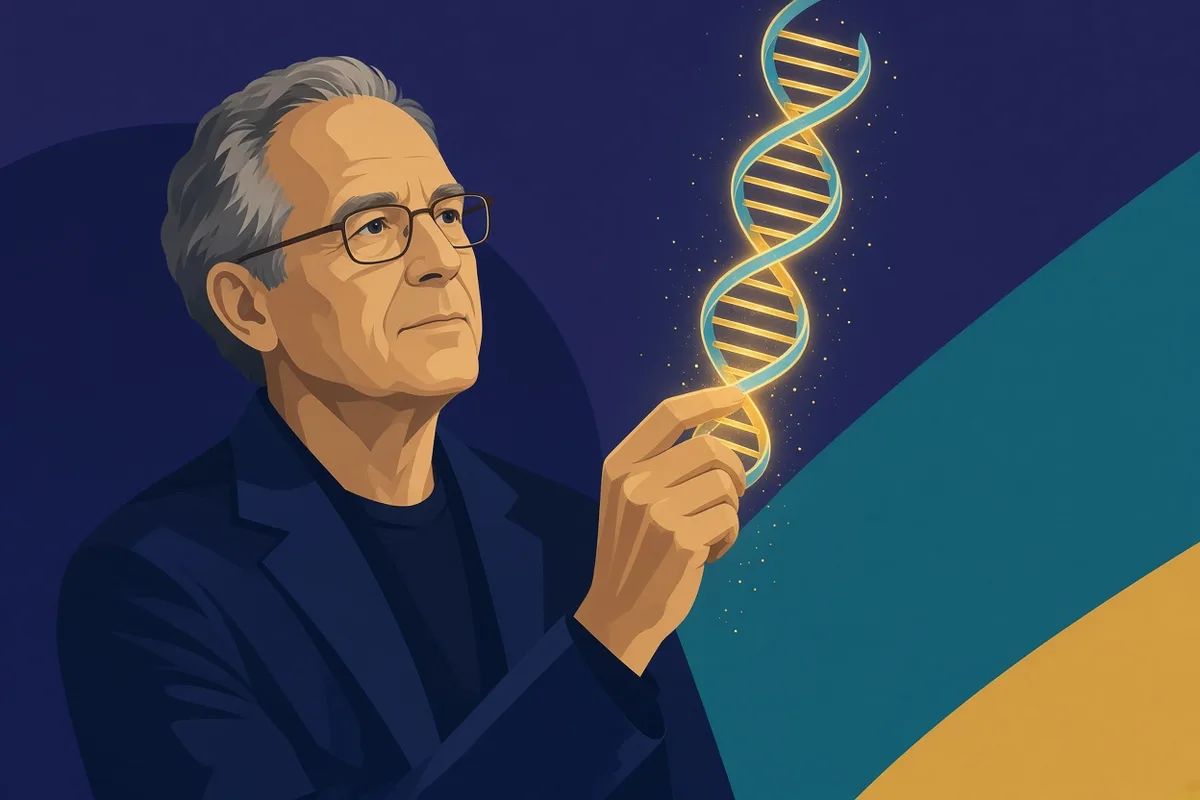
- Isaacson’s lasting claim is that humanity now holds cheap control over heredity and must decide, in real time, who steers it.
The big idea
Isaacson argues that CRISPR has opened a life-sciences revolution as consequential as the digital one by putting precise editing of human heredity within reach. He contends that patents, regulation, and profit matter as much as lab technique, because the same scissors that can cure disease can also rewrite the germline.
The book in brief
Isaacson opens with Jennifer Doudna growing up in Hilo, Hawaii, pulled into biochemistry by a paperback of Watson’s DNA book her father left on her bed. She chose RNA over fashionable DNA because its varied shapes fascinated her, then built expertise on RNA catalysis and ribozymes with Jack Szostak and at Yale. Isaacson treats that aesthetic curiosity, plus her competitive drive and fear of being scooped, as the real engine of later breakthroughs.
He reconstructs CRISPR itself as something found, not built. Francisco Mojica noticed odd repeated bacterial sequences in the late 1980s; Danisco food scientists linked similar repeats to viral resistance in yogurt cultures; scattered labs slowly realized bacteria stored viral DNA snippets as a primitive immune system. Doudna entered around 2006 when Berkeley colleague Jillian Banfield sought her RNA skills to explain the mechanism.
The hinge is the 2011 Puerto Rico meeting with Emmanuelle Charpentier, who had identified tracrRNA working with CRISPR RNA to guide the Cas9 protein. Their Skype collaboration produced the 2012 Science paper showing a single synthetic guide RNA could program Cas9 to cut any DNA in a test tube. Within months Feng Zhang at the Broad Institute demonstrated editing inside human and mouse cells, filed patents on an expedited track, and ignited a years-long legal battle. Universities spun out Caribou, Intellia, CRISPR Therapeutics, and Editas; academic rivals became business competitors.
Isaacson then maps the ethical fault line. CRISPR revives eugenics debates because editing is precise, cheap, and potentially inheritable. He separates somatic fixes for sickle cell or beta-thalassemia already entering trials from germline changes that pass to descendants, covers 2015 Napa and Washington summits that called for a clinical germline moratorium, and shows Doudna’s own dread of misuse. Those norms collapsed when He Jiankui announced in 2018 that he had edited CCR5 in twin embryos and brought Lulu and Nana to term.
COVID-19 proved the toolkit’s wider reach when Doudna’s lab and firms like Mammoth Biosciences repurposed Cas enzymes to detect viral RNA rather than cut DNA. The 2020 Nobel in Chemistry went solely to Doudna and Charpentier—the first two women to share a science Nobel without a male co-recipient—while leaving out Zhang and Virginijus Siksnys. Isaacson closes by tying Doudna’s hard-won institutional power to the unresolved question the whole arc raises: who decides how this tool is used.
Context
Walter Isaacson published the book in 2021 after extensive interviews with Doudna, casting the CRISPR story through her career just as the field absorbed a Nobel, the He Jiankui scandal, and a pandemic diagnostics scramble. The account freezes a moment before later therapy approvals and fuller reconstructions of He’s oversight failures, so its clinical and ethics chapters already read as a dated snapshot.
The key ideas

1
Curiosity before cure plans
Isaacson shows scientific revolutions often start with fascination for a molecule’s shape, not an institutional plan to treat disease.
Isaacson begins with Doudna as a girl in Hilo whose father left Watson’s book on her bed, pulling her toward biochemistry when few women were steered that way. At Pomona and Harvard she chose RNA over DNA because its varied shapes seemed biologically richer, a taste that later mattered because CRISPR depends on RNA as a guide, not merely a messenger.
Graduate work with Jack Szostak on RNA catalysis and postdoctoral ribozyme research gave her the structural skills the bacterial puzzle would eventually need. Isaacson treats her habit of chasing harder, riskier problems—including crystal structures at Yale—as a pattern, not a roadmap toward gene editing.
He also folds personality into the method: competitive, driven, anxious about being scooped, she kept moving toward structural puzzles nobody yet linked to medicine. The chapter’s claim is that breakthroughs often ride aesthetic obsession long before anyone names a therapy.
In practice: A chance paperback of Watson’s DNA book on a childhood bed, not a funded disease program, set Doudna toward the RNA expertise CRISPR later required.
2
Found in yogurt and salt lakes
CRISPR was a natural bacterial immune system recognized only when unglamorous applied work met pure genomics across labs.
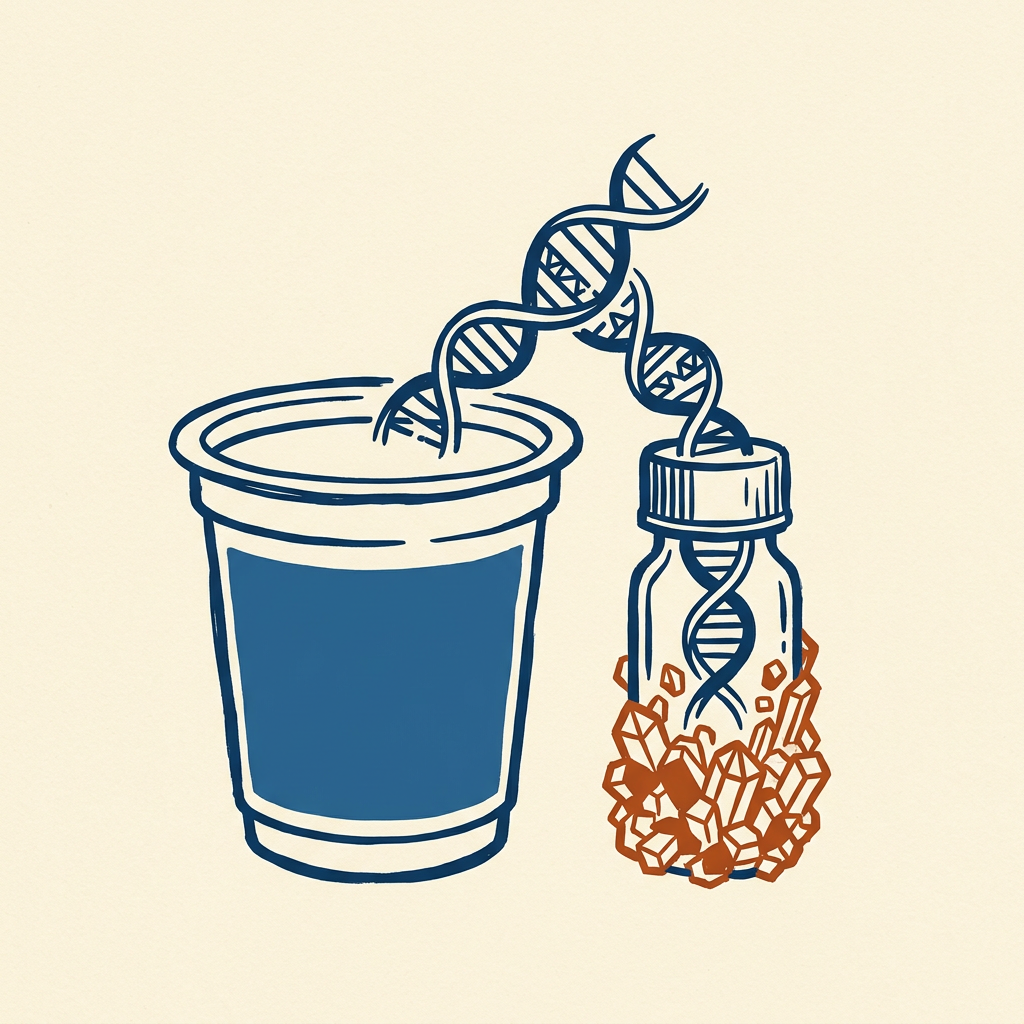
Isaacson stresses that the repeated DNA sequences Mojica noticed in the late 1980s sat in genomes already sequenced many times; nobody knew they stored viral mugshots. Food-industry researchers at Danisco, trying to keep yogurt cultures from viral collapse, helped reveal that the repeats let bacteria recognize and destroy prior invaders.
The insight joined dairy microbiology to salt-loving archaea and basic genomics. Doudna joined around 2006 only after Banfield asked for RNA help; the system was billions of years old and hiding in plain sight.
Isaacson uses this to undercut lone-genius myths. Basic curiosity about spoiled yogurt and extreme microbes, plus talk across fields, produced a world-changing tool decades later—provided someone was paying attention.
In practice: Danisco scientists protecting yogurt bacteria from viruses supplied a key piece of what became gene editing’s core mechanism.
3
Two labs, one scissors
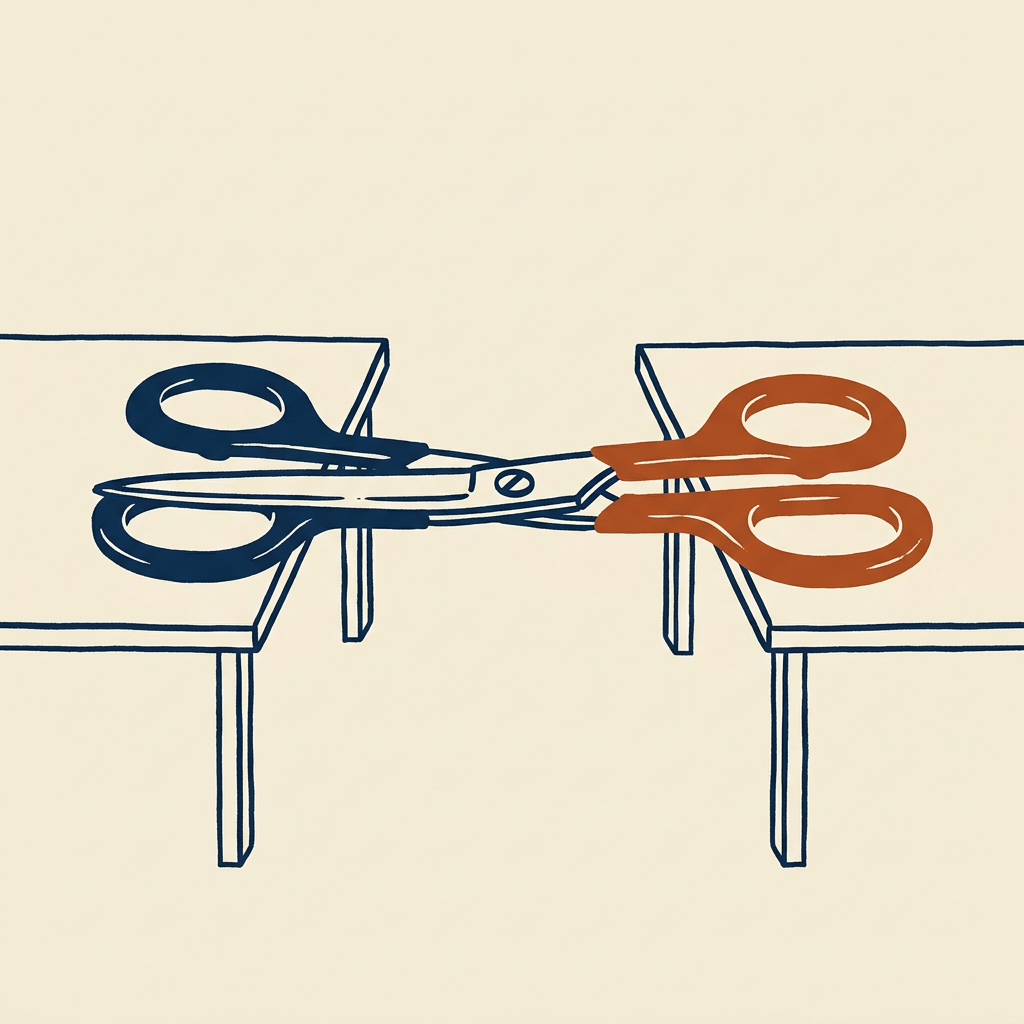
The Doudna–Charpentier partnership turned a bacterial curiosity into programmable molecular scissors through complementary skills, not solo genius.
Before 2012
CRISPR-Cas9 as a bacterial virus defense studied in pieces
After the paper
A programmable tool that could cut any chosen DNA sequence in a test tube
At a 2011 Puerto Rico conference Doudna met Charpentier, who had been mapping Streptococcus pyogenes and the Cas9 protein plus a second RNA, tracrRNA, that helped guide the cut. Doudna’s structural biology meshed with Charpentier’s microbiology; much of the work ran over Skype between Berkeley and Sweden.
Their 2012 Science paper showed Cas9 could be aimed with one synthetic guide RNA at any chosen DNA sequence in a test tube. Isaacson calls that the conceptual leap: a general-purpose tool, not merely a bacterial defense.
He flags two shadows. The demo was still in a tube, not living cells—a distinction that later fed the patent fight. And the partnership itself frayed under competing credit claims, previewing courtroom and Nobel disputes.
In practice: The 2012 paper’s single synthetic guide RNA reprogramming Cas9 marked the turn from natural curiosity to aimable gene editor.
4
Speed to patent shapes glory
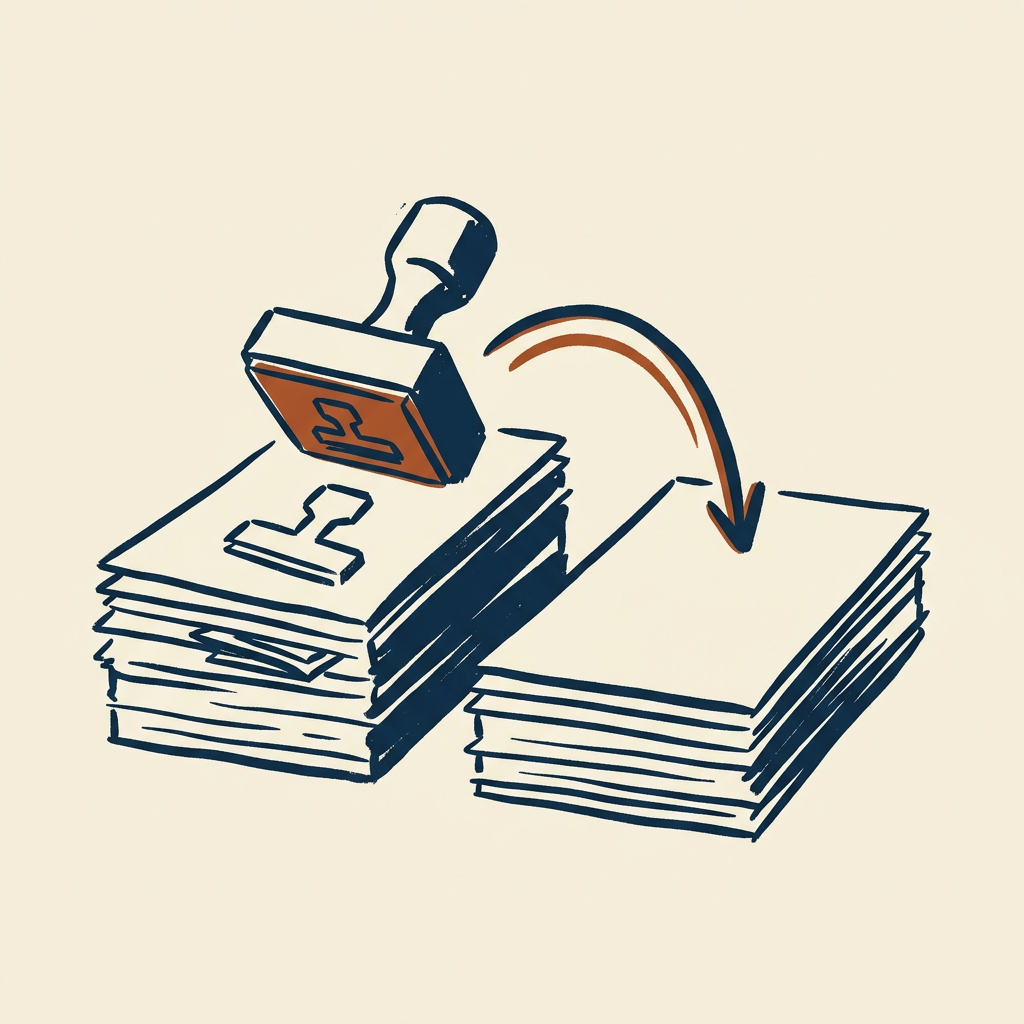
Zhang’s human-cell results and expedited filings show commercial and institutional incentives now write scientific credit as much as lab notebooks do.
- 2012Doudna–Charpentier Science paper: programmable cutting in a test tube
- Months laterZhang shows editing in human and mouse cells; Broad files fast
- Following yearsU.S. and European patent boards reach split outcomes
- 2020Nobel recognizes only Doudna and Charpentier
Months after the 2012 paper, Zhang at the Broad published CRISPR-Cas9 editing in human and mouse cells—the step medicine needed—and used faster patent review to secure rights ahead of Berkeley’s slower application. Multi-year fights before the U.S. Patent Trial and Appeal Board and in Europe split differently by jurisdiction.
Isaacson refuses a neat priority verdict. The test-tube demo was necessary; making cuts inside a nucleus wrapped in chromatin was a nontrivial further problem. Universities stood to earn huge licensing revenue; Caribou, Intellia, CRISPR Therapeutics, and Editas turned colleagues into competitors.
He treats the scramble as ordinary modern biotech, where speed to patent and speed to publish fuse with speed to therapy. The same dispute later framed the Nobel’s choice to sideline Zhang.
In practice: Zhang’s team paid for expedited patent review and locked core rights while Berkeley’s application still moved slowly.
5
Somatic cure, germline line
CRISPR revives eugenics fears in sharper form because the same cheap precise tool can fix a patient or alter every descendant.
Somatic editing
Fixes the patient’s cells only; sickle cell and beta-thalassemia trials
Germline editing
Changes embryos and every generation after; opens trait selection and inequality fears
Isaacson links today’s debates to early-twentieth-century U.S. sterilization programs and the racial policies they later influenced, then carefully splits legitimate therapy from trait selection. Somatic edits affect only the patient; germline edits enter the inheritance line—height, intelligence, eye color, or disease risk alike.
He airs both poles: some argue refusing to erase serious inherited disease when the tool exists is itself a moral failure; others warn any germline use opens a market where wealth buys genetic advantage. Disability-rights critics reject the premise that wiping out deafness or Down syndrome is simply progress.
By the late 2010s, CRISPR Therapeutics and Vertex already had trials aimed at beta-thalassemia and sickle cell, so the therapeutic case was no longer hypothetical. That fault line becomes the book’s central ethical stake.
In practice: Trials for sickle cell and beta-thalassemia showed somatic medicine advancing while germline use remained the bright red line.
6
Moratoriums without enforcement
Asilomar-style self-policing proved only as strong as the least scrupulous actor once He Jiankui ignored the consensus and edited human embryos.
- Summit norm2015 calls for moratorium on clinical human germline editing
- Voluntary complianceDepends on labs, countries, and journals all holding the line
- Single breachHe implants edited embryos; twins born; norms exposed as paper-thin
In 2015 Doudna and peers ran Napa and Washington summits modeled on the 1975 Asilomar recombinant-DNA meeting, calling for a moratorium on clinical human germline editing while basic research continued. Isaacson shows Doudna uneasy: she had helped unleash a tool already slipping into cheap DIY kits.
Self-regulation needs every lab and country to comply. CRISPR reagents are inexpensive and easy to obtain, unlike nuclear materials, so norms rest on journals refusing rogue papers and scientists policing their own.
He Jiankui, U.S.-trained, disabled CCR5 in embryos to try for HIV resistance, implanted them, and in November 2018 announced twins Lulu and Nana in Hong Kong. Need was weak—safer ways already blocked father-to-child HIV—edits were mosaic, and CCR5 loss may raise other infection risks. China sentenced him in 2019; the technique stayed available. Isaacson reads the episode as proof that norms without teeth fail.
In practice: He’s CCR5-edited twins, announced to expected praise and met with global condemnation, ended the illusion that summit statements could bind every lab.
7
Scissors that also sense
COVID showed the same Cas machinery could become cheap diagnostics, vindicating basic research once dismissed as impractical.
Editing mode
Cas9 guided to cut a chosen DNA sequence
Diagnostic mode
Cas enzymes retasked to detect specific viral RNA for rapid tests
When the pandemic hit in early 2020, Doudna turned her Berkeley lab and the Innovative Genomics Institute toward community testing and CRISPR-based viral detection. Cas enzymes engineered to recognize specific viral RNA sequences, rather than cut DNA, promised rapid tests without full PCR infrastructure.
Mammoth Biosciences, which she co-founded, and Sherlock Biosciences, tied to Zhang’s circle, chased commercial versions. Isaacson’s larger point is that the payoff was never only gene editing narrowly defined.
He also links CRISPR to the parallel maturation of mRNA vaccines, arguing the 2020s opened with a whole molecular-biology toolkit reaching the clinic together.
In practice: Mammoth and Sherlock repurposed Cas detection for COVID tests that aimed to work with less lab heavy lifting than PCR.
8
Prizes tidy messy credit
The 2020 Chemistry Nobel to Doudna and Charpentier alone shows prize rules force a clean story that many in the field still contest.
- DDoudna & Charpentier2020 Chemistry Nobel for CRISPR-Cas9 as a genome-editing tool
- FFeng ZhangHuman-cell editing and Broad patents; left out of the prize
- VVirginijus SiksnysClosely related findings submitted around the same time; brief treatment
October 2020 made Doudna and Charpentier the first two women to share a science Nobel without a male co-recipient, vindicating their 2012 conceptual leap. Isaacson is candid that the choice omitted contributors many peers call essential—especially Zhang’s human-cell step and Siksnys in Lithuania, who submitted related findings around the same time.
Nobel caps of three winners force omissions, yet the pick still judges which origin story counts as foundational. Patent rights stayed separately contested in the U.S. and Europe; the medal settled neither history nor money.
Isaacson’s broader claim is that scientific honor and legal ownership answer to different bodies and can diverge for years after the field’s highest prize is handed out.
In practice: Siksnys’s near-simultaneous work and Zhang’s cell-culture advance both sat outside the two-person Nobel narrative.
9
Breakthrough is not equality
Doudna’s rise shows women reached CRISPR’s top ranks by breaking barriers at personal cost, not because the barriers had vanished.
Isaacson closes the biographical thread by recalling how few senior structural-biology labs women led when Doudna began, and how a family friend once told her girls did not become scientists. Credit fights with male collaborators, including public clashes over Charpentier’s account and Broad scientists, sometimes played out along gendered lines in how hard each side pressed claims.
He refuses a simple triumph tale. He presents her as ambitious, occasionally difficult, anxious about scoops, and shaped by decades of proving she belonged in rooms where she was often the only woman. Founding companies and directing a major institute meant learning to wield institutional power she first found uncomfortable.
The same drive that sent her after RNA structure and a transatlantic collaborator also pushed her to testify, found firms, and accept public responsibility for a technology she could not fully control. Progress, in Isaacson’s telling, is real without being proof the underlying problem is solved.
In practice: Being talked out of science as a girl, then later navigating gendered credit disputes, frames her eventual institutional power as hard-won rather than inevitable.
Key terms
- CRISPR Clustered Regularly Interspaced Short Palindromic Repeats—bacterial DNA repeats that store viral snippets as a primitive immune memory
- Cas9 A CRISPR-associated protein that cuts DNA at a site chosen by guide RNA; the core ‘scissors’
- Guide RNA The RNA molecule, natural or synthetic, that steers Cas9 to a specific DNA sequence
- tracrRNA The second small RNA Charpentier’s team identified that helps CRISPR RNA guide Cas9
- Somatic editing Gene changes that affect only the treated person and are not passed to children
- Germline editing Gene changes in embryos or reproductive cells that can be inherited by future generations
- Asilomar model Scientists trying to self-regulate a risky biotech through summits and voluntary moratoriums, named for the 1975 recombinant-DNA meeting
- Patent race The fight over who owns core CRISPR rights after near-simultaneous discoveries and faster filings by some institutions
What to do
- Read one primary paper or filing on a science fight you know only from headlines and note what the coverage dropped.
- If you work in biotech, medicine, insurance, or law, check whether approved CRISPR therapies such as Casgevy already touch your field and what policy your organization holds.
- If you run a lab or research team, write an explicit process now for credit disputes and outside-collaboration disclosure before a project succeeds.
- Talk with your kids about the difference between treating disease and selecting traits, since that line will be a live policy fight in their lifetime.
Questions to think with
- Once reagents are cheap, can any voluntary scientific moratorium hold, or is binding law the only real brake on germline editing?
- How should credit and patents be shared when a discovery is genuinely multi-lab and near-simultaneous?
- Where exactly should society draw the line between curing sickle cell and editing height or intelligence?
- Does a Doudna-centered narrative help the public grasp CRISPR, or does it hide how collective and contested the work was?
- If the same tool cures disease and enables inequality, who gets to set the rules—scientists, states, patients, or markets?
The other side
Isaacson’s narrative momentum around Doudna pulls credit toward her even when his reporting shows a tangled multi-lab, multi-country story; Zhang reads as a rival in her plot, Siksnys gets little room, and deeper molecular detail is thin. He surveys ethics without committing on long-term germline acceptability, and a 2021 freeze-frame misses later therapy approvals and fuller He Jiankui reconstructions.
Who it's for
Readers who want the human, competitive, and ethical story of how a major discovery actually happens—credit fights, patents, and all—especially anyone wrestling with gene-editing ethics from disease cures to embryo alteration. Pair it with technical histories or Broad-side accounts if you need a less Doudna-centered view.