



McRaney book argues curiosity changes identity-tied beliefs better than facts

In 60 seconds
- A faked 2014 canvassing study was rebuilt honestly and still found durable attitude shifts from one short, structured conversation.
- The backfire effect is narrow: most people update slightly toward accuracy when corrected, unless the fix threatens identity without acknowledgment.
- Contested beliefs often work as group badges, so smarter people can reason worse on charged topics while defending belonging.
- Asking someone to explain a policy step by step drops confidence and extremity without any counter-argument.
- Deep canvassing trades personal stories of unfair judgment for months-long shifts; street epistemology loosens certainty by rating confidence and methods.
- Exits from conspiracies and cults need accumulated doubt, a trusted relationship, and a path that does not mean total social loss—genuine curiosity is the shared solvent.
The big idea
McRaney argues that facts rarely move identity-tied beliefs because people correctly treat those beliefs as membership signals, not just claims about the world. Lasting change comes from non-adversarial methods—story exchange, confidence rating, and patient relationship—that let someone revise a view without feeling defeated or exiled.
The book in brief
The book starts from a research scandal: a celebrated finding that brief canvassing could flip marriage attitudes rested on fabricated data. Rather than drop the question, skeptical researchers ran an honest field test and found a real, if messier, effect when conversations used a specific emotional structure instead of facts alone.
From there the argument diagnoses why ordinary correction so often stalls. Popular claims about universal backfire shrink under larger replications; facts do move people weakly, except when a belief functions as a badge of belonging. At that point an attack on the claim registers as an attack on the person and their group.
McRaney then shows that overconfidence itself is brittle. People rate their grasp of policies far above their ability to explain mechanisms; walking through those mechanisms out loud drops certainty without a fight. That insight feeds the applied methods that occupy the middle of the book.
Deep canvassing replaces debate with reciprocal personal narrative. Street epistemology never states a counter-position; it asks believers to score their own confidence and inspect the method behind it. Exit paths from conspiracies and high-control groups add the missing social piece: doubts accumulate inside a trusted relationship that makes leaving feel possible rather than humiliating.
The closing claim unifies every technique. Questions asked to understand work; questions asked to trap trigger the same identity defense as argument. There is no fast rhetorical trick—only patience, humility, and willingness to be changed by the exchange.
Context
David McRaney wrote the book amid rising alarm over misinformation and polarization. He draws on psychology research, cult-exit counseling, and grassroots political canvassing to offer evidence-based techniques rooted in curiosity and listening rather than louder facts or shame.
The key ideas
1
The scandal that held
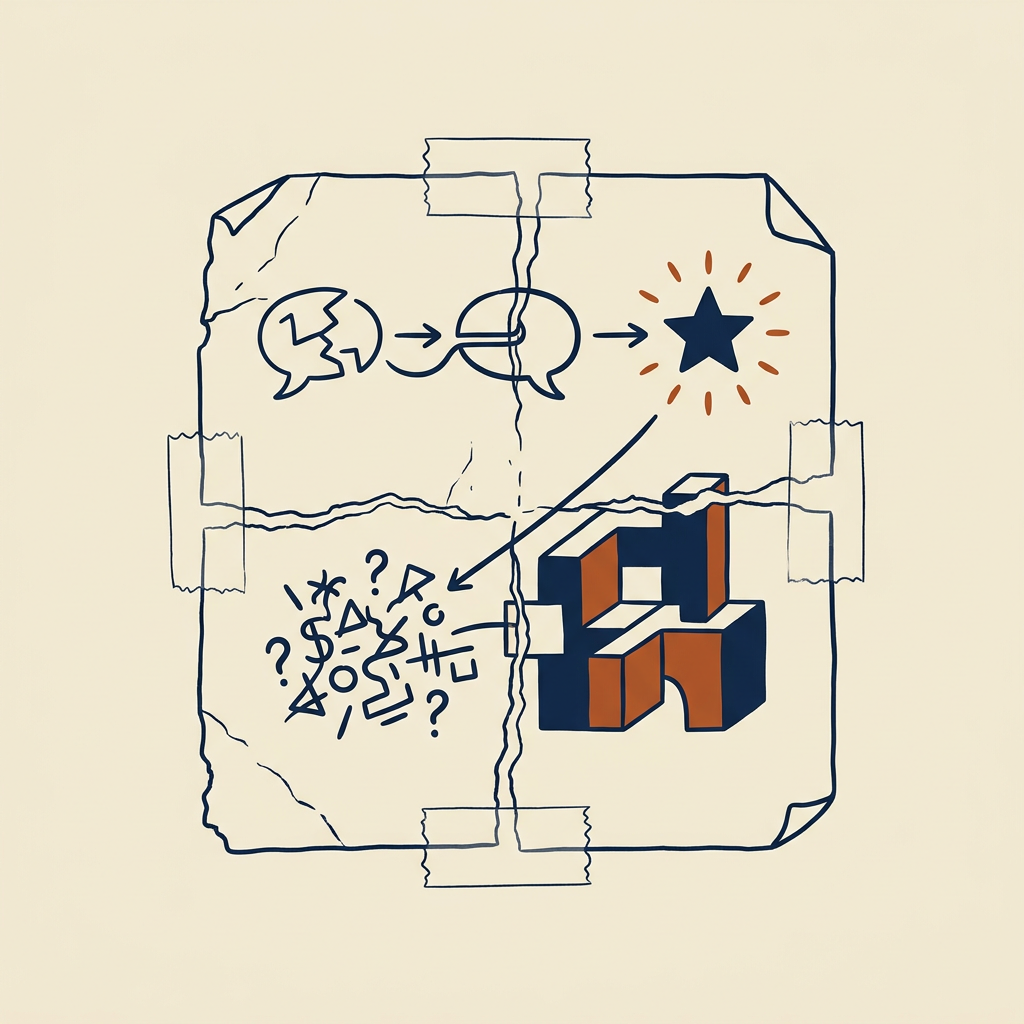
A fabricated 2014 canvassing study was honestly rebuilt and still produced measurable, durable attitude change from one structured conversation.
- 2014LaCour’s Science paper claims a twenty-minute canvassing talk flips marriage views
- RetractionBroockman and Kalla expose fabricated survey data
- Honest rebuildReal Miami canvassers shift transgender-rights attitudes in ten minutes
McRaney opens with graduate student Michael LaCour’s claim, published in Science, that a single twenty-minute talk with a gay canvasser could shift support for same-sex marriage. Two researchers, David Broockman and Joshua Kalla, tried to extend the work and found the survey data had been fabricated; the paper was retracted.
Instead of abandoning the question, they ran their own honest experiment with real canvassers in Miami. Attitudes toward transgender rights shifted after a single ten-minute conversation when canvassers used a precise sequence: ask the person to recall a time they were judged unfairly, then link that memory to the group under discussion.
The episode establishes the book’s method. McRaney follows the replication trail rather than repeating viral headlines. Dramatic clean results in social science deserve suspicion until independently checked; the truth about belief change is procedural and messier than any single study suggested.
Facts alone did not move the Miami voters. A structured emotional exercise did. That distinction becomes the thread the rest of the book pulls.
In practice: Broockman and Kalla’s honest Miami canvass produced lasting transgender-rights shifts after ten-minute conversations built around a personal memory of unfair judgment.

2
Corrections rarely backfire
Backfire is real only under narrow identity-threat conditions; most people, most of the time, update at least slightly toward accuracy when given clear corrections.
Popular myth
Any correction makes people cling harder to the false belief
What larger tests found
Backfire is rare; most people update slightly unless identity is threatened without acknowledgment
McRaney revisits the 2010 Nyhan and Reifler study that made the backfire effect famous: conservative subjects shown corrections about Iraq’s weapons of mass destruction grew more convinced the weapons existed. The result spread as proof that facts are useless.
Later, larger replications—including work by Thomas Wood and Ethan Porter across thousands of subjects and dozens of political claims—found backfire is the exception, not the rule. Most people do move a little toward accuracy.
What the original study likely captured was narrower: corrections that threaten identity, delivered without any acknowledgment of the person’s underlying concern, can trigger defensive reasoning. Facts work weakly and unreliably when the belief functions as a badge of group membership rather than a claim about the world.
The obstacle is not that human reasoning is broken. People are often answering a different question—will accepting this cost me standing with people I trust?—and answering it correctly.
In practice: Wood and Porter’s large replications across dozens of claims showed ordinary corrections usually produce small updates toward accuracy rather than entrenched denial.

3
Beliefs as membership badges
Many contested beliefs are held to signal group membership, so changing them threatens relationships and belonging, not just opinions.
McRaney argues that a large share of fights over vaccines, climate, or political figures are affiliative rather than epistemic. He uses Dan Kahan’s identity-protective cognition framework to explain why more numerate people can be worse at reasoning about charged facts: they have more tools to defend a group-consistent conclusion.
Once a belief fuses with self, family, and community, an attack on the claim registers physiologically like an attack on the person. Research on social rejection activating the same brain regions as physical pain helps explain why people will sacrifice accuracy to preserve belonging.
Persuasion is therefore a social problem before it is an informational one. You cannot out-argue someone’s need for community. Effective approaches must offer a path to revise the belief without forcing an exit from the group, or must face the emotional cost of that exit directly.
Contempt for the belief is correctly read as a threat to the believer’s whole social world, which guarantees resistance. Protecting social bonds is, in this framing, a reasonable priority rather than simple irrationality.
In practice: Identity-protective cognition predicts that higher numeracy can worsen accuracy on politically charged facts because cognitive skill is recruited to defend the group line.

4
Explain it step by step
Asking someone to detail how a policy or mechanism actually works destabilizes overconfident belief more than presenting counter-evidence.
- 1Rate understandingPerson scores how well they grasp the policy or object
- 2Explain the mechanismThey walk through cause and effect in concrete steps
- 3Watch confidence fallThe gap between felt and actual knowledge does the persuasive work
Cognitive scientists identified the illusion of explanatory depth: people rate their understanding of everyday objects such as toilets or bicycles far higher than their ability to explain the mechanism. When forced to explain in detail, confidence drops sharply.
Steven Sloman and Philip Fernbach applied the same test to politics. Subjects rated their grasp of a carbon tax or flat tax, then had to walk through how the policy would actually work, step by step. Confidence and often the extremity of the position fell—without any counter-argument.
The technique needs no confrontation. Instead of telling someone they are wrong, you invite them to hear the limits of their own knowledge in their own words. Defensiveness stays low because no group is insulted and no one is attacked.
McRaney treats this as a building block for the later field methods. Both deep canvassing and street epistemology lean on self-generated reflection rather than external argument.
In practice: Subjects who tried to explain a carbon tax or flat tax mechanism by mechanism showed sharp drops in confidence and position extremity with no rebuttal offered.

5
Trade stories, not facts
Lasting attitude change happens when a conversation exchanges personal narrative and vulnerability, letting people update without feeling defeated.
- 1Open questionAsk nonjudgmentally what the person thinks and why
- 2Listen onlyNo interruption, no correction, no rebuttal
- 3Recall unfairnessInvite a personal memory of being judged or misunderstood
- 4Link and shareConnect that memory to the issue; offer a vulnerable story of your own
McRaney embeds with the Leadership LAB in Los Angeles, run by Dave Fleischer, which trains canvassers in deep canvassing. The method was refined after the LaCour scandal and validated by the honest Broockman and Kalla replication.
Concrete steps: ask an open, nonjudgmental question about the person’s view; listen without interrupting or correcting; invite a personal memory tied to the underlying value—such as a time they felt discriminated against—then ask them to connect that memory to the group or issue; share a vulnerable story of your own. Canvassers do not argue or cite discrimination statistics.
Field trials produced measurable, durable shifts in support for transgender rights and immigration attitudes that lasted months after a single conversation—effects larger and more persistent than mailers, ads, or standard door scripts.
The proposed mechanism is that the person reaches the new conclusion through their own values and memories, so the change feels like growth rather than surrender. Emotion and story sit at the center on purpose.
In practice: Leadership LAB deep-canvass conversations produced months-long shifts on transgender rights and immigration after one reciprocal story exchange rather than a statistics dump.
6
Score the confidence
Calm Socratic questions that make someone rate their certainty and inspect its method can loosen deep convictions without challenging the belief’s content.
- 1Rate confidenceBeliever places the claim on a numerical certainty scale
- 2Name the methodThey state what evidence or process produced that number
- 3Test the methodAsk whether the same method would yield truth in other domains
McRaney turns to Anthony Magnabosco and the street-epistemology movement, inspired by philosopher Peter Boghossian. Practitioners use structured questioning in public—often filmed—on religious, political, and paranormal claims.
The method never states a counter-position. The believer rates confidence on a numerical scale, explains what method or evidence produced that number, then considers whether the same method would reliably yield true beliefs in other domains. The goal is to expose the scaffolding under certainty, often for the first time in a nonhostile setting.
Interviews describe people who later abandoned firm beliefs, including religious conviction, not because they were shown wrong but because their own reasoning looked thinner than expected. On-the-spot conversion is rare; more often a question unsettles confidence over weeks or months alongside other life events.
The shared feature with deep canvassing is that the persuader stops being an adversary and becomes a collaborator in the other person’s inquiry, which blocks the identity-defense reaction.
In practice: Street-epistemology conversations ask believers to give a 1–10 confidence score and test whether their method of knowing would work in unrelated domains, often planting doubts that surface later.

7
Exit without total loss
People leave conspiracies and extremist groups through accumulated doubts, a trusted relationship, and a moment that makes leaving feel possible rather than humiliating.
McRaney recounts Charlie Veitch, a prominent flat-earth and 9/11 conspiracy figure who publicly renounced his views after the 2018 Flat Earth International Conference, where a scientist took his questions seriously instead of mocking them. He also draws on cult-exit work associated with Steven Hassan, a former Moonie who developed the BITE model of undue influence.
Across cases the pattern is consistent. Belief systems that feel airtight from inside are held partly by the social cost of leaving—loss of community, status, and identity. Exit therefore needs intellectual doubt plus an alternative source of belonging, or at least assurance that departure will not mean total isolation.
Motivational interviewing, developed for addiction treatment by William Miller and Stephen Rollnick, supplies a practical stance: avoid telling the person what to do; help them articulate their own ambivalence and their own reasons for change.
Conspiracy belief and ordinary political disagreement sit on the same continuum, differing in degree of social entrenchment rather than in kind. The same conversational tools therefore apply to both.
In practice: Charlie Veitch left flat-earth circles after a 2018 conference scientist answered his questions without mockery, inside a setting that did not demand instant public humiliation.

8
Curiosity is the solvent
Genuine, non-strategic curiosity about why someone believes what they believe is the one consistent ingredient across every technique that works.
Question as trap
Sets up a rebuttal; read as identity threat; triggers defense
Question as curiosity
Seeks the person’s actual reasons; keeps the persuader as collaborator; allows self-revision
In the closing synthesis McRaney argues that deep canvassing, street epistemology, and exit counseling all succeed by asking real questions and actually listening, rather than using questions as setups for rebuttal. People detect the difference between a question meant to understand and one meant to trap; the latter reliably triggers identity defense.
He returns to the LaCour episode for a final irony: the fraudulent study got the broad conclusion right—canvassing conversations can work—yet only the honest, rigorous rebuild showed the real effect was smaller, slower, and more procedural than the original headline.
The desire for a quick satisfying technique is itself a trap. Real persuasion requires patience, humility about one’s own certainty, and willingness to be changed by the conversation. Deep-canvass talks take roughly twenty minutes; street-epistemology effects may take months; exit counseling can take years.
Anyone hunting a fast rhetorical trick to win arguments has misunderstood the project. The research shows that the appearance of trying to win is exactly what keeps minds from changing.
In practice: McRaney notes that canvass conversations, confidence-rating dialogues, and multi-year exit counseling share one detectable feature: questions asked to understand rather than to corner.
Key terms
- backfire effect The claim that correcting a false belief makes people hold it more tightly; real mainly when identity is threatened without acknowledgment, otherwise uncommon.
- identity-protective cognition Reasoning aimed at defending group belonging rather than accuracy, which can make more skilled thinkers worse on charged facts.
- illusion of explanatory depth The gap between how well people think they understand a mechanism and how poorly they explain it when asked step by step.
- deep canvassing A door-level method that swaps judgment-free listening and reciprocal personal stories for facts and arguments.
- street epistemology Public Socratic questioning that has believers rate confidence and inspect their own method of knowing without hearing a counter-case.
- motivational interviewing A counseling stance that helps people voice their own ambivalence and reasons for change instead of being told what to do.
- BITE model Steven Hassan’s framework for how high-control groups use behavior, information, thought, and emotional control to keep members.
What to do
- Ask the other person to walk through their reasoning step by step, including how they would expect it to fail, and do not interject corrections.
- In one hard conversation this week, share a genuine personal story tied to the issue before stating any position, then ask for a comparable memory of theirs.
- Rate your own confidence on a contested belief out loud on a 1-to-10 scale and name what evidence would move the number down.
- Before disagreeing, replace your prepared counterargument with one sincere question about why the belief matters to them.
- Practice the confidence-rating exercise on yourself first so the technique feels credible when you use it with others.
- When you catch yourself framing a question as a trap, stop and re-ask it only if you actually want to understand the answer.
Questions to think with
- When did a belief of yours function more as a badge of belonging than as a claim about the world?
- What would it take for someone in your life to revise a charged view without feeling they had to leave their group?
- How would your last political argument have changed if you had only asked for a step-by-step mechanism explanation?
- Can you tell, in real time, whether your question is meant to understand or to win—and what signals give it away?
- Where do the book’s one-on-one techniques simply fail under mass media or anonymous online conflict?
The other side
The strongest fair criticism is that McRaney leans heavily on the single well-designed Broockman and Kalla deep-canvassing replication and a handful of adjacent field experiments to underwrite a broad theory of persuasion; later work, including a widely cited 2020 immigration study, found smaller or faster-fading effects, and the method has been hard to scale beyond trained, supervised volunteers. Street epistemology rests mostly on testimonials and YouTube cases rather than controlled outcome data—a weaker base the book does not clearly flag—while the near-total focus on in-person conversation sidesteps how minds change under algorithmic feeds and anonymous conflict. The optimistic tone can also understate cases where beliefs track material interests or real power struggles that better listening will not dissolve, and the book gives little guidance for institutions that must operate at scale.
Who it's for
Anyone exhausted by fruitless political arguments with relatives, plus organizers, canvassers, and educators who need field-tested ways to shift opinions without shame. Readers curious about conspiracy psychology and how people actually leave cults or extremist groups will get the full arc.