


Damar Hamlin's Toy Drive Avalanche
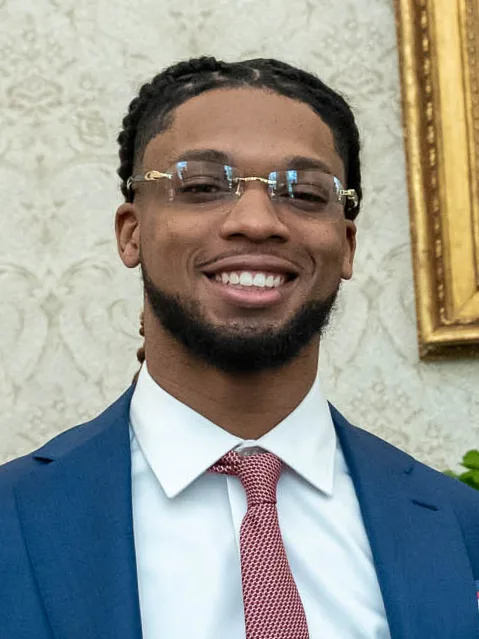
I was folding donated sweatshirts into bins at Kelly and Nina's when he first walked through the door, twenty-two years old, still smelling like Pitt practice fields, talking about a number that seemed almost embarrassingly small. Twenty-five hundred dollars. That was the ask. He had ten days to plan it and a name for the whole effort, Chasing M's Foundation, and a promise he kept saying out loud like he needed to hear it as much as we did — that wherever the league took him, he wasn't going to forget the streets of McKees Rocks, the six thousand of us strung along the south bank of the Ohio River like an afterthought on a map.
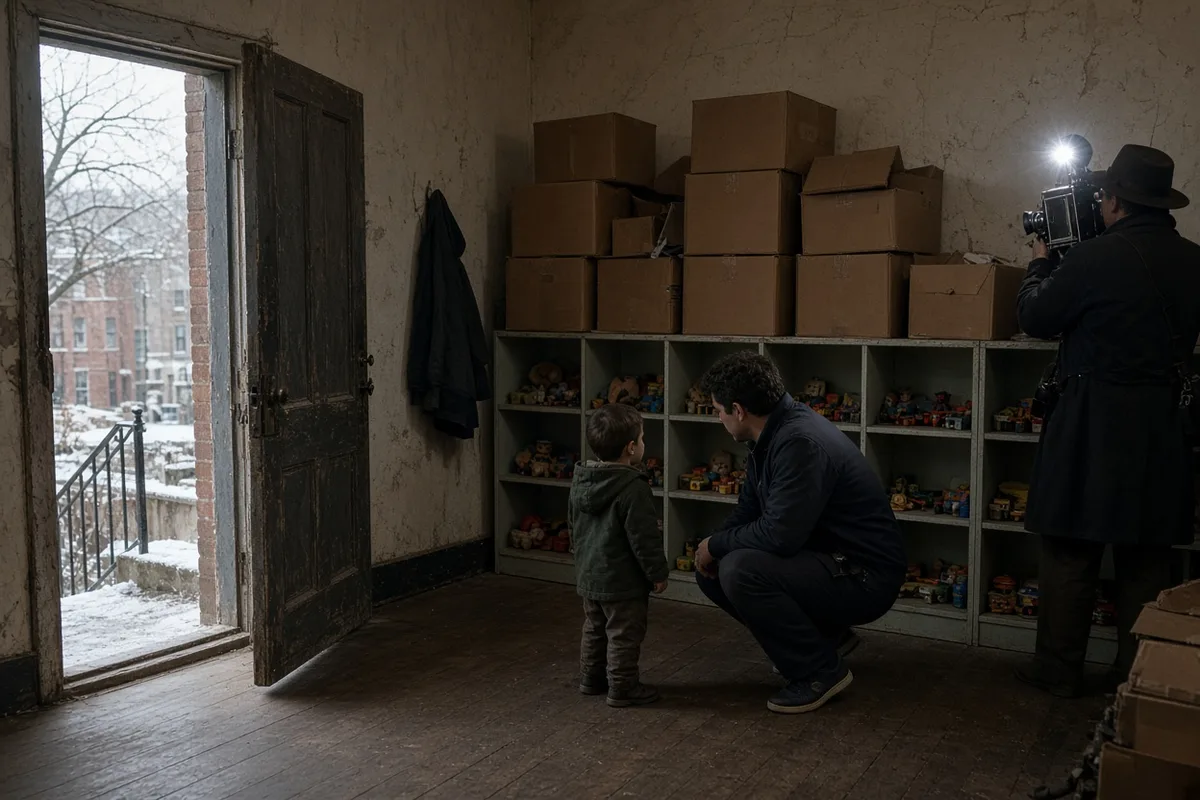
December of 2020 was cold enough to numb your fingers on the folding tables, and the daycare center smelled like cocoa and wet boots. Clothes came in from Pitt, boxes of them, and toys came in from people who had no idea who Damar Hamlin was yet, just neighbors doing a neighbor a favor. I remember a boy named Bryce, three years old, bundled in a coat too big for him, picking through a bin like it held the entire world's inventory of joy. Damar crouched down next to him for the photograph, and I remember thinking, this is a nice thing, a small thing, the kind of thing that happens in a hundred towns like ours every December and never leaves the county line.
He told us once, in pieces, not all at one time, about the friends he'd buried to gun violence before he was old enough to drive, about his father gone for three and a half years on a drug charge while Damar kept his grades up and his eye on a scholarship that felt, most days, like chasing smoke. He didn't perform the hardship. He just mentioned it the way you'd mention weather, something that had simply happened to him, and now he wanted to be the kind of man who turned around and pulled other people up the same hill he'd climbed. The toy drive wasn't a stunt. It was a receipt for a debt he felt he owed.
The GoFundMe page sat there online for two years collecting almost nothing. Last I'd checked, before any of this, it had crawled up to two thousand nine hundred and twenty-one dollars. I want to be honest about that number because it matters — it tells you how invisible the whole good, quiet thing was to the rest of the country. Damar Hamlin was a Buffalo Bills safety by then, a second-year pro, name known mostly to people who watched Sundays closely. The page sat there like a well nobody had found yet.
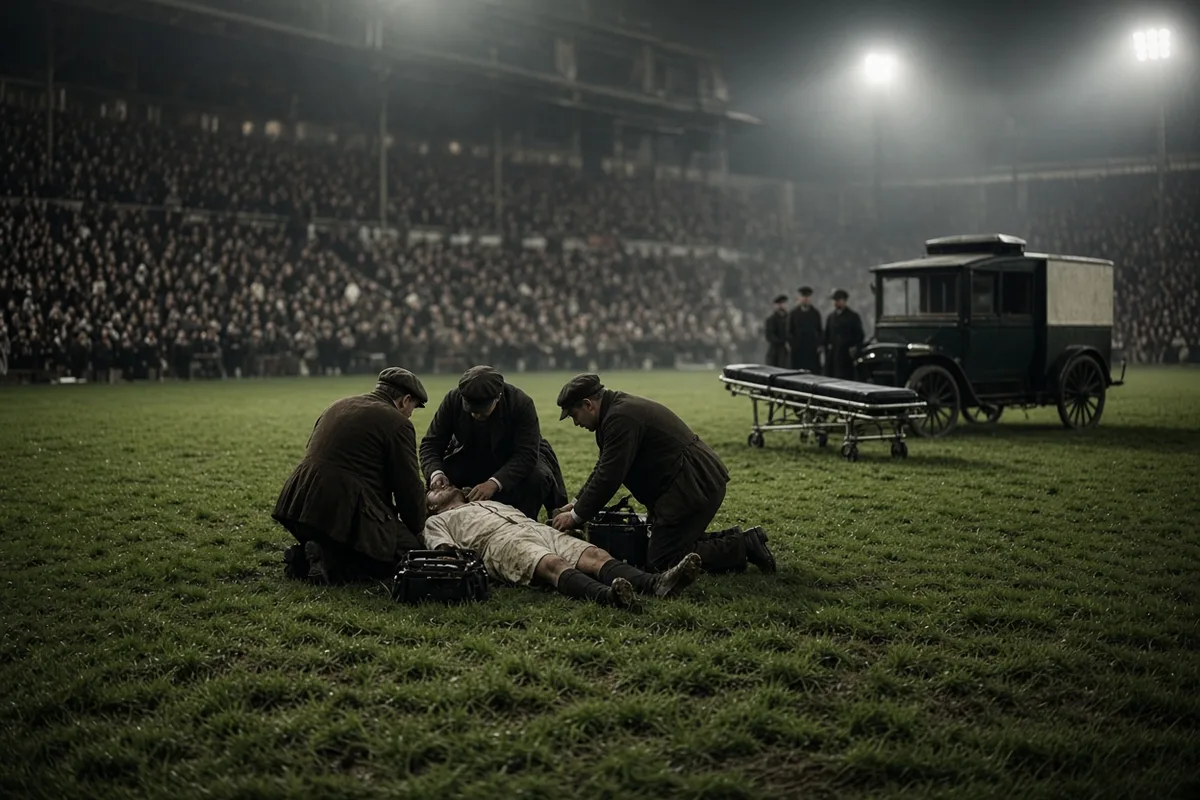
Monday night, the second of January, I had the television on more out of habit than anything, Bills against the Bengals, Cincinnati under lights, and I was half paying attention until the hit in the first quarter — routine-looking, the kind of collision that happens on every down of every game — and then he didn't get up. I watched him go still on the turf and I watched the medical staff swarm him and I watched them restart his heart right there on the field, in front of a stadium full of people who had come expecting nothing more dramatic than a football game.

The broadcast went quiet in that particular way broadcasts go quiet when nobody in the booth knows what to say. Players from both teams were on their knees. Some were crying, not bothering to hide it. The ambulance came out onto the field and the whole building held its breath, and I sat on my couch in western Pennsylvania with my phone in my hand not knowing yet that this night would reach all the way back to a daycare center on Second Avenue.
They took him to University of Cincinnati Medical Center. Within the hour there were fans standing outside in the cold, just standing there, praying, some of them strangers to each other and to him, holding candles or just holding their own arms against the January air. I watched the footage of that crowd gathering outside the hospital and felt something crack open in my chest, because grief for a man you've never met is a strange, communal thing, and that night it belonged to everyone watching.
Somewhere in those first hours, somebody found the old fundraiser. I don't know who clicked first. I imagine it was a Bills fan doing what Bills fans do best, digging for a way to turn helplessness into action, and there it was — a toy drive with a name they recognized, a page that had been sitting quiet since 2020, sitting at less than three thousand dollars, waiting.
By midnight it wasn't waiting anymore.
I checked the page myself around one in the morning, unable to sleep, and the number had already jumped past anything I understood as normal for a hometown fundraiser. Not thousands. Not tens of thousands. It kept climbing while I watched, the way a river rises overnight and you don't notice until the water's at your door. Donations were landing three every second in that first stretch — strangers giving twenty-eight dollars on average, some giving five thousand at a time, small amounts stacking on small amounts until the small amounts stopped being small.
By ten the next morning, Tuesday, the fundraiser that had spent two years crawling toward its original twenty-five-hundred-dollar goal was sitting at three million, six hundred thirty-seven thousand, five hundred ninety dollars. Roughly a hundred thirty thousand people had gone to that page in twelve hours. I sat with that math for a long time. A hundred thirty thousand people, most of whom had never set foot in McKees Rocks, most of whom couldn't have told you where the Ohio River bent south of Pittsburgh, all of them reaching for the one door still open to them at three in the morning — a place to put money because they couldn't put their hands on him, couldn't do anything for the young man sedated and critical in a hospital bed two states away.
The messages came with the money. People wrote things they'd never say out loud to a stranger. One man, Michael Lynch, wrote about moments that stop the world, about praying for two things at once — the recovery and the impact — as if he understood that whatever came next, this fundraiser had already outgrown its original purpose and become something closer to a vigil you could fund.
And it wasn't only Bills fans, though the Bills Mafia carried the first wave the way they always do. This was a fan base I'd watched do it before — sending sixteen dollars and eighty-eight cents to a pediatric cancer charity after a young player named Luke Knox died over the summer, honoring his brother Dawson's jersey number, turning grief into a habit of giving almost automatically. I'd watched them send money to Miami's quarterback's foundation after he went down with a head injury in that same Cincinnati stadium, watched them give to a division rival's charity after a heartbreaking playoff loss, because somewhere along the way that fan base had decided that football rivalry didn't have to extend to human suffering. But this time other fan bases joined them outright, writing in comment after comment that team colors didn't matter anymore, one hashtag circulating that said, simply, that everyone watching had become a Bills fan for as long as it took.
I thought about Damar crouching down next to Bryce Williams two years earlier, about how neither of them could have imagined that photograph would end up recirculated by the Associated Press with wire captions, evidence exhibit A in a story about a toy drive nobody outside a few square miles had ever heard of. I thought about the ten days of planning, the boxes of Pitt clothing, the cocoa smell in the daycare center, and I thought about how strange it is that the same twenty-four hours can hold both a man's heart stopping on national television and a monument being built, dollar by twenty-eight-dollar donation, to the person he'd quietly been the whole time nobody was watching.
His teammates didn't fly home to Buffalo the next day. Some of them chose to stay behind in Cincinnati, close to the hospital, unwilling to put distance between themselves and him while he lay sedated, unable to know yet what was pouring in on his behalf. I understood that instinct. There's a kind of helplessness that makes you want to be near, even if nearness changes nothing about the outcome, even if all you can offer is proximity.
The number didn't stop at three point seven million. It kept moving through that week the way flood water keeps rising even after the rain stops, fed by every new share, every retweet, every newscast that mentioned the page. I watched it pass four million, then five, watched it climb past what any of us who'd stood in that daycare with boxes of donated coats could have conceived of as a real figure attached to a children's toy drive. It would eventually near nine million dollars, an amount so far beyond the original twenty-five hundred that the two numbers seemed to belong to different universes entirely, connected only by his name.
I kept thinking about the arithmetic of attention, how a boy's collapse on a football field could redirect that much human energy toward children he had never met, kids who would now get bicycles and coats and toys they wouldn't have gotten otherwise, because a nation's fear had nowhere else to go on a Monday night and found, almost by accident, an outlet built two years earlier by a twenty-two-year-old with ten days and a folding table.
The hospital updates trickled out over the following days, careful and clinical, critical then improving, sedation eased, breathing tube out, questions answered with a thumbs up before he could speak. Each update landed on the fundraiser page like a tide coming back in, more donations arriving with every hopeful line released by the medical staff, as if his recovery and the count of dollars were rising together on the same graph, one measuring dollars and the other measuring breath.
I went back to the daycare center that week, past the same tables where we'd folded coats in 2020, and it felt different walking in, knowing that the small good thing we'd done together had somehow become a headline the entire country was reading over its coffee. The center hadn't changed. The rooms were the same size. The need in McKees Rocks hadn't shrunk or grown because of a national broadcast. What had changed was the scale of what could now be done about it, and that felt like its own kind of miracle, unglamorous and enormous at the same time.
Weeks later I heard he was released from the hospital, discharged and cleared to travel back to Buffalo, his heart monitored, his recovery treated by doctors as something close to remarkable given how the night had begun. I thought about the stadium full of players kneeling on turf, about the silence in the broadcast booth, about the fans outside the hospital in the cold holding candles for a man most of them had known only as a jersey number and a highlight reel, and I thought about how none of that silence or fear had gone to waste, because somewhere it had turned itself into bicycles and winter coats for children in a river town nobody outside western Pennsylvania could find on a map.
I still have a photograph from that December two years before it all happened, a stack of donated clothes and a young man crouched at kid height, patient, unhurried, in no rush to be anywhere else. I look at it now and it means something entirely different than it did the day it was taken. Back then it was just a nice afternoon at a daycare center. Now it's the beginning of a story that traveled from a folding table in McKees Rocks to a football field in Cincinnati and back out into the hands of a hundred thirty thousand strangers who decided, on the worst night of a young man's life, that the smallest promise he'd ever made deserved to be kept at a scale none of us in that room could have imagined.