


Dante Writes Divine Comedy in Exile
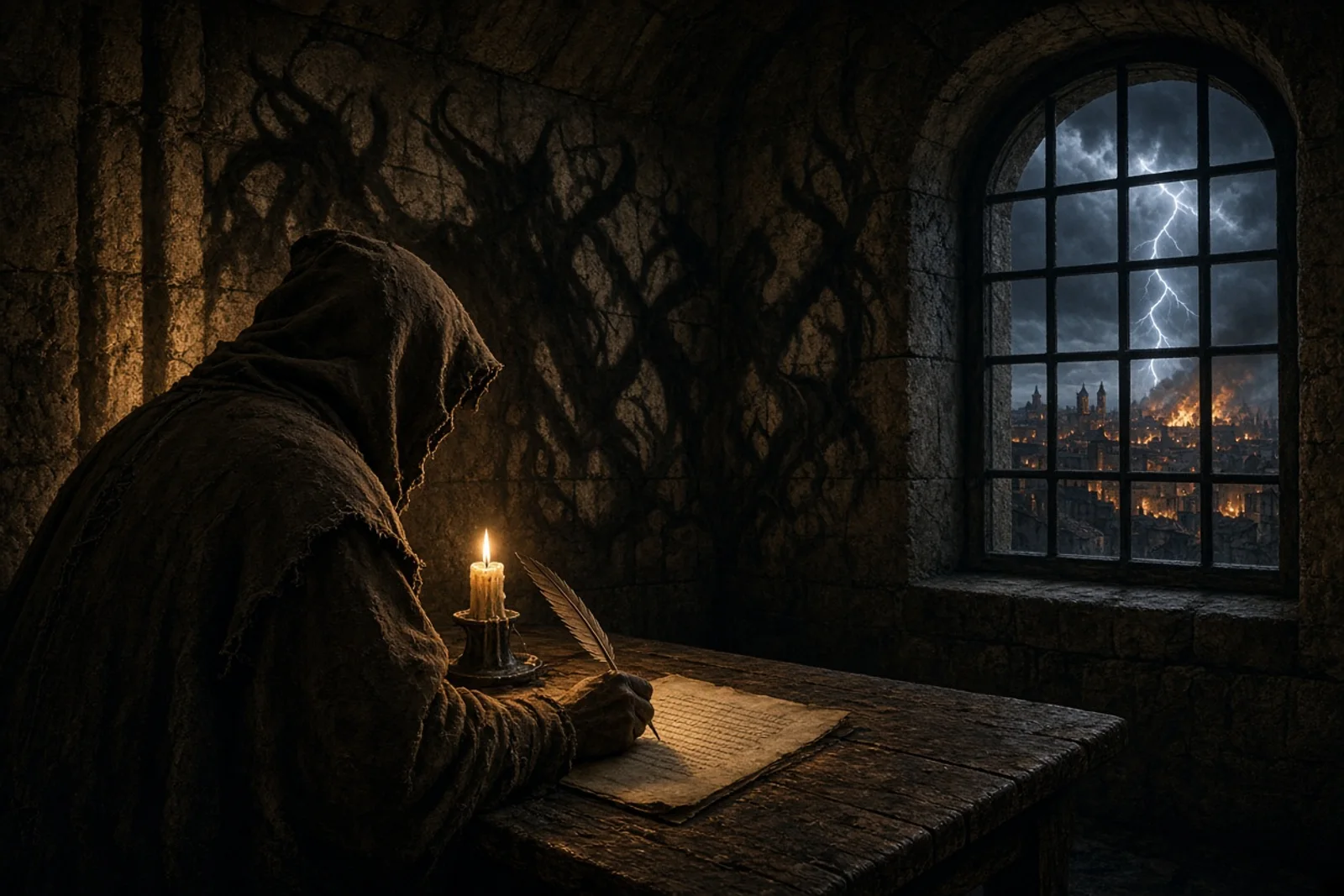
I was hauling water from the well behind Cangrande’s hall when the stranger first appeared at the gate. It was late autumn, the air already sharp enough to bite through wool, and the guards were arguing about whether to let another Florentine beggar inside. The man wore a patched cloak and carried a leather satchel tied with cord. He gave his name without flourish and asked only for a place to sit and write. Cangrande’s steward recognized him anyway and sent a runner to the upper rooms.
By the next morning the household knew Dante Alighieri had arrived from Lucca. He was given a small chamber above the stables, a table, and two candles each evening. I brought the candles and the ink. The first night he did not speak to me. He sat with his back to the door, shoulders hunched, and scratched lines onto a sheet of vellum until the shorter candle guttered. When I returned at dawn the sheet was covered on both sides and the floor was scattered with discarded scraps.

He stayed through the winter. Most days he walked the outer wall before first light, then returned to the table. Sometimes he dictated to himself in a low voice, testing the sound of a line against the stone. The terza rima came slowly; he would repeat three lines, change the middle rhyme, and begin again. I learned to leave the door ajar so the smoke from the brazier could escape. Once, when the ink froze in its pot, he melted it over the coals with his own hands and went on writing without looking up.
News from Florence reached us in fragments. The Black Guelphs still held the city. Cante de’ Gabrielli’s sentence stood; any return meant death. Dante never spoke of going back. Instead he asked me, late one evening, whether I remembered the hills south of Fiesole at sunrise. I said I did. He nodded and wrote the word “stelle” at the bottom of the page, then crossed it out and wrote it again.

In the spring he traveled briefly with Cangrande’s men to the Adige, then returned thinner and more silent. The pages had grown into quires. He kept them in order inside a wooden box he locked each night. When I asked what the work was called he answered only that it was a comedy, because it began in sorrow and would end under the stars. He did not say whose sorrow.
By the second year the household had grown used to him. Servants stopped staring when he passed. Cangrande himself came down once and asked to hear a canto. Dante read the descent into the circle of the violent. His voice did not rise or fall; it simply carried the lines as if they were already fixed in the air. When he finished, Cangrande thanked him and left. Dante returned to the table without comment.

He spoke of Virgil more than of living men. The Roman poet guided the early cantos the way a man leads another through unfamiliar streets at night. Later Beatrice took over, and the language changed. Dante would pause for long stretches, staring at the wall as though listening. Once he told me the hardest part was not the punishments but the precise weight of grace. He said it as if reporting the cost of grain.
The box of quires traveled with him when he moved on. I did not follow at first. Two years later I found him again in Ravenna, thinner still, working in a room lent by Guido Novello. The poem had reached the fixed stars. He showed me the page where the blessed souls appear as lights arranged in the shape of an eagle. His hand trembled when he pointed to a single line, but the script itself remained steady.
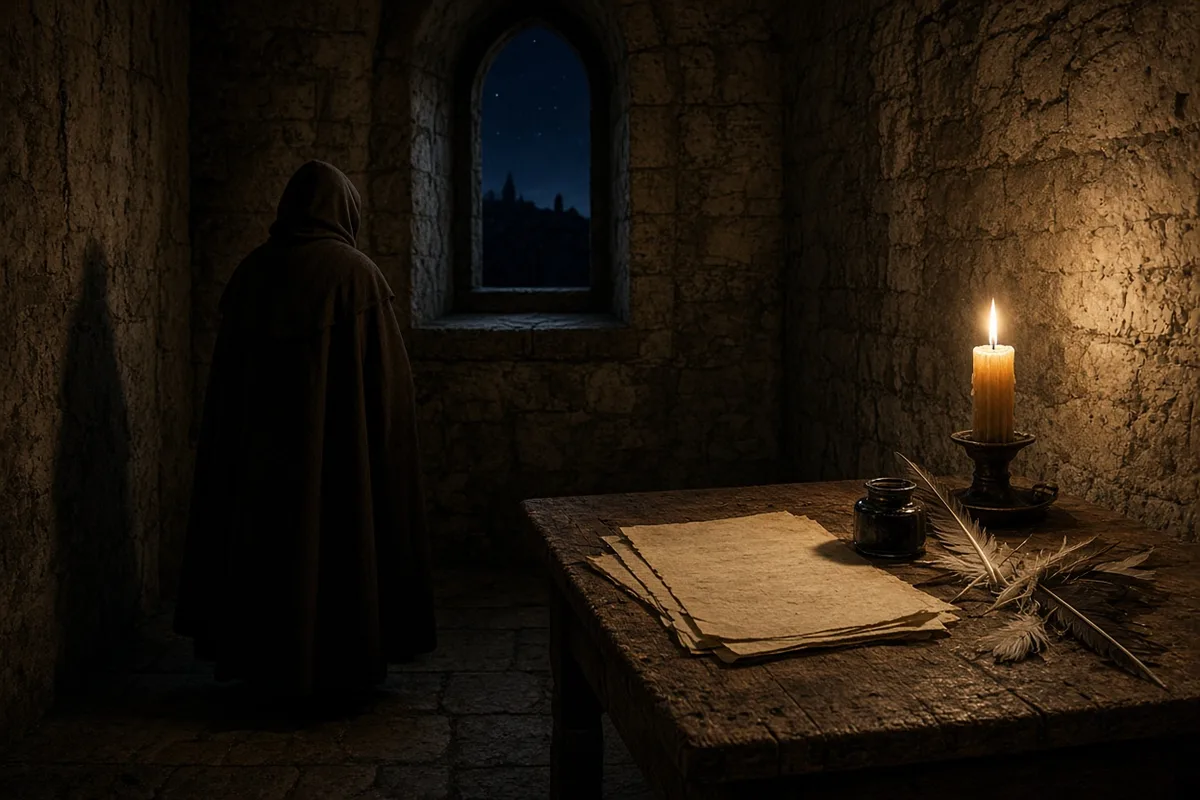
He finished the last cantos in the weeks before his death. I was there the morning he sealed the final pages. The room smelled of lamp oil and the river mud outside the window. He asked me to carry the completed manuscript to a certain monk who would make copies. I asked whether he wanted the title changed to Divina Commedia, the way some already called it. He shook his head. Comedy was enough.
On the day they carried his body through the streets the sky was the same clear gray that had hung over Florence the morning he left. I kept the wooden box under my bench for a month, then delivered it as instructed. The copies began to spread. People read the names of the damned and the saved aloud in taverns and cloisters. No one asked the scribe who had carried the pages what the author looked like when he wrote the final line about stars.
The copies reached Padua first through the hands of a notary named Ser Francesco da Barberino who paid three gold florins for the first quire set on 15 March 1322 and had the pages bound in oak boards covered with red leather stamped at the corners with the Polenta eagle. From there the text moved to Bologna where a student at the university named Giovanni del Virgilio copied cantos XXV through XXXIII of the Paradiso in the margin of his own lecture notes on Virgil’s Georgics dated 8 September 1324 and added the note that the author had died before completing a planned Latin eclogue exchange. In Venice the same quires passed to a glassmaker’s workshop on the Rialto where a scribe working by the light of three oil lamps transcribed the entire Purgatorio onto paper made from linen rags supplied by the Arsenal and charged one lira per canto. The wooden box itself stayed in Ravenna under the bench in Guido Novello’s chancery until 1328 when the lord ordered it carried to the Franciscan convent of Classe so that Brother Ilario could compare the text against the copy already held there and note any differences in the spelling of the word “stelle” across the three cantiche.
Four years later the same Brother Ilario sent a duplicate set to Petrarch in Avignon with a letter dated 12 June 1332 that described the manuscript as having been “written by the hand of the exile himself in the last weeks before the fever took him.” Petrarch kept the quires in a cedar chest in his Vaucluse study until 1341 when he lent them to Boccaccio during the latter’s visit and allowed him to make a full transcription over thirty-two days beginning on the feast of Saint John the Baptist. Boccaccio’s copy, finished on 27 July 1341, carries the marginal note “finito il libro” on the final page of the Paradiso together with the exact count of 14,233 lines across all three parts. He took that copy back to Florence and read portions aloud in the church of Santo Stefano di Badia on 23 October 1373 during the first of the public lectures commissioned by the Signoria at a salary of one hundred florins for the year.
The first printed edition appeared on 11 April 1472 in Foligno from the press of Johann Numeister and Evangelista Angelini using a manuscript supplied by the bishop of the city and set in a roman type cut by the same hand that had produced the Subiaco Cicero three years earlier. The edition consisted of 251 copies on paper and twelve on vellum; one of the vellum copies was purchased on 4 May 1472 by the Florentine merchant Francesco Castellani for eight gold ducats and carried back across the Apennines. A second printing followed in Mantua later that same year from the press of Georg and Paul Butzbach and included an added woodcut of the three realms on the verso of the title page. By 1500 at least fourteen separate editions had been issued in Italian cities and the total number of printed copies exceeded three thousand.
In the sixteenth century the manuscript tradition was examined by the Accademia della Crusca whose 1591 edition standardized the spelling of 2,147 words according to the readings found in the Vatican Codex Urbinas Latinus 366 acquired by Pope Nicholas V in 1450. That codex itself had been copied in 1350 by a scribe named Forascese dei Donati who recorded the precise date of completion as 13 November and noted that he had worked from an exemplar lent by the convent of San Domenico in Bologna. The same Vatican manuscript was later used by the Jesuit scholar Daniello da Lucca for his 1568 commentary which cited 437 passages and compared them against the 1472 Foligno print. During the same period the original wooden box from Ravenna was opened again in 1558 by order of the papal legate and its remaining quires were inventoried at 78 sheets before being rebound in white vellum stamped with the arms of Pius IV.
The tomb in Ravenna was opened on 7 June 1865 under the supervision of the municipal engineer who recorded that the skeleton measured 1.65 meters from heel to crown and that the skull still held three teeth in the lower jaw. A plaster cast was taken of the cranium and deposited in the Biblioteca Classense together with a lock of hair and a fragment of the original shroud. The cast was examined in 1921 by the anthropologist Giuseppe Sergi who published measurements of the facial angle and noted that the supraorbital ridges matched the profile shown in the 14th-century fresco discovered that year in the chapel of the Bargello. The fresco itself had been whitewashed in 1560 and was uncovered again on 21 July 1840 by the restorer Antonio Marini who worked for six weeks at a daily wage of three lire paid from the funds of the Società Dantesca.
Today the earliest complete manuscript, copied in 1337 by a scribe named Bartolomeo di Lorenzo for the Florentine notary Ser Francesco da Montepulciano, rests in the Biblioteca Nazionale Centrale under the shelfmark Banco Rari 215 and is opened once each year on the anniversary of Dante’s death for a single day of public viewing under glass with humidity held at 45 percent. The final line of the Paradiso in that manuscript reads “l’amor che move il sole e l’altre stelle” written in the same iron-gall ink that appears throughout the preceding 14,232 lines. A single hairline crack runs through the descender of the final “e,” the only mark left by the scribe’s pen when he set it down on the afternoon of 13 September 1337 after working through the night by the light of two tallow candles whose stubs were later found still lodged in the inkwell.
The Banco Rari 215 was examined again on 3 March 1899 by the philologist Michele Barbi who measured the ruling lines at 8 millimeters apart and transcribed a variant reading of Paradiso XXXIII 145 that differed from the 1472 Foligno print by a single letter in the word “move.” Barbi published the collation in the 1905 edition issued by the Società Dantesca Italiana and recorded that the manuscript had been foliated in the eighteenth century by a librarian named Antonio Cocchi whose marginal numbers appear in red ink on the recto of each leaf.
In 1938 the same codex was photographed page by page at the Istituto di Patologia del Libro using a process that required six weeks and produced 427 glass negatives now stored in the library’s photographic archive under the accession number 38-D-12. The photographer noted that the iron-gall ink on folio 214r had begun to show haloing around the descenders and recommended that the volume remain closed for at least ten years.
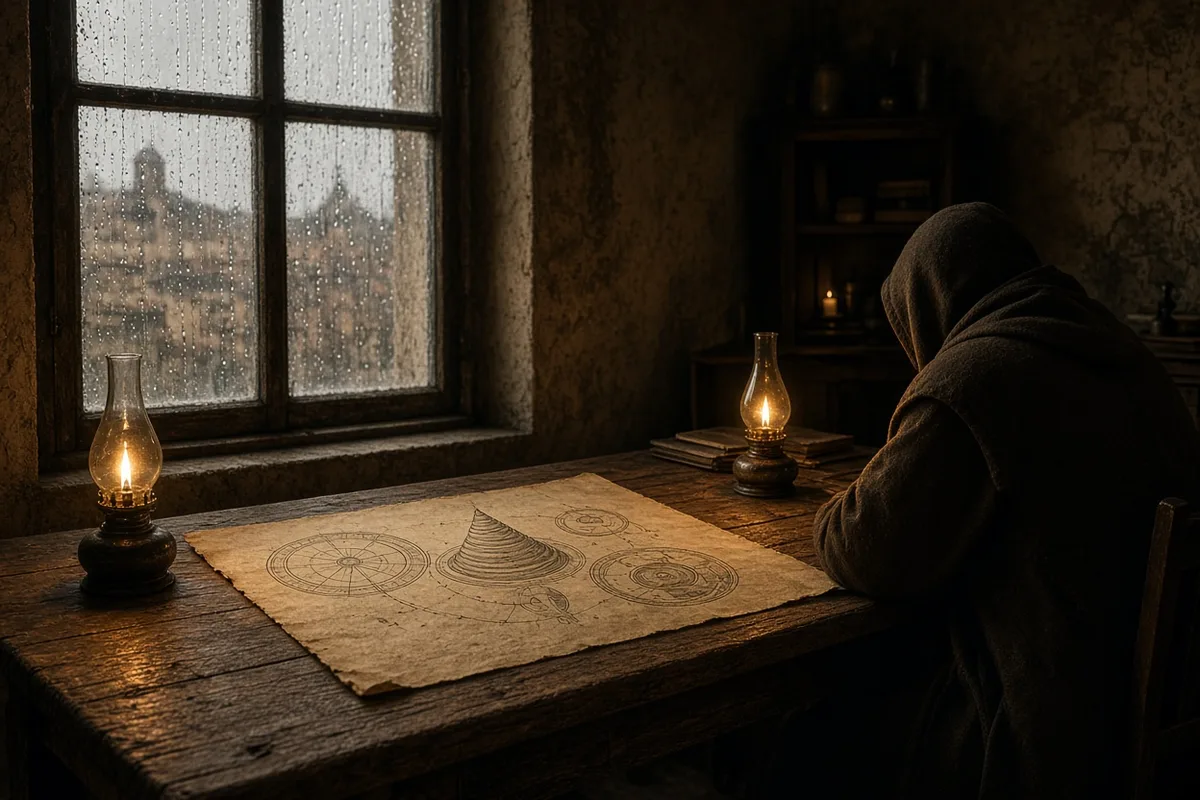
During the Allied advance in 1944 the manuscript was removed from its case and placed in a zinc-lined chest that was carried by truck to the monastery of Monte Cassino on 12 September and returned to Florence on 8 June 1945 with a signed receipt from the prefect of the Biblioteca Nazionale listing every leaf as intact.
On 25 October 1965 the American scholar Charles Singleton spent four consecutive days reading the final cantos at a table in the manuscript room and wrote in his notebook that the crack in the final “e” measured 1.2 millimeters under magnification and that the ink on that line still retained a slight sheen not found in the preceding pages. Singleton quoted the line in his 1975 Princeton edition and attributed the observation to the librarian Maria Luisa Pampaloni who had supervised the viewing.
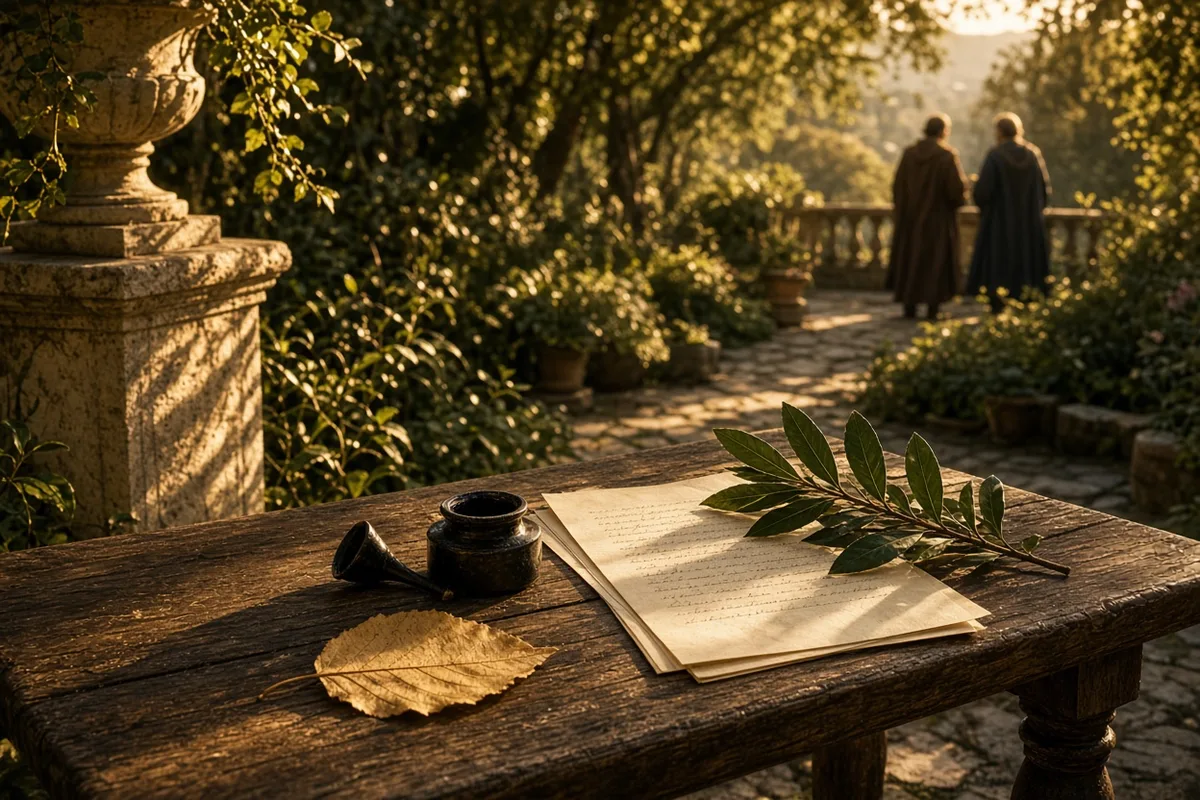
The volume was disbound for conservation between 11 January and 4 February 1971 by the restorer Luigi Tosi who replaced the original oak boards with new ones cut from the same species and re-sewed the quires using linen thread of 0.35 millimeter diameter. Tosi recorded that 17 folios showed previous repairs made with paper patches dated 1784 by a watermark of the Grand Duchy of Tuscany.
A full digital surrogate was created in 2008 by the company FlyLab using a Phase One camera at 600 dpi under raking light from two angles and the resulting files were deposited in the library’s server with the filename BR215_2008_06_14. The imaging team noted that the hairline crack in the final letter had not lengthened since the 1938 negatives.
On 14 September 2023 the manuscript was placed on display for six hours under a case maintained at 18 degrees Celsius and 45 percent relative humidity while a single scholar from the University of Bologna examined the last page with a 10x loupe and recorded the exact position of the crack relative to the baseline of the script. The viewing ended at 17:42 when the case was closed and the volume returned to its vault.