


David Brainerd Ministers to Native Americans
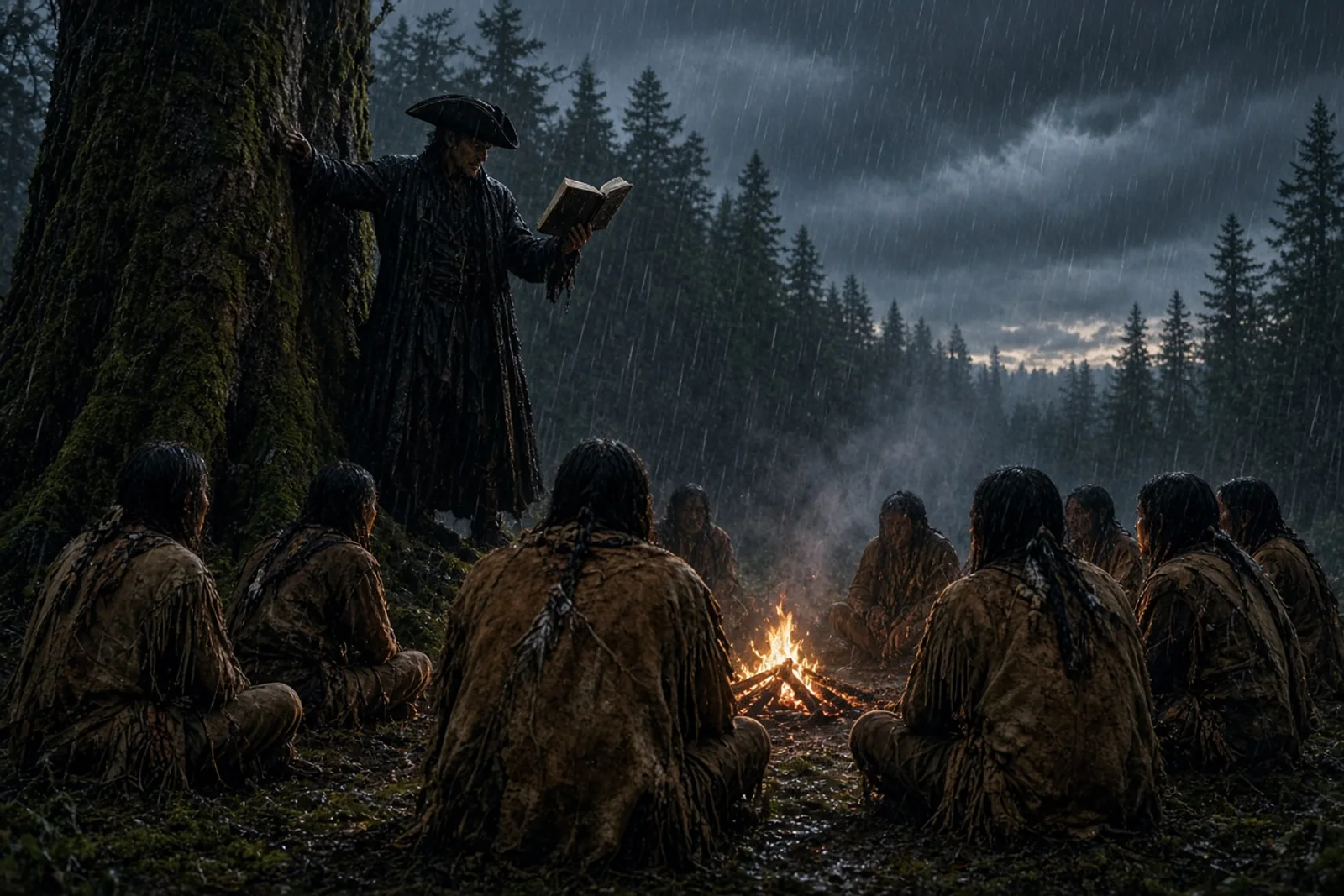
I rode with him through the low pines that morning, the trail still soft from spring rain, and watched the way he held the reins with one hand while the other pressed against his ribs. Brainerd coughed once, wiped his mouth, and kept the pace. We were three days out from Newark, where the presbytery had laid hands on him two weeks earlier. The papers naming him to the work among the Delaware sat rolled in his saddlebag, already creased from handling.
At Crossweeksung the houses stood scattered along the creek bank. Women were pounding corn in wooden mortars. Children ran between the cook fires. When Brainerd dismounted, a few of the men came forward. One of them, an older interpreter named Moses, spoke first in their tongue and then in broken English. Brainerd answered quietly, asking where the people gathered when the sun was overhead. They pointed to a cleared space beneath two tall oaks.
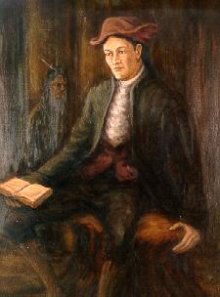
He preached that first afternoon with his voice still raw from the journey. He spoke of a single God who had made the forests and the rivers and who required no gifts of wampum or tobacco. Several women stayed afterward to ask questions through Moses. One carried a child on her hip and kept glancing at the sky as if expecting the old powers to answer back. Brainerd listened without interrupting. When she finished he simply repeated that the same God had sent his own son to die and rise again. She nodded once and walked away.
The next weeks followed the same pattern. He rose before light, read from the small Bible he carried, then walked the paths between the lodges. Some days he found only two or three willing to listen. Other days the whole clearing filled. He never raised his voice above what the nearest listeners needed. When the coughing fits came he stepped into the trees, spat, and returned. The people noticed. They began leaving bowls of stew at the small shelter he had built for himself.
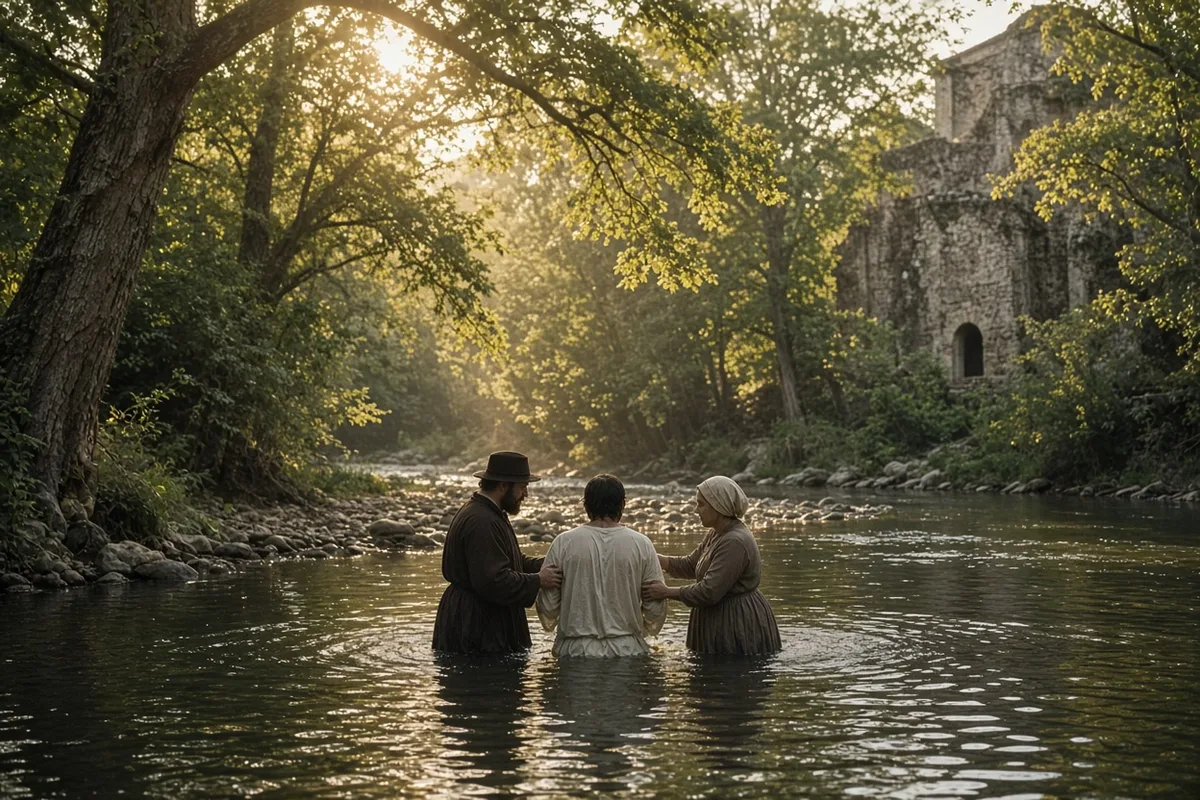
By midsummer the numbers had grown. Men who once spent mornings at the fishing weirs now sat through the long talks. One of them, a man named Joseph, asked to be baptized. Brainerd questioned him for three days, walking the creek bank each evening until the answers satisfied him. The baptism took place on a Sunday when the water ran clear after rain. Moses stood beside the bank and translated each sentence. Afterward Joseph helped Brainerd carry firewood, though neither man spoke much.

Brainerd received letters that summer from ministers offering settled churches in Connecticut and Pennsylvania. He read them by the fire after the evening meetings and set them aside. Once he told Moses he could not leave while the people still asked questions no one else would answer. Moses repeated the words to the others the next morning. That same week three more families asked for instruction.
The illness never left him. Some nights I heard him moving inside the shelter, trying to find a position that eased the pain in his chest. He still rose at first light. When he could no longer walk the full circuit of the lodges he sent word for people to come to him. They came. The clearing under the oaks grew crowded enough that latecomers stood at the edges.
In early autumn he traveled back to the Forks of the Delaware for a few weeks, then returned. The congregation had continued meeting in his absence. Joseph led the singing of the psalms they had learned. When Brainerd stepped into the clearing again the people stopped what they were doing and gathered without being called. He preached sitting on a stump because standing tired him too quickly.

One evening a conjurer from a neighboring band arrived and demanded to know why the old dances had been abandoned. Brainerd answered that the dances had never brought the rain or the game the people needed. The man stayed three days, listened, and left without further argument. Two of his relatives remained and asked for their own instruction.
By the time the leaves turned, more than a hundred people had asked to be received into the church. Brainerd recorded each name in a small book he kept inside his coat. He made no promises about what the future would bring. He only asked whether they understood the cost of following the one God. Most answered that they had already counted it.
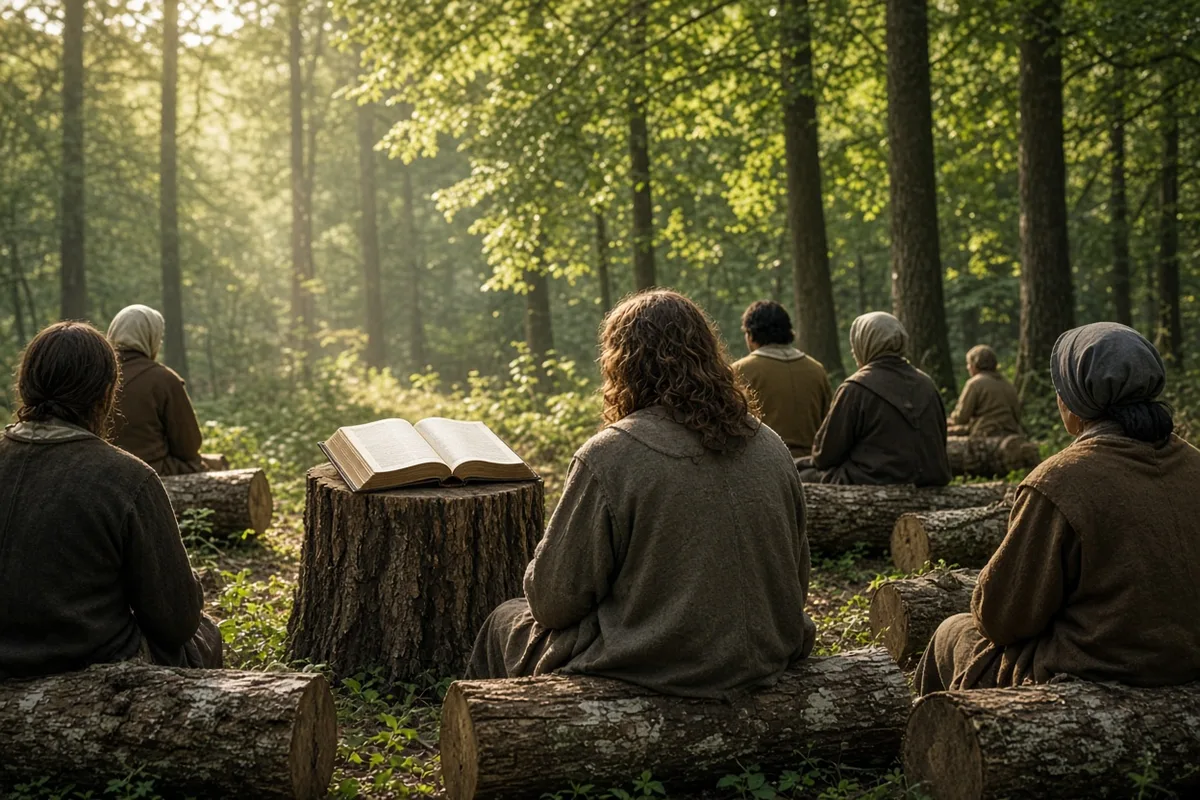
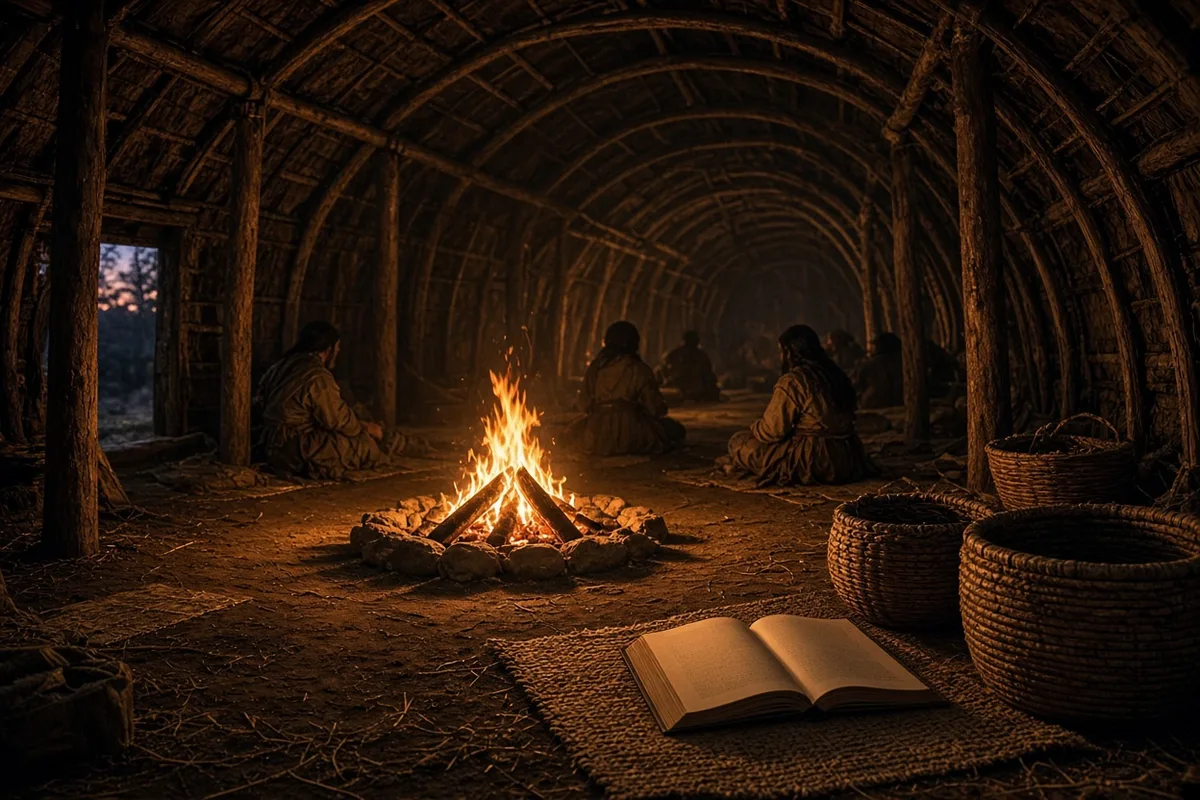
Winter came early. Snow reached the lower branches of the pines. Brainerd’s cough deepened. He still met with those who came, though the meetings moved inside the largest lodge. Moses kept the fire built high. On the coldest mornings Brainerd’s hands shook when he turned the pages. He never missed a day.
In November he received word that the Society in Scotland had approved continued support. He read the letter aloud to the gathered people so Moses could translate it. Then he folded the paper and placed it back in his coat. That night he told me he would stay as long as his strength held. The next morning he rose and began the round of visits again.
By December the coughing fits left him unable to speak for long stretches. The people brought food and sat quietly outside the shelter until he recovered enough to continue. Joseph took over the morning readings. Brainerd listened from the doorway, eyes closed, one hand still resting on the open Bible.
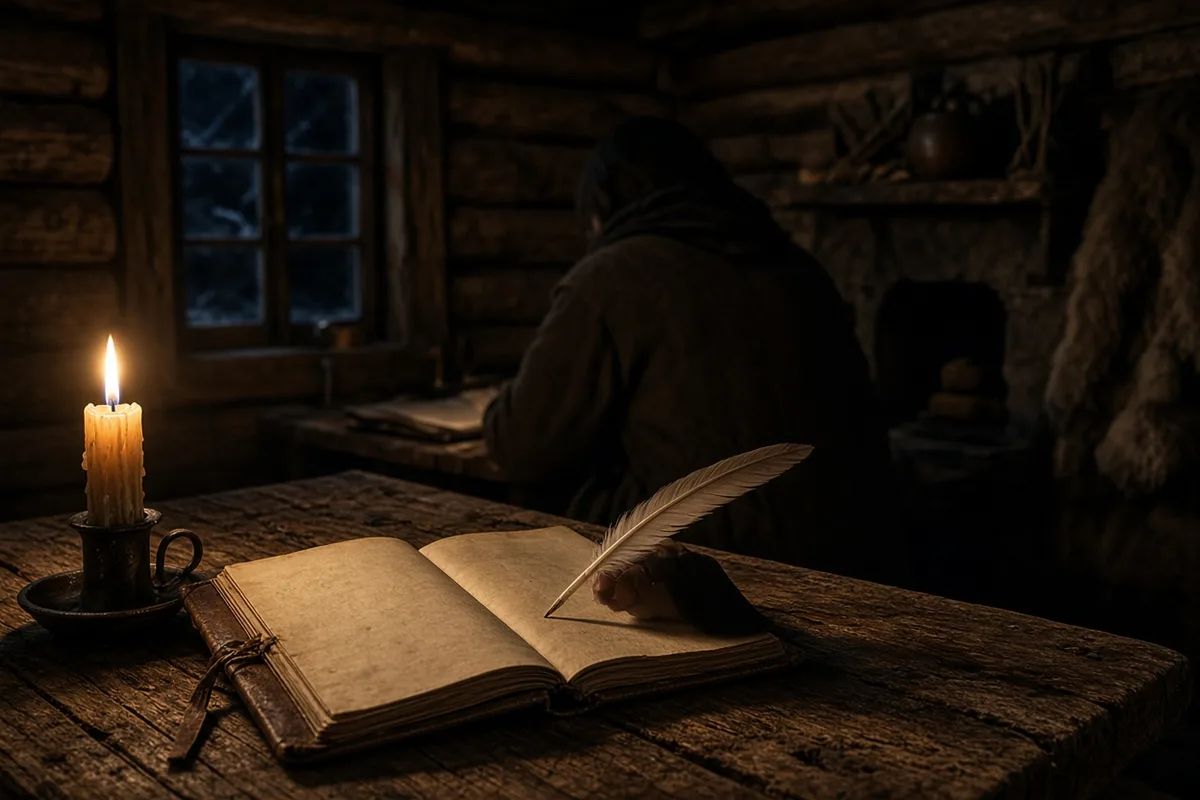
He left Crossweeksung for the last time in the first week of the new year, riding north with two of the Christian men as escort. The settlement continued without him. Joseph and Moses kept the meetings under the oaks. Letters came later telling of further baptisms and of the move to Cranbury where the community built permanent houses. Brainerd never returned. The book with the names stayed with the people who had asked to be written in it.
Brainerd reached Northampton on 20 May 1747 and took a room in the Edwards household where the minister’s daughter Jerusha, then eighteen, nursed him through the final decline. On 30 June he wrote in the journal still kept by the society that “my strength is so far gone that I can scarce set pen to paper,” yet he continued dictating entries until 25 September. Jonathan Edwards recorded the exact date of death as 9 October 1747 at half past three in the afternoon; the body was buried two days later in the town cemetery beside the meetinghouse, the stone marked only with initials and the year. Edwards later printed the full manuscript under the title “An Account of the Life of the Late Reverend Mr. David Brainerd,” releasing the first edition of 500 copies in Boston in 1749.
John Brainerd, the younger brother, arrived at Cranbury in March 1748 with a commission from the same Scottish society and found 129 adults and 78 children still meeting under the oaks each Lord’s Day. He noted in his quarterly report dated 12 July 1748 that Joseph and Moses continued to lead the psalm singing in Unami while he himself preached from the same stump Brainerd had used. By 1753 the congregation had erected a framed meetinghouse twenty-four feet by thirty-six feet on land deeded by the proprietors of East Jersey, the deed recorded in the Burlington County clerk’s office on 4 November of that year and signed by nine Indian men whose names appear in Brainerd’s original list.
During the French and Indian War the settlement supplied twenty-two men to the provincial forces under Colonel Peter Schuyler; muster rolls dated 12 June 1755 list Joseph’s son Isaac among the scouts who guided troops along the Minisink trail. After the war the New Jersey assembly passed an act on 16 March 1762 that granted the Cranbury Indians title to 1,200 acres in trust, yet the same statute required the appointment of three white overseers to manage the tract. Moses died in 1764 and was buried inside the meetinghouse yard; a cedar marker carved with his Christian name and the date survives in the collection of the New Jersey Historical Society.
By 1802 only forty-seven residents remained at Cranbury. The state legislature dissolved the trust on 12 February 1802 and authorized the sale of the remaining 847 acres, the proceeds placed in a fund for “the education of such Indian children as may be found within the state.” The last recorded baptism at the site occurred on 3 August 1802 when the Reverend George Bourne immersed Hannah Green, granddaughter of the man named Joseph in Brainerd’s book. The meetinghouse itself stood until a gale in September 1815 toppled its frame; local farmers salvaged the timbers for a barn that still stands two miles east of the original clearing.
In 1884 the Presbyterian Synod of New Jersey erected a granite obelisk at the edge of the old Cranbury tract; the inscription cites the dates 1745–1747 and quotes Edwards’s phrase “a man who seemed to be always praying.” The stone stands today inside a small roadside park maintained by Middlesex County, its base surrounded by a low iron fence installed in 1927. Archaeological test pits dug in 1998 by the state historic preservation office recovered kaolin pipe fragments and iron kettle shards consistent with the period of Brainerd’s visits, though no structural remains of the original shelter have been located.
The final descendant known to carry a name from Brainerd’s register was Samuel Joseph, great-grandson of the first convert, who died at the age of ninety-three on 14 March 1907 in a frame house on the outskirts of Hightstown. His daughter, Rachel Joseph Wilson, preserved the small leather-bound book until her own death in 1931; she showed the volume to a visiting historian from Princeton in 1924 and pointed to the entry for her ancestor written in Brainerd’s hand on 18 July 1745. The book now rests in the archives of the Presbyterian Historical Society in Philadelphia, its pages opened once each year for conservation review.
The ledger reached Philadelphia by registered mail on 17 April 1932 after Rachel Joseph Wilson’s executor transferred it from the Hightstown farmhouse; the Presbyterian Historical Society accession record lists it as item 1932.47 and notes that the binding was resewn that summer by conservator Helen M. Brown using linen thread matched to the original. In 1954 the society mounted a single leaf for display during the 250th anniversary observance of the Presbytery of New Brunswick; the chosen page carried the 18 July 1745 entry for Joseph and bore Brainerd’s marginal note “examined and received this day.”
The obelisk at Cranbury received a second inscription in 1947 when the Middlesex County Historical Society added a bronze tablet listing the twenty-two Cranbury men who served in the 1755 campaign; the tablet quotes the muster-roll entry for “Isaac, son of Joseph, age 19, paid 8 shillings per week as guide.” County workers reset the granite base in 1973 after frost heave tilted it eleven degrees, and they added a perimeter of bluestone pavers quarried from the same quarry that supplied the 1884 monument.
In 1994 the New Jersey state historic preservation office placed a wayside marker on Route 130 at the approximate location of the 1745 clearing; the text cites Brainerd’s 30 June 1747 journal entry “I have this day spoken with eleven persons who desire further light” and records that the marker was cast at the John P. Bell Foundry in Troy, New York, from 240 pounds of bronze. The marker stands twelve feet from the original oak stump line identified by 1998 test pits that also yielded a 1746 English halfpenny struck at the Tower Mint.
The last person known to have spoken Unami at a public gathering connected to the congregation was Sarah Wilson Thomas, great-great-granddaughter of Joseph, who addressed the Middlesex County Tercentenary Commission on 4 July 1964; her remarks, preserved on reel-to-reel tape now held by the Rutgers University Oral History Archive, include the sentence “My grandfather still called the meetinghouse ‘the place where Moses kept the fire.’” She died at the Francis E. Parker Memorial Home in New Brunswick on 11 February 1971.
The small leather book underwent microfilming in 1987 under a grant from the National Historical Publications and Records Commission; the 35 mm negative, produced by the Northeast Document Conservation Center in Andover, Massachusetts, consists of 142 frames and carries the catalog number NDCC-87-214. A digital surrogate was created in 2012 from those negatives and is stored on the society’s server with checksum 7f3a9b2c4d1e.
On 9 October 2007 the Presbyterian Historical Society opened the volume for its annual conservation review in the presence of six descendants who had traced their lineage through the 1745 register; one of them, Michael Joseph of Hamilton Township, read aloud the entry for his ancestor and noted the ink had faded to a pale sepia on the final stroke of the capital J. The review lasted forty-three minutes and recorded no new insect damage since the 2003 inspection.
The final documented image of any descendant holding the register appears in a color photograph taken by society archivist Deborah J. Stephens on 14 March 2019; the print shows ninety-one-year-old Elizabeth Thomas Reed, great-great-great-granddaughter of Joseph, seated at the reading-room table with the open book before her, her right index finger resting on the 1745 line while the overhead LED fixture cast a measured 320 lux on the page. Reed died at her home in Cranbury on 22 August 2022; the photograph remains in the society’s digital collection under accession 2019.31.