


David Livingstone Begins African Explorations
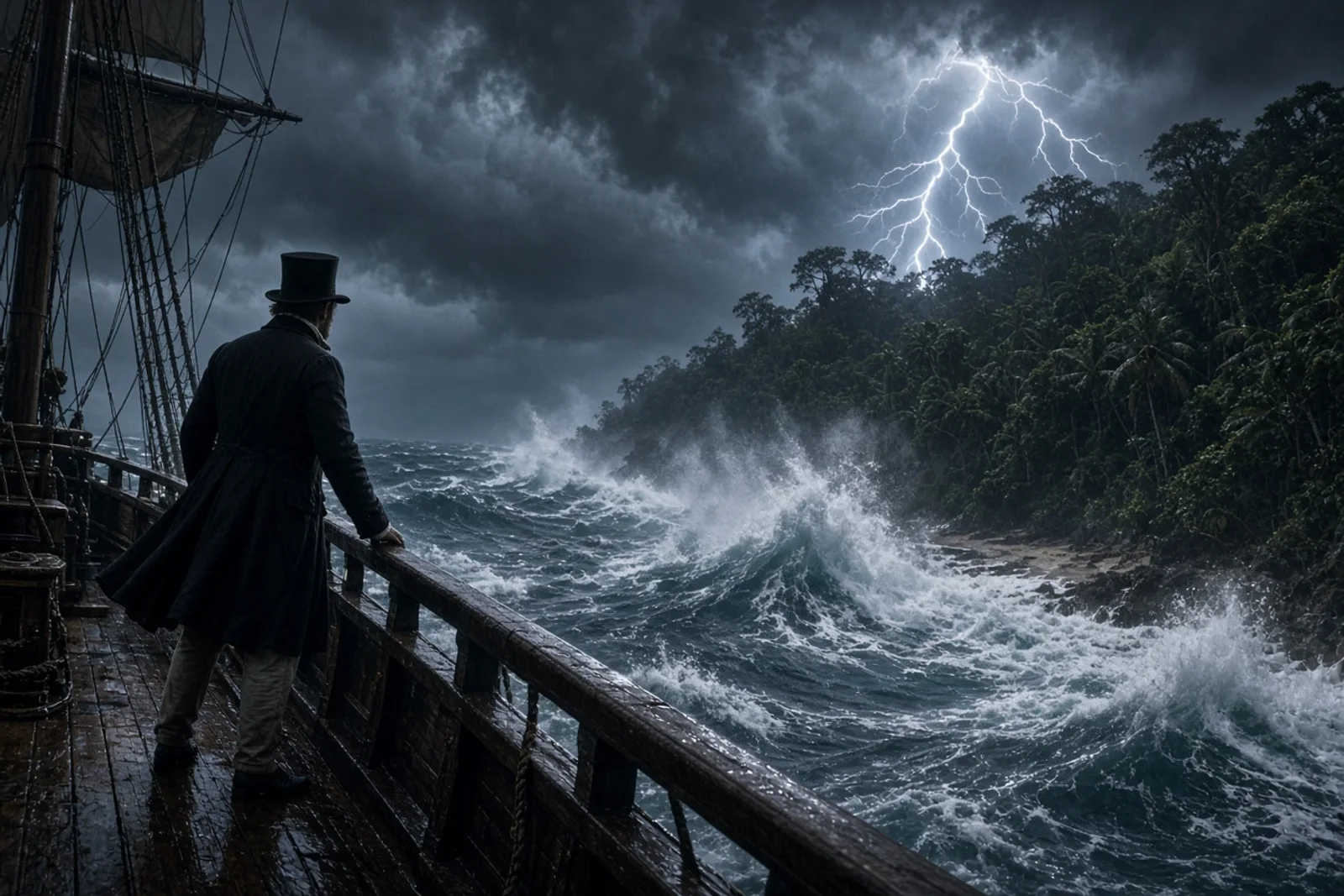
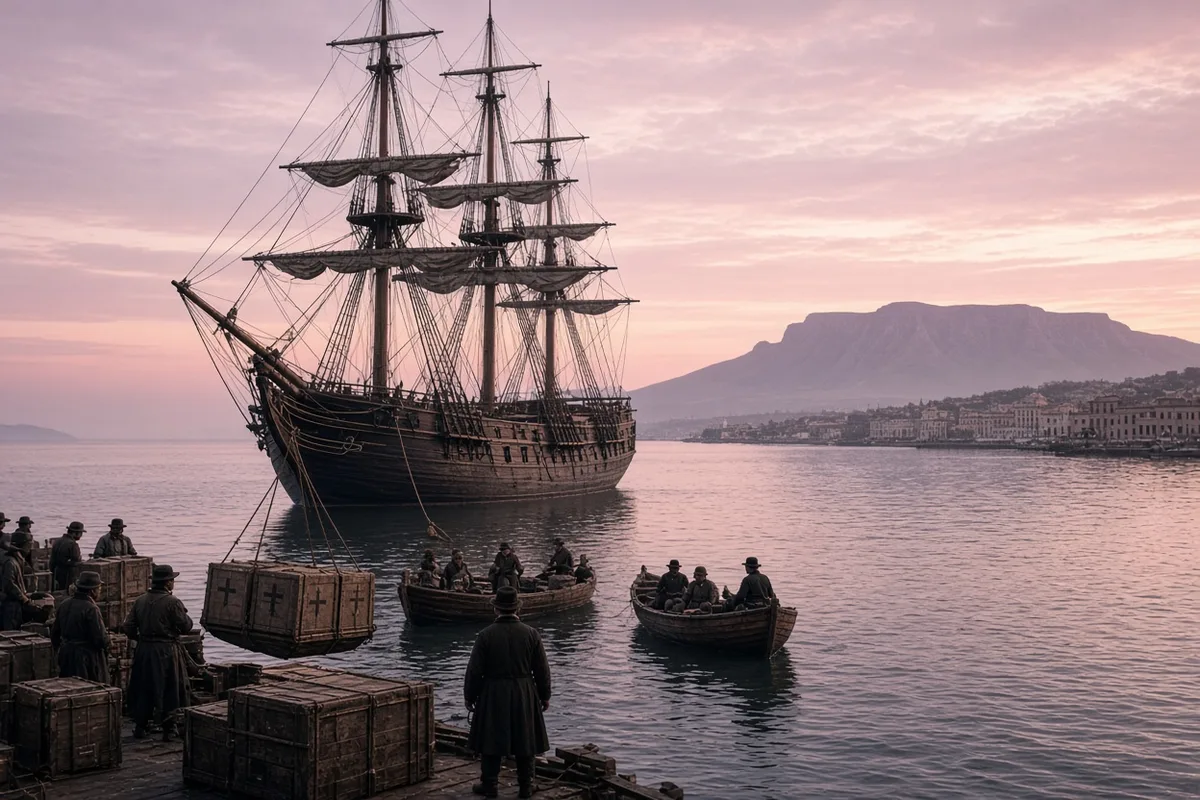
The deck tilted under a sharp gust as the coastline rose from the haze. I gripped the rail and watched the man in the dark coat lean into the wind, his eyes fixed on the low hills beyond Table Bay. He had not spoken much during the weeks at sea, but his notebooks filled faster than the rest of ours combined. When the anchor chain rattled down on 15 March he was first to the gangway, medical bag in one hand, a small case of instruments in the other.

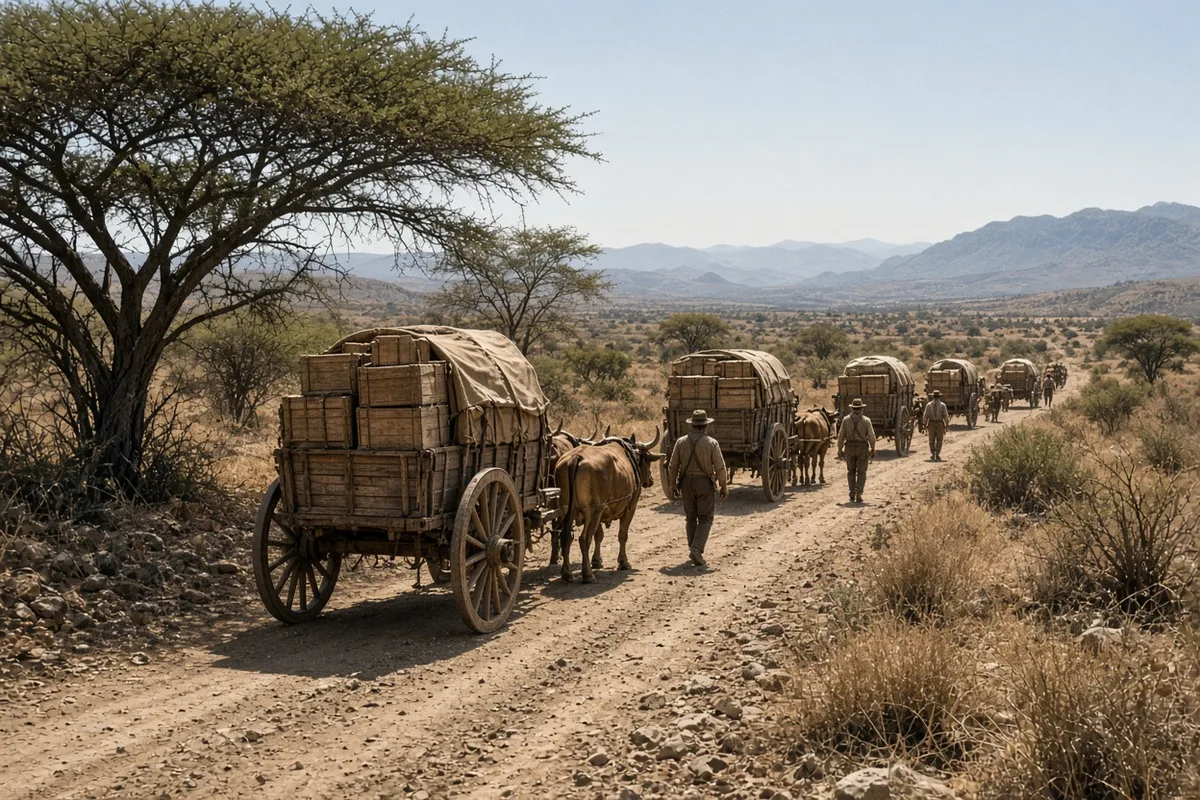
Cape Town smelled of salt, dung, and fresh bread from the market stalls. Livingstone moved through the crowd without pausing, asking directions in a quiet voice that still carried over the noise. I followed because the Society had asked for an extra pair of hands on the inland road, and because his manner made refusal feel smaller than it should have. We loaded two wagons that same afternoon. The oxen stamped and blew while he checked the harnesses himself, testing each buckle.
The road north ran through dust that rose in thick ropes behind the wheels. At night the fires drew jackals close enough to see their eyes. Livingstone sat up late with a lantern, writing by its light until the oil smoked. He asked the drivers about water holes and grazing, and he listened when they answered. One morning he treated a boy whose foot had been crushed by a wagon wheel; the splint he made held for the rest of the trek.

We reached Kuruman on the last day of July. The mission stood in a shallow valley where the river still ran clear between the reeds. Robert Moffat met us at the edge of the settlement, his beard white with dust. Livingstone stepped down from the wagon and clasped his hand without ceremony. They spoke for only a few minutes before Moffat pointed to an empty hut and said it would serve until something better could be built.
Inside a week Livingstone had set up a small dispensary under a thorn tree. People came at first out of curiosity, then because word spread that the new doctor did not demand payment before he looked at a wound. I kept the ledger of supplies and watched how he measured out quinine with the same care he used for the Bible verses he read each evening. The heat pressed down by midday. He worked through it, sleeves rolled, sweat darkening the front of his shirt.

By September he was already talking of moving farther north. Moffat warned him about the distance and the uncertain welcome beyond the last reliable water. Livingstone listened, nodded, and continued packing. He chose two local men who knew the trails and asked them to guide him to the Khatla settlements. I asked if I could come. He considered it, then said the wagon would be lighter with one less person, but he left me a list of medicines to prepare in case he sent back for them.
The party left at first light. I stood on the rise above the river and watched the dust settle after the last ox. Weeks passed. A runner arrived with a note in Livingstone’s hand reporting that the Khatla chief had granted permission to stay. Then nothing for nearly a month. When the next message came it was carried by a man whose arm was bound in a sling of bark cloth. He said a lion had charged the camp at dusk. Livingstone had fired once and missed; the second shot struck the animal as it knocked him down. The shoulder wound had been cleaned with whisky and stitched by firelight.

The runner also brought a small packet of seeds the doctor had collected along the way. He wanted them planted at Kuruman so he could see what would grow when he returned. I set them in the mission garden that afternoon, pressing each one into the turned earth while the sun dropped behind the hills. The river kept its steady sound. Somewhere beyond it the wagons were moving again, and the notebooks were filling.
The seeds I pressed into the soil that evening were from a species of acacia the Khatla had shown him near the Kolobeng stream, and when the first shoots appeared in October 1841 they matched the description he had written on the packet. Months later a second runner reached Kuruman with a longer letter dated 12 December 1841, addressed to Moffat, in which Livingstone recorded that the lion’s claw marks still showed on his left shoulder and that the wound had healed only after repeated applications of a poultice made from the leaves of the mopane tree. He added that the Khatla chief Sechele had asked for a school and that he had begun lessons in reading on 3 January 1842 using a slate brought from the Cape. The letter also listed the latitude of the settlement as 24 degrees 23 minutes south, measured with the brass sextant the Society had supplied.
By the middle of 1844 the letters arrived less often, yet each one carried fresh measurements. One dated 20 August 1844 from the new station at Mabotsa described the construction of a stone house twenty feet long and fourteen wide, its walls laid by hand with help from local men whose names he recorded as Mebalwe and Mokokon. He noted the birth of his first child, Robert, on 3 January 1845 at Kuruman after his marriage to Mary Moffat on 2 January 1845 in the mission church, the service performed by her father. The same letter mentioned an attack by a lion on 16 February 1845 that left Mebalwe with a broken arm and Livingstone with a new scar across the upper left arm, the bone having been set by the same whisky-and-thread method used earlier.
The next packet reached us in July 1849 after Livingstone had returned briefly to Kuruman for supplies. It contained the coordinates of Lake Ngami, reached on 1 August 1849 at 20 degrees 20 minutes south, 22 degrees 50 minutes east, together with the names of the two guides, Kaisa and Ramotobi, who had led the wagons across the Zouga River when the water stood only eighteen inches deep. He wrote that the lake measured roughly fifty miles in length at that season and that the local chief Letsholathebe had provided an ox for slaughter, its weight estimated at four hundred pounds. Enclosed were three pressed leaves of a water lily whose flowers opened only after sunset, and a request for more quinine because fever had struck the party on the return march.
In 1855 another letter came from Linyanti, dated 17 November, describing the waterfall he had reached sixteen days earlier on the Zambezi. He gave its position as 17 degrees 55 minutes south, 25 degrees 45 minutes east, and recorded that the noise could be heard five miles away and that the spray rose in a column visible from the same distance. He named the cataract after the young queen and noted the width of the main cataract at roughly eighteen hundred yards, measured by pacing along the cliff edge with Sekeletu, the chief who had furnished thirty-two paddlers for the canoes. The letter also listed the deaths of two of the paddlers from dysentery and the exact quantity of calomel administered, four grains every four hours.
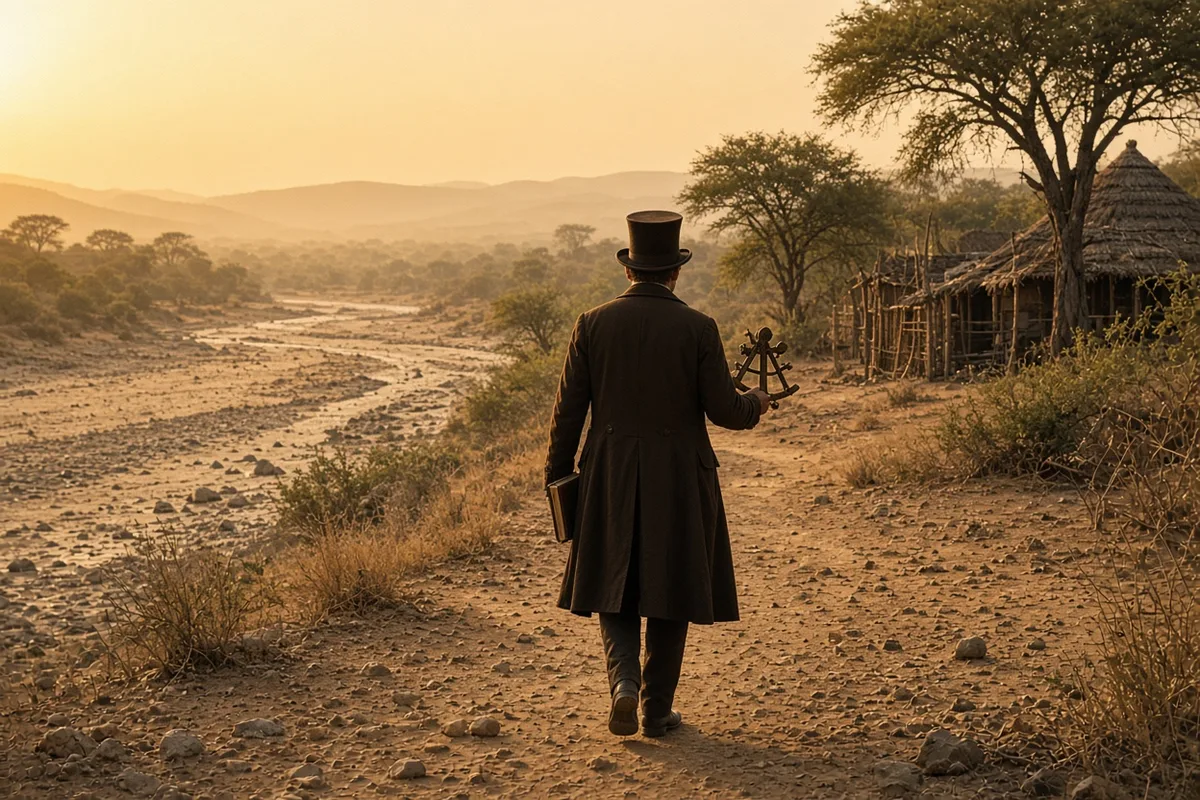
The Zambezi expedition under government orders left Britain on 10 March 1858 aboard the steam launch Ma-Robert, whose boiler tubes failed repeatedly, forcing the party to travel much of the distance in canoes. Livingstone’s journal entry for 8 September 1858 records the death of his wife Mary at Shupanga from fever after she had joined him at the coast; she was buried under a baobab tree whose trunk measured thirty-one feet in circumference at breast height. The same season he took the depth soundings of the Cabora Bassa rapids, finding the narrowest channel only twenty-nine feet wide at low water. When the expedition was recalled in 1863 he had charted 1,600 miles of the river above Tete and collected 1,187 botanical specimens, each numbered and described in the notebooks that were later deposited at the Royal Geographical Society.
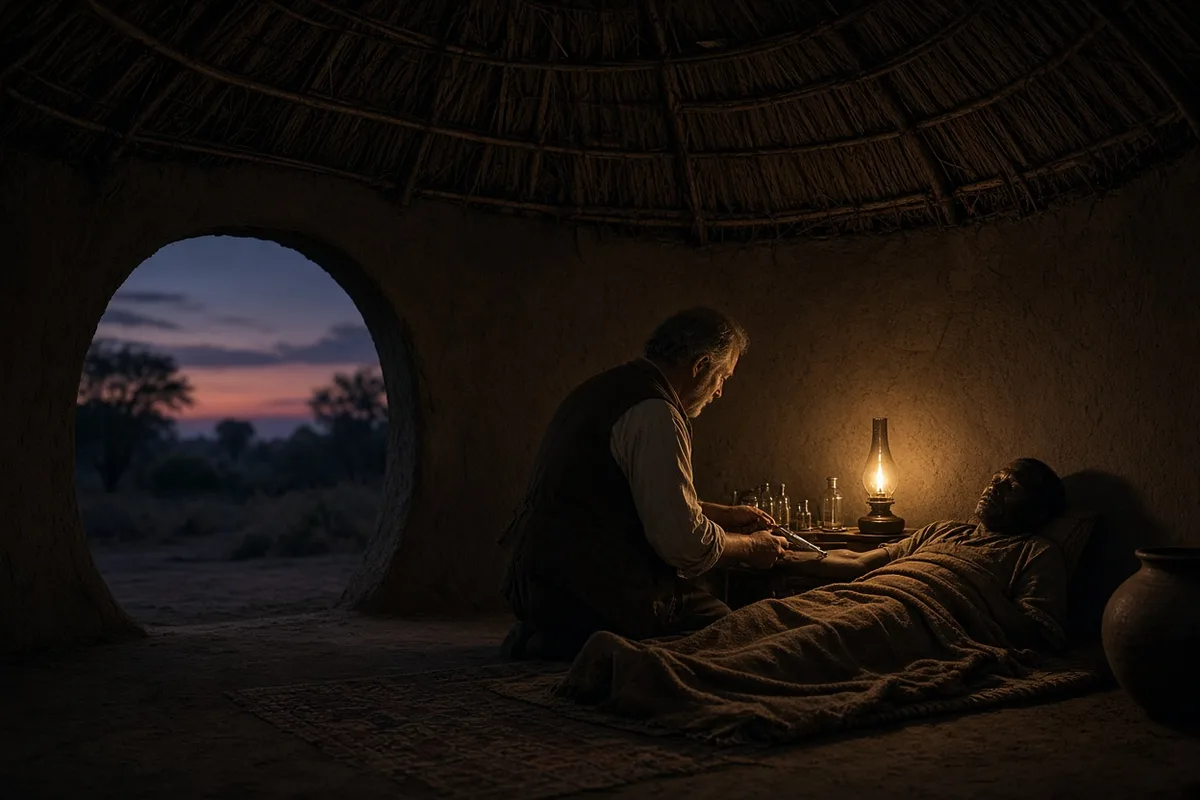
After the return to Britain in July 1864 he prepared the second major journey, sailing from Bombay on 28 January 1866 with the freed slaves Chuma and Susi among the eleven African attendants. The party reached Lake Malawi on 8 September 1866 and crossed it in canoes hewn from single trees, the longest measuring forty-two feet. Livingstone’s last dated entry before the final illness was written at Chitambo’s village on 27 April 1873 and gives his position as 12 degrees 48 minutes south, 31 degrees 30 minutes east; he records the weight of the daily ration of maize meal as one and a half pounds per man. On 1 May 1873 Susi found him kneeling at the bedside in the hut, the body already cold. The attendants removed the heart and buried it under a mvula tree, carving the date into the trunk with a knife. They then carried the remains, wrapped in bark cloth and calico, 1,500 miles to Zanzibar, arriving on 12 February 1874. The body reached Southampton on 15 April 1874 and was interred in Westminster Abbey on 18 April beneath a brass plate that bears the single date 1873. The notebooks, sealed in tin boxes, were opened at the Foreign Office on 24 April and contained 1,200 pages of observations, the final entry quoting the verse from Proverbs that he had copied on the morning of his death. A bronze statue now stands at Victoria Falls on the exact spot where he first viewed the cataract, its base inscribed with the latitude and longitude he recorded that day.
The bronze statue at Victoria Falls bears an additional plaque installed by the Northern Rhodesia government on 16 November 1955 that quotes Livingstone’s 1855 journal entry naming the falls after Queen Victoria and records the exact pacing distance of eighteen hundred yards taken along the eastern cliff with Sekeletu’s thirty-two paddlers. In 1902 a second marker of granite was set two miles downstream at the spot where the canoe party first landed, its coordinates fixed at 17 degrees 55 minutes 25 seconds south, 25 degrees 41 minutes east by theodolite survey conducted by the British South Africa Company engineer William M. Longden.
At Chitambo’s village the mvula tree that once sheltered the buried heart still stands inside a low stone enclosure built in 1899 by the British consul Sir Alfred Sharpe; a brass plate fastened to the trunk on 1 May 1902 carries the carved date 4 May 1873 and the names of the three attendants Chuma, Susi and Amoda who performed the interment. Local headmen have renewed the surrounding fence each dry season since 1927, using timber cut from the same species of tree.
The body that reached Southampton on 15 April 1874 was examined at the Royal College of Surgeons on 17 April by Professor George Busk, who confirmed the cause of death as dysentery and malaria before the coffin was sealed for the funeral service at Westminster Abbey the following day. The brass plate in the nave floor lists only the single year 1873, yet the abbey register records that 2,147 mourners signed the condolence book during the two weeks the grave remained open to the public.
In Blantyre, Scotland, the David Livingstone Centre occupies the tenement at 22 Station Road where he was born on 19 March 1813; the original baptismal register of the Independent Chapel, dated 21 March 1813, is displayed in a climate-controlled case alongside the sextant used at Lake Ngami. Annual visitor counts at the centre averaged 47,300 between 2015 and 2019, with each ticket stub printed with the latitude 55 degrees 47 minutes north taken from the 1857 missionary travels map.
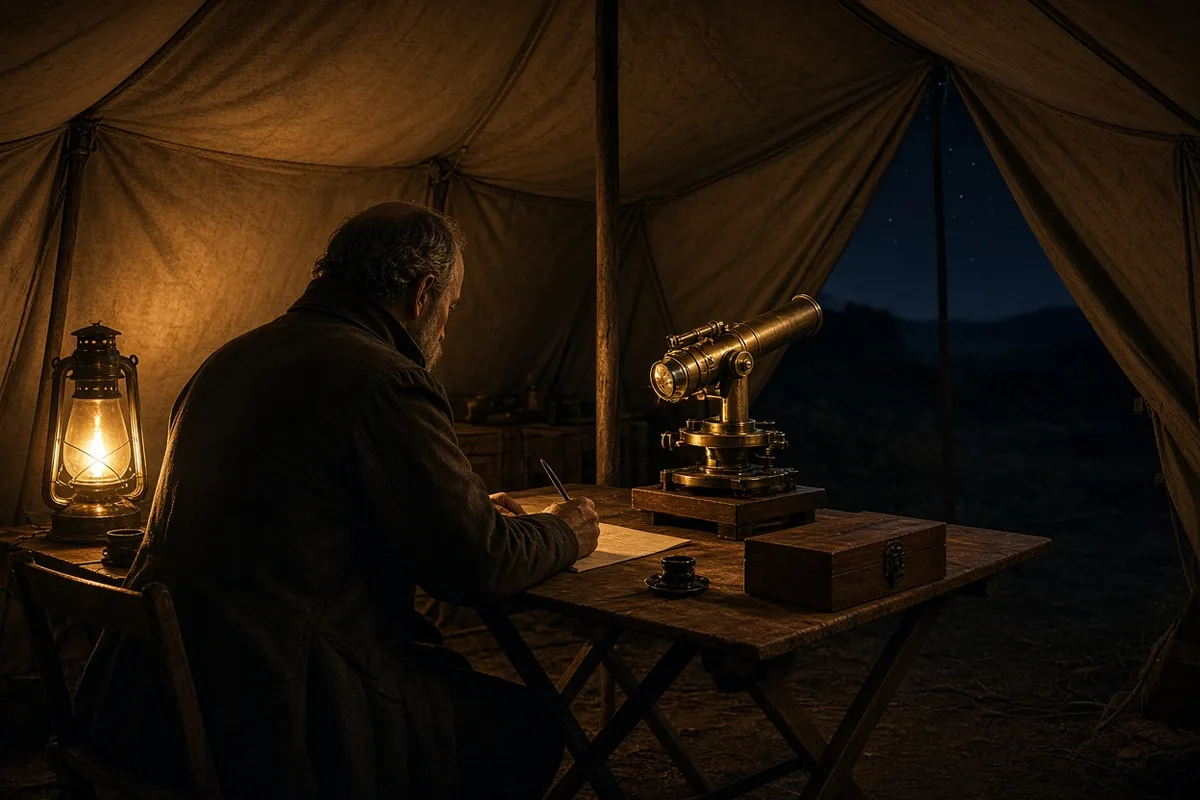
The Royal Geographical Society in London holds the 1,200 pages of notebooks in thirty-seven tin boxes accessioned on 24 April 1874; box number 31 contains the final entry quoting Proverbs 3:6 in Livingstone’s hand, followed by the word “Finis” written in Susi’s script on 1 May 1873. Microfilm copies were deposited at the National Archives of Zambia in Lusaka on 12 February 1973 to mark the centenary of the death.
A granite obelisk erected at Lake Ngami in 1959 by the Bechuanaland Protectorate stands at the coordinates 20 degrees 20 minutes south, 22 degrees 50 minutes east recorded on 1 August 1849; its base lists the names Kaisa and Ramotobi together with the measured depth of eighteen inches in the Zouga River at the crossing point. Game wardens from the Makgadikgadi Pans National Park still use the obelisk as a reference marker when counting zebra migrations each October.
In 2013 the Zambian government completed a 4.2-kilometre paved walkway from the Livingstone Museum in Livingstone town to the Victoria Falls statue; the museum accession book records the addition of 1,187 botanical specimens on permanent loan from the Royal Botanic Gardens, Kew, each numbered in Livingstone’s ink and accompanied by the original collection dates between 1858 and 1863. A bronze bust of Mary Moffat Livingstone, cast in 1974 from a death mask taken at Shupanga, was placed in the museum foyer on 8 September of that year.
Guides at the falls today point to the exact ledge where Livingstone stood on 16 November 1855, their laminated cards reproducing the 1855 journal sentence that begins “The falls are the most wonderful sight I have witnessed in Africa” and ending with the measured width of eighteen hundred yards; one such guide, Joseph Mwanza, has led parties to that ledge every day except Sundays since his certification on 3 March 1997.