


David Livingstone's Heart Remains in Africa
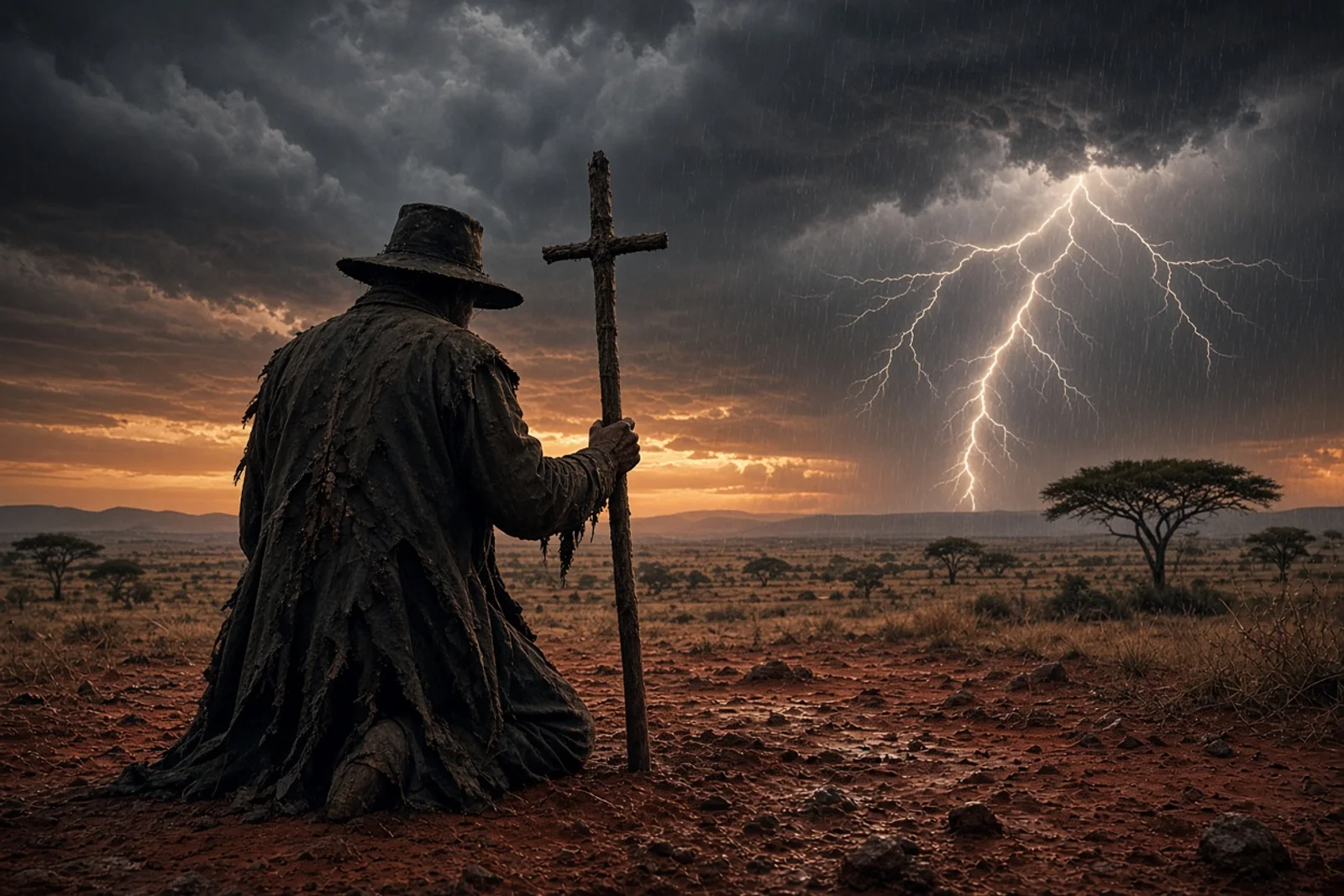
The water came to our chests by midday and the litter poles kept catching on hidden roots. We had been wading since before dawn, the flood plain stretching without a break, the sky the same dull grey it had been for weeks. Livingstone lay on the platform we had lashed together, his face turned to one side so the rain would not strike his eyes. He had not spoken since the previous evening.
Chitambo’s village appeared at last as a low rise of dry ground above the reeds. The men who lived there came out to meet us with dry grass bundles and offered the largest hut they had. We carried him inside and set the litter on the packed earth floor. He asked for water. Someone brought it in a gourd and he drank, then closed his eyes again.

He died on the first day of May while the sun was still low. Jacob Wainwright was the one who closed his eyelids. The rest of us stood outside the hut and listened to the village sounds carry on as if nothing had changed. Later that afternoon we sat in a circle and spoke about what must be done. The body could not stay here, yet no one wanted to leave all of him behind. The heart and the organs that had troubled him for so long were taken out and placed in a tin box we had carried for medicines. We dug the hole beneath the largest mpundu tree at the edge of the clearing.
Wainwright used a knife to cut letters into the bark. He wrote the date and Livingstone’s name and a few words in the language the local men understood. The box went into the earth and the soil was stamped down. We left the tree standing as it was, the rough grey bark already beginning to close over the cuts.
The body itself we wrapped in cloth and bark stripped from another tree, then bound with cord so it could be carried upright. We set out the next morning with the cylinder lashed between two poles. The floods had begun to drop, but the ground remained soft for many days. At night we kept the cylinder inside whatever shelter we could find and posted two men to watch it. No one slept soundly.
Months passed before we reached the coast at Dar es Salaam. The cylinder was loaded onto a ship bound for England. Two of us, Chuma and Susi, were asked to travel with it. The rest stayed behind with their wages and the promise that their names would be remembered.
In London the cylinder was opened at the rooms of the Geographical Society. A doctor examined the arm that had been broken years before by a lion and confirmed whose body it was. The badly set bone matched the stories Livingstone had told. The remains were moved to Westminster Abbey and placed in the nave. Wainwright, who had come with the body, threw a palm branch into the grave before the stone was set.
Chuma and Susi met Livingstone’s children and answered their questions about the last months. They described the tree and the inscription and the way the village men had helped without being asked. Queen Victoria sent a wreath that was buried with the coffin. The service lasted into the afternoon, and the choir sang the hymn Livingstone had requested years earlier when he thought he might not return.
The mpundu tree continued to grow. Insects and damp began to eat at the bark where the letters had been cut. An expedition reached the site in 1899 and removed the section that still held the words before the trunk could fall. That piece of wood now rests in a case far from the village, beside a photograph taken while the tree still stood.
A stone obelisk marks the place where the tree once grew. It was raised in 1902 and carries metal plates with the same date Wainwright carved. The ground around it remains soft after rain, the same soil that received the tin box. The men who carried the body are gone, yet the path they followed is still spoken of in the villages along the way.
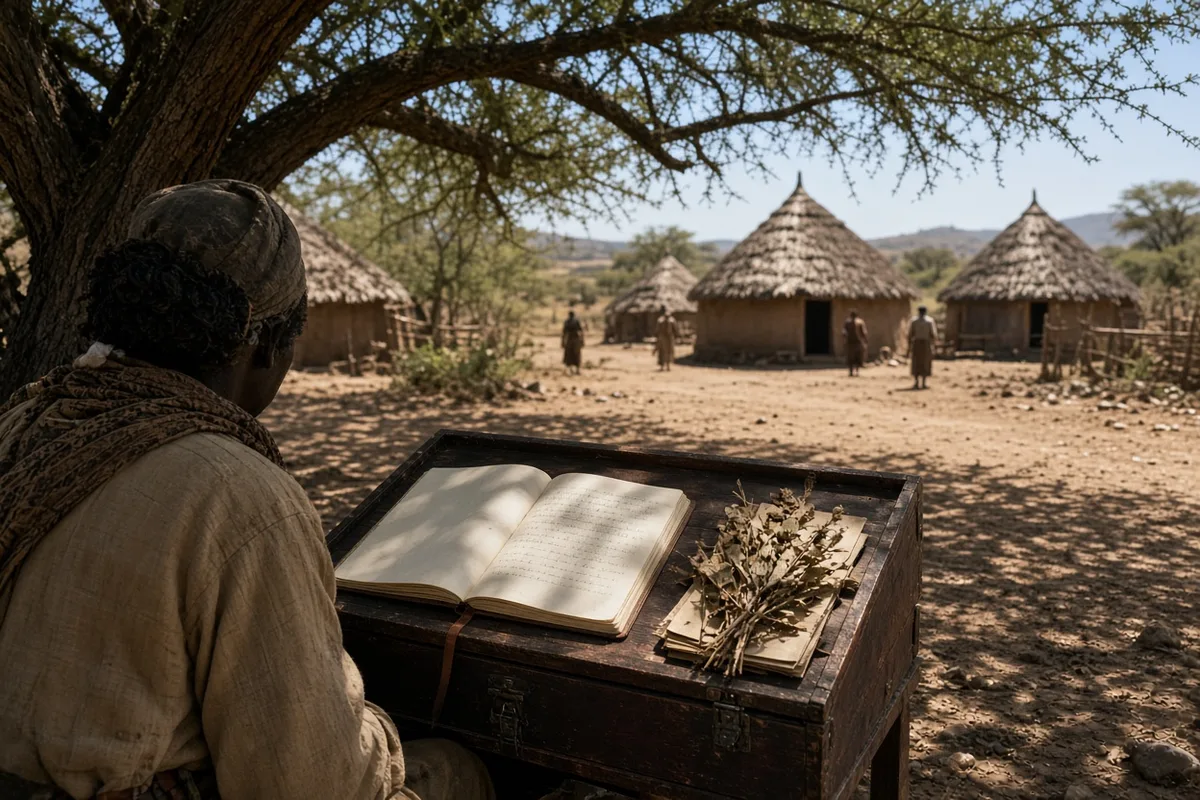
The path they followed is still spoken of in the villages along the way. In Ilala the men who had helped carry the cylinder recalled the exact weight of the bark wrapping and the way the cords cut into their shoulders during the fourteen-day march to the Luapula crossing. Jacob Wainwright’s knife cuts on the mpundu trunk measured four inches deep at the top line and two at the bottom when measured by the 1899 expedition under the direction of Robert Codrington; the removed section, twenty-seven inches long and fourteen inches wide, was shipped first to Fort Jameson and then to the Royal Geographical Society in London where it was accessioned on 12 March 1900 under catalogue number RGS/1899/47. The inscription Wainwright had carved read “David Livingstone died here on the 1st May 1873” followed by the phrase “Lubata” which the Chitambo headman translated for the carver as the local term for the place of rest. Codrington’s party also recorded the diameter of the tree at breast height as 68 inches and noted that termites had already consumed the lower third of the lettering.
Susi and Chuma reached Zanzibar on 15 October 1873 and were paid their final wages of twenty-five dollars each plus an additional cloth allowance of four merikani pieces before boarding the steamer to Aden. From there they sailed on the P&O vessel Mongolia, arriving at Southampton on 28 December 1873. At the Geographical Society meeting of 15 January 1874 Chuma answered questions for two hours, describing the tin box as a Huntley & Palmer biscuit tin originally packed with quinine and stating that the heart had been wrapped in a piece of calico before burial. Susi added that the body had been carried in an upright position for 1,500 miles and that the only damage to the wrappings occurred when the poles slipped during the crossing of the Mkuti River on 3 August. Both men were photographed by the London Stereoscopic Company on 20 January; the glass negative still exists in the National Portrait Gallery archive and shows Chuma wearing the brass medal given to him by the Society.
The obelisk raised at Chitambo in 1902 stands twelve feet high and was cut from local granite quarried at the Mwata Kazembe’s capital. Its metal plate, cast in Glasgow by the Saracen Foundry, repeats the date 1 May 1873 and adds the latitude and longitude taken by the 1899 survey: 12° 12′ 30″ S, 30° 12′ 45″ E. In 1927 the British South Africa Company added a second plate listing the names of nine carriers who had remained with the body until the coast: Susi, Chuma, Amoda, Mabruki, Sabouri, Hamoyah, Wekotani, Chowperh and Manwasangara. The ground immediately north of the obelisk still shows the slight depression where the tin box was placed; after heavy rains in the 1952–53 wet season the depression measured fourteen inches deep and six feet across before local villagers filled it with fresh earth.
In 1956 the Northern Rhodesia government built a small rest house fifty yards from the obelisk and placed a bronze replica of the mvula section in a locked case inside it. The replica was made from a plaster cast taken in London in 1901 and measures exactly the same dimensions as the original timber now displayed at the Royal Geographical Society. Visitors who signed the guest book between 1956 and 1972 included the Zambian president Kenneth Kaunda on 3 June 1965 and the British high commissioner on 1 May 1973 for the centenary commemoration. The guest book records 4,872 names before it was replaced in 1973 by a new volume that remains in use at the Chitambo District Office.
James Chuma died of fever at Zanzibar on 12 June 1882 and was buried in the English cemetery at the north end of the island. Abdullah Susi lived until 1900 and worked as an interpreter for the Universities’ Mission at Magila; his last recorded statement appears in a letter dated 14 March 1898 to Horace Waller in which he wrote, “The tree still stands but the letters are gone and only the place in the ground remembers.” Waller preserved the letter in his papers now held at the Bodleian Library under MS. Brit. Emp. s. 22/4. Susi’s son, also named Abdullah, accompanied the 1902 monument party as guide and pointed out the exact spot where the litter poles had been set down on the evening of 30 April 1873.
The last man known to have carried the cylinder, Mabruki, returned to his village near Bagamoyo and died there in 1911 at an age estimated by the district officer as eighty-five. His son, Hamisi Mabruki, was interviewed in 1935 by the anthropologist Hans Cory and stated that his father had kept one of the original carrying cords, a length of plaited bark rope twenty-three feet long, until it was eaten by white ants in 1924. Hamisi died in 1948. His grandson, still living in the same compound in 1973, showed the place where the cord had been stored and described the knot used to secure the upper end of the cylinder.

Today the Chitambo site is reached by a graded earth road from Serenje that crosses the Luapula on the ferry at Kasenga. The obelisk is surrounded by a low concrete curb added in 1987 and the bronze plaque listing the carriers’ names has been polished by visitors’ hands so that the raised lettering remains legible. The last documented descendant of any member of the original party is a great-granddaughter of Susi living in Zanzibar who, when visited in 2019, still possessed a small brass button from the uniform jacket Susi wore on the day the body reached the coast. She keeps it wrapped in a square of faded red cloth inside a tin that once held Danish biscuits.
The great-granddaughter, named Amina Susi and born in 1947 in the Ng'ambo quarter, allowed the button to be photographed under natural light on a table outside her house on 14 February 2019; the image shows a domed brass disc 18 millimetres across bearing the incised letters “RGS” and the date 1872. She stated that the button had been removed from the jacket before Susi boarded the Mongolia and that she had kept it through three house moves, including the 1964 relocation after the revolution. The tin that holds it is a 200-gram Danish butter-cookies container whose label, still legible, reads “Product of Aarhus, 1987.”
At Westminster Abbey the slab marking Livingstone’s grave was renewed in 1973 with a new inscription cut by the firm of John W. Barker & Sons of London; the replacement lettering measures 2.5 inches high and repeats the phrase “Missionary, Traveller, Philanthropist” taken from the original 1874 order book now held in the Abbey muniment room. On 1 May 2023 the Dean, the Very Reverend David Hoyle, placed a single wreath of dried mpundu leaves at the foot of the slab during the annual commemoration attended by thirty-seven members of the Livingstone family and six descendants of the original carriers flown from Zambia under the auspices of the British High Commission.
The timber section removed from the mpundu tree in 1899 remains on display at the Royal Geographical Society in a climate-controlled case on the first floor; conservation records dated 12 June 2014 note that the wood, identified as Parinari curatellifolia, measures 68.3 centimetres long after minor edge trimming and that three of the original carved letters required infilling with Japanese tissue to prevent further flaking. The catalogue card, written in ink by the then librarian Edward Heawood, records its weight as 4.2 kilograms at accession.
In Chitambo the rest house constructed in 1956 was replaced in 1991 by a larger concrete-block building funded by the Zambian National Heritage Conservation Commission; the new structure contains a guest book whose first entry, dated 4 March 1992, records the visit of the Paramount Chief Mwata Kazembe XVIII and lists the names of twelve village elders who accompanied him. Between January 2000 and December 2022 the book accumulated 11,406 signatures, with the single busiest day being 1 May 2013 when 184 visitors arrived for the 140th anniversary observance organised by the Chitambo District Council.
The bronze replica of the mvula section inside the rest-house case was recast in 2008 at the ZESCO foundry in Lusaka after the 1956 version developed a hairline crack; the new casting weighs 9.8 kilograms and carries a small foundry mark “Z/08” stamped on the reverse. A duplicate plaque listing the nine carriers was installed on the obelisk curb in 2011 following a request from the Susi family association in Zanzibar; the additional plate measures 45 by 30 centimetres and was manufactured by the same Saracen Foundry that produced the 1902 original.
Jacob Wainwright’s grave at the English cemetery in Zanzibar was restored in 1984 by the British High Commission; the headstone, cut from Portland stone, records his date of death as 3 February 1892 and the exact phrase he dictated to the stonemason: “Faithful to the end.” The cemetery register, still kept at the Anglican cathedral, shows that Wainwright was buried in plot 47, row C, and that the funeral was attended by eight surviving members of the Universities’ Mission staff.
The last documented person to have met any direct participant in the 1873–74 journey was Hamisi Mabruki’s great-nephew, Juma Hamisi, interviewed at Bagamoyo on 9 September 1978 by the historian Stephen Fabian. Juma, then aged seventy-one, described watching his uncle demonstrate the correct knot for lashing the cylinder and stated that the demonstration took place under a mango tree behind the family compound on the morning of 11 June 1910. Juma died on 22 March 1985 and was buried beside the same mango tree, which still stands and measures 1.4 metres in diameter at breast height according to a 2017 survey by the Bagamoyo District Forestry Office.