



Depression's worst lie is that the pain never ends
In 60 seconds
- Severe depression can detonate inside an ordinary-looking life with no single clear trigger, which is why people around the sufferer are often blindsided.
- Its core danger, Haig argues, is not the pain alone but the absolute conviction that this state is final and that earlier happiness was an illusion.
- The illness lives in the body as much as the mind: racing pulse, chest tightness, lost weight, dread on waking before thought can intervene.
- Survival depended less on any treatment than on people, especially a partner, who stayed without being able to fix him.
- Recovery was not a breakthrough but the slow accumulation of small repeated acts that gradually widened what felt survivable.
- The book’s plain voice is itself the point: saying suicidal despair out loud without euphemism to interrupt the isolation stigma creates.
The big idea
Haig argues that depression’s most damaging feature is its conviction that the unbearable present is permanent, a conviction he says is always eventually proven false by time. Surviving it, on his account, required no single cure but the steady presence of people who stayed and the gradual widening of what felt livable through small, repeated acts.
The book in brief
Haig opens in Ibiza in 1999, twenty-four and outwardly fine, then within days standing near a cliff edge under anxiety so total it felt physical. His partner pulled him back; he flew home to his parents because he could not be trusted alone. He refuses a tidy single cause—overwork, drink, and unexamined anxiety built slowly—so the fall reads as a threshold after which ordinary functioning could no longer be assumed.
From there he names the illness’s signature move: not sadness but permanence, the belief that this state is the true and final one. Lying in bed unable to imagine five minutes ahead, he mistook a narrowed horizon for evidence. The fact that he is alive and writing becomes his counter-proof that time changed what the illness insisted could never change.
He catalogs how thoroughly the illness inhabited the body—racing pulse, chest tightness, breathlessness, a stomach that refused food for weeks, sleep that offered no relief. Panic mimicked cardiac events closely enough that he suspected his heart; tests found nothing. That physical siege undercuts any picture of depression as thoughts a person could simply reason away.
Against that, he places the unglamorous tether of people who stayed. Andrea slept beside him through years of a relationship that gave little back; his parents housed him in a dependent mid-twenties position he treats as necessary. Isolation, he argues, would likely have been fatal. What he himself then contributed was not a turning point but forced walks a little further each week, compulsive reading, and lists of tiny things that helped on a given day—shower, short walk, a phone call without panic—repeated over months while setbacks kept recurring.
He meets medication with deliberate ambivalence: some flattening of anxiety peaks, side effects, and unresolved doubt about whether the drugs or time were doing the work. He will neither crown nor condemn them. Later he makes the uncomfortable claim that the illness, while destructive, also sharpened the sensitivity to time and fragility that fed his writing life, without arguing anyone should seek suffering for that reason. He closes on the book’s own plain form—short vignettes, direct address, bare lists—as a corrective to clinical distance and inspirational smoothing, written as the book he wished he had had at twenty-four.
Context
Matt Haig’s 2015 memoir recounts the depression and anxiety that nearly killed him at twenty-four and the uneven years of building a livable life afterward. It mattered because it spoke plainly about suicidal despair from inside the experience at a time when few bestselling books did, without clinical distance or a recovery formula.
The key ideas
1
The sudden fall
Haig argues catastrophic depression can arrive without warning in a life that looks stable, undermining the assumption that only the visibly troubled are at risk.
- 1999, IbizaOutwardly fine at twenty-four, then days later at a cliff edge under total anxiety
- Immediate aftermathPartner pulls him back; flown home to parents, unable to be trusted alone
- Threshold crossedOrdinary functioning—showering, eating, being with people—no longer assumable
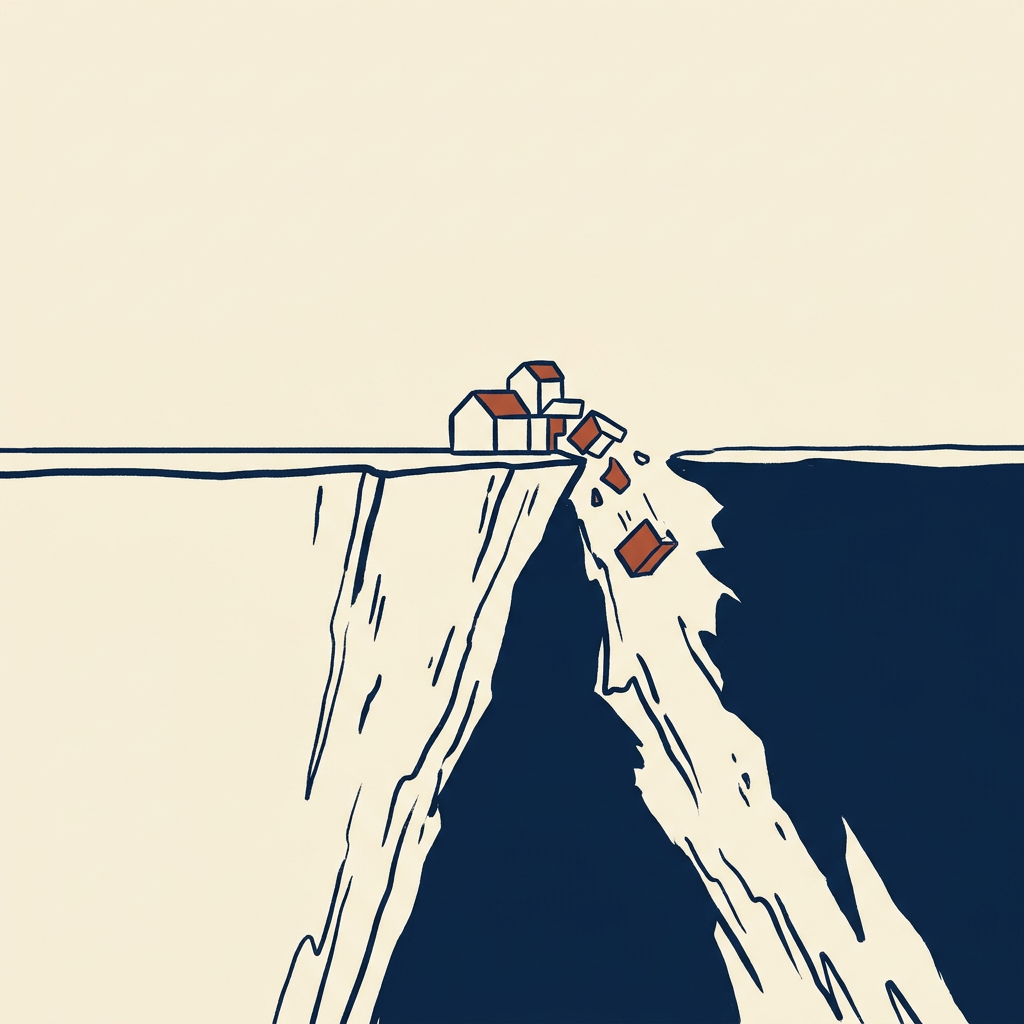
In Ibiza in 1999 he was twenty-four, working, and by conventional measures fine. Within days the anxiety was so total it felt physical and he stood near a cliff edge convinced jumping was the only way to stop it. Andrea pulled him back; he was flown home to live with his parents because he could not be trusted alone.
He will not locate a single cause. No clear trauma, no obvious trigger beyond a slow build of overwork, drink, and unexamined anxiety that finally broke through. That refusal matters because it resists the tidy narrative readers often want, where collapse follows visibly from crisis.
Depression and panic, on his account, can detonate inside an ordinary life. That is why people around a sufferer are so often blindsided, and why the sufferer feels ashamed, as if they have no right to be this unwell. Basic tasks—showering, eating, being in a room with others—became impossible. The fall is a threshold crossed, not a single event.
In practice: Standing near a cliff edge in Ibiza, he was pulled back by Andrea and returned to his parents’ house because he could not be left alone.

2
The permanence lie
Haig contends depression’s most damaging feature is not the pain itself but its absolute conviction that the pain will never end—a conviction he says is always false even when it feels like certainty.
What depression insists
This state is final; prior happiness was an illusion; nothing will change
What Haig counters
Permanence is the symptom’s signature move; time already proved the certainty wrong
Building on the crisis, he turns to what depression tells the sufferer moment to moment. Its core message is permanence: this state is the true and final one, and any prior happiness was an illusion. He describes lying in bed unable to imagine a future five minutes away, mistaking that narrowed horizon for evidence rather than symptom.
This is the argument the whole book is built to counter. The fact that he is alive and writing proves the earlier certainty wrong, because time changed things the illness insisted could never change. He uses the analogy of being underwater, where the surface is invisible and breathing feels like a memory, to explain why rational arguments about impermanence rarely land in the moment.
He is not claiming the pain is imaginary. He is claiming the specific belief in permanence is a symptom with a track record of being wrong, in his case and in others who later wrote to him. The practical rule of thumb he keeps for relapses: distrust any thought that insists nothing will ever change, since that thought is the illness’s signature move.
In practice: Lying in bed unable to picture five minutes ahead, he treated the collapsed horizon as proof rather than a symptom of the illness.
3
Body under siege
Haig argues anxiety and depression are as much physical illnesses as psychological ones, challenging the habit of treating mental suffering as thought alone.
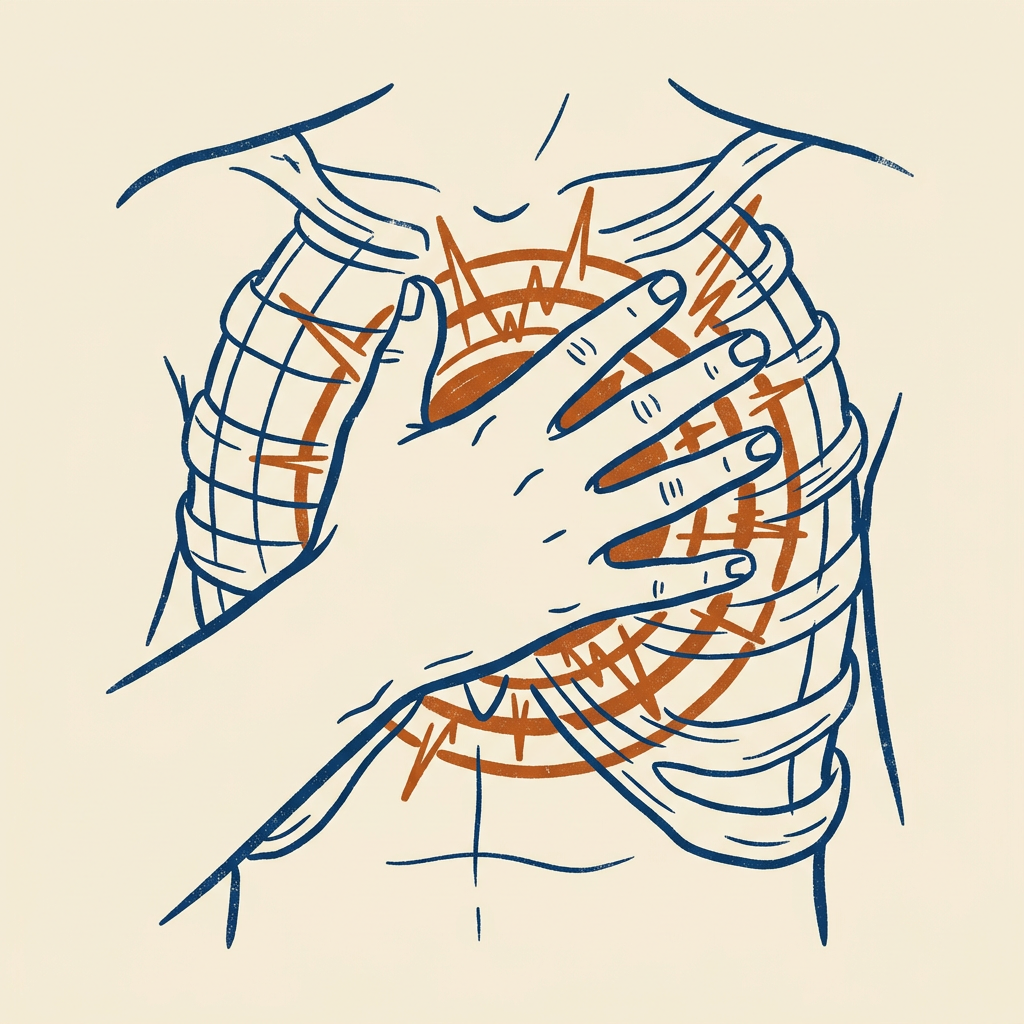
He catalogs symptoms that felt indistinguishable from heart disease: racing pulse, chest tightness, breathlessness, a churning stomach that made eating impossible for stretches of weeks. He lost significant weight not by intention but because his body would not accept food. Sleep, when it came, offered no relief; waking brought the same dread instantly, before conscious thought could intervene.
If the nervous system itself is in alarm, willpower directed at thoughts will not reach the underlying mechanism. Early on, panic attacks mimicked cardiac events closely enough that he suspected something was wrong with his heart; the relief and frustration of being told, after tests, that nothing was left him stranded between body and diagnosis.
He notes that exercise, particularly running, later became one of the few interventions that reliably calmed his body rather than his mind directly—suggesting the physical route into the illness could also be a physical route partway out. He offers testimony, not a physiological theory: anyone treating depression as purely mood or attitude is missing half of what the sufferer experiences.
In practice: Panic attacks mimicked heart events so closely he suspected cardiac disease; tests found nothing, which was both relief and dead end.

4
Love as tether
Haig argues his survival depended less on any treatment than on the steady, unglamorous presence of people—especially his partner—who refused to leave despite having no way to fix him.
Self-help framing
The sufferer as sole agent of recovery through insight and effort
Haig’s account
People who stayed supplied the stability he could not; isolation would likely have been fatal
Andrea appears not as a rescuer with answers but as someone who stayed in the room, slept beside him, and tolerated years of a relationship that gave her little back. He could not hold a conversation, leave the house, or reciprocate affection for long stretches; she absorbed that without promise of when or whether it would end.
His parents housed him during the worst period, returning him to a dependent position in his mid-twenties that he treats as necessary rather than shameful. Recovery was not achieved by him alone through insight or effort; people supplied stability he could not supply himself.
This runs counter to a self-help framing in which the sufferer is sole agent. Isolation, he insists, would likely have been fatal. For readers whose loved ones are ill, showing up repeatedly without expecting gratitude or fast results is not a minor gesture but plausibly the decisive one.
In practice: Andrea stayed through years when he could not converse, leave the house, or return affection, with no timeline attached.
5
Small repeated acts
Haig argues recovery from severe depression is not a single breakthrough but the slow accumulation of small, repeated, mundane actions that gradually widen what feels survivable.
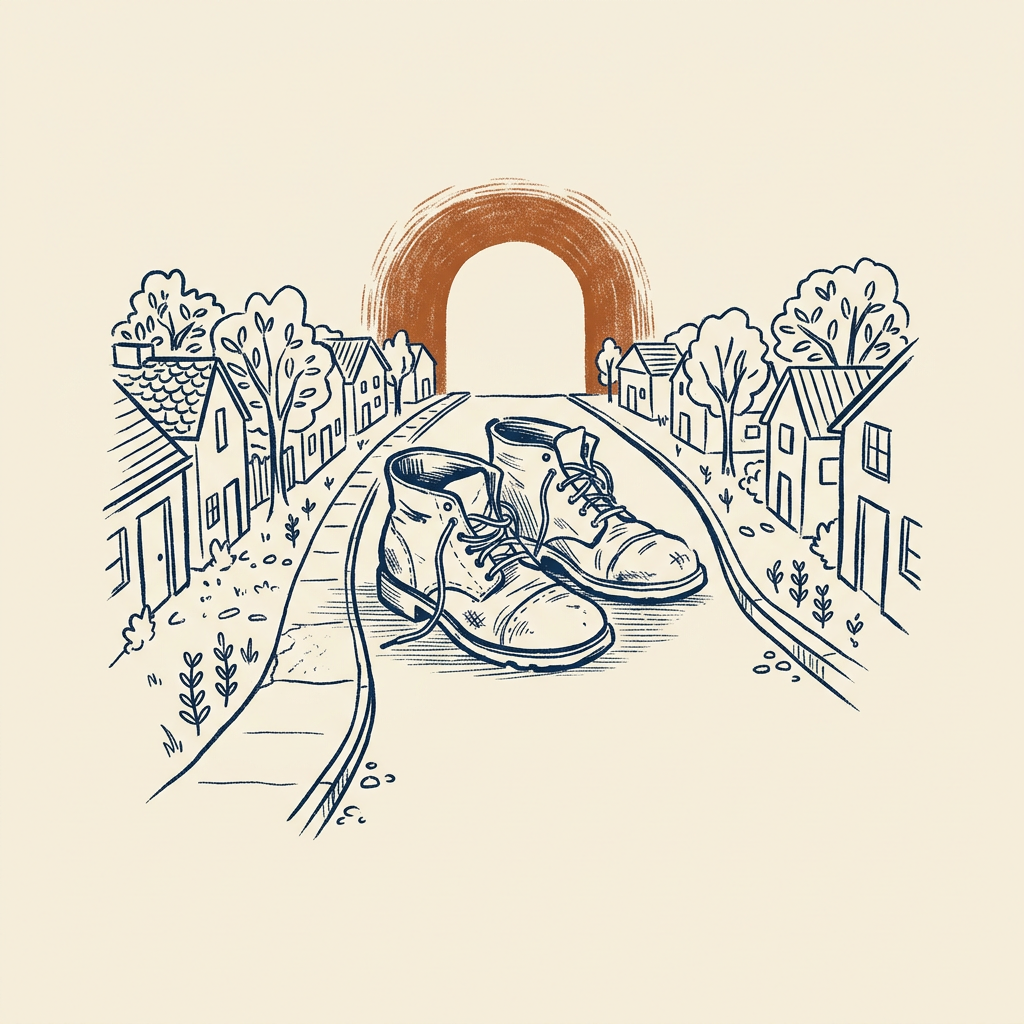
Once other people made survival possible, what he contributed was a long series of minor deliberate acts rather than any decisive turning point. He forced himself to walk to the end of his parents’ road, then slightly further the next week, treating physical distance from the house as a measurable proxy for recovery.
He read compulsively—partly distraction, partly because fiction gave evidence that other minds had survived extremity, a counterweight to depression’s claim of uniqueness and permanence. He kept lists of things that helped on a given day: a shower, a short walk, a phone call completed without panic. None were curative in themselves; their value came from repetition over months and years.
He is explicit that setbacks recurred, that improvement was not linear, and that a good week could be followed by a bad one without warning. The idea of a cure is replaced by a widening margin: the world someone with severe depression can tolerate expands through practice, the way physical stamina builds through unremarkable effort. That reframing lowers the stakes of any given day.
In practice: He walked to the end of his parents’ road, then a little further each week, using distance from the house as a proxy for recovery.
6
Medication without a verdict
Haig argues honest testimony about psychiatric medication requires admitting ambivalence rather than offering a verdict, since his experience was neither clear success nor clear indictment.
Public poles
Medication as essential rescue vs. medication as overprescribed sedation
His testimony
Partial effect, side effects, unresolved doubt; one life is not a verdict
He tried antidepressants and had a mixed, inconclusive experience: some flattening of the worst anxiety peaks, alongside side effects and nagging uncertainty about whether the drugs were helping or whether the passage of time was doing the real work. He refuses to generalize from this single data point in either direction.
The refusal is the argument. The loud public debate—advocates who treat medication as essential versus skeptics who treat it as overprescribed sedation—does a disservice to people trying to make an individual decision under distress. What worked for him (time, relationships, exercise, eventually meaningful work) might not transfer to someone whose illness has a different shape.
Personal testimony, including his own, is not evidence of what will work generally. He wants to model uncertainty honestly, in contrast to both pharmaceutical optimism and anti-medication skepticism, neither of which matched his lived experience of trial, partial effect, and unresolved doubt.
In practice: Antidepressants flattened some anxiety peaks but left him unsure whether the drugs or sheer time were doing the real work.

7
Illness as unwanted teacher
Haig makes the contentious claim that his illness, alongside everything it destroyed, also sharpened the sensitivity that made him a writer, complicating any purely subtractive account.
Before the breakdown he had not published a novel; afterward, partly because the crisis forced a reckoning with what he wanted from a shortened sense of time, he began writing seriously and eventually published multiple novels and this memoir. He rejects the idea that depression is necessary for creativity or that people should seek meaning through illness.
His narrower claim is that the heightened sensitivity to time, mortality, and the fragility of ordinary functioning became material and motivation for later work. Treating the whole experience as purely destructive would be dishonest to how he actually thinks about it now. Recovery did not mean returning to exactly who he was before; the self was permanently altered, for worse in obvious ways and, in some respects he is willing to name, for better.
He extends this cautiously to resilience: surviving a severe episode can leave a durable, if unwanted, capacity to tolerate difficulty. He flags the risk that this could be misread as advice to seek suffering—which is not his intent. The point is retrospective and personal, not prescriptive.
In practice: He had not published a novel before the breakdown; the crisis’s pressure on time and mortality became fuel for the writing life that followed.

8
Plain speech against silence
Haig argues stigma around depression and suicidal thinking persists because sufferers are pressured into silence, and that this book’s plain unclinical voice is itself meant as a corrective act.
He deliberately avoids clinical vocabulary and structured chapters in favor of short vignettes, direct address, and bare lists—things depression tells you that are not true; reasons, however small, to keep going. Plainness is a choice against two failure modes: a distancing clinical register that keeps the reader at arm’s length, and an inspirational register that smooths over how ugly and boring the illness is for long stretches.
His aim is the book he wished had existed for him at twenty-four, written by someone who had been there rather than someone studying it from outside. Silence around suicidal thinking is dangerous because people who are suicidal often believe, wrongly, that no one else has felt this. Saying the words plainly, including the cliff-edge moment without euphemism, can interrupt that isolation.
The earlier claims—that depression lies about permanence, that recovery depends on people staying, that small acts accumulate—all depend on someone being willing to say them out loud in ordinary language, without waiting for full recovery or professional credentials first. Directness is the practical mechanism, not a stylistic preference.
In practice: He includes bare lists of untrue things depression says and small reasons to keep going, written as the book he needed at twenty-four.
Key terms
- lie of permanence Depression’s core message that this unbearable state is final and that earlier happiness was an illusion—always a symptom, on Haig’s account, not a fact
- the fall The threshold when ordinary functioning collapses; for Haig, Ibiza 1999 and the cliff edge, after which he could not be trusted alone
- body under siege The physical takeover—racing pulse, chest tightness, refused food, dread on waking—that makes depression more than negative thinking
- love as tether The steady unglamorous presence of people who stay without fixing you; for Haig, the decisive condition of survival
- small repeated acts Minor deliberate actions—slightly longer walks, lists, reading—whose value is cumulative over months, not curative in any single instance
- widening margin Recovery framed as the slow expansion of what feels survivable, rather than a cure or return to the prior self
- medication ambivalence Haig’s refusal to declare antidepressants either savior or fraud based on one mixed personal trial
- depression as teacher His cautious claim that the illness also left heightened sensitivity to time and fragility that later fed his writing, without romanticizing suffering
What to do
- Show up for someone depressed this week without a plan to fix them; sit, call, or be present, and do not require gratitude or visible improvement to return.
- Pick one small physically concrete action—a walk to a specific landmark, a single meal, ten minutes outside—and repeat it daily regardless of whether it feels like it is working.
- Write down today one specific thought depression insists is permanent, and file it to reread in a month as a testable claim rather than a fact.
- If you are on medication or considering it, discuss your actual doubts with a prescriber rather than adopting a public side in the broader debate.
Questions to think with
- When depression insists nothing will change, what would it mean to treat that insistence as the illness’s signature move rather than as evidence?
- Who in your life has stayed—or whom could you stay beside—without demanding fast improvement or gratitude?
- Which single small physical act could you repeat this week even if it feels pointless in the moment?
- How do you keep Haig’s ‘depression as teacher’ claim from sliding into a romance of suffering he explicitly rejects?
- What support conditions in his recovery (partner who could stay, parents’ spare room, flexible work) are missing from your situation, and what does that limit?
The other side
The sharpest limit is structural: the recovery factors Haig credits—a partner who could afford to stay, parents with a spare room, and eventually a writing career on his own terms—are not available to everyone, and the book does not engage poverty, access to care, or the obstacles that decide whether small repeated acts are even possible. It is testimony from a sample of one (plus later correspondents), not a transferable map; its fragmentary list-heavy style strikes some in acute crisis as too glib for the danger they are in; the ‘depression as teacher’ chapter risks romanticizing suffering even though he disclaims that reading; and as a white middle-class British man’s account it does not address how gender, race, class, psychosis, or severe substance dependence reshape the illness and its treatment.
Who it's for
Someone currently inside depression or anxiety who needs to hear from inside the experience that permanence is a lie; a partner, parent, or friend trying to understand what it is like to sit with someone who wants to die; and readers tired of clinical or self-help language who want a plain personal account rather than a formula.